
 Singapore
 China
China
Step into a world where your home evolves with you, where form and function exist in a perfect, harmonious dance. This is the promise of modular furniture design principles, an approach that redefines living spaces with intelligence and grace. It’s more than just furniture; it’s a philosophy of adaptable living, crafting environments that are as dynamic as your life. Imagine clean lines, seamless integration, and the quiet confidence of a space that is perfectly attuned to your needs. This design ethos moves beyond fleeting trends, offering timeless elegance and unparalleled practicality. At its heart, it is about creating personal sanctuaries that are both beautiful and brilliantly functional. It's about empowering you to shape your world, piece by perfect piece.
The Genesis of Modular Design: A Journey Through Time
The concept of modularity, though it feels distinctly modern, has roots that stretch back through design history. Its story is one of innovation, born from a desire for efficiency and a response to changing social landscapes. Early seeds were planted in the 19th century with inventions like standardized bookcases, but the movement truly blossomed in the post-war era of the 20th century.
As cities grew and living spaces became more compact, designers and architects sought solutions that offered flexibility without sacrificing style. The mid-century modern period was a fertile ground for these ideas. Visionaries like Charles and Ray Eames championed the use of new materials and production techniques, creating systems that could be mass-produced yet personalized. Their Eames Storage Units (ESU), introduced in 1949, were a landmark in modular design—a configurable system of shelves, cabinets, and drawers that was both industrial and elegant.
The 1960s and 70s saw a further explosion of creativity. Joe Colombo's "Total Furnishing Unit" imagined a single, mobile block containing all the elements of a home, while Verner Panton's vibrant, stackable Panton Chair showcased how a single modular element could define a space. These pioneers were not just designing furniture; they were rethinking the very nature of living. They envisioned a future where our environments were not static, but fluid and responsive.
This legacy continues to inspire today. The core tenets of adaptability, simplicity, and user empowerment are more relevant than ever. In our fast-paced world, the ability to reconfigure, expand, or downsize our furnishings is a quiet luxury. This historical journey reveals that modular furniture design principles are not a fleeting fashion but a profound and enduring answer to the essential human need for a home that truly fits.
The Five Pillars of Modular Furniture Design
Modular design is governed by a set of principles that ensure its unique blend of beauty and utility. These pillars are the foundation upon which every successful modular system is built, transforming ordinary objects into instruments of personal expression and spatial harmony.
1. Modularity and Interchangeability
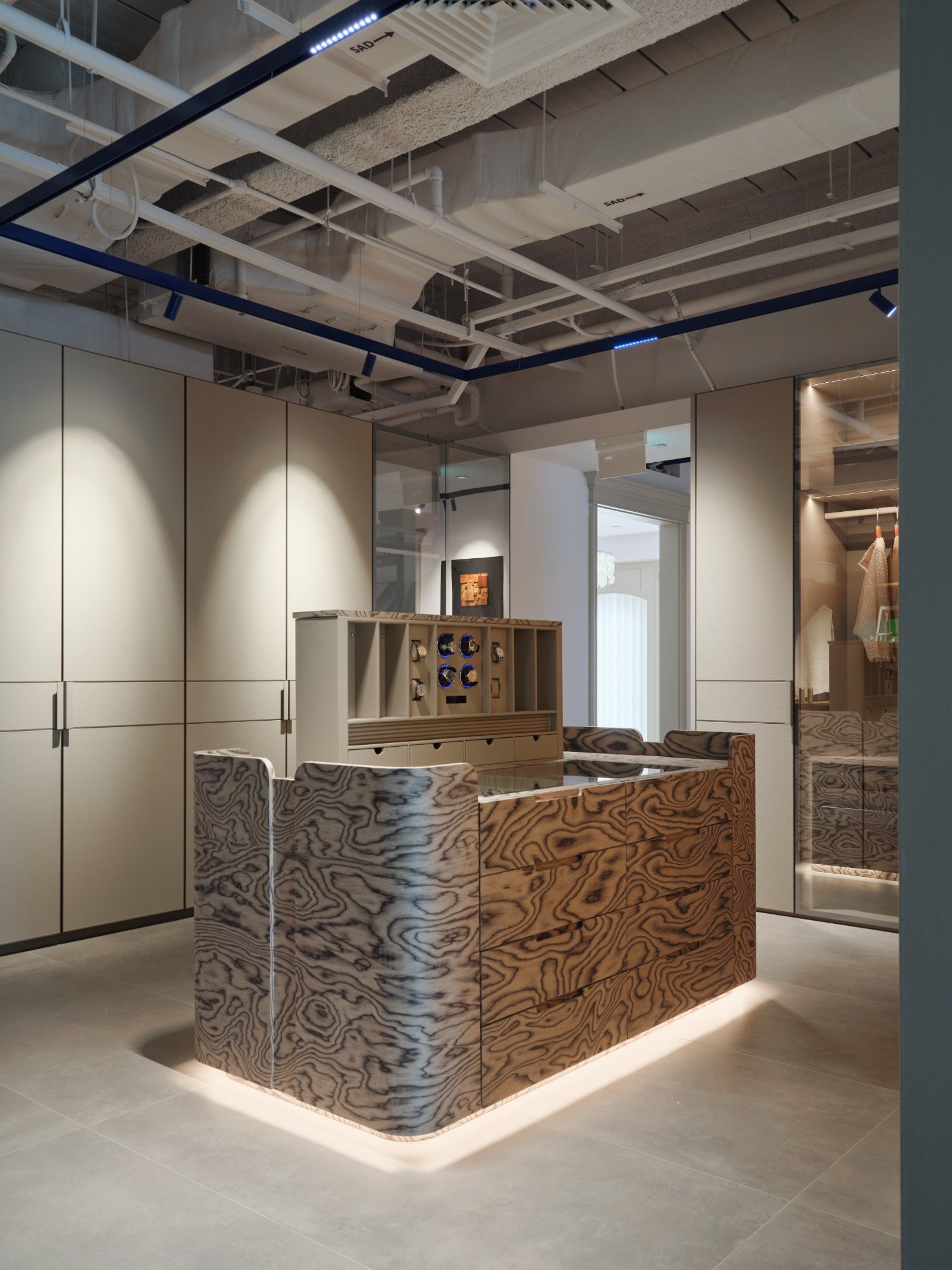
The soul of modular design is the module itself—a single, standardized unit that can connect with others to create a larger, cohesive whole. Like building blocks, these components are designed for seamless interchangeability. A drawer unit can be swapped for a shelf; a small table can connect to another to form a larger surface. This principle empowers you to become the architect of your own space. At MRETTY, we craft each cabinet and component with meticulous precision, ensuring that every piece integrates flawlessly, allowing your kitchen or wardrobe to be reconfigured as your needs evolve. The line is always simple, the structure is always unexpected.
2. Flexibility and Adaptability
Life is not static, and your furniture shouldn't be either. Flexibility is the promise that your furnishings can adapt to new roles, new spaces, and new stages of life. A modular sofa can be rearranged from an L-shape for entertaining to two separate loveseats for quiet conversation. A shelving system designed for a living room can be reconfigured to fit a home office. This inherent adaptability ensures longevity, making modular furniture a wise and sustainable investment. It’s about owning pieces that grow with you, not ones you outgrow.
3. Simplicity and Minimalism
There is a profound elegance in simplicity. Modular design often embraces a minimalist aesthetic, characterized by clean lines, uncluttered surfaces, and a focus on essential forms. This isn't just a stylistic choice; it's a functional one. By stripping away unnecessary ornamentation, the focus shifts to the purity of the form and the intelligence of the system. This visual quietude creates a sense of calm and order, allowing the furniture to complement the space rather than dominate it. MRETTY’s designs embody this principle, offering a refined and understated luxury that speaks of quality, not excess.
4. Standardization
For a modular system to work, there must be a common language of connection and dimension. Standardization is the invisible framework that guarantees compatibility between all components. It dictates the dimensions, the connection points, and the tolerances, ensuring that a module purchased today will seamlessly connect with one purchased years from now. This principle is a testament to thoughtful engineering and forward-thinking design. It provides the assurance that your investment is future-proof, allowing for endless expansion and modification.
5. User-Centric Design
Ultimately, modular furniture is designed for you. This user-centric approach places your needs, habits, and desires at the forefront of the design process. The goal is to create intuitive systems that are easy to assemble, reconfigure, and use. It’s about giving you the tools to solve your own spatial puzzles and create an environment that perfectly supports your lifestyle. From adjustable shelving heights to customizable cabinet interiors, every detail is considered to enhance your daily experience. MRETTY places you at the heart of our creation process, translating your vision into a tangible, beautiful, and highly personalized reality.
The Unmistakable Advantages of Going Modular
Choosing modular furniture is an investment in a lifestyle defined by freedom, intelligence, and elegance. The benefits extend far beyond aesthetics, touching every aspect of how you interact with your living space.
First and foremost is the unparalleled customization. Modular systems liberate you from the constraints of off-the-shelf furniture. You have the power to select components, finishes, and configurations that perfectly match your taste and spatial requirements. With MRETTY, this bespoke experience is elevated. We transform your vision into a one-of-a-kind kitchen or wardrobe system, where every cabinet, drawer, and surface is tailored for your life. Ingenious conception in mind, a good life in the kitchen.
Spatial efficiency is another key advantage, particularly in modern urban living where space is a premium. Modular furniture is a master of optimization. It can be configured to fit into awkward corners, utilize vertical space, and serve multiple functions within a small footprint. A modular wall unit can combine storage, a media center, and a desk into one streamlined element, freeing up valuable floor space and creating a sense of openness.
The inherent scalability of modular design offers remarkable long-term value. Your needs change over time, and your furniture should be able to change with you. Starting a family might mean adding more storage; moving to a new home might require a different configuration. With a modular system, you can simply add, subtract, or rearrange components instead of replacing entire sets of furniture. This adaptability not only saves money but also reduces waste, making it a sustainable choice.
Furthermore, modular furniture is often easier to transport and assemble. Because it breaks down into smaller, manageable components, moving becomes significantly less daunting. Assembly is typically designed to be straightforward and intuitive, further empowering the user and simplifying the process of setting up a new home or reconfiguring an existing one.
Finally, embracing modular furniture design principles contributes to a more sustainable way of living. The longevity of adaptable furniture means less is discarded. MRETTY amplifies this benefit by using premium, eco-friendly materials, ensuring your home is not only beautiful and functional but also healthy and environmentally conscious.
Related Products
Bespoke Kitchen Systems: Explore our range of customizable kitchen cabinets, islands, and pantries, designed for seamless integration and timeless style.
Whole-House Customization: Discover how our modular principles can be applied to create cohesive and elegant wardrobes, bookcases, and storage solutions for every room in your home.
- Smart Integrated Cabinetry: Experience the future of convenience with our cabinets featuring integrated lighting, smart locks, and automated systems.
Customer Testimonials & Case Studies
Case Study: The Tan Family, Singapore
"Our apartment had an unusual layout, and finding furniture that fit was a challenge. MRETTY designed a whole-house system for us, from the kitchen to the bedroom wardrobes. The modular approach meant every inch of space was utilized perfectly. The installation was seamless, and the quality is exceptional. Our home finally feels both spacious and incredibly organized." – Mrs. Tan
Testimonial: Mr. Lee
"I chose MRETTY for my new kitchen because I wanted something modern and minimalist. Their design team understood my vision completely. The flexibility of the modular cabinets allowed us to create a highly functional workspace that looks stunning. It’s the centerpiece of my home."
Frequently Asked Questions (FAQ)
1. Is modular furniture durable?
Absolutely. High-quality modular furniture, like the systems offered by MRETTY, is built to last. We use premium materials and precision engineering to ensure structural integrity and longevity, even with repeated reconfiguration.
2. Is it difficult to assemble or reconfigure?
While some systems vary, user-friendliness is a core principle. MRETTY provides professional installation to ensure a perfect fit and finish. Should you wish to adapt your system later, our designs are engineered for straightforward adjustments.
3. Can modular furniture look high-end?
Definitely. The elegance of modular design lies in its clean lines, quality materials, and flawless execution. When designed by experts like MRETTY, modular systems offer a sophisticated, bespoke luxury that is far superior to mass-produced furniture. The minimalist aesthetic is synonymous with modern, high-end interiors.
4. How does MRETTY incorporate sustainability?
We are committed to environmental responsibility. MRETTY prioritizes the use of sustainable and low-VOC (Volatile Organic Compound) materials to ensure a healthy indoor environment. Our commitment to quality and adaptability also means our furniture lasts longer, reducing waste.
The principles of modular design offer a compelling vision for modern living—a vision of spaces that are fluid, intelligent, and deeply personal. It is a departure from the static and a move towards the dynamic. By embracing modularity, you are not just furnishing a home; you are creating a responsive environment that adapts to the beautiful, ever-changing story of your life.
As a proud holder of FSC certification, MRETTY is committed to sourcing materials from responsibly managed forests, ensuring your bespoke creation is not only a testament to exquisite design but also to environmental stewardship. We blend artistry with accountability, crafting spaces that you can feel good about in every sense. Your vision for a perfect home is unique, and it deserves a solution that is just as special. Let us help you bring that vision to life with the power and elegance of modular design.
Book a Free Consultation Now and begin your journey toward a perfectly tailored space.
