
 Singapore
 China
China
TL;DR:
- What You’ll Learn: Five key "Modern Minimalist Interior Design" trends for 2026, tailored for Singapore homes—from biophilic design to invisible technology.
- Why It Matters: Understand how intentional design choices make your HDB or Condo feel more spacious, serene, and increase long-term value.
- How to Execute: Grasp why "Whole-House Custom Furniture" is the true foundation for a seamless, clutter-free, timeless minimalist home.
Last week at the MRETTY showroom, a client shared a dilemma common among Singapore homeowners: they had just received keys to their 4-room BTO flat and felt overwhelmed by the compact space. They wanted a modern minimalist vibe but feared it would feel too cold or "showroom-like." I’ve heard this concern countless times.
Minimalism is not about empty spaces. Its essence is creating room for what truly matters.
Quick Answers to Your Top Questions
Is Minimalist Style Still Popular in Singapore?
Not only is it popular—it’s gaining traction, especially as living spaces become more compact and homeowners crave quiet, unburdened environments. The new generation of minimalism is warmer and more textural, perfectly suited for creating cozy homes. A Q4 2025 Houzz survey showed that 62% of Singapore homeowners planning renovations are considering minimalist or Japandi themes.
How Much Does a Minimalist Interior Design Renovation Cost in Singapore?
Costs vary by size and materials. A minimalist renovation for a 4-room BTO typically ranges from S$50,000–S$90,000; for Condos, it can start from S$100,000 and go higher.
Here’s a counter-intuitive truth: many assume "minimalism = fewer items = cheaper." But high-quality minimalism often requires higher upfront investment—because the budget isn’t saved by skipping "decorative extras" but shifted to foundational elements. From my experience, 35%–50% of the budget goes into high-performance custom carpentry—that’s the real base of a serene, functional, and enduring home.
What Are the Key Minimalist Design Trends for 2026?
New minimalism revolves around warmth, texture, and technology—it’s our response to the need for "home as a sanctuary." The stark, all-white "empty boxes" of the early 2010s are long gone. Here are five trends I’m actively implementing in MRETTY projects today:
- Warm Biophilia: Weaving nature seamlessly into daily life.
- Sustainable Materiality: Choosing surfaces that are beautiful, eco-friendly, and durable.
- Curved Silhouettes: Softening edges for an organic, gentle feel.
- Invisible Technology: Embedding smart functions into custom furniture.
- Japandi Evolution: A deeper fusion of Japanese wabi-sabi and Scandinavian hygge.
1. Warm Biophilia: Nature in Every Corner
Biophilic design goes far beyond "placing a few potted plants." It’s about creating a deep connection between home and nature—maximizing natural light, using organic materials, and integrating natural hues. Studies show biophilic environments can reduce stress levels by up to 15% and boost overall well-being.
Practical techniques include large windows, lightweight linen curtains, and neutral palettes dominated by stone tones, beiges, and earthy greens to blur the boundary between indoors and outdoors. In a high-density city like Singapore, this connection is especially precious.
How Custom Furniture Activates This Trend
Custom carpentry is key to turning "nature" from a decorative accent into an architectural language. We design low TV consoles with integrated planters; use FSC-certified light oak or walnut veneers for cabinet faces to bring natural grain into the room. In a recent Punggol HDB project, we created a full-height display cabinet with embedded lighting simulating dappled tree shadows—transforming a purely storage unit into a focal point.
- ❌ Common Mistake: Placing plants randomly without relation to the spatial design.
- ✅ Better Approach: Integrate greenery and natural materials into the home’s structural framework during the custom carpentry phase, rather than relying on afterthoughts.
2. Sustainable Materiality: Beauty That Lasts
Today’s luxury is sustainability. Homeowners are demanding materials that are not only beautiful but also transparently sourced and built to endure. Look for options like FSC-certified wood and low-VOC (Volatile Organic Compound) paints—they improve indoor air quality and health.
One core principle of minimalism is "buy less, buy better." This applies equally to your walls, countertops, and cabinets: investing in high-quality materials reduces waste and future rework.
How Custom Furniture Activates This Trend
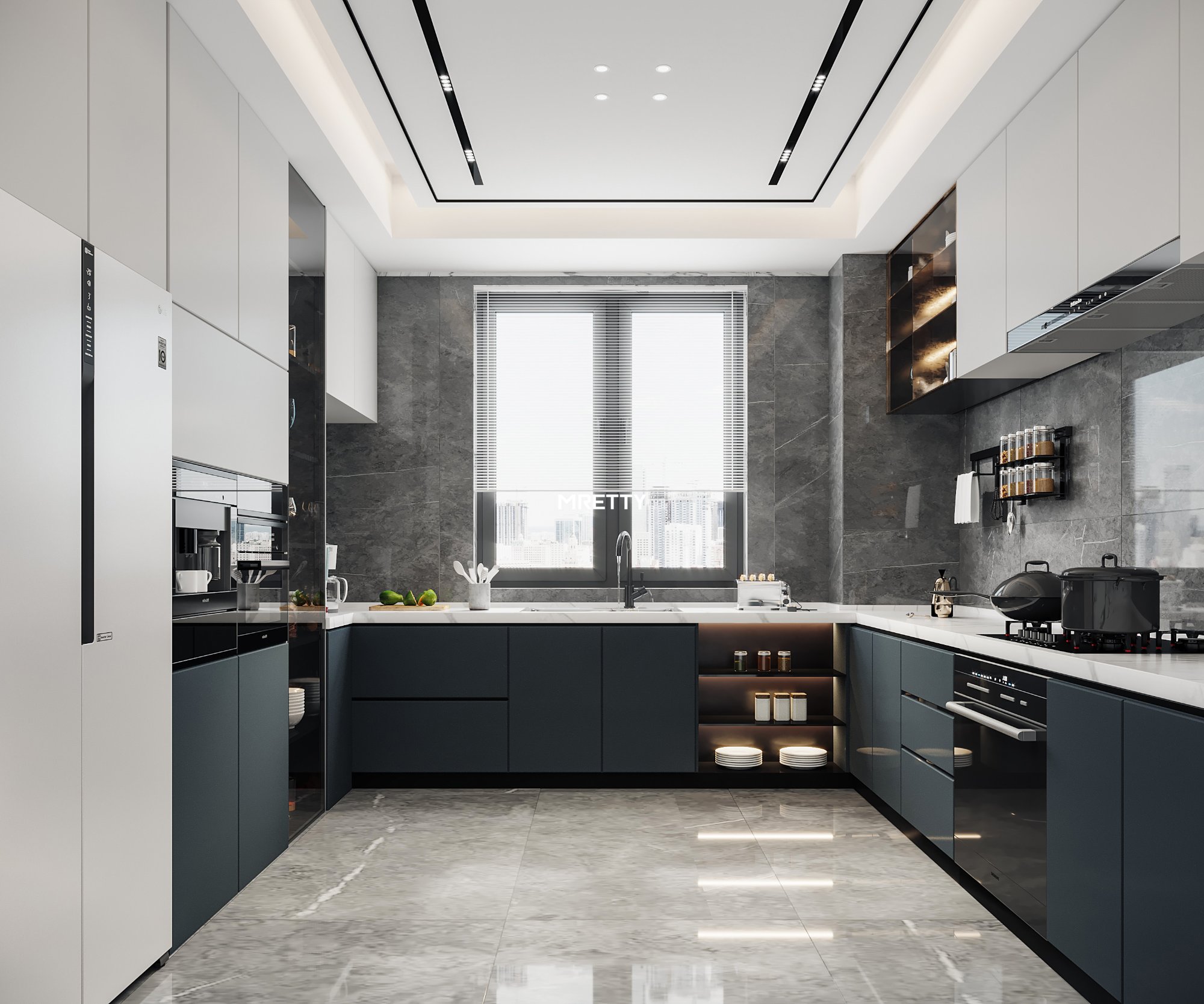
Processing sustainable premium materials requires matching production capabilities. For instance, in our smart factory, we specify Fenix NTM nano-matte surfaces for kitchen cabinet doors—it is fingerprint-resistant, resistant to micro-scratches, low-reflective, and its thermal healing properties give it at least 50% longer lifespan than standard laminates, making it a truly sustainable investment. Paired with robust hardware like Blum, every component is built to function smoothly for decades.
- ❌ Common Mistake: Chasing trendy but fragile materials that need replacing in a few years.
- ✅ Better Approach: Invest in high-performance, certified sustainable materials (like Fenix NTM or solid wood) for enduring aesthetic longevity.
Download Your Free Minimalist Home Checklist
Ready to start but unsure where to begin? We’ve compiled a comprehensive "decluttering + planning" checklist specifically for Singapore living environments.
This guide walks you through clarifying core needs room by room—so you understand yourself before engaging a designer.
[Download MRETTY’s Free Minimalist Home Checklist]
3. Curved Silhouettes: The End of Sharp Edges
Minimalism is softening. We’re moving away from harsh stacked blocks toward arcs and curves: arched doorways, circular mirrors, soft-edged furniture—creating a welcoming, organic flow that psychologically makes spaces feel more relaxed and safer.
This is especially effective in small homes: a curved kitchen island improves circulation; a round-edged dining table makes a room feel less cramped. The change seems small, but its psychological impact is significant.
How Custom Furniture Activates This Trend
The beauty of curves relies entirely on precision. Off-the-shelf furniture rarely fits your room’s specific dimensions in curved forms. Only precision CNC cutting can produce truly fluid curved edges on cabinet doors, headboards, and feature walls. In a luxury minimalist project at Sentosa Cove, we crafted a continuous curved feature wall concealing a hidden door—a level of integration achievable only through custom manufacturing.
- ❌ Common Mistake: Forcing a "curved sofa" into a room full of straight, hard edges—it looks disjointed.
- ✅ Better Approach: Let the curved motif recur across architectural details, custom carpentry, and key furniture pieces to form a unified language.
4. Invisible Technology: Smart Homes, Seamless Design
The best technology disappears. In a minimalist context, this means embedding smart functions into furniture and architecture: wireless charging pads built into bedside surfaces, speakers hidden in ceilings, all cables vanishing. The goal is function present, visual noise absent.
This must be planned from the design stage—not added as gadgets later, but built in. Statista projects Singapore’s smart home revenue will exceed US$630 million in 2026, reflecting clear demand.
How Custom Furniture Activates This Trend
A whole-home integrated mindset is essential here. We design media consoles that hide all cables, consoles, and speakers behind clean panels; kitchen cabinetry incorporates smart appliances for a flush, unified appearance; one of the most sought-after custom features is motion-sensor LED lighting inside wardrobes—a small detail, but a daily luxury.
- ❌ Common Mistake: Visible cables, speakers, and hubs cluttering clean countertops.
- ✅ Better Approach: "Pre-bury" technological needs during the design phase, using custom furniture to swallow devices and wiring entirely.
5. The Japandi Evolution: Warmth Meets Function
Japandi—the fusion of Japanese wabi-sabi and Scandinavian hygge—continues to evolve. The 2026 version isn’t about rigidly following a "style formula" but evoking a feeling: Japanese reverence for craft × Nordic dedication to comfort and practicality.
The result is spaces that are both serene and warm: low furniture, solid materials, muted palettes accented with black. Light wood, paper lanterns, and bouclé textiles play starring roles.
How Custom Furniture Activates This Trend
Balancing this气质 requires precise control. We use solid oak for custom tatami/platform beds to establish a sense of grounding in the bedroom; custom shoji-inspired sliding screens partition open-plan HDB layouts flexibly—allowing light while preserving privacy. Controlling the process from design to production ensures wood grains and finishes align perfectly with Japandi’s philosophical core.
- ❌ Common Mistake: Using too many Japanese or Scandinavian clichés to "decorate" the space.
- ✅ Better Approach: Capture the underlying principles—craftsmanship, natural materials, functional simplicity—and weave them into a coherent, authentic whole through custom pieces.
How to Apply Minimalist Design to a Singapore HDB Flat
Applying these trends to a typical HDB requires strategy—because space itself is the ultimate luxury, and every choice must amplify both "actual space" and "perceived space."
Use Custom Cabinetry to Create Visual Unity
The most effective technique for small BTOs? Seamless, floor-to-ceiling custom systems. This draws the eye upward while eliminating visual noise caused by freestanding furniture. Let the TV console, storage cabinets, and door finishes flow in the same material palette—the space instantly feels larger. A full-wall system can conceal a fold-down dining table or a hidden workstation—all functions present, but only quiet texture visible.
Make Storage "Effortless"
Minimalism is impossible without storage—the biggest challenge in Singapore apartments. Forget generic solutions; you need minimalist storage best practices: pull-out pantries in kitchens, hydraulic storage beds, ultra-slim full-height corridor cabinets… When everything has a home, countertops can breathe.
MRETTY: Premium Bespoke Kitchen & Cabinet Systems Provider in Singapore.
