
 Singapore
 China
China
What You’ll Learn
- Deep Dive: 4 Mainstream Materials – A complete breakdown of quartz, sintered stone, marble, and granite on real-world performance, price, and application.
- Avoid Costly Mistakes – Learn how to choose based on your budget and cooking habits to prevent future regrets.
- Designer Styling Secrets – Exclusive MRETTY tips on pairing countertop colours and textures with cabinets and lighting to elevate your kitchen’s overall aesthetic.
Table of Contents
- #how-to-evaluate-countertop-materials-for-maximum-value--durability
- #how-to-choose-quartz-countertops-for-the-perfect-balance-of-beauty--function
- #how-to-embrace-cutting-edge-tech-with-near-perfect-sintered-stone
- #how-to-master-natural-stone-for-a-truly-unique-luxury-kitchen
- #how-to-choose-the-right-countertop-for-singapores-environment
- #how-to-match-countertop-colours-to-elevate-your-kitchen-design
- #about-the-author
Last month, I met a couple living in an Orchard Road condo. Their kitchen had a massive west-facing window—gorgeous light, but a real headache when choosing between stunning-but-delicate marble and practical-but-safe quartz. They worried marble would fade in the sun or stain from curry, yet found standard quartz patterns uninspiring. This dilemma is exactly what most quality-focused homeowners face.
As a Singapore-based whole-home designer with 10 years of experience, my job is helping clients strike that perfect balance. Choosing a kitchen countertop isn’t just picking a slab—it dictates your next decade of cooking, cleaning, and even your home’s overall vibe.
Years ago, a client chose a “promotional” off-brand quartz to save a few hundred dollars. Within a year, the surface was riddled with fine scratches and permanently yellowed from turmeric stains. He ended up paying double to replace everything, regretting that “savings.” The lesson is clear: your countertop is a high-frequency investment. Short-term penny-pinching often leads to long-term headaches. This guide will help you avoid those pitfalls.
How to Evaluate Countertop Materials for Maximum Value & Durability
You need a clear framework. I advise clients to assess five core dimensions: budget, scratch resistance, stain resistance, heat tolerance, and maintenance. Remember: there’s no perfect material, only the one that best fits your lifestyle.
To simplify things, our team compiled this comparison of mainstream 2026 Singapore countertop materials:
2026 Kitchen Countertop Material Price & Performance Comparison
| Material | Price Range (S$/ft run) | Mohs Hardness (1-10) | Heat Resistance | Stain Resistance | Maintenance | MRETTY Designer Rating | | :--- | :--- | :--- | :--- | :--- | :--- | :--- | | Quartz | S$120 - S$250 | 6 - 7 | Good | Excellent | Very Low | ★★★★★ | | Sintered Stone | S$200 - S$450+ | 7 - 8 | Excellent | Excellent | Very Low | ★★★★★ | | Granite | S$150 - S$300 | 6 - 7 | Excellent | Good | Medium | ★★★★☆ | | Marble | S$180 - S$500+ | 3 - 4 | Fair | Poor | Very High | ★★★☆☆ |
\Note: Pricing is typically per linear foot (ft run) including fabrication & installation, standard in Singapore.
This table reveals core differences. Price usually aligns with performance, but quartz offers the best sweet spot. Sintered stone represents peak current technology with virtually no weaknesses. Marble’s beauty demands high maintenance—it’s not just numbers; it directly impacts your daily mood in the kitchen.
❌ Common Mistake: Deciding based only on first impressions and sticker price, ignoring long-term maintenance costs and performance gaps.
✅ Smarter Approach: Combine the performance metrics above with your cooking frequency (e.g., do you use turmeric, coffee, or wine often?) to evaluate which material has the lowest total cost of ownership.
FAQ: What is the most durable, scratch-proof kitchen countertop?
By Mohs hardness, sintered stone (7-8) is the most durable, scratch-proof material on the market. You can cut directly on its surface without leaving marks. High-quality quartz and granite (6-7) are next, resisting daily knife scrapes. Marble is softest and scratches most easily.
How to Choose Quartz Countertops for the Perfect Balance of Beauty & Function
In Singapore, quartz is the most popular kitchen countertop material—over 70% of homeowners prioritise it during renovations. Why? It’s durable, low-maintenance, and offers vast design options. But not all quartz is created equal.
Crucially, a premium quartz countertop must contain over 90% natural quartz crystals, mixed with high-purity resins and pigments, then vacuum-compressed under high pressure. This process creates an ultra-low porosity surface, delivering excellent stain resistance—soy sauce, vinegar, and coffee barely penetrate and wipe clean easily.
Quartz Countertop Pros & Cons
Pros:
Huge variety of colours/patterns, from realistic marble veining to solid hues.
Non-porous, antibacterial, no sealing required—ideal for busy families.
Cons:
Heat-resistant but not heat-proof; never place a scorching hot pot directly from the stove onto it.
Large runs may need seams, demanding skilled installation.
Recently, I designed a kitchen for a 5-room HDB client in Punggol with two young kids—total chaos central. Their top priority? A countertop that was effortless to clean. We recommended a MRETTY light-grey starlight quartz. It proved perfect: tomato sauce and juice wiped off instantly. The subtle sparkles in the light grey base also cleverly “hid” crumbs and water spots, drastically cutting the young parents’ cleaning anxiety.
❌ Common Mistake: Assuming “quartz is quartz,” opting for cheap, low-quality slabs with less than 85% quartz content.
✅ Smarter Approach: Ask about quartz content and brand. Choose reputable names like Caesarstone or Silestone, or a trusted whole-home brand like MRETTY that guarantees material quality, ensuring long-term durability.
FAQ: Which is better, quartz or sintered stone?
The classic debate. Comparing Singapore’s mainstream options: Sintered stone wins on heat resistance and UV protection, making it ideal for west-facing or open-plan kitchens. Quartz offers slightly better value and colour variety. If budget allows and you want peak performance, choose sintered stone. If you want the best all-rounder within a reasonable budget, high-quality quartz is a safe, excellent bet.
Still Stressed About Choosing?
Your kitchen deserves the best design. Book a complimentary 1-on-1 consultation with a MRETTY Senior Designer. We’ll provide expert countertop recommendations and a precise quote tailored to your layout, lifestyle, and style preferences.
[Book Your Free Design Consultation Now]
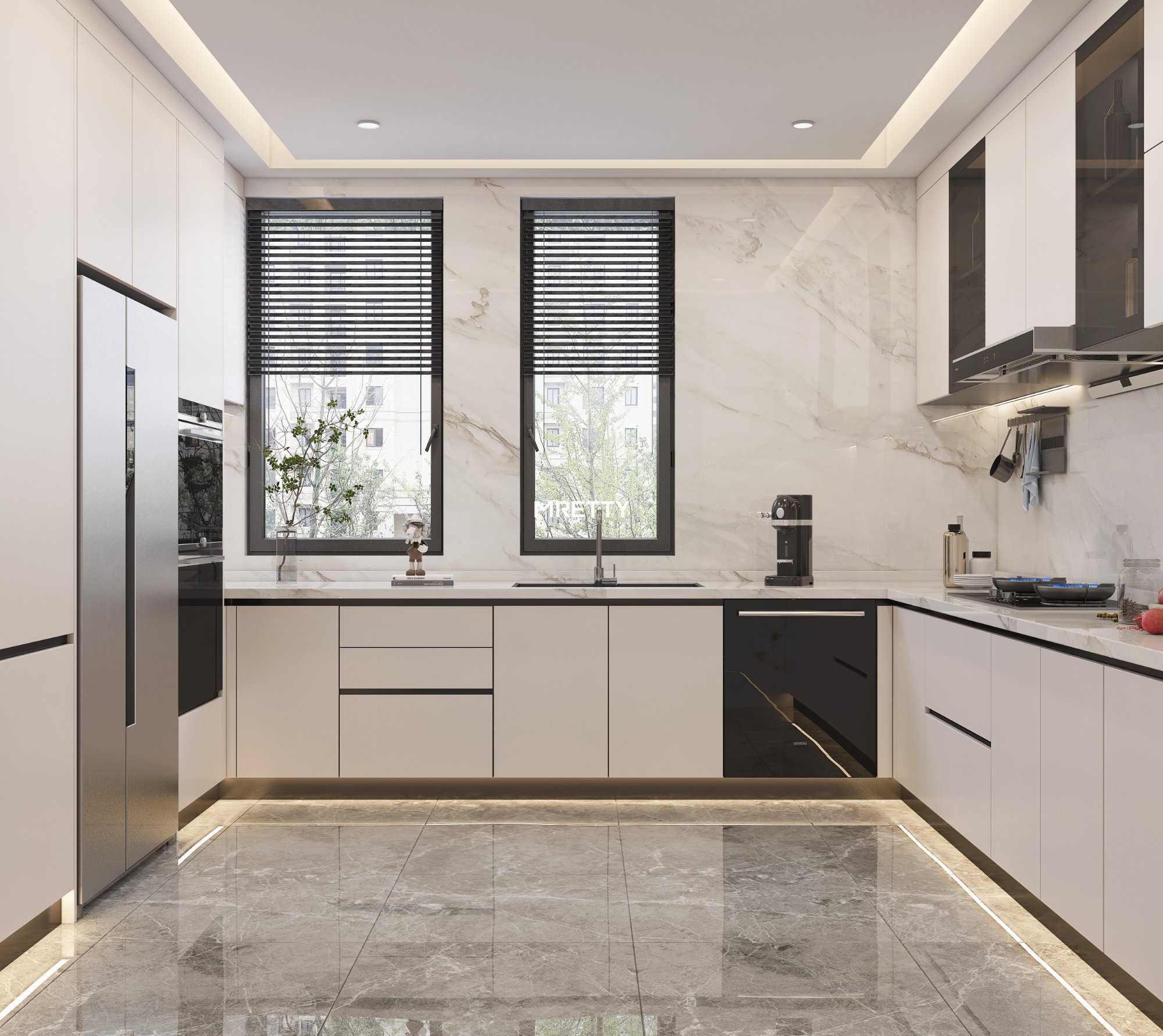
How to Embrace Cutting-Edge Tech with Near-Perfect Sintered Stone
Sintered stone is a technological breakthrough in surfacing. It’s not mined; it’s engineered from feldspar, quartz, and natural clays, fired at over 1200°C and compressed under massive pressure. This mimics natural stone formation but yields superior performance.
This extreme manufacturing gives sintered stone superpowers:
Top-Tier Heat Resistance: Place hot pots directly on it—no trivets needed.
Extreme Scratch Resistance: Mohs 7-8 hardness; cut fruit directly on the surface, knife glides without a mark.
Zero-Porosity Stain Proof: Water absorption below 0.02%; a true “stain fighter.”
UV Resistant: Never fades, even under intense Singapore sun—perfect for open kitchens or west-facing windows.
Remember the Orchard Road couple? Given their harsh afternoon sun, I recommended a premium Italian matte snow-white sintered stone. Its UV stability solved their fading fears, while the realistic stone veining satisfied their aesthetic demands. That’s the value of expert knowledge solving real-life problems.
❌ Common Mistake: Assuming it’s indestructible and ignoring its relatively brittle edges, hiring non-specialists for installation.
✅ Smarter Approach: Only work with brands owning professional sintered stone fabrication equipment and experience. Transport and installation are specialist jobs. MRETTY’s 15,000 sqm smart factory has dedicated cutting and edge-polishing tools, ensuring smooth, strong edges and preventing future chipping.
Though pricier, sintered stone offers a near-permanent, high-performance solution for quality-focused kitchens.
How to Master Natural Stone for a Truly Unique Luxury Kitchen
Despite synthetic advances, natural marble and granite offer irreplaceable charm. Each slab’s veining is a unique masterpiece crafted by Earth over millennia.
What are the disadvantages of marble kitchen countertops?
Marble screams luxury but has a “princess complex”: High Porosity: Like a sponge; absorbs liquids fast. Coffee, wine, or lemon juice leave permanent stains if not wiped immediately. Low Hardness: Soft; easily scratched by knives or hard objects. Etching: Acidic substances (vinegar, citrus) dull the surface on contact.
But here’s a contrarian view: Most believe marble is too delicate for kitchens. Actually, it depends on how you define and use your “kitchen.”
For “dry kitchens” used mainly for socialising, light meals, and display, marble’s aesthetic value can outweigh practicality. I designed a “social kitchen” for a finance-industry couple featuring a Calacatta Gold marble island. They rarely cooked; the island was a champagne and cheese bar for guests. Here, marble’s unmatched elegance became the artistic focal point—something no synthetic material could replicate.
Granite is the more “grounded” natural choice. Harder and denser, it’s more durable and stain-resistant than marble, though its speckled pattern is less fluidly elegant.
❌ Common Mistake: Blindly choosing untreated marble for a kitchen used for frequent Chinese stir-frying and heavy oil cooking.
✅ Smarter Approach: If you love natural veins but hate high maintenance, choose granite. Or, use marble only in low-risk zones like a separate breakfast bar or decorative backsplash.
Choosing natural stone means embracing a lifestyle needing care—its unique beauty rewards the diligent.
How to Choose the Right Countertop for Singapore’s Environment
Good design is rooted locally. In Singapore, we must tackle two challenges: high humidity and compact layouts.
Best Kitchen Countertops for Singapore’s Humid Climate
Choose materials with water absorption below 0.5% to prevent mould and bacteria. High-quality quartz (<0.5%) and sintered stone (<0.02%) are the best defences. Professional seamless joining and edge waterproofing are equally vital to stop moisture seeping into cabinetry.
Best Countertops for Small HDB/Condo Kitchens (8-12 sqm)
Countertops can visually expand tight spaces: Prioritise Light, Solid Colours: White, cream, light grey reflect light, making kitchens feel brighter and larger. Choose Gloss or Silk Finishes: Reflective surfaces enhance visual depth better than matte. Consider Integrated Design: Using the same material/colour for the countertop and backsplash creates a clean, continuous look, reducing visual clutter. We applied this successfully in a Punggol 5-room HDB project.
Open Kitchen Countertop Design Tips
Open kitchen counters extend your living/dining aesthetic. Material and colour must harmonise with your home’s style. In a recent MRETTY countertop customisation case, we designed an open kitchen for a Tanjong Pagar condo. The client wanted industrial modern; we boldly used the same dark grey cement-textured sintered stone for the island countertop and backsplash as used in the living room TV feature wall, seamlessly connecting both zones.
How to Match Countertop Colours to Elevate Your Kitchen Design
Once you choose the material, colour pairing dictates your kitchen’s “vibe.” Here are three professional rules I use:
- Classic Contrast Rule: The safest winner. Dark cabinets (charcoal, navy, forest green) with light countertops (white, cream, light grey marble-look), or vice versa. Strong contrast creates instant depth and luxury.
- Harmonious Unity Rule: Choose a countertop in the same colour family as your cabinets, but different in shade. E.g., off-white cabinets with a white countertop featuring beige or gold veining. Creates a serene, elegant, minimalist feel—perfect for Japanese or modern styles.
- Visual Focal Point Rule: Treat your island as the star. Keep perimeter counters and cabinets neutral, then give the island a bold, dramatically veined, or dark countertop. Instantly boosts design impact. In our Q1 2026 project review, kitchens using this rule scored highest in “design wow factor” satisfaction.
❌ Common Mistake: Choosing countertop colour in isolation, not considering it within your whole home’s palette.
✅ Smarter Approach: Request physical samples of cabinet doors, countertops, and flooring. View them together under both natural daylight and your planned kitchen lighting to ensure harmony.
FAQ: What kitchen countertop colour hides dirt best?
Pure white and pure black are the worst—every speck of dust or water spot shows. The most forgiving colours are mid-tones with speckles, particles, or complex patterns, like beige, grey, or quartz mimicking granite/marble veins. These irregular patterns cleverly camouflage everyday smudges.
Smart colour pairing ensures your expensive countertop material delivers maximum visual value, transforming your kitchen from a utility space into an aesthetic statement.
About the Author
Aida, Senior Lead Designer, MRETTY Whole-Home Customisation
With over 10 years of high-end residential design experience, Aida firmly believes a space is the physical manifestation of its occupant’s inner spirit, and her designs guide clients on a journey of self-discovery. She excels at crafting functional yet deeply personal homes tailored to Singapore’s unique living environments (high-rise condos and HDBs).
As a core creative force at MRETTY, Aida’s profound understanding of materials, light, and spatial planning has delivered numerous acclaimed projects. Her mastery of Modern, Italian, French, Japanese, and Mid-Century styles allows her to create timeless, one-of-a-kind homes for clients with diverse tastes.
MRETTY: Premium Bespoke Kitchen & Cabinet Systems Provider in Singapore.
