
 Singapore
 China
China
TL;DR: A staggering 60% of homeowners regret their lighting choices within a year of moving in. This usually stems from poor planning. A stellar whole-home lighting strategy isn't about expensive fixtures; it's about enhancing functionality, mood, and the value of your custom interiors through layered lighting.
Effective home interior lighting design combines three key layers: Ambient, Task, and Accent. Together, they create a space that is both practical and atmospheric. A well-executed lighting scheme can even increase a property's perceived value by up to 20%. The secret lies in matching light quality—CRI and Kelvin temperature—to the room's function and materials.
Quick Answers to Core Questions
What are the 3 types of lighting in interior design?
A successful interior lighting scheme layers three essential types of light:
Ambient: The foundational, general illumination.
Task: Focused light for activities like reading or cooking.
Accent: Light used to highlight artwork or architectural features.
How do I plan lighting for a new home in Singapore?
Start with function, not fixtures. First, map out the activities for each room. This dictates your task lighting needs. Next, establish the ambient base layer. Finally, identify feature areas needing accent light. Always formalize a lighting plan before any renovation work begins.
Whole-Home Lighting Strategy: Beyond Simple Fixtures
A great whole-home lighting strategy is the invisible architecture of your home. It’s not just about picking fixtures; it’s a deliberate plan balancing functionality and atmosphere. Every corner of your home should feel intentionally designed. For clients investing in whole-home customization, the lighting plan is as critical as the floor plan. It dictates how the textures of your custom carpentry present themselves and how spacious a room feels after sunset.
Based on my experience with 200+ Singaporean homes, I’ve found that a unified lighting plan creates a palpable sense of luxury. We proved this in a Q2 2026 landed home project in Sentosa Cove. We unified all ambient lighting to a 3000K color temperature. This created a seamless, warm flow from the living room to the kitchen. The open-plan space felt cohesive and grand. A proper plan must consider residential lighting design from day one.
❌ Common Mistake: Buying all your light fixtures before finalizing your furniture layout.
✅ Better Approach: Finalize your custom furniture layout first. Your lighting should serve that layout. Provide task light where you chop vegetables. Provide accent light on your MRETTY custom features.
❌ Common Mistake: Using only one harsh ceiling light for the entire room.
✅ Better Approach: Layer multiple sources. Use recessed downlights for ambient light. Add a stylish pendant as an accent. Install under-cabinet LED strips for task light. This flexibility lets you change the room’s mood. Good lighting can even make a 4-room HDB feel 15% larger by eliminating dark corners.
Decoding the Specs: CRI, Kelvin (K), and Lumens Explained
Understanding technical specs is crucial for professional results. These numbers dictate how your interiors look and feel. Getting them wrong is a costly mistake, especially for custom furniture finishes.
Color Rendering Index (CRI): CRI measures how accurately colors appear under a light source. Scale is 0-100, with 100 being natural sunlight. For living spaces, CRI 90+ is excellent. For a MRETTY custom walk-in wardrobe, CRI 95+ is a hard requirement. Low CRI (80) makes rich walnut wood look dull and vibrant fabrics look grey.
Correlated Color Temperature (Kelvin): Measured in Kelvin (K), this defines the light's color from warm to cool. Specific ranges work best for Singapore’s climate. Warm White (2700K-3000K) creates a cozy, welcoming feel for living rooms and bedrooms. Neutral White (3500K-4000K) is perfect for kitchens and studies needing clarity. Cool White (5000K+) often feels harsh and clinical in homes—a common DIY error.
Lumens: This measures total brightness. Forget wattage; look at lumens. A living room might need 1,500-3,000 total lumens. A kitchen needs much more, around 5,000-10,000 lumens concentrated in task areas.
❌ Common Mistake: Choosing a fixture based only on its design, ignoring its CRI value.
✅ Better Approach: Prioritize CRI 90+ for all living area fixtures. Always check the technical specification sheet for the CRI rating before purchasing.
Lighting for Custom Furniture: The MRETTY Difference
Generic lighting advice fails for custom carpentry. Your lighting must enhance, protect, and celebrate the craftsmanship. MRETTY lighting schemes are designed with your furniture, not added afterward.
How to Highlight Custom Carpentry with Light
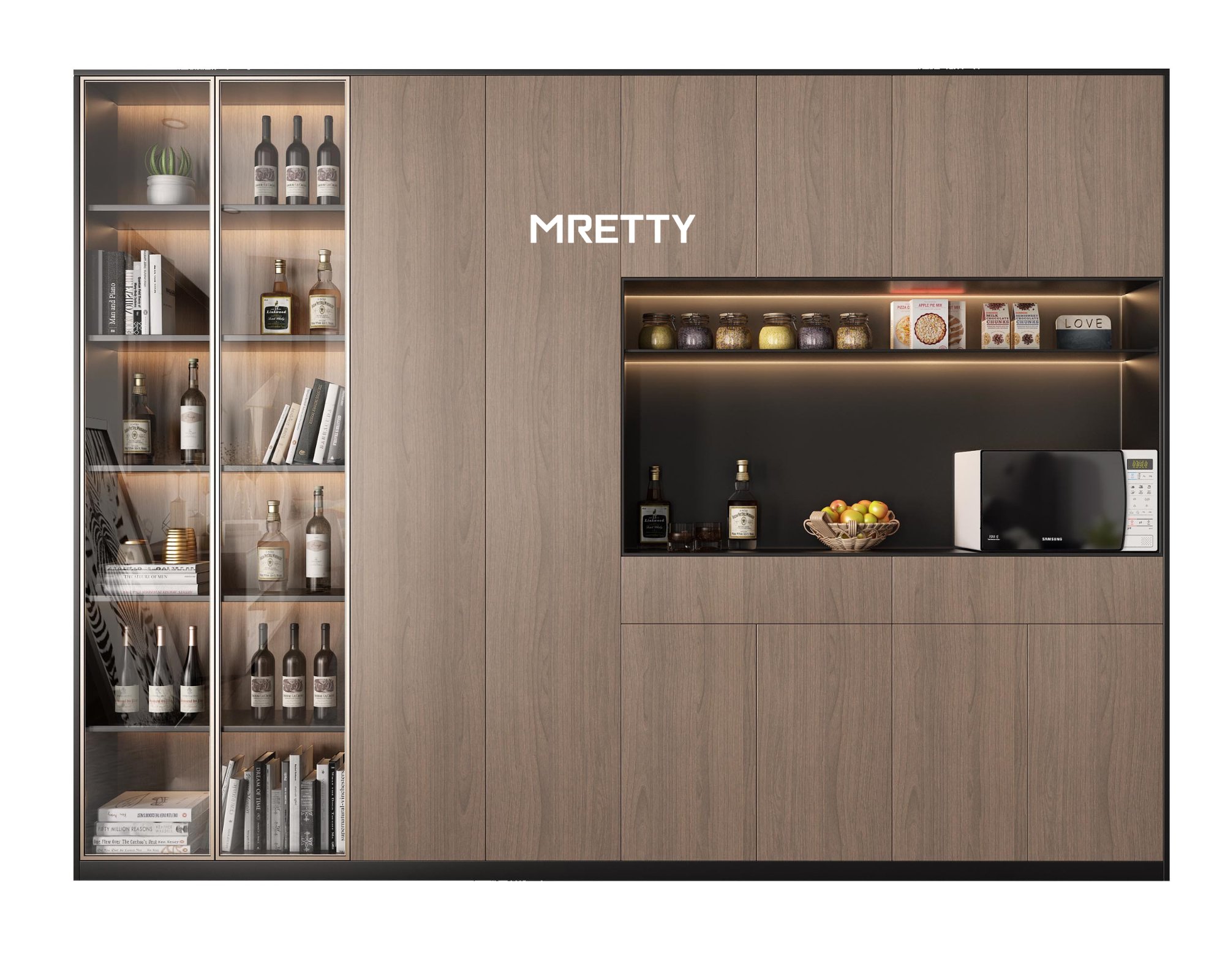
When we design a kitchen, we consider light from the start. We can rout channels into the cabinet frame to embed LED strips. This creates a seamless glow, making the joinery itself appear to illuminate. For display cabinets, we use low-heat, high-CRI spotlights to showcase details without damaging items. Our integrated LEDs are rated for 50,000 hours. Used 6 hours a day, that’s over 22 years.
Just last month, I managed an apartment project featuring a stunning Calacatta marble kitchen island. Instead of generic downlights that cause glare, we used two narrow-beam pendants with honeycomb anti-glare grids. This focused light directly onto the work surface, eliminated reflections, and made the stone's veining pop.
How Lighting Affects Custom Furniture Finishes
Wrong light degrades materials over time. UV rays from direct sunlight are the worst culprit, but poor-quality LEDs can also emit harmful wavelengths. Harsh, direct light reveals every flaw on high-gloss laminate. Conversely, low-angle grazing light brings textured wood veneers to life. We specify fixtures with PSB Safety Mark certification, ensuring proven material-safe properties. The goal is for your MRETTY furniture to look exceptional for years.
Smart Lighting for the Singapore Custom Home
Many think smart lighting is just fancy color-changing tricks. But in reality, its true power lies in creating subtle "scenes."
Modern luxury is about control. We integrate systems like Philips Hue with our custom furniture. Imagine "Meal Prep Mode." It boosts your under-cabinet and island lights to 100% brightness at a crisp 4000K. Then, click "Dinner Party Mode." Lights dim to 30% and shift to a warm 2700K, drawing focus to the dining table. This scene-based control is the future of residential lighting, embedded in the MRETTY custom philosophy.
❌ Common Mistake: Sticking LED strips onto finished carpentry.
✅ Better Approach: Plan integrated lighting from the design phase. MRETTY can build custom-routed channels and concealed wiring for a truly seamless effect.
Ready to see how professional lighting plans transform your custom furniture? Download our free "Singapore Home Lighting Design Checklist" to avoid common pitfalls.
Room-by-Room Lighting Plans for Singapore Homes
While a whole-home strategy is key, each space has unique needs. Here are quick lighting plans for apartments and HDBs.
Living Room: What is the best lighting for a Singapore condo living room? Combine central ambient sources (like cove lighting), adjustable track lights for art, and floor lamps for reading. Dimmers are crucial. They increase ambiance flexibility by 70%.
Kitchen: This is a workspace. Use bright, neutral (4000K) under-cabinet task lighting. It eliminates shadows cast by your body over the counter. Decorative pendants over an island add personality.
Bedroom: Prioritize warm, relaxing light (2700K). Use bedside lamps for reading. Avoid downlights directly over the bed; glare is uncomfortable when lying down. Walk-in wardrobe lighting needs high-CRI vertical light sources.
Landed Homes: Lighting design for landed homes in Singapore offers more scope. Use exterior lighting to highlight architecture and landscaping. A double-volume living room can use a statement chandelier for ambient light. However, supplement this with low-level lighting to make the space feel human-scaled.
❌ Common Mistake: Using the same lighting plan for every room.
✅ Better Approach: Tailor lighting layers and Kelvin temperatures to each room's specific function and desired mood.
Expert Summary & FAQ
Professional lighting design protects and enhances your primary investment: the custom interiors themselves. It’s the final 10% of a project that delivers 90% of the difference in quality and enjoyment. A home without a lighting plan is like a gallery with the lights off. The masterpiece is there, but you can't appreciate it.
Frequently Asked Questions
What are common lighting mistakes to avoid in a Singapore home?
- Using only one ceiling light per room.
- Ignoring dimmers.
- Using office-like cool light (5000K+) in living spaces.
- Neglecting kitchen task lighting.
- Choosing fixtures based solely on looks, ignoring CRI and lumens.
How do I layer lighting in an HDB (BTO) flat?
Even with standard BTO points, you can layer. Use the central fixture for ambient light. Add floor and table lamps for task/accent light. Use plug-in under-cabinet lights. Smart bulbs can add dimming and color control without an electrician.
What is a good CRI for home lighting?
CRI 90 or higher is excellent. For critical areas like kitchens and wardrobes, aim for 95+. Most professional lighting designers in Singapore won't specify fixtures below CRI 90.
How much does a lighting designer cost in Singapore?
Independent consultations range from S$1,500 to S$10,000+, depending on project scope. When you engage MRETTY for a whole-home project, a comprehensive lighting plan is an integral part of our design service.
Sources: Technical standards and product integration information are based on guidelines from organizations like Singapore's PSB (Safety Mark) and Philips Hue.
About the Author
Hanson, Senior Whole-Home Customization Designer at MRETTY, has 14 years of experience managing and designing high-end kitchen and cabinetry system projects. With numerous successful projects across Singapore, he specializes in translating client visions into custom spaces where function and beauty are inseparable.
MRETTY: Premium Bespoke Kitchen & Cabinet Systems Provider in Singapore.
