
 Singapore
 China
China
TL;DR:
- The average renovation cost for a 4-room HDB (BTO) in Singapore is approximately S$55,000, with a typical timeline of 8–12 weeks.
- True value lies not in "cheapest pricing," but in a Design-Build-Manufacture Integrated System: one team handling design, production, and installation eliminates finger-pointing, color mismatches, and rework.
- This guide breaks down the complete workflow, real-world budgets, common pitfalls, and how to vet a reliable team like MRETTY with a professional lens.
Table of Contents
- #must-read-for-beginners-most-common-questions
- #the-standard-interior-design-sg-process-the-right-way-to-execute-a-whole-home-renovation
- #detailed-2026-singapore-interior-design-budget-breakdown
- #the-mretty-difference-integrated-design-build-custom-furniture
- #final-qa
- #about-the-author
1. Must-Read for Beginners: Most Common Questions
How Much Does Interior Design Cost in Singapore?
Renovation costs depend on unit type, size, and material selection. Based on 2026 benchmarks:
- 4-Room HDB BTO (New Handover): Approx. S$45,000 – S$65,000
- 3-Bedroom Condo (<1,200 sqft): Approx. S$50,000 – S$120,000+
- Landed Property (>2,000 sqft): Typically S$250,000+
Note: The above usually includes design fees, project management, hacking, tiling, electrical/plumbing, and custom carpentry. Carpentry often accounts for 40–50% of the budget, directly dictating the home's quality and longevity.
What Are the 3 Key Things to Look for When Choosing an Interior Design Firm?
- Consistent Portfolio: Look at multiple completed projects, not just 3D renders.
- Transparent Quotations: Are substrates, finishes, hardware brands, and warranty scopes itemized clearly?
- Possession of "In-House Capabilities": Can they manage the entire chain from design to production and installation?
- Teams controlling the full pipeline are more reliable in quality and accountability. - Check reviews on Qanvast or HomeRenoGuru, but always confirm their project management approach in person.
2. The Standard Interior Design SG Process: The Right Way to Execute a Whole-Home Renovation
The biggest mistake in renovation is "building as you think of ideas." In my 14 years of project experience, the safest approach is structured progression.
MRETTY’s 5-Step Whole-Home Customization Process
- Consultation & Needs Analysis (Week 1)
Not starting with style, but clarifying:
- Your daily routine, family members, and future changes in the next 3–5 years (children, parents moving in, etc.).
- Which spaces are pain points (insufficient storage, poor circulation, bad lighting).
- Space Planning & Scheme Design (Weeks 2–3)
Delivering 2D layout plans + 3D visualizations to account for every square meter.
> Core Insight: Many clients initially obsess over expensive marble from Pinterest. But layout is the foundation.
> Last year, for a BTO project in Punggol, the owner wanted a marble feature wall. We convinced him to allocate part of that budget to a "visible kitchen + kids' activity zone" so the mother could watch her child while cooking. The result was a daily happiness boost far greater than a decorative wall.
- Material & Hardware Selection (Week 4)
Locking in board materials (e.g., Italy's FENIX), substrates (moisture-resistance grade), and hardware (Blum / Hettich, etc.), translating design into executable specifications.
- Parallel Production & Site Works (Weeks 5–10)
- Upon design finalization, custom furniture enters our 15,000㎡ Smart Factory for production.
- Concurrently, site works proceed with hacking, tiling, and electrical/plumbing.
- This parallel execution shortens the timeline by roughly 20%.
- Installation & Handover Acceptance (Weeks 11–12)
Unified installation of custom cabinets, trims, lighting, and soft furnishings. Conducting a joint final inspection with the homeowner before handing over the keys.
Common Mistakes During the Planning Phase
❌ Common Mistake: Saving dozens of Pinterest photos without a unifying theme.
✅ Better Approach: Create one focused mood board with only 3–5 images that best represent the "feel" you want, noting down "What I like about this image" beside each.
❌ Common Mistake: Budgeting with zero buffer.
✅ Better Approach: Reserve a 10–15% contingency fund for contingencies or last-minute upgrades (e.g., upgrading standard hinges to soft-close full-overlay hinges).
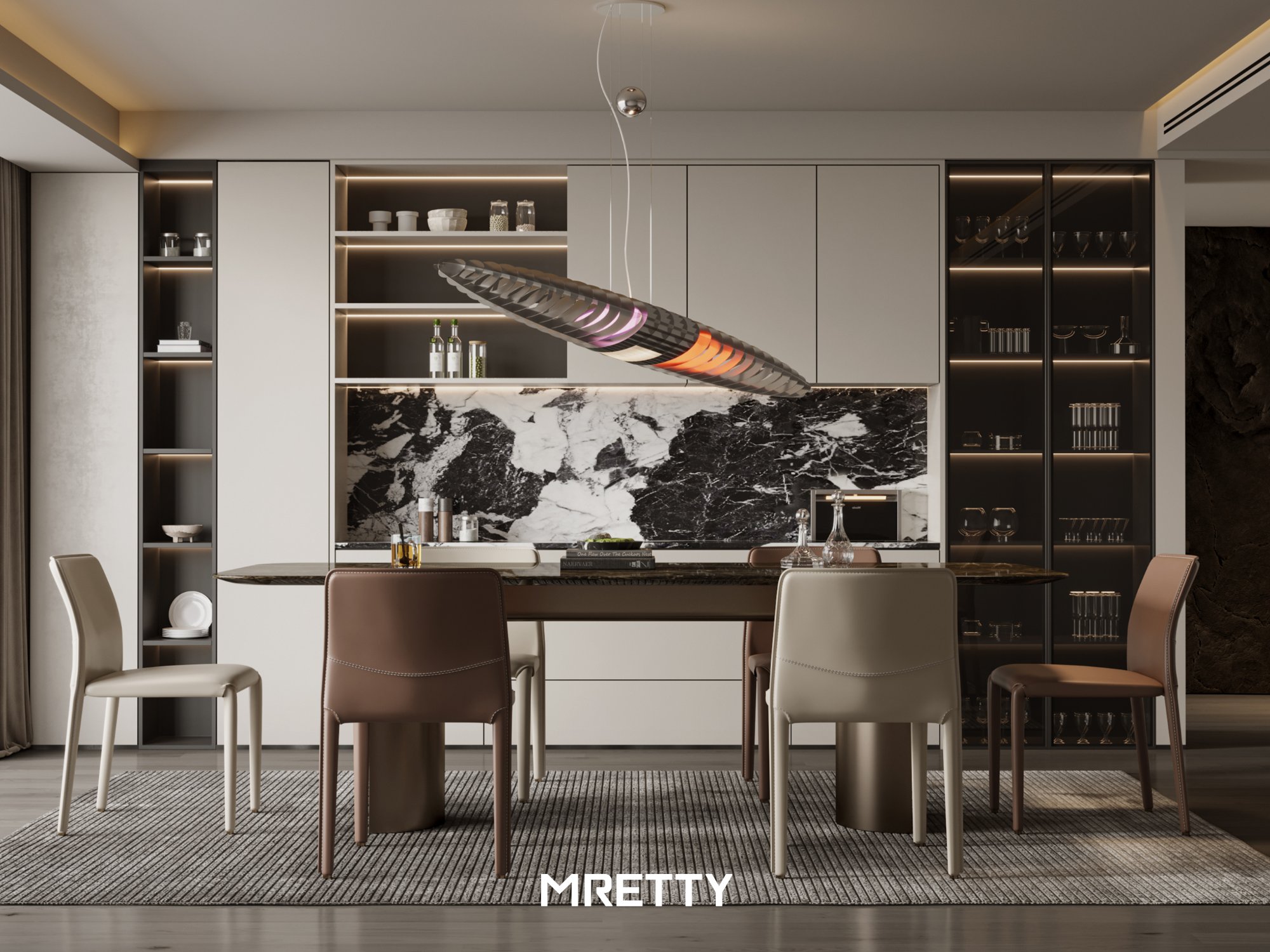
3. Detailed 2026 Singapore Interior Design Budget Breakdown
Online calculators give rough estimates; real budgets depend on material grade, carpentry complexity, and service depth.
Estimated Ranges by Housing Type (2026 Market Rates)
| Housing Type | Estimated Total Renovation Cost |
| :--- | :--- |
| 3-Room HDB BTO (New) | S$35,000 – S$50,000 |
| 4-Room HDB BTO (New) | S$45,000 – S$65,000 |
| 5-Room HDB BTO (New) | S$55,000 – S$80,000 |
| Condo (<1,200 sqft) | S$50,000 – S$120,000+ |
| Landed Property (>2,000 sqft) | S$250,000+ |
What Determines Carpentry Costs?
Carpentry often consumes 40–50% of the total budget, driven by three factors:
- Substrate Grade
- Wet areas (kitchen, bathroom) require moisture-resistant plywood / high-density boards.
- Standard areas can use cost-effective substrates, but not across the board.
- Finish Selection
- Basic laminate vs. imported premium finishes (e.g., fingerprint-resistant FENIX).
- Finishes dictate the "first-glance quality feel."
- Hardware Brand
- Generic hinges are cheaper but prone to loosening and squeaking within 1–2 years.
- European brands like Blum / Hettich offer lifetime warranties and a completely different daily tactile and silent experience.
Don't Fall for the "Lowest Quote" Trap
Many instinctively think: "Get a few quotes and pick the cheapest one."
But this is often a trap. Ultra-low pricing usually means:
- Downgraded substrates (more prone to moisture damage and warping).
- Subcontracting to unstable small teams.
- Constant "hidden costs" added later.
The eventual cost in time, rework, and frustration often far exceeds the "few thousand saved" upfront.
A more rational approach: Choose an integrated team with transparent, itemized quotations and stable reviews, even if the total is 5–10% higher—the long-term value is greater.
Interior Designer vs. Contractor: What's the Difference?
| Dimension | Interior Designer (Turnkey) | Contractor |
| :--- | :--- | :--- |
| Role | One-stop负责人 from concept to handover | Executes construction based on your drawings |
| What You Need to Do | Interface with one team, confirm schemes & milestones | Draft drawings, select materials, coordinate trades yourself |
| Risk & Effort | Lower, with unified management | Very high, requiring you to act as project manager |
| Suitable For | Most people, especially busy professionals | Those with renovation experience, ample time, and knowledge of materials/processes |
Companies like MRETTY integrate both: possessing design capabilities alongside in-house factories and construction management, eliminating the disconnect where "the designer draws it, but the contractor builds it poorly."
4. The MRETTY Difference: Integrated Design, Build & Custom Furniture
Unlike the traditional model of "design firm + outsourced carpenter," MRETTY operates on a Design-Build-Manufacture Integrated route.
In-House Smart Factory = Quality Certainty
- Upon design finalization, drawings go directly into our 15,000㎡ Smart Factory.
- Using CNC and automated edge banding to minimize human error.
- This means: the color samples, edge banding, and hardware you confirmed are faithfully replicated in the final product, avoiding "color mismatches" or "uneven gaps."
Material & Hardware Standards
- Boards: Preferring moisture-resistant substrates + optional premium finishes like FENIX.
- Hardware: Standardizing Blum soft-close hinges and slides throughout, not just "generic buffers."
Clear Accountability, No Room for Finger-Pointing
- If an issue arises, it won't be "the designer blaming the factory" or "the factory blaming the installer."
- One team takes full responsibility for the outcome—this is the greatest source of security in an integrated model.
Common Factory Selection Mistakes
❌ Common Mistake: Assuming all "custom carpenters" are the same, only looking at showroom samples.
✅ Better Approach: Directly ask:
- Do you have your own factory?
- Can I see factory videos or arrange a visit?
- Are your warranty terms clearly stated in writing?
5. Final Q&A
What is the Process for Hiring an Interior Designer in Singapore?
- Shortlist 2–3 teams whose portfolio style you like.
- Schedule meetings to clearly communicate your budget, timeline, and lifestyle.
- Compare their detailed quotations (checking if materials, hardware, and timelines are itemized).
- Check reviews, view past cases, then sign the contract.
Is Hiring a Designer Worth It for HDB Flats?
Absolutely, especially for space-constrained BTOs:
- Designers excel at transforming "standard layouts" into "tailor-made spaces" for you.
- Through integrated custom cabinetry, you gain over 30% more usable storage compared to buying ready-made pieces.
- Good design accommodates family changes over the next 5–10 years, not just immediate aesthetics.
6. About the Author
Hanson, Senior Whole-Home Designer at MRETTY
With 14 years of experience in high-end residential design and project management in Singapore, specializing in whole-home execution for Condominiums and Landed properties. Firmly believes that "good design isn't about stacking decorations, but making space, circulation, and storage feel natural," leveraging an in-house smart factory to translate designs from renderings into millimeter-accurate installation sites.
MRETTY: Premium Bespoke Kitchen & Cabinet Systems Provider in Singapore
