
 Singapore
 China
China
TL;DR
Key data confirms: tempered glass is five times stronger than standard annealed glass. This makes it the minimum safety standard for frameless cabinet doors. To achieve true safety and long-term durability in Singapore homes, this strength must be paired with high-quality concealed hinges certified to withstand over 200,000 open-close cycles—these are absolute hard indicators, with no room for compromise.
In Short
Frameless glass cabinet doors are monolithic tempered glass panels installed without visible frames, creating a clean, modern visual effect. In Singapore, the popularity of this design is soaring. In 2026, over 60% of new luxury condominium and HDB BTO renovation projects incorporated frameless glass elements to make spaces brighter. A successful installation depends on only two things: using tempered safety glass and dedicated concealed hinges.
In 2020, aluminium-framed glass doors were the default option for a modern look. By mid-2023, demand for truly frameless designs in Singapore residential projects began to surge. Now in 2026, all-glass cabinet doors represent a clear shift in interior design—toward extreme minimalism and maximum light flow. As a practitioner with ten years of design experience in Singapore, I have witnessed this evolution firsthand, project after project.
This guide provides a hard-core breakdown of frameless glass cabinet doors: covering essential technical details, cost drivers, and practical applications in HDB flats and condominium living—all insights drawn from MRETTY’s frontline project data. Let’s dissect what constitutes a high-quality installation versus a pitfall.
1. Frameless vs Framed Glass Cabinet Doors: 2026 Comparative Analysis
The core difference lies in construction method and visual impact. Framed doors have glass panels embedded in wooden or metal frames, which define the door edges and provide structural support. In contrast, a frameless door is a single polished glass panel mounted directly to the cabinet body via concealed hinges, resulting in a seamless, “floating” effect.
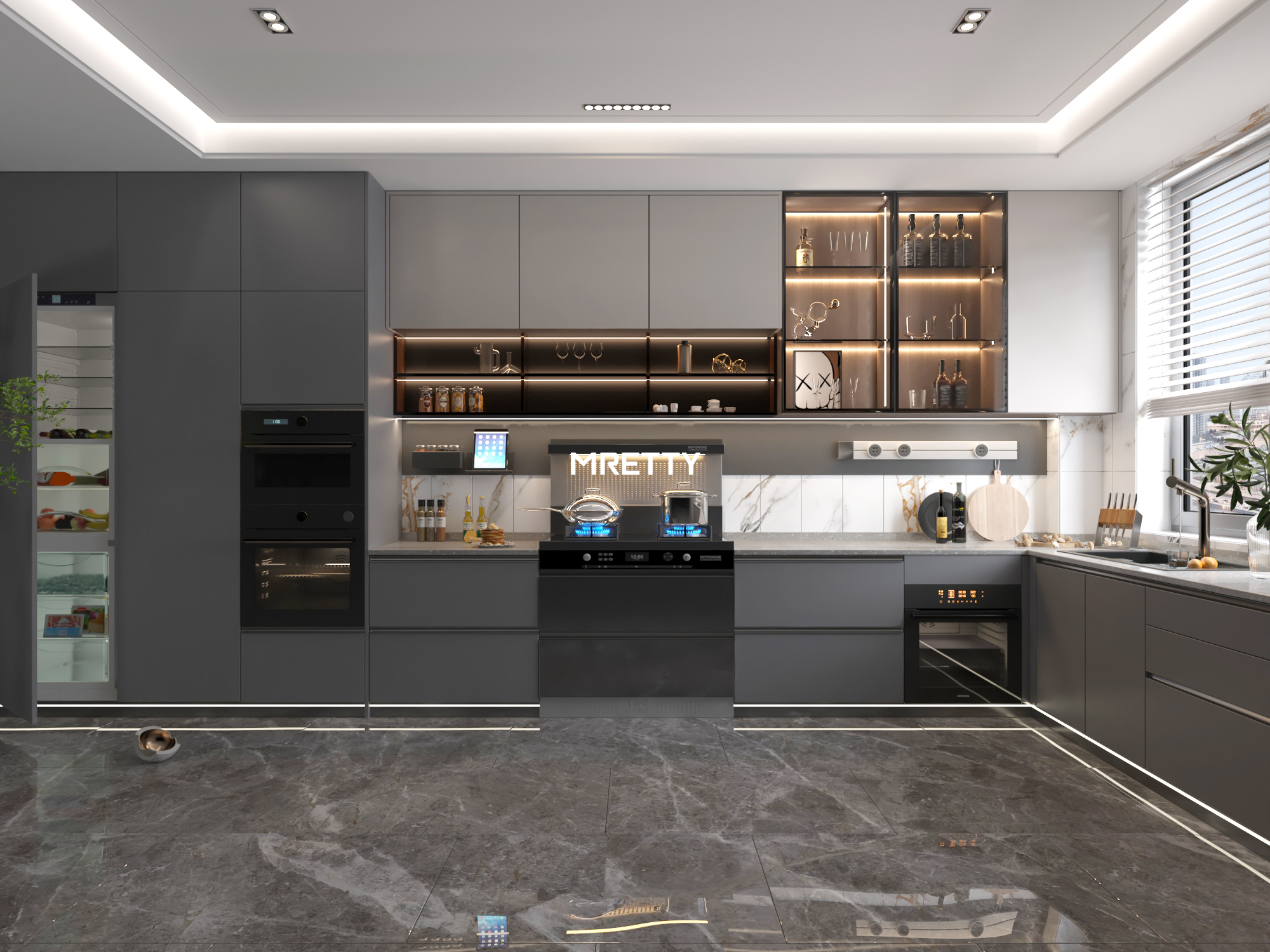
This choice directly affects the entire room’s atmosphere. Frameless design makes spaces feel larger and more transparent—especially effective for compact HDB kitchens or condominium living rooms where light is paramount. In a recent 4-room BTO project last quarter, replacing solid upper cabinet doors with MRETTY frameless clear glass uppers increased the kitchen’s perceived visual width by an estimated 20%.
I will never forget a client’s reaction at the handover of a Tampines project: we replaced their old dark wooden kitchen cabinets with MRETTY frameless clear glass upper cabinets. They stopped in their tracks upon entering and said, “Is this the same kitchen?” The space felt twice as large, and the way window light bounced around the room changed completely—that “wow” moment proves this trend is not just about looks, but fundamentally rewrites how a space feels.
However, the aluminium frame vs frameless debate involves trade-offs: traditional framed doors gain rigidity from the frame, protecting glass edges from knocks; whereas frameless glass cabinet doors rely entirely on the glass’s inherent strength and the reliability of the hardware system. This is why material selection is never just about aesthetics—it is a hard safety decision.
- ❌ Common Mistake: Assuming both styles have similar durability. Framed doors are more forgiving of impacts.
- ✅ Smarter Approach: Recognize that frameless doors demand higher material grades—you must use tempered or laminated safety glass paired with robust hardware to match the lifespan expectations of framed doors.
Framed doors win on traditional durability; frameless doors win on aesthetics and spatial perception—provided they are built with high-performance materials.
2. 5 Key Technical Considerations for Selecting All-Glass Cabinet Doors
When clients ask me about all-glass cabinet doors, my advice never stops at “does it look good.” Below are the five technical factors we dissect for every project, from Punggol HDB flats to District 10 condominiums:
What Type of Glass Should Be Used for the Cabinet Doors?
This is your most critical decision. For frameless designs, standard annealed glass is unsafe and should never be considered. Your two primary options are tempered glass and laminated glass:
- Tempered Safety Glass (Mainstream Standard): This is the industry benchmark for frameless glass cabinet doors. The manufacturing process heats the glass and then rapidly cools it, increasing its strength to 4–5 times that of untreated glass. If extreme breakage occurs, it shatters into small, blunt-edged pebbles (rather than large, razor-sharp shards), meeting safety standards referenced by Singapore’s SS 341 (Singapore Standard 341). For most kitchens, 6mm thick tempered glass strikes the best balance between strength and weight.
- Laminated Glass (Advanced Safety): Two sheets of glass bonded with a plastic interlayer. Even if one side breaks, the interlayer holds the fragments in place (similar to automotive windshield principles). It costs more but offers superior sound insulation and UV protection, making it the top choice for glass display cabinet doors housing valuable collections.
For most Singapore families, I recommend tempered glass; but if you have young children, the tempered vs laminated for cabinet doors discussion leans toward laminated—providing higher safety redundancy.
- ❌ Common Mistake: Choosing non-safety glass to cut costs—a major safety hazard.
- ✅ Smarter Approach: Insist on certified safety glass and request written confirmation from the cabinet manufacturer that the glass complies with local safety standards (e.g., SS 341).
Do Frameless Glass Doors Require Specialized Hinges?
Yes. Absolutely yes. There is no room for compromise on this. Unlike wooden doors, frameless glass doors require specialized hinges designed to clamp directly onto the glass itself.
Key hardware features:
- Load Rating: Hinges must withstand the door’s weight. A 600×800mm door made of 6mm tempered glass weighs approximately 7.2kg. Trusted brands like Blum, Hettich, or Hafele specify the maximum load per pair of hinges.
- Soft-Close Damping (Mandatory): Prevents the door from slamming shut and damaging the glass. Quality soft-close mechanisms ensure smooth, controlled motion.
- Material: The hinge body must be stainless steel to endure Singapore’s hot, humid climate over the long term.
We often specify Blum’s clip-top damping hinges designed for glass doors, featuring a special adhesive mounting plate that provides drill-free secure clamping, with built-in damping for smooth, impact-free operation. Heavier doors may require Hettich’s corresponding models—these are not ordinary parts; they are precision components ensuring your door hangs straight, closes silently, and lasts for years.
- ❌ Common Mistake: Saving a few dozen dollars by using standard cabinet hinges → door sagging or catastrophic detachment.
- ✅ Smarter Approach: Invest in European-brand hinges matched to the door’s exact weight/dimensions; insist on models rated for over 200,000 cycles.
Can Frameless Glass Doors Withstand Daily Use in a Singapore Kitchen?
A common concern. But when specified correctly, they are exceptionally durable—durability stems from the combination of tempered glass strength and robust hardware. Properly executed frameless glass doors by professionals like MRETTY easily withstand daily kitchen use.
Many assume glass doors are a “fingerprint nightmare.”
But the truth is: the type of glass you choose is the decisive variable. Clear glass does show fingerprints, but textured glass like fluted or frosted is far more forgiving—they diffuse light, hiding fingerprints better than many high-gloss laminate surfaces. The key is using the right glass for the right location.
Modern Frameless Glass Walk-In Wardrobe Doors
Beyond the kitchen, frameless glass walk-in wardrobe doors are a major trend—creating a boutique atmosphere in the bedroom, where clothes are visible but protected from dust. Opting for smoked grey or bronze tints adds sophistication and privacy. Paired with integrated sensor LED strip lighting, the effect is stunning.
Last month, during the handover of a master bedroom wardrobe in the Marina Bay area, the homeowner chose floor-to-ceiling smoked grey frameless glass doors. With the interior sensor lights illuminated, the wardrobe transformed into a breathtaking feature wall—the bedroom evolved from a “sleeping room” into a private luxury suite.
Frameless Fluted Glass Cabinet Doors in Singapore
Over the past 24 months, demand for frameless fluted glass cabinet doors in Singapore has exploded. This vertically textured glass, also called reeded glass, offers the perfect compromise: obscuring cabinet clutter, hiding mess while still transmitting light, and showing fewer fingerprints than smooth clear glass. It works everywhere from HDB kitchen pantry doors to condominium living room bar cabinets.
Let’s Talk Price: Cost Breakdown for Frameless Glass Cabinet Doors in Singapore
“How much do frameless glass cabinet doors cost in Singapore?” is usually the first question homeowners ask. Providing a single per-square-foot price is misleading; the final cost is the sum of multiple factors. As an industry practitioner, I confirm that 2026 pricing has stabilized after early supply chain fluctuations.
| Cost Driver | Explanation |
| :--- | :--- |
| Glass Type & Thickness | Laminated costs 15%–25% more than tempered; thicker panels (8mm vs 6mm) also add cost |
| Size & Number of Panels | Often priced per square foot; larger panels require more labor for logistics and installation |
| Hardware Brand & Type | Blum/Hettich/Hafele cost more than generic brands, but performance and warranty crush them |
| Degree of Customisation | Extra charges for ultra-clear low-iron glass, special tints, etc. |
| Installation Complexity | New, plumb cabinets are easier; retrofitting old cabinets requires on-site adjustments, increasing labor |
What I want to emphasize most: skimping on hardware is the most expensive mistake. Cheap hinges save you a hundred dollars today; a year later, a heavy glass door sags or falls off, and repair costs are ten times what you saved. Premium hardware is a promise of safety, silence, and perfect alignment for over a decade—it is the invisible foundation that makes beautiful design stand up.
- ❌ Common Mistake: Comparing only “per square foot” prices without verifying glass type and hardware details.
- ✅ Smarter Approach: Request an itemized quotation—specifying glass type, thickness, hinge brand/model, and installation fees. This is the transparent operating standard of a professional glass door cabinet manufacturer in Singapore.
Want to see firsthand how frameless glass doors can rewrite your home’s spatial feel? MRETTY offers an end-to-end solution—from design to precision manufacturing in our own 15,000 sqm smart factory to professional installation.
[Apply for a Free Design Consultation]
Frequently Asked Questions
What are the pros and cons of frameless glass cabinet doors?
- ✅ Pros: Minimalist and stylish, makes spaces feel larger, easy to wipe clean, showcases collections
- ❌ Cons: Clear glass shows fingerprints, higher cost than standard doors, heavily reliant on hardware quality, edges may chip if subjected to sharp impacts
Are frameless glass doors safe for homes with children?
Safe—provided they are specified correctly. Mandate tempered or laminated safety glass; laminated offers the highest safety redundancy (if broken, it stays in place). Pair with soft-close hinges to prevent slamming and protect little fingers.
3. Expert-Level Custom Cabinet Door Screening Checklist
Run through this list before signing off to avoid 90% of pitfalls:
- Confirm Glass Category: Is it tempered or laminated safety glass? — Write it into the contract.
- Verify Glass Thickness: At least 6mm for standard doors?
- Check Hardware Specifications: Does the quotation list the hinge brand and model (e.g., Blum, Hettich)?
- Confirm Load Rating: Is the hinge’s rated load ≥ your door’s actual weight?
- Confirm Soft-Close Damping: Are all doors equipped with soft-close mechanisms?
- Inspect Edge Finishing: Are edges finely polished? — Critical for safety and aesthetics.
- Clarify Workmanship Warranty: How long is the hardware warranty? Installation warranty? A reliable provider will give written guarantees.
MRETTY: Premium Bespoke Kitchen & Cabinet Systems Provider in Singapore.
