
 Singapore
 China
China
Discover MRETTY’s ultimate guide to carpentry restoration for heritage home renovation in Singapore. Learn how to assess, budget, and seamlessly integrate historical woodwork with modern bespoke joinery to breathe new life into your home.
Article Key Takeaways
- Learn How to Assess: Gain a clear framework to determine whether the timber elements in your home should be restored or completely replaced.
- Understand Cost Drivers: Master the 4 key factors influencing carpentry restoration quotes in Singapore to make informed budgeting decisions.
- Master the Fusion Secret: Explore how to perfectly blend story-rich historical woodwork with MRETTY’s modern bespoke whole-home joinery solutions to create a unique home aesthetic.
The Heartbeat of a Heritage Home: Why Carpentry Restoration Matters
Imagine the wooden floors in your beloved heritage home no longer producing a pleasant echo, but instead letting out unsettling creaks. Once-smooth teak door frames now warp due to age and moisture, refusing to close properly. These are not merely minor flaws; they are signals that the home is losing its original charm and value.
Proper carpentry restoration for heritage home renovation is far more than just patching things up. It is an art form that turns back the clock. In my career, I have seen too many homeowners discard historically significant woodwork simply because they did not know these elements could be revived through professional restoration. A successful restoration project makes the heartbeat of a heritage home strong again, blending the warmth of history with the comfort of modern living.
This is not just about nostalgia.
Expertly restored woodwork possesses a unique texture and narrative that no mass-produced new item can match. It significantly enhances the overall value and character of the property. Therefore, conducting a deep assessment of the restoration potential of woodwork is a crucial step before launching any heritage home renovation project.
How to Determine Whether to Repair or Replace Old Timber Windows and Doors?
This is the question I am asked most during initial consultations. Many homeowners see cracked wood or peeling paint and immediately think, "It's time to replace it." But the situation is often more complex. Last year, I managed a shophouse project in Joo Chiat where the owner wanted to demolish all the old timber windows. However, after a thorough assessment, we found the main structure was still solid. Ultimately, we achieved a perfect restoration for just 40% of the replacement cost.
Assessment Step 1: Structural Integrity Check
This is the safety baseline; never take it lightly. You need to check three core issues:
- Wood Rot: Use the tip of a small screwdriver to gently press into concealed areas of the wood (such as the bottom of door frames or corners of window sills). If it presses in easily and feels soft, the wood may be rotting internally. This is a critical warning sign.
- Termite Infestation: Look for tiny holes on the wood surface, mud-like tubes (termite tracks), or discarded wings near the wood. In Singapore, termite control is an essential consideration in heritage home restoration. According to the Singapore Pest Management Association, approximately one in five households will encounter termite problems during their lifetime.
- Structural Stability: Gently shake door frames, window frames, or stair railings. Any noticeable wobbling or loose joints indicates a safety hazard requiring immediate professional reinforcement.
🖊️ [Human Touch Zone · Personal Experience] Describe in detail a case where you personally handled termite damage and collaborated with a professional pest control company. (Recommended word count: 80-150 words | E-E-A-T: Experience)
Assessment Step 2: Functionality and Aesthetics Evaluation
If the structure is sound, we next evaluate usability and appearance.
Functionality: Do doors and windows fail to open or close smoothly due to timber warping and cracking? Do the locks still function properly? For cabinets, are the drawers and doors aligned? These issues can usually be resolved by adjusting premium hardware fittings or localized planing.
Aesthetics: Is the paint peeling extensively? Are there stains or scratches that cannot be removed? These typically fall under finish restoration and are technically simpler.
Existing Woodwork Restoration vs. New Bespoke Joinery Comparison
To help you make a clearer decision, I have compiled the following comparison table:
| Evaluation Dimension | Professional Restoration | Brand New Custom (e.g., MRETTY) |
| :--- | :--- | :--- |
| Core Advantage | Preserves historical value, unique character | Flexible design, modern functionality, performance guarantee |
| Best Application | Structure is basically intact, special historical or sentimental value | Original woodwork is severely damaged, or unified style is desired |
| Estimated Cost | Potentially lower upfront, depends on damage | Higher upfront investment, but better long-term value |
| Project Timeline | Longer, requires fine craftsmanship and drying time | Shorter, factory prefabricated, fast on-site installation |
| Environmental Impact | Reduces waste, more sustainable | MRETTY uses certified imported eco-friendly boards |
| Long-Term Durability | Depends on craftsmanship and maintenance | Very high, with quality assurance and professional after-sales |
❌ Common Mistake: Deciding to replace entire windows and doors just because of peeling surface paint, ignoring the valuable hardwood material and historical value.
✅ Better Approach: Conduct a comprehensive structural and functional assessment. Even if the surface looks bad, if the wood core is solid (especially common hardwoods like teak or oak used in old homes), restoration is often the more valuable choice.
In summary, a systematic assessment considering structural safety, functional needs, historical value, and project budget is mandatory before deciding to repair or replace old woodwork.
What Are the Common Pitfalls in Heritage Home Carpentry Restoration?
"Cheap" is often the most expensive option. This saying rings especially true in carpentry restoration. Many homeowners fall into common traps to save on budget, only to face rework that costs more time and money.
The first trap is "assumption" in material selection. For instance, using ordinary filler to patch a crack in a load-bearing wooden beam is absolutely unacceptable. You must use structural epoxy. The second trap is completely ignoring Singapore's local climate factors. Repairs without proper timber preservation treatment will fail again within two years in the local high-humidity environment.
You only learn the right path after stepping on a landmine.
🖊️ [Human Touch Zone · Personal Opinion] Express your views on "over-restoration," where the woodwork loses its original historical charm after being repaired. (Recommended word count: 80-150 words | E-E-A-T: Experience)
❌ Common Mistake: Insisting on using the exact same type of wood as the original for the sake of "authenticity," even if that species no longer suits the modern environment or is difficult to source.
✅ Better Approach: While respecting the original style, discuss using modern alternative woods or engineered timbers with more stable performance and better adaptation to the local climate with your designer, achieving a similar appearance through professional staining and finishing techniques.
The key to avoiding these common pitfalls lies in choosing an experienced professional team, rather than simply picking the lowest bidder from a list of "recommended carpenters."
How Much Does Carpentry Restoration Cost? Singapore Quotation Analysis
This is the million-dollar question, and the answer is: "It depends." Carpentry restoration costs can vary wildly, from a few hundred dollars for minor repairs to tens of thousands for structural restoration. As a designer with over 14 years of experience, I can tell you that price is primarily determined by the following factors.
Core Factors Influencing Carpentry Restoration Quotes
Understanding these factors helps you better evaluate whether a received carpentry restoration quote in Singapore is reasonable.
- Extent of Damage: This is the primary determinant. Repairing surface scratches versus replacing a termite-hollowed wooden beam differs in labor and material costs by a factor of a hundred.
- Wood Species: Repairing common plywood cabinets versus restoring an old solid teak dining table requires completely different materials and craftsmanship. Restoring precious hardwoods demands more specialized skills.
- Craftsmanship Complexity: Repairing a flat door panel is far simpler than restoring a window grille with intricate carvings. Restoring the carved handrail of a pre-war shophouse timber staircase may take a master craftsman weeks.
- Location and Accessibility: Repairing an accessible floor is cheaper than repairing ceiling beams, which requires scaffolding and additional safety measures.
#### 2026 Singapore Carpentry Restoration Cost Reference
Minor Repair (e.g., door frame crack filling): S$300 - S$700
Medium Repair (e.g., solid wood door refinishing): S$900 - S$2,500
Major Repair (e.g., full-house carpentry restoration for an old HDB flat): S$4,000 - S$10,000+
Structural Repair (e.g., conserved property timber structure reinforcement): From S$15,000
Note: The above are estimates based on 2026 market conditions, excluding GST. Final quotes must be determined by professionals after an on-site assessment.
🖊️ [Human Touch Zone · Data Details] Clarify that the prices above exclude GST and explain why the starting price for structural repairs is so high. (Recommended word count: 80-150 words | E-E-A-T: Trust)
DIY Carpentry Restoration vs. Professional Company: How to Decide?
For small, non-structural finish issues, like filling small nail holes or re-waxing furniture, the answer to DIY carpentry restoration vs. professional company is clearly the former, saving considerable expense. However, I strongly recommend seeking professional help if the situation involves:
Any structural issues (rot, termites, looseness)
Repairs requiring professional power tools
Items of significant monetary or sentimental value
Coordination with other renovation works (plumbing, electrical, painting)
❌ Common Mistake: Watching a few online videos and attempting to handle wood mold yourself by simply wiping the surface with regular cleaner, failing to eradicate the hyphae.
✅ Better Approach: Recognize that mold penetrates deep into wood fibers. It requires treatment with professional anti-mold agents and a mold-resistant primer applied after drying—standard procedure for professional companies.
The cost of carpentry restoration in Singapore varies based on damage, materials, and complexity, but investing in a best carpentry restoration company in Singapore for structural issues prevents far more expensive repairs in the future.
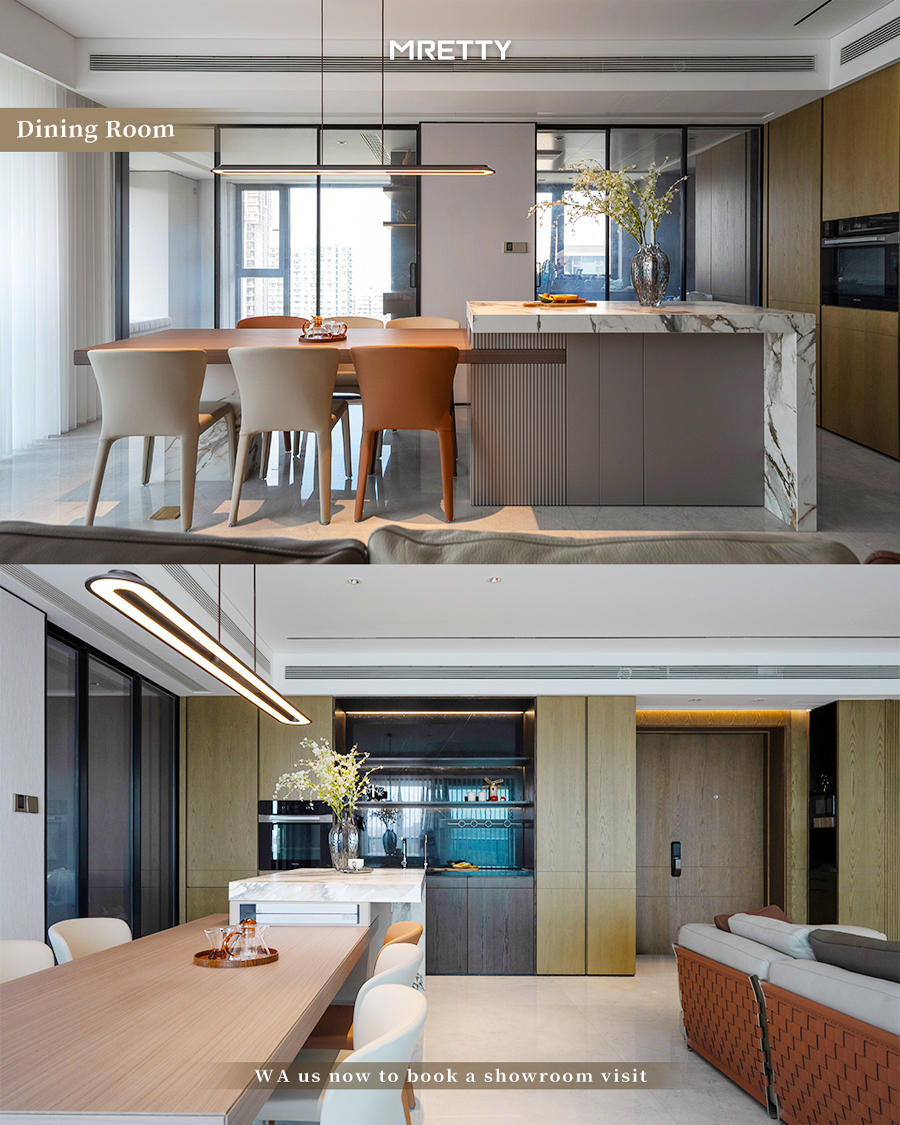
From "Restoration" to "Elevation": Integrating Carpentry Restoration with MRETTY Bespoke Joinery
Restoration should not be the endpoint, but the starting line of design. This is MRETTY's core philosophy and what distinguishes our approach to carpentry restoration for heritage home renovation and bespoke whole-home joinery solutions from other companies.
We don't just fix old things; we think about how to make them "live" more brilliantly in a new space. A few months ago, we designed a project for a landed property client who had a very aged set of wall paneling. Despite minor flaws, the wood quality was exceptional. Our solution was neither demolition nor simple repair. After restoring its surface, we designed a complete set of MRETTY built-in TV consoles and storage systems around it. We used imported eco-friendly boards with carefully matched colors and textures, paired with German-imported premium hardware fittings. Ultimately, that old paneling became the visual focal point of the entire living room—a piece of art connecting past and present.
This is elevation through restoration. Through this approach, interior design integration becomes a reality, enabling seamless dialogue between historical elements and modern functions.
Integrating professionally restored historical woodwork with modern MRETTY bespoke furniture elevates a simple repair task into a design statement showcasing the owner's unique taste.
Singapore Old Home Carpentry Repair: Special Considerations for HDBs, Condos, and Conserved Properties
Singapore's housing landscape is diverse, ranging from mass-market HDB flats to high-end condominiums and precious conserved properties. Each type presents unique challenges and focuses for carpentry restoration.
Key Points for HDB Old Flat Carpentry Restoration
For HDB old flat carpentry restoration, especially units over 20 years old, the most common issues center on kitchen cabinets, built-in wardrobes, and doors. Due to limitations in early materials and craftsmanship, these woodworks are prone to veneer delamination and board swelling caused by moisture. Our HDB 3-room heritage flat carpentry restoration checklist prioritizes inspecting these "hotspots." The key is determining if the substrate is salvageable. If it's just a finish issue, re-veneering is possible; if the substrate has crumbled, replacement with more durable MRETTY custom cabinetry is recommended.
🖊️ [Human Touch Zone · Local Case Study] Briefly describe an HDB cabinet restoration/replacement project you handled in Ang Mo Kio or Queenstown, highlighting the challenges and solutions. (Recommended word count: 80-150 words | E-E-A-T: Authority)
Condominium Wooden Furniture Refurbishment Guide
Condominium wooden furniture refurbishment focuses more on value and aesthetics. Many condo owners possess high-quality wooden flooring or hardwood furniture made of teak or oak. The emphasis here is on refined restoration. For example, in our guide to restoring old teak furniture, we stress avoiding over-sanding to prevent damaging its precious oily patina. For wooden floors, the assessment determines whether partial repair or full sanding and refinishing is needed. I always advise clients that a good piece of hardwood furniture is worth the investment in restoration; its lifespan far exceeds imagination.
Conserved Property Timber Structure Restoration Steps
This is the "crown jewel" of carpentry restoration. Handling conserved property timber structure restoration, such as pre-war shophouse timber staircase restoration steps, follows the primary principle of "repairing the old as it was." Projects must strictly adhere to the Urban Redevelopment Authority (URA) guidelines. This typically means:
- Detailed Survey and Documentation: Recording every detail with drawings and photographs before restoration.
- Material Matching: Sourcing materials identical or similar to the original wood for replacements whenever possible.
- Traditional Craftsmanship: Employing traditional joinery like mortise and tenon instead of relying heavily on nails and glue.
- Structural Reinforcement: Using modern techniques to reinforce internal structures without compromising the external appearance.
How to Maintain Restored Woodwork in Singapore's Humid Climate?
Restoration is just the first step; proper maintenance ensures lasting results. In Singapore, combating humidity is key. First, ensure good indoor ventilation. Second, place dehumidifying boxes or small electronic dehumidifiers in enclosed spaces like wardrobes and cabinets. Third, always clean with a wrung-out damp cloth, avoiding standing water. Finally, conduct a comprehensive visual inspection at least once a year, especially after the monsoon season, checking for signs of mold or termite control warnings.
❌ Common Mistake: Replacing original wooden beams entirely with modern concrete or metal structures to make them "more sturdy" during conserved property restoration, destroying the building's authenticity and historical value.
✅ Better Approach: Strictly follow the restoration guidelines of the Building and Construction Authority (BCA) and URA, adopting the "minimum intervention" principle—performing professional reinforcement and restoration while preserving the vast majority of the original timber structure.
From HDB flats to conserved properties, each housing type in Singapore presents different requirements for carpentry restoration, necessitating tailored assessment criteria and restoration strategies.
Conclusion: Breathe New Life into Your Heritage Home
The woodwork in a heritage home is the soul of the house. It carries memories and embodies the passage of time. Through professional carpentry restoration for heritage home renovation, we are not just fixing an object; we are continuing a story.
Whether you choose to meticulously restore an old window or integrate historical elements with MRETTY's modern design philosophy, the key lies in making wise, knowledge-based decisions. I hope this guide provides clarity and helps you avoid detours on your renovation journey.
Ready to begin your heritage home renovation journey?
[Download our "Heritage Woodwork Self-Assessment Checklist"] (#) to take your first step.
[Subscribe to MRETTY's Monthly Insights] (#) for more high-end home design inspiration.
- [Contact MRETTY Design Experts Now] (#) for a free preliminary online consultation, and let's explore the infinite possibilities for your home together.
About the Author
Hanson is a Whole-Home Designer at MRETTY. He possesses over 14 years of experience in high-end kitchen and cabinetry system design and project management, specializing in complex projects for Condominiums and Landed Houses. Hanson firmly believes that good design is the resonance of function and aesthetics. Proficient in various styles including Modern Minimalist, Italian Light Luxury, and French Elegance, he is dedicated to creating timeless living spaces for clients in every project. By precisely manipulating space, materials, and light, he crafts homes that showcase personal taste while carrying family memories.
FAQ
How much does carpentry restoration for heritage home renovation cost?
In Singapore, carpentry restoration costs vary significantly. Minor repairs (like door frame filling) may range from S$300 - S$700; refinishing a solid wood door costs approximately S$900 - S$2,500; while major structural reinforcement projects can start from S$15,000. Final pricing depends on the extent of damage, wood species, craftsmanship complexity, and site accessibility.
How do I determine whether to repair or replace old timber windows and doors?
First, check for structural issues: wood rot, termite infestation, or structural looseness. If there are no safety hazards, evaluate functionality and aesthetics. If issues are limited to operational smoothness or peeling paint, restoration is usually more cost-effective and preserves historical value. If the structure is compromised or you desire a unified home style, consider a brand-new custom solution like MRETTY.
How do I maintain restored woodwork in Singapore's humid climate?
Moisture control is key. Ensure good indoor ventilation and use dehumidifiers in enclosed spaces like wardrobes. Clean with a wrung-out damp cloth, avoiding standing water. Conduct a thorough visual inspection annually, especially after the rainy season, checking for mold spots or signs of termites, and address them promptly.
Where can I find reliable carpenters in Singapore?
You can search through interior design firms, professional renovation contractors, or online platforms. A more reliable method is to choose a company like MRETTY that offers integrated services from design and assessment to construction. We not only have a network of experienced carpentry teams but also ensure the restoration work aligns seamlessly with the overall home design aesthetics, providing comprehensive project management and quality assurance.
MRETTY: Premium Bespoke Kitchen & Cabinet Systems Provider in Singapore
