
 Singapore
 China
China
TL;DR
A professionally designed built-in TV console can add over S$15,000 to a condo's resale value, a 2025 Singapore property survey found. It works by creating a polished, high-end look. It also maximizes functional space, especially in compact HDB and condo layouts. The key is integrating the design with your home's entire aesthetic.
This guide is contextualized for Singapore’s local renovation and private property market (HDB / Condominiums / Landed Properties). From design philosophy and material selection to real-world case studies, construction workflows, and budgeting, this article helps you systematically determine: whether a built-in TV feature wall suits your home, how to execute it without costly mistakes, and where your money is best spent.
Your Top Concerns, Answered First
How Much Does a Built-In TV Console Cost in Singapore?
Custom built-in TV console costs fluctuate based on size, materials, and complexity. Below are the most common ranges we (MRETTY) discussed with clients in mid-2026:
- HDB (BTO / Resale): S$2,500 – S$5,500
Typically covers a standard low TV console (~2.4m wide) using quality laminate finishes and reliable hardware.
- Condominium: S$4,000 – S$9,000
Often involves more complex forms, potentially integrating sintered stone feature walls, in-built LED strips, and expanded storage.
- Landed Property: From S$8,000
Commonly a full-height floor-to-ceiling TV feature wall, spanning greater widths with premium materials (high-grade wood veneer / custom finishes).
Key Cost Drivers: Length and height, whether it is "floating / half-height / full-wall," panel materials (laminate most economical, natural stone/premium sintered stone most expensive), and hardware grade (e.g., Blum / Hettich increases budget but dictates durability).
Is a Built-In TV Console Worth It for HDB Flats?
Yes—and it is often one of the most cost-effective investments with the highest perceived upgrade in a renovation. It solves two major pain points in HDB living rooms: insufficient storage and the perception of limited space:
- Built-ins conceal routers, gaming consoles, set-top boxes, and power sockets entirely.
- Through "tailored-to-ceiling / to-edge / floating" designs, visuals are cleaner, making the living room feel larger.
- Professional execution routes all cabling through hidden rear channels, eliminating spiderweb wires.
1) The Philosophy of "Whole-Home Integration": The TV Console Is Not Just a Wall
Your built-in TV console is essentially the "visual rudder" of your living room: it governs circulation, proportion, and overall ambiance.
Previously, many treated it as a standalone purchase. Today, the more mature interior design approach in Singapore is: the TV console must integrate into the home’s narrative. It is not an isolated cabinet; it is part of your home’s "design DNA."
At MRETTY, we first clarify the home’s lines, material palette, and color logic: the console’s finish, grooves, metal accents, and LED color temperature should "dialogue" with the entry shoe cabinet, dining display area, or corridor side cabinets—not contradict them.
Practical Case Study: A Tampines BTO client wanted a dark walnut TV console, but the rest of the home leaned toward light oak. Instead of forcing a stark contrast, we introduced a thin light oak trim along the top edge of the dark console as a transition—the two zones immediately "breathed" together, appearing intentional rather than accidental.
- ❌ Common Mistake: Screenshotting a "good-looking TV wall" from Pinterest without considering whether it matches your flooring, door frames, curtains, or lighting color temperature.
- ✅ Better Approach: Finalize the home’s primary tone and two core materials first (e.g., light wood + micro-cement grey / dark wood + matte black metal), then "write" them into the TV console to form a unified vocabulary.
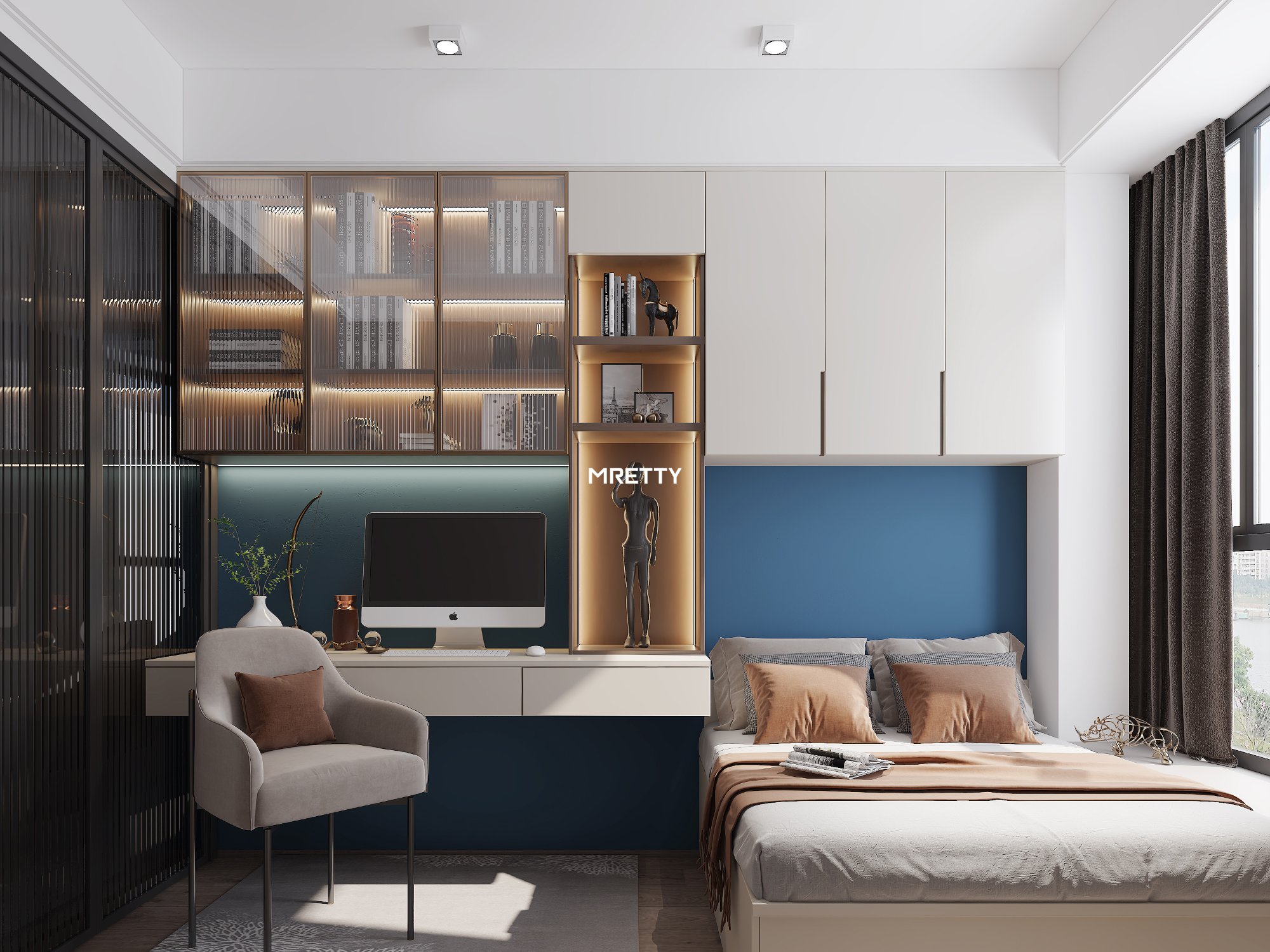
2) Material Deep Dive: What Lasts in Singapore’s Humid Climate
Singapore’s year-round heat and humidity mean wrong material choices = bubbling, cracking, and darkening edges within two years. Here is a thorough breakdown of the three most common options:
| Material | Suited For / Style | Performance in Humidity | Relative Cost Factor |
| :--- | :--- | :--- | :--- |
| Laminate (High-Pressure Laminate) | Budget-conscious, high-traffic use, mainstream HDB/Condo | Dense, non-porous surface; scratch-resistant, moisture-stable | 1× (Baseline) |
| Sintered Stone (Large Slab) | "Luxury condo" feature wall, near-zero maintenance | Fully waterproof, heat-resistant, stain-proof (resists soy sauce/coffee) | ~1.3× – 1.5× (vs. laminate) |
| Natural Wood Veneer | Classic, warm, high-end aesthetic | More sensitive to humidity; may develop fine cracks seasonally in non-air-conditioned areas | ~1.2× – 2× |
Additional Notes:
- Premium laminate brands (like Lamitak, EDL) are the "workhorses" of most living room carpentry in Singapore—non-porous surfaces resist moisture and expansion.
- Sintered stone/large slab creates a powerful luxury built-in TV console, but costs typically start 30%–50% higher than laminate solutions. Crucially, it is best used for the "feature wall expanse," paired with laminate for lower cabinets to manage budget.
- My contrarian view: Unless you run air conditioning consistently and are meticulous with maintenance, natural wood veneer on a built-in TV wall requires caution (especially in non-air-conditioned living rooms). In many cases, high-fidelity wood-grain laminate or engineered veneers offer superior stability suited to Singapore’s reality.
- ❌ Common Mistake: Choosing based solely on "looking good under showroom lights."
- ✅ Better Approach: Bring material samples to your home; view them under your actual lighting. Discuss explicitly with your designer how the material performs during humid seasons, cleaning frequency, and in pet/child scenarios.
3) Design Case Studies: Popular Custom TV Console Solutions in Singapore
Below are four directions we recently executed, corresponding to different housing types and budgets:
Case 1 | Minimalist Feature Wall (HDB BTO) — Floating Half-Height + Fluted Back Panel
A Punggol couple wanted a "clean, expansive" look. We designed a 30cm high floating low console with a vertically fluted back panel in matte white laminate. All wiring ran through hidden rear channels—zero visible cables. Project Cost: ~S$4,200.
Case 2 | Storage Media Wall (Condo) — Half-Height / Partial Floor-to-Ceiling + Mixed Open/Closed Storage
An Orchard-area family prioritized "hiding clutter while looking premium." We created a near-full-height integrated media wall: closed cabinets used Blum push-to-open hardware, open shelves featured LED backlighting, finished in a deep grey Fenix-series laminate (fingerprint-resistant, mimicking matte lacquer).
Case 3 | Luxury Focal Point (Landed / Sentosa Cove Style) — Sintered Stone Back Panel + Low Console Contrast
For a "striking first impression" effect: the back panel used large-format Calacatta-look sintered stone, anchored by a low console in dark wood veneer, creating material contrast. This luxury built-in TV console became the room's centerpiece.
Case 4 | Large-Scale Full Wall (Landed Property) — Stabilizing Presence with "Low Center of Gravity"
A Bukit Timah landed home featured a living room with nearly 5m ceilings. We used dark wood-grain vertical fluting for the full-height feature wall to draw the eye up, but deliberately designed the TV console itself as a low, substantial light-grey platform to "anchor" the visual weight to the ground, preventing the wall from feeling top-heavy.
- ❌ Common Mistake: Cramming the feature wall with grids, recesses, and three or more textures—trying to "show off" everything.
- ✅ Better Approach: Retain only one hero element (fluting, stone, or an accent color); let everything else recede as supporting cast—less is more luxurious.
4) Critical Execution Details: Cable Management & Storage Planning (Where Quality Shows)
No matter how beautiful, visible wires instantly degrade a TV wall’s perceived quality. Professional cable management is where customization justifies its cost.
How to Hide Wires Completely?
During the detailing phase, we design a "double-layer back panel": reserving an approximate 50mm cavity for power, HDMI, and network cables to run through hidden channels. Sockets are recessed into the cabinet body (not exposed on the wall). For devices unreachable by remote, IR repeaters (infrared extenders) solve the issue.
Regarding storage, a truly functional integrated media unit zones the space:
- Lower console core: Hosts/gaming consoles/audio equipment (ensure ventilation slots or grilles).
- Upper/side enclosed cabinets: General clutter, documents, children’s items.
- Open display shelves: Decor/books, enhanced with LED strips for depth.
Prioritize hardware like Blum soft-close hinges/slides (costing 15%–20% more than generic brands, but vastly superior in lifespan and tactile feel).
The detail I am most thanked for, yet rarely requested upfront: reserving a "future-ready conduit."
A client from two years ago later upgraded to a new gaming console requiring an extra cable. Because we had预留 (reserved) a hollow conduit from the cabinet to the TV mount location, adding the cable took ten minutes—no drilling, no patching.
- ❌ Common Mistake: Failing to account for "next-gen console/new audio" wiring needs or ventilation.
- ✅ Better Approach: Reserve at least one spare conduit + provide discreet ventilation for electronics cabinets; separate power and low-voltage wiring for safety.
5) From Factory to Home: MRETTY’s Custom Workflow
Many ask: How is a custom TV console managed? Will it drag on? Who guarantees quality?
MRETTY utilizes a direct-from-own-factory model, offering greater transparency and a shorter accountability chain:
- Needs Discussion & 3D Renderings: Discuss lifestyle, style, and budget first, then produce complete 3D visualizations—you see the final proportions, panel gaps, lighting positions, and material combinations.
- Precision Manufacturing (Factory): Upon confirmation, drawings enter MRETTY’s 15,000㎡ smart factory. CNC machining ensures miters, trims, and drillings align within sub-millimeter tolerances.
- Pre-Assembly & QC: Components undergo "dry-fit matching" in the factory to minimize on-site dust and rework risks.
- On-Site Installation & Handover: Completed by our internal team: installation, leveling, lighting checks, and detailing—finishing not just the cabinet, but the "delivery experience."
- ❌ Common Mistake: Engaging opaque subcontracted carpenters with vague quotes and unclear milestones, leading to forced fixes for mismatched dimensions later.
- ✅ Better Approach: Choose a factory-integrated partner like MRETTY, where there is a single point of accountability.
6) Expert Verdict: Built-In vs. Freestanding TV Consoles—Which Offers More Value?
On the surface, freestanding TV consoles seem more flexible and cheaper: buy and place immediately.
But viewed long-term, hidden costs are often higher:
- Wasted Space: Gaps inevitably exist between the unit and the wall; tops collect dust, bottoms become "dust repositories."
- Poor Fit: Shelf heights are wrong (cannot fit soundbars/hosts), depth insufficient (wires protrude), width fails to span the wall (awkward side gaps).
- Unsolvable Wiring: Freestanding units rarely achieve true "full concealment."
- Resale Perception: Cheap freestanding units can make a living room feel pieced together and dated. A proportionally correct built-in feature wall makes the unit feel more "complete."
A well-executed built-in TV console is fundamentally an asset maximizing every centimeter: tailored to your devices, your circulation, your aesthetics. And as referenced earlier by the 2025 property observation: in suitable layouts and market segments, it supports resale perception and pricing justification (provided the design avoids excessive personalization and maintains quality craftsmanship).
7) Frequently Asked Questions (FAQ)
Q: Won’t it feel oppressive? My living room is small.
A: Quite the opposite—built-ins allow for "floating half-height + light back panels," offering a more breathable visual presence than bulky freestanding low cabinets. The key is proportion and negative space.
Q: What if I upgrade my TV size later?
A: Design the mounting zone with adjustable reinforced backing or预留 (reserved) expansion holes; include spare conduits, and upgrades are generally painless.
Q: Are sintered stone back panels very expensive?
A: Yes. But if budget is constrained, use a "composite approach" (partial stone / partial laminate) to achieve the effect with better cost control.
8) About the Author: Aida
Aida is a senior interior designer in Singapore, specializing in residential custom carpentry and whole-home integration for over 12 years. She believes: Good design is not about piling on forms, but about aligning storage, proportion, and living habits in one coherent system.
Sources: MRETTY internal project data (2025–2026), Lamitak, EDL, Blum, Hettich.
MRETTY: Premium Bespoke Kitchen & Cabinet Systems Provider in Singapore.
