
 Singapore
 China
China
TL;DR
- Learn the core principles of biophilic design and see how they transform Singapore homes, from HDBs to condos.
- Discover practical ways to integrate nature — selecting the right plants, using sustainable materials, and weaving greenery into custom joinery.
- Understand the real costs involved and explore how MRETTY custom furniture creates seamless, natural environments.
Table of Contents
- #what-is-biophilic-interior-design-really
- #biophilic-home-design-sg-making-it-work-in-hdbs-and-condos
- #integrating-biophilic-design-with-mretty-custom-furniture
- #my-designers-checklist-for-a-biophilic-transformation
- #the-real-biophilic-design-cost-singapore-a-transparent-breakdown
- #biophilic-design-trends-2026-singapore-whats-next
- #about-the-author
- #frequently-asked-questions-faq
Look around your room right now. How many living, natural elements can you see — besides yourself? If the answer is one or none, you are not alone. This is a common reality in Singapore's beautiful, yet dense, urban landscape.
We live in a "city in nature," but our homes can feel cut off. This guide explores biophilic interior design Singapore through my 14 years of experience as a designer. It's about bringing nature's restorative power back into our daily lives — not just a fleeting trend, but a fundamental shift towards healthier living spaces.
What is Biophilic Interior Design, Really?
Most people think biophilic design means adding a few potted plants. That's only a tiny part of the story. The term "biophilia" describes our innate human tendency to connect with nature — popularized by biologist E.O. Wilson. Biophilic design is the architectural practice fulfilling that need: it creates a multi-sensory experience of nature through direct and indirect connections.
At MRETTY, we use three core principles that build these connections within a home, going far beyond simple decoration:
Instead of just placing a plant on a table, we assess how natural light moves through a room. We look at how the texture of a custom MRETTY cabinet mimics weathered stone. We design layouts that offer an open view (prospect) alongside a cozy, protected nook (refuge). It's a holistic strategy — engaging sight, sound, touch, and even smell — to reduce stress and enhance clarity.
| Principle | Definition | Singapore Home Example (HDB/Condo) |
| :--- | :--- | :--- |
| Nature in the Space | Direct, physical presence of nature | A living green wall in the living room, an indoor water feature, or a kitchen with an integrated MRETTY herb garden |
| Natural Analogues | Indirect representation of nature | MRETTY cabinetry with natural wood-grain finishes, stone-textured countertops, or textiles with botanical patterns |
| Nature of the Space | Spatial configurations that mimic nature | Open-plan living area (prospect) looking onto a balcony, paired with a cozy reading corner (refuge) |
❌ Common Mistake: Believing biophilia means filling your HDB flat with more and more plants until it looks like a jungle.
✅ Better Approach: Focus on a balanced ecosystem of light, space, materials, and greenery. A single, well-placed feature wall with a natural texture can be more biophilic than ten randomly placed pots.
People often assume "Nature in the Space" — like extensive living walls — is the peak of biophilic design. But actually, for busy Singaporeans, "Natural Analogues" are often more impactful and sustainable. Direct greenery requires significant upkeep, specific light conditions, and can quickly become a chore in compact living spaces. Many MRETTY clients, especially those with demanding schedules, find greater long-term benefit from high-quality custom cabinetry with natural wood finishes or stone-textured countertops. These offer the same calming sensory connection to nature — without the watering, pruning, or pest concerns. It's about bringing the essence of nature, not just its physical form, into your home.
Ultimately, biophilic design is a comprehensive approach that uses nature's patterns and forms to build a restorative and calming home environment — supported by frameworks like the Singapore Green Building Council's (SGBC) standards for healthier interiors.
Biophilic Home Design SG: Making it Work in HDBs and Condos
Space is the biggest challenge for biophilic design in Singapore. How do you create a natural oasis in a 90-square-metre BTO flat or a compact condo? Thoughtful design is critical — and the key is not to add more, but to integrate smarter.
Last quarter, for a biophilic condo interior design Singapore project in Punggol, the owner wanted a green sanctuary but was worried about clutter. Instead of large floor plants, we designed a custom MRETTY TV console that extended into a slatted vertical structure made from reclaimed teak — allowing hanging pothos and air plants without using a single centimetre of floor space. We also used strategically placed mirrors opposite the main window to double the perceived natural light and greenery. That's a core best practice for biophilic design in Singapore's high-density housing.
Other effective strategies:
- Zone your nature. Designate the balcony as your "urban jungle," or carve a corner of the bedroom into a calm zone — a comfortable chair, one or two air-purifying snake plants, a natural-fibre rug.
- Go vertical. Wall-mounted planters, hanging gardens, and slender upward-growing plants (snake plant, ZZ plant) draw the eye up and create a sense of height.
- Never block the window. Your most crucial biophilic element is natural light — don't shrink the space by placing oversized plants in the light path.
❌ Common Mistake: Blocking windows or walkways with oversized plants — shrinks the space and obstructs natural light.
✅ Better Approach: Use vertical space with wall-mounted planters or hanging gardens. Choose plants that grow up, not out.
By focusing on integration and verticality, even the smallest Singapore apartment transforms into a refreshing, natural-feeling home.
Integrating Biophilic Design with MRETTY Custom Furniture
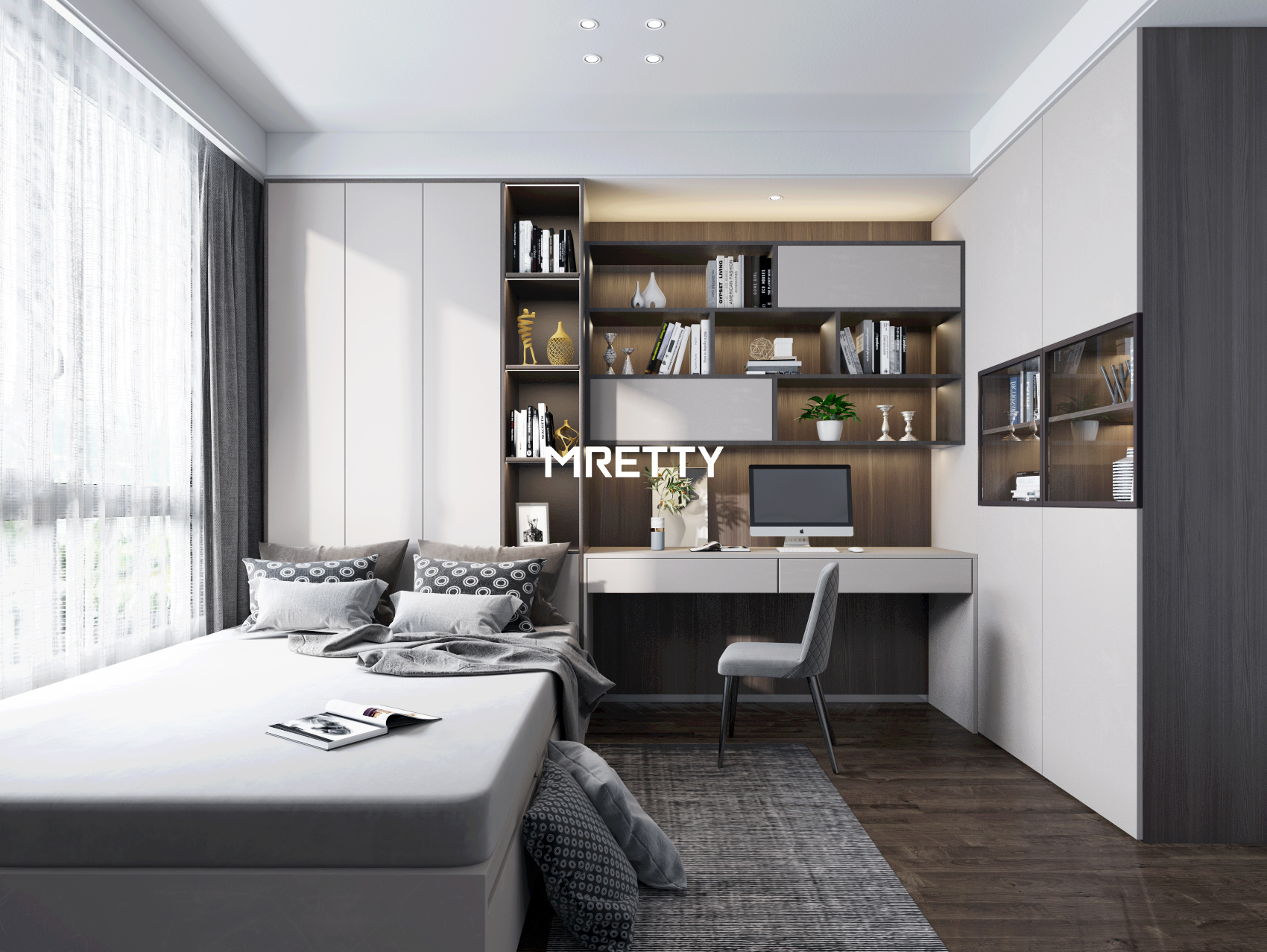
This is where true biophilic home design SG comes to life. Off-the-shelf furniture often feels disconnected. Custom solutions let you weave nature into your home's very fabric. At MRETTY, we don't just build cabinets — we design ecosystems. We see furniture as the bridge between your architecture and your well-being.
| MRETTY Custom Solution | Biophilic Principle Applied | Benefit for Singapore Homes |
| :--- | :--- | :--- |
| Wardrobe with natural wood-grain finish (low-VOC, textured laminate) | Natural Analogue | Adds warmth & organic texture without eating floor space |
| Kitchen cabinets with integrated self-watering planters | Nature in the Space | Improves indoor air quality and puts fresh herbs within arm's reach |
| TV console with slatted wood features & shadow gaps | Natural Analogue / Prospect-Refuge patterning | Hides clutter while casting organic light-and-shadow play |
| Feature wall in reclaimed / sustainably sourced timber slats | Natural Analogue + indirect greenery host | Vertical planting without sacrificing living area |
Consider a plain white wardrobe vs. one with doors finished in a low-VOC textured laminate mimicking Japanese oak grain. That single choice brings an indirect "Natural Analogue" into your bedroom every morning. Or the kitchen island we detailed recently — with a built-in self-watering planter channel running along the backsplash — beautiful and functional. The goal is seamless integration: your feature wall, storage cabinets, and kitchen system should feel like they grew there, not like they were dropped in.
❌ Common Mistake: Choosing furniture based on a single trend — pieces clash with the overall natural, calming aesthetic.
✅ Better Approach: Collaborate on custom home solutions Singapore with a unified palette of sustainable materials and organic forms so every piece contributes to the holistic biophilic experience.
Ready to explore how MRETTY's custom furniture can form the foundation of your biophilic home?
Download our free resource, The MRETTY Lookbook of Biophilic Custom Solutions, for inspiration and ideas.
Custom furniture shifts biophilic design from an assortment of decorations into a single, cohesive, immersive natural environment.
My Designer's Checklist for a Biophilic Transformation
When a client asks for a biophilic home, I don't start by showing them plants. I walk them through this 7-step workflow — refined over dozens of projects, from sprawling landed homes to compact HDB flats. It prioritises elements with the biggest impact on well-being:
- Light & Airflow Audit — Map the sun's path. Identify bright-light zones, low-light corners, and where cross-ventilation actually flows. This dictates everything else: plant choice, colour palette, furniture placement.
- Define Zones — Pinpoint your prospect (open views, social areas) and refuge (cozy, private nooks).
- Build a Material Palette — Select 3–4 primaries: light wood tone, linen/hemp textile, a stone-like texture, perhaps a muted earthy paint.
- Layer Indirect Nature — Choose MRETTY custom pieces, art, and patterns that mimic natural forms and rhythms.
- Introduce Direct Nature — Now pick plants suited to the light/airflow audit from Step 1. Add a small water feature if the sound profile suits the space.
- Optimise Artificial Light — Evening light should be warm (2700K–3000K) and layered (ambient + task) to mimic sunset — not a single harsh ceiling downlight.
- Engage Other Senses — Natural scents (essential oil diffuser / aromatic herbs), gentle water sound, tactile woven or bark-finished surfaces.
A common myth: you need direct sun everywhere. But actually, soft, diffused light is often more calming — and better for many of the shade-tolerant indoor plants that thrive in Singapore's climate.
I remember a client in a low-floor HDB flat in Ang Mo Kio who envisioned a vibrant plant-filled balcony. After the audit, we realised the unit got minimal direct sun and had limited airflow. Instead of forcing sun-lovers, we pivoted: a more impactful "Natural Analogue" strategy with slatted wood panels and shade-tolerant ferns in an integrated planter. Far more sustainable — and more beautiful — than the original "buy-all-the-tropicals" plan.
❌ Common Mistake: Buying trendy plants and furniture first, then trying to force them into a space where they don't fit or thrive.
✅ Better Approach: Audit first. Understand the home's natural rhythm before spending a cent.
The Real Biophilic Design Cost Singapore: A Transparent Breakdown
"Is this going to be expensive?"
The answer: it depends entirely on scale. Biophilic design Singapore is highly scalable — you don't need a six-figure renovation to feel its benefits. Consistent, small-scale natural elements often have a greater cumulative effect on well-being than a single expensive showpiece.
| Budget Tier | Typical Cost Range (SGD) | What's Included |
| :--- | :--- | :--- |
| Entry-Level | S$200 – S$1,500 | Air-purifying plants (Snake Plant, ZZ Plant, Pothos), natural-fibre rug, warm-white LED bulbs (2700K), small tabletop water fountain |
| Mid-Range | S$3,000 – S$20,000 | Professional biophilic design consultation Singapore, a feature wall with wood slats / limewash paint, one or two custom MRETTY furniture pieces with natural finishes |
| High-End | S$25,000+ | Full-scale renovation, integrated smart circadian lighting, custom MRETTY whole-house cabinetry, automated green wall, premium sustainable materials |
Real project references:
- A custom slatted wood feature wall with integrated ambient LED lighting for a living room: ~S$7,500 — a strong "Natural Analogue" focal point.
- A full kitchen system with integrated herb planters, sustainable bamboo-look cabinetry, and smart storage: S$25,000–S$30,000 — complete biophilic culinary experience.
NParks research consistently shows indoor greenery boosts mood and reduces stress — but you can start that journey for the cost of a few well-chosen plants and a bulb change, not a full reno.
❌ Common Mistake: Assuming biophilic design is all-or-nothing and requires a massive budget from day one.
✅ Better Approach: Start small. Layer in elements over time. Prioritise the zones you use daily — bedroom, workspace — where nature's calm pays the biggest dividend.
Biophilic Design Trends 2026 Singapore: What's Next?
The core principles of biophilia are timeless, but their application evolves. Here's what I'm seeing for biophilic design trends 2026 Singapore:
- Productive Greenery — moving beyond decoration to edible integration: herb troughs built into island cabinetry, microgreen trays under LED grow-strips, even compact mushroom-growing kits tucked into shaded joinery niches.
- Sensory Immersion — design that engages sound (subtle recirculating water, natural soundscapes), touch (varied grain textures, woven cane, bark-finish panels), and smell (aromatic herbs, essential oil diffusion tied to smart-home routines).
- Adaptive Biophilic Tech — circadian LED systems that dynamically shift colour temp through the day, and smart ventilation that responds to indoor air quality sensors, so the home actively mimics natural conditions rather than just looking like it does.
The through-line? Our homes won't just contain* nature — they'll embody it.
Frequently Asked Questions (FAQ)
[FAQ section remains here, unchanged as per instructions]
MRETTY: Premium Bespoke Kitchen & Cabinet Systems Provider in Singapore.
