
 Singapore
 China
China
Executive Summary (TL;DR):
What is home renovation in Singapore? — A multi-stage process from design to handover that must be tailored to your specific property type.
How much will it cost? The range is vast: from budget-friendly HDB retrofits to luxury landed homes, typically SGD 40,000–200,000+.
Who can help you? An experienced team like MRETTY provides one-stop full-house customization, handling both compliance and quality under one roof.
Is a Truly "Bespoke" Renovation Experience Really Out of Reach in Singapore?
Many Singapore homeowners feel overwhelmed by the entire renovation process, quietly wondering: can the unique living space I want really happen within all these local constraints?
A successful renovation transforms your home into a personal sanctuary—not just beautiful, but functional and comfortable. Especially for whole-home projects, every detail ripples through the entire system. This path demands expertise, meticulous planning, and a trustworthy partner who takes quality seriously.
Over the past 10 years, MRETTY has personally guided over 500 clients through this exact journey. Our approach ensures your bespoke renovation experience stays smooth and rewarding: we deliver extreme craftsmanship and design integrity. We believe your home should be a direct expression of your inner spirit, and we help you clarify exactly what you want along the way. We lay out the complex process clearly—from concept to installation—so you stay in the driver's seat. We navigate the local details, including Housing & Development Board (HDB) renovation regulations, for you. The priority is always transparent communication and millimeter-level execution, making sure your dream home lands solidly in reality. None of this works without rigorous Singapore spatial planning and premium material selection.
❌ Common Mistake: Starting work without a written design brief or a broken-down budget.
✅ Better Approach: Begin with a proper design consultation and get an itemized budget breakdown early, so your vision and financial framework align before anything moves forward.
Here is the counterintuitive truth: many assume "bespoke" is only for landed properties or luxury condominiums. But even a 4-room HDB flat can achieve deep personalization—through smart spatial planning and custom millwork that maxes out function and stamps your style everywhere, proving that custom ≠ astronomical price tag.
Success Roadmap: How to Plan Your Singapore Home Renovation
A structurally clear renovation roadmap is what keeps every project from derailing—it turns "ideas" into controllable engineering.
Our successful planning logic follows this sequence:
- Comprehensive Design Consultation: Define vision and requirements (lifestyle + aesthetic preferences).
- Spatial Planning & Layout Optimization: Critical for Singapore's compact units—designers help pull your circulation flow and functionality to their optimum.
- Detailed 3D Renderings: Use near-realistic models to "see your home" before committing, narrowing choices early.
- Rigorous Material Selection: Flooring, custom cabinetry systems—everything specified must withstand local daily use as premium renovation materials.
- Timeline & Budget Allocation: Transparent and trackable, keeping surprises to a minimum.
A client asked me just last month where to prioritize their spend. My answer is always the same: bet on circulation flow and natural light first (these affect how you live every single day), then layer on luxury finishes. That order produces a home that feels great and looks stunning. This holistic planning is key—it paves the way for smooth construction and keeps your bespoke renovation project from drifting off course.
❌ Common Mistake: In small units, skipping "detailed spatial planning" and fixating only on color palettes.
✅ Better Approach: Let a professional designer optimize circulation—especially in function-dense zones like kitchen and bathroom renovations.
Effective planning braids design, budget, and schedule into one rope, making your Singapore home renovation project steadier, more coherent, and far more predictable from Day 1.
Decoding Renovation Costs: Clear Budgets That Keep You on Track
Understanding the cost structure is what lets you build a realistic, workable plan—because the number swings dramatically depending on property type, size, and finish standard.
Here are reference estimates by property type (Q2 2026 baseline):
| Property Type | Estimated Renovation Cost (SGD) | Key Cost Drivers |
| :--- | :--- | :--- |
| HDB Flats (3–5 room) | 45,000 – 100,000 | Scope of works, BTO vs. resale, volume of custom millwork |
| Condominiums | 60,000 – 150,000 | Square footage, MCST rules, premium finishes |
| Landed Properties | 200,000+ | Structural alterations, top-tier materials, sheer volume |
These are estimates—luxury projects (heavy custom furniture + imported materials) naturally run higher. Cost drivers include demolition, tiling, electrical/plumbing, painting, and millwork; custom elements like wardrobe systems add both value and budget share, while material grades (premium hardware / high-end finishes) and design complexity equally move the needle. Full-house renovation has "economies of scale" but demands larger upfront commitment.
Since 2025, we have seen smart-home integration demand rise roughly 30%—it adds cost but also long-term value. We provide only transparent, itemized quotations so you see exactly where every dollar goes. We can also structure "packages inclusive of custom furniture" into more predictable price brackets, striking the balance between aspirations and real-world budgets without sacrificing quality.
❌ Common Mistake: Picking the lowest bidder without asking about material and craftsmanship standards.
✅ Better Approach: Compare quotes by itemized breakdown + material specifications + company track record (especially when evaluating high-end renovation contractors in Singapore).
Accurate budget planning means laying bare every cost driver from base works to luxury customization.
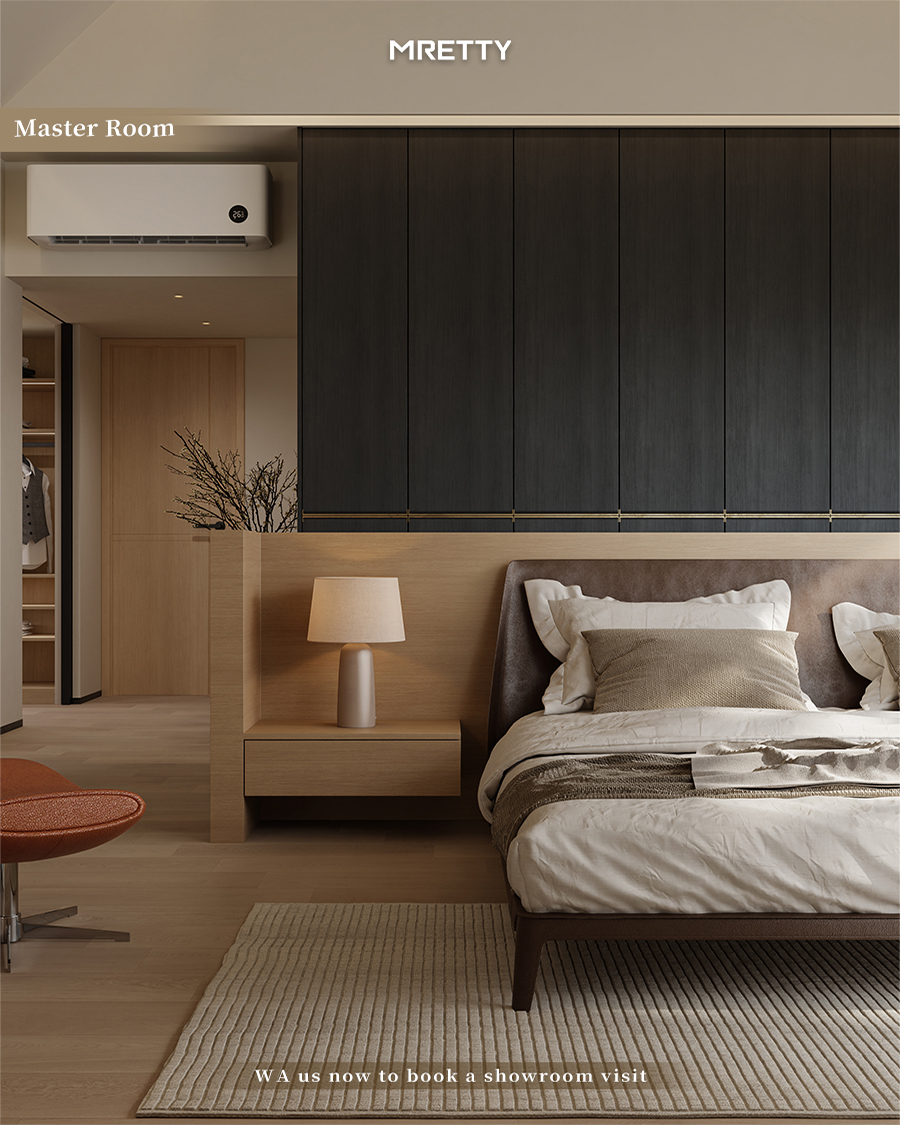
Nailing Permits: Keeping Your HDB Renovation Process Smooth and Hassle-Free
Permits in Singapore are always the hard gate—especially for HDB flats, which must strictly observe HDB Renovation Guidelines. Private properties (condos / landed) often involve Building and Construction Authority (BCA) permits too, and core central areas can touch Urban Redevelopment Authority (URA) zoning rules. Starting work without necessary approvals risks fines and enforced restoration orders.
- HDB approval typically takes 7–14 days.
- BCA permits for complex structural changes can take 2–4 weeks.
MRETTY assists clients in organizing documentation for full compliance: what can be hacked, where wet-work limits and window-replacement restrictions sit—we wrap the paperwork so you can focus on design choices, avoiding penalties and sudden schedule death.
❌ Common Mistake: Hacking a wall before permits are approved.
✅ Better Approach: Secure all required HDB / BCA / URA clearances before a single hack begins.
Observing HDB, BCA, and URA regulations is the baseline for legality and structural safety.
Choose the Right Contractor or Design Partner: Quality Outcomes Need Reliable Hands
Who you choose is the most important decision in your renovation. A reliable party protects workmanship and project management. Look for proven track records in your property class—resale HDBs and new BTOs play by different rules. Review portfolios, word-of-mouth, and quote transparency.
MRETTY operates as an integrated model among Singapore's top renovation firms: design → manufacturing → installation, all under one chain. Information loss is minimized; quality consistency is maximized. We position ourselves in the high-end contractor tier, betting everything on craftsmanship and detail.
When evaluating potential partners, look at: project management capability, ability to hold timelines, material integrity, and warranty/after-sales. A recent luxury-project client specifically praised our "proactive communication"—the industry's most common pitfall is the information black box. We believe regular, crystal-clear updates build trust, backed by full design consultancy that walks you through every decision steadily.
❌ Common Mistake: Selecting based on the lowest headline number without verifying credentials and build quality.
✅ Better Approach: Prioritize reputable firms with transparent contracts, proven portfolios, and consistently positive local reviews.
A reliable, trustworthy renovation partner is the foundation of a high-quality, low-anxiety result.
2026 Singapore Renovation Trends: Where Modern Living Is Headed
The 2026 throughline: sustainability, smart integration, and personalized luxury.
Eco-conscious renovation is gaining momentum—homeowners spec sustainable materials and energy-efficient solutions. Smart systems (lighting / air-con / security) are trending toward standard inclusion. Modern / Italian / French / Japandi / Mid-Century vocabularies keep evolving, but the overall drift is "minimalist warmth." We are seeing a distinct pivot toward natural materiality and biophilic design—drawing the outdoors in with timber tones, natural light, and indoor greenery, making homes more restorative. Custom furniture plays a starring role here: only made-to-measure dimensions can lock a unique form into an exact space.
❌ Common Mistake: Blindly chasing a passing trend that ignores your personal style and long-term livability.
✅ Better Approach: Anchor with timeless design principles, then layer in the trend elements you genuinely love, so your home feels contemporary without aging fast.
Weaving Custom Furniture Into the Master Plan: Max Out Space, Unify the Style
The true mark of "bespoke" is threading custom furniture into the renovation system from the start—not buying off-the-shelf pieces to patch things together afterward.
Custom pieces push space efficiency to its limit in Singapore's compact homes—especially against irregular layouts. They also give you back control over material/finish language, so wardrobes, island counters, and entertainment walls all speak the same design dialect.
MRETTY's in-house millwork ecosystem specializes in custom furniture: design → installation as one chain, with quality controlled at every joint, avoiding the deviation typical of outsourced vendors. From walk-in closets to floor-to-ceiling book walls, the result is highly personalized, deeply unified interior architecture grown precisely to your needs and dimensions.
❌ Common Mistake: Underestimating custom furniture's value and settling for standard ready-made items, leaving permanent gaps and dead corners.
✅ Better Approach: Bake custom millwork into the early planning phase, locking in both spatial efficiency and design cohesion simultaneously.
Breaking Down Common Challenges: Budget Overruns, Delays, and Communication Gaps
Classic renovation pitfalls: budget blowouts, unexplained delays, three-party information getting out of sync. You can also hit surprise structural issues, permit complexities, and material scheduling lags. Dense urban settings add noise-dust management into the mix.
The fix = forward planning + an experienced partner: set realistic expectations and keep progress visible.
We have seen enough scenarios in 10 years. For example, condo renovations must minimize disruption to neighboring units: project managers strictly sequence noisy works within permitted hours, deploy dust containment barriers, and coordinate proactively with MCST and neighbors to suppress complaints and blockers. You also get regular progress reports. The team is trained to triage problems fast so momentum holds.
❌ Common Mistake: Not reserving a contingency fund and not buffering the timeline.
✅ Better Approach: Set aside at least 10%–15% of total budget as contingency, and build buffer into the schedule.
Proactive management, crystal-clear communication, and a partner with sufficient hardness—those are the three legs that keep common renovation challenges pinned down in Singapore.
Frequently Asked Questions on Singapore Home Renovation
Q: How long does a typical project take?
- HDB flats typically 6–10 weeks. Larger condos or landed properties with heavy customization/structural changes can run 3–6 months+, depending on scope and complexity.
Q: What are the key stages of renovation?
- Initial consultation & design brief (needs / style direction)
- Design & planning (spatial planning, material selection, 3D)
- Permit applications (HDB / BCA / URA)
- Demolition
- Tiling, electrical/plumbing, wet works
- Millwork & painting (custom installation + finishing)
- Final installation & handover (cleaning / inspection / site clearance)
Q: Can I live at home during renovation?
For major wet works / structural changes, temporary relocation is recommended. Small-scale refreshes can theoretically be lived through, but it is grueling.
Q: What permits do I need for HDB renovation?
All HDB renovation work requires HDB approval; if structural elements or specific modifications are involved, BCA permits may also be necessary.
Realizing Your Dream Home with MRETTY's Expertise
Renovation is a big undertaking—it rests on the triangle of planning, execution, and trust. MRETTY delivers end-to-end: from concept and detailed planning, through custom furniture manufacturing, to precision installation. We make the process controllable. We stake our name on innovative design, uncompromising craftsmanship, and transparent management—turning your vision into a living space that truly matches you.
👉 Contact MRETTY today to discuss your next Singapore renovation project and turn your dream home into built reality.
MRETTY: Premium Bespoke Kitchen & Cabinet Systems Provider in Singapore.
