
 Singapore
 China
China
Key Insights (TL;DR):
- True luxury is "bespoke," not "expensive": Tailor-made furniture and personalized spatial planning carry far more weight than brand name stacking.
- Budget breakdown decoded: Understand exactly where your capital flows—from material selection to millwork complexity.
- The manufacturing edge: Only vertically integrated models like MRETTY’s lock in quality control, precision, and cost-efficiency simultaneously.
Core Q&A: Cutting Through Critical Ambiguities
What defines luxury interior design in Singapore?
Luxury interior design in Singapore is a holistic methodology: weaving bespoke solutions, premium materials, and expert craftsmanship into a singular vision for a space unique to you. It goes far beyond surface-level aesthetics—centering on functionality, longevity, and a seamless living experience. From my experience, the decisive variable is personalization: a luxury space anticipates your needs—from flawless circulation flow tailored to your household, to custom millwork precision-engineered for your routines, and material combinations vetted for our climate.
How much does luxury interior design cost in Singapore?
- Condominium luxury projects typically start from approximately SGD 80,000.
- Landed property renovations can exceed SGD 300,000 (excluding loose furnishings).
Final costs depend on scope, material grades, and customization complexity. For a typical SGD 150,000 renovation, custom millwork accounts for 30%–40% of the budget; imported materials, premium hardware, and professional design fees make up the remainder. A 10% contingency buffer is strongly advised.
What Are the Four Pillars of True Luxury Interiors?
Luxury interiors are not a collection of expensive furniture—they are the synergy of four pillars: spatial planning, material palette, custom millwork, and lighting design—a symphony of details, not a pile of statement pieces.
Many assume luxury means filling a home with catalogued designer names.
In reality, the opposite is true. The most successful high-end projects prioritize "invisible fundamentals": flawless circulation and millimeter-perfect built-in systems. No off-the-shelf sofa can fix a poor layout; true luxury is a home that adapts to you, not vice versa. The value created by bespoke solutions far outweighs any logo on a cushion.
1) Foundation: Bespoke Spatial Planning
Bespoke spatial planning optimizes layouts around your lifestyle: intuitive circulation + maximized functionality. Last quarter, I worked on a 5-room BTO flat where removing a non-load-bearing wall to create an open-plan kitchen-dining area transformed the family’s daily interaction entirely.
- ❌ Common Mistake: Accepting developer-default layouts without scrutiny.
- ✅ Better Approach: Engage a designer early to audit floor plans, aligning the layout with your daily rhythms.
2) Soul: Cohesive Material Palette
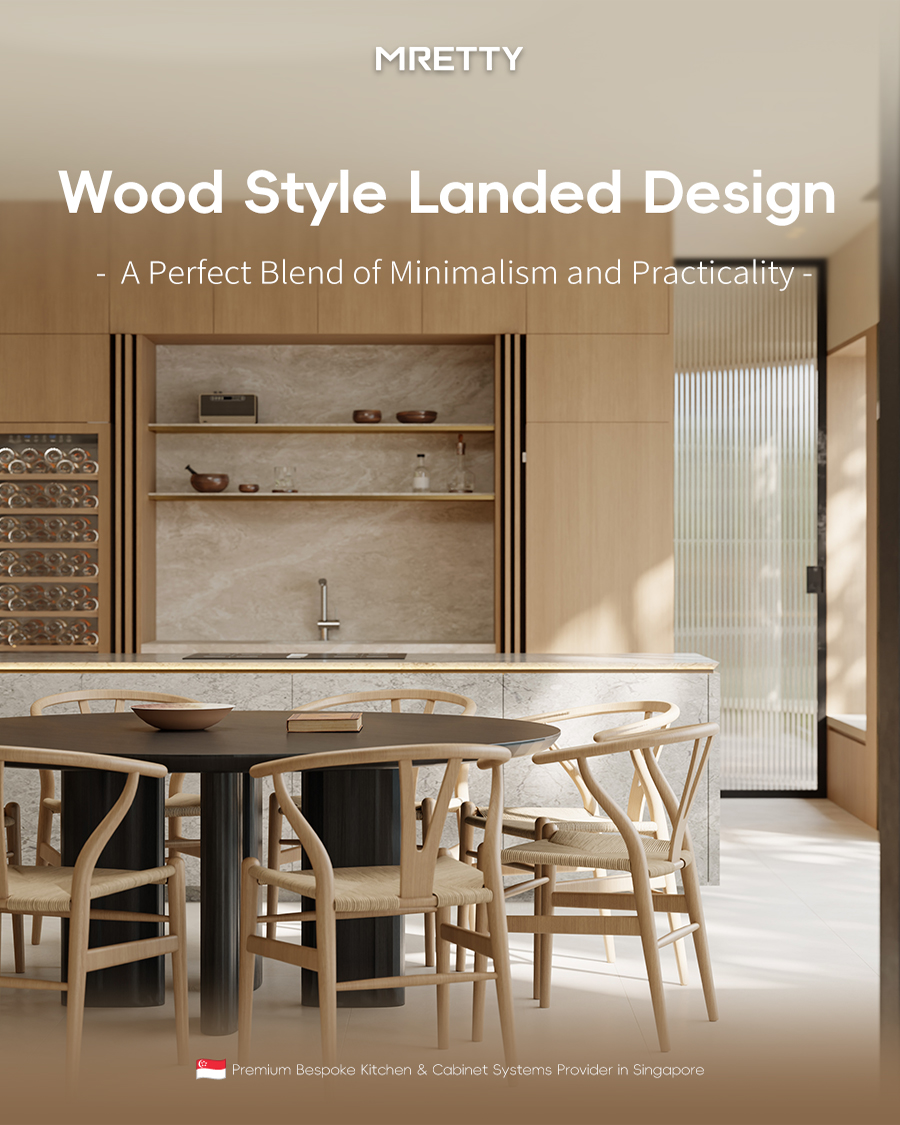
A unified material palette—using a curated selection of high-quality finishes throughout—creates harmony and understated sophistication: pairing Italian sintered stone countertops with the warmth of solid wood cabinetry, or carrying a premium veneer seamlessly from the living area into bedrooms. This is critical for Singapore’s climate—specifying moisture-stable materials ensures beauty endures.
3) Heart: Custom Millwork & Joinery
Custom millwork is the highest-impact element in a luxury residence: storage and display systems engineered to fit both your space and your needs. This is where vertical integration shines: unlike outsourced millwork, in-house manufacturing guarantees sub-millimeter precision and uncompromised quality control—from kitchen cabinetry to walk-in closets, hidden doors, and integrated media walls. Paired with Blum and Hettich premium hardware, every drawer and door operates smoothly for decades.
4) Radiance: Layered Lighting Design
Sophisticated lighting combines ambient, task, and accent layers to shape atmosphere and enhance functionality. It is often underestimated: a tiered, dimmable scheme makes spaces feel larger and more elevated.
- ❌ Common Mistake: Relying on a single central ceiling fixture per room.
- ✅ Better Approach: Implement multi-layered lighting with dimmers to shift a room’s mood across scenarios.
The interplay of these four elements defines "true luxury."
How Luxury Design Adapts Across Singapore Property Types?
The core luxury principle remains (quality + personalization), but execution must adapt to property type: spatial scale, regulatory boundaries, and lifestyle contexts differ. The best projects amplify a property’s inherent character through bespoke solutions.
| Property Type | Luxury Execution Focus | Key Constraints/Opportunities |
| :--- | :--- | :--- |
| 5-Room/ BTO Flats | Smart zoning + high-quality built-in millwork; light-tone palettes to visually expand space; maximizing every square meter | Limited ceiling height/ hacking permissions; leverage verticality and built-ins |
| Condominiums | Framing views; glass partitions for zoning without blocking light; premium finishes + custom furniture for a "hotel-suite" feel | Stricter MCST regulations and logistics (lift access, work hours) |
| Landed Properties | Maximum flexibility: structural alterations, double-volume ceilings, indoor-outdoor transitions; requires disciplined cohesion | Large footprint demands strong integrated design and end-to-end QC |
- ❌ Common Mistake: Applying a one-size-fits-all "luxury template" across properties.
- ✅ Better Approach: Develop a bespoke design concept tailored to your property’s scale, regulations, and lifestyle.
Why In-House Manufacturing Is the Core of True Luxury?
In-house manufacturing consolidates quality control, design fidelity, and cost efficiency: when the design team controls production, the gap between vision and reality disappears.
My firm rule: the truest marker of a luxury home is not the designer’s name, but the build quality. Many firms outsource millwork, leading to deviations, delays, and finger-pointing—unacceptable risks in high-end projects.
MRETTY’s 15,000-square-meter smart factory sits at the center of the workflow:
- Precision & Quality: Advanced CNC machinery locks tolerances to sub-millimeter levels, with full control over materials and processes.
- Seamless Alignment: Design and production communicate within a single ecosystem, ensuring visual consistency and structural coherence across all custom elements.
- Accountability & Efficiency: We control scheduling and delivery, with 100% ownership of outcomes.
- ❌ Common Mistake: Assuming "all custom millwork is equal" and selecting firms based solely on portfolio aesthetics.
- ✅ Better Approach: Inquire about the production chain—vertical integration is the strongest signal of quality and reliability.
An in-house manufacturing base is not a logistical advantage—it is the backbone of lasting, functional luxury.
Material Selection for Singapore’s Climate: Avoiding Costly Mistakes
Material selection in Singapore must prioritize durability, moisture resistance, and ease of maintenance. High humidity degrades inferior materials (especially low-grade wood composites); specifying tropical-vetted finishes is responsible luxury.
I always advise clients to invest in "high-wear core materials": flooring, countertops, and cabinet substrates.
| Material Category | Optimal Choice for SG Climate | Why It Works | Common Pitfalls |
| :--- | :--- | :--- | :--- |
| Countertops | Sintered stone / Quartz | Non-porous, stain and scratch resistant | Porous natural marble requires frequent sealing |
| Cabinet Substrate | Moisture-resistant plywood / MR-grade MDF | Stable in humidity; resists warping/delamination | Standard MDF swells and fails in moist conditions |
| Flooring | Engineered wood / Premium vinyl | More dimensionally stable than solid wood | Solid wood can cup/crown in prolonged humidity |
| Hardware/Metal | 304 stainless steel (wet/coastal areas) / Premium electroplated hardware | Corrosion-resistant; Blum/Hettich-grade longevity | Cheap plated metal rusts and loses luster |
- ❌ Common Mistake: Selecting materials based on overseas catalogues without considering tropical suitability.
- ✅ Better Approach: Prioritize tropical-vetted materials; request samples and technical spec sheets before committing.
Climate-adapted material selection is the foundation of durable luxury.
Frequently Asked Questions
Does luxury design require gutting everything?
Not necessarily. True luxury prioritizes "strategic interventions": sometimes reconfiguring a single non-load-bearing wall, optimizing circulation, and integrating bespoke millwork delivers greater impact than indiscriminate hacking.
How do I prevent budget overruns?
Anchor spending on "custom millwork + core materials"; demand an itemized quotation rather than a lump sum; and retain a 10% contingency buffer.
What are the tangible benefits of an in-house factory for homeowners?
It eliminates the information loss and disputes of outsourcing: higher precision, fewer defects, more predictable timelines, and consistent quality delivered to your home.
About the Author
Aida, Senior Full-Case Principal Designer at MRETTY With a decade of high-end full-case design experience, Aida specializes in Singapore luxury residences and bespoke millwork. She believes "space is the tangible expression of the dweller's inner spirit," and treats craftsmanship precision, climate adaptation, and personalized circulation as the three non-negotiable pillars of luxury.
MRETTY: Premium Bespoke Kitchen & Cabinet Systems Provider in Singapore.
