
 Singapore
 China
China
True luxury interior design in Singapore is fundamentally the art of curating a personal sanctuary. It balances exclusive craftsmanship with intelligent spatial planning, signifying the selection of premium materials suited to the local climate, tailored to the homeowner's lifestyle, and seamlessly weaving technology and comfort into daily life—far beyond mere "decoration."
TL;DR: The Pathway to a Luxury Home
Opt for Integrated Whole-Home Customization. It creates a seamless wholeness that standalone furniture simply cannot replicate.
Choose Climate-Smart Materials. Only materials that can withstand Singapore’s humidity offer lasting value—that is true luxury.
Recognize Your Property Type. Design strategies for landed homes differ fundamentally from those for prime condominiums.
Partner with a Firm That Controls Its Own Factory. This is the master key to delivering极致 quality and true bespoke capability.
Can you distinguish between an "expensive renovation" and a "truly luxurious private residence"? Most cannot. Luxury is not defined by the price tag.
True luxury is a feeling—where space, light, texture, and function click into perfect harmony. It is when your home works for you, rather than you working around your home. Having practiced bespoke interior design in Singapore for a decade, I have learned that achieving this harmony requires not spending more money, but a specific mindset—curating an integrated holistic environment rather than selecting a collection of pretty items. This guide provides a designer’s framework to help you make decisions that build long-term value.
Define Your Vision: Crafting a Truly Bespoke Residence
The first step is shifting your mindset from "decorating" to "expressing." Your home should be an extension of your identity. Before selecting any material, we must define the space's core mission: Is it a tranquil retreat? A vibrant entertaining hub? Or a functional engine for a busy family? This mission governs every subsequent decision—from spatial flow to the tactile feel of a cabinet handle.
A common pitfall is chasing trends. While 2026 luxury trends may lean towards biophilic design, if your essence is minimalist and monochromatic, forcing a trend will feel artificial. True luxury is timeless and personal—translating your essence into physical form. This requires deep collaboration between you and your designer, ensuring the final result fits like a tailored suit, not a page torn from a magazine.
Last quarter, a client arrived with a folder full of "Japandi Wabi-Sabi" reference images. The style is undeniably beautiful, but upon deeper discussion, I realized their life was vibrant, bustling, and filled with colorful gatherings. That overly neutral, minimalist Japandi vibe simply did not reflect their personality. We pivoted towards a richer "Modern Tropical" concept—incorporating more texture and flexible spaces suited for hosting. The final product felt like their home, not a magazine spread. That is honest expression.
What Are the Four Pillars of a Luxury Residence?
A truly luxurious home stands on four pillars:
- Exceptional Spatial Planning: Enhancing flow, function, and natural light.
- Discerning Material Palette: Using authentic, high-quality, climate-adapted materials.
- Bespoke Joinery: Furniture and fixtures built to exact specifications, not compromised by standard sizing.
- Integrated Technology: Comfort and convenience systems woven silently into life, not clumsily stacked on top.
These four elements synthesize—missing any one will cause the luxury to crumble in the details. If the lighting is harsh or the acoustics echo, the illusion shatters. True luxury resides in the holistic synergy.
❌ Common Mistake: Collecting images of individual items (a sofa, a lamp, a rug) without a unifying score.
✅ Better Approach: Start with "feeling or function." Create a mood board for the desired atmosphere and list the daily activities the space must support. This builds a stronger foundation for unified design.
Defining your vision is not about picking finishes; it is about clarifying how you want to live.
Decode Singapore Property Layouts: Maximize Spatial Potential
Designing for a Good Class Bungalow (GCB) versus a prime condominium is designing on fundamentally different canvases.
Landed Homes: Space and Control as Gifts
Luxury landed properties—especially GCBs—grant you spatial and structural control. Design can even shape the architecture: we can create double-volume ceilings, seamless indoor-outdoor flow, and dedicated zones for every family member. On a recent GCB project in District 10, we reoriented the entire ground floor around a central courtyard—maximizing natural light and ventilation, something impossible in a high-rise. The challenge here is scale: ensuring vastness feels intimate, not empty. This is where large-scale bespoke joinery and strategic lighting become critical.
Condominiums: The Precision Game, Where Space is the Ultimate Luxury
In a prime condominium, every square foot is precious. The focus shifts to multi-functional design and clever storage to create the illusion of expansiveness—using mirrors, glass partitions, and a unified material palette to stretch the perception of space.
Here, whole-home customization is not an option; it is a necessity. Off-the-shelf furniture almost never fits flush, wasting centimeters of space. A partner like MRETTY, with its own 15,000 sqm smart factory, can measure an awkward recess down to the millimeter to build a wardrobe; or transform a kitchen island into a dining table and storage unit—all through precision.
In a two-bedroom condo along Orchard Road, the homeowner needed a workspace without letting the desk dominate the room. We designed a custom platform bed with deep base drawers, extending the headboard into a sleek console surface—paired with a custom stool for a hidden workstation. When not in use, it is merely a design feature, leaving the room’s serenity intact. That is the power of bespoke design in compact spaces.
Is Whole-Home Custom Furniture Worth It for Singapore Condos?
Absolutely. In a city where every foot counts, custom furniture delivers an ROI that ready-made pieces cannot match—eliminating wasted space and delivering a unified aesthetic tailored to your needs. While the initial investment is higher, the long-term gains in functionality and property value are significant. According to PropertyGuru’s 2025 market analysis, properties with high-quality integrated bespoke joinery often command a 5-8% price premium at resale.
❌ Common Mistake: Applying landed home design logic to a condo—resulting in bulky furniture and suffocating space.
✅ Better Approach: Embrace the constraints of the condo. Prioritize multi-functional, built-in solutions that account for every inch of vertical and horizontal space.
Understanding your property type is the first step to unlocking its full potential.
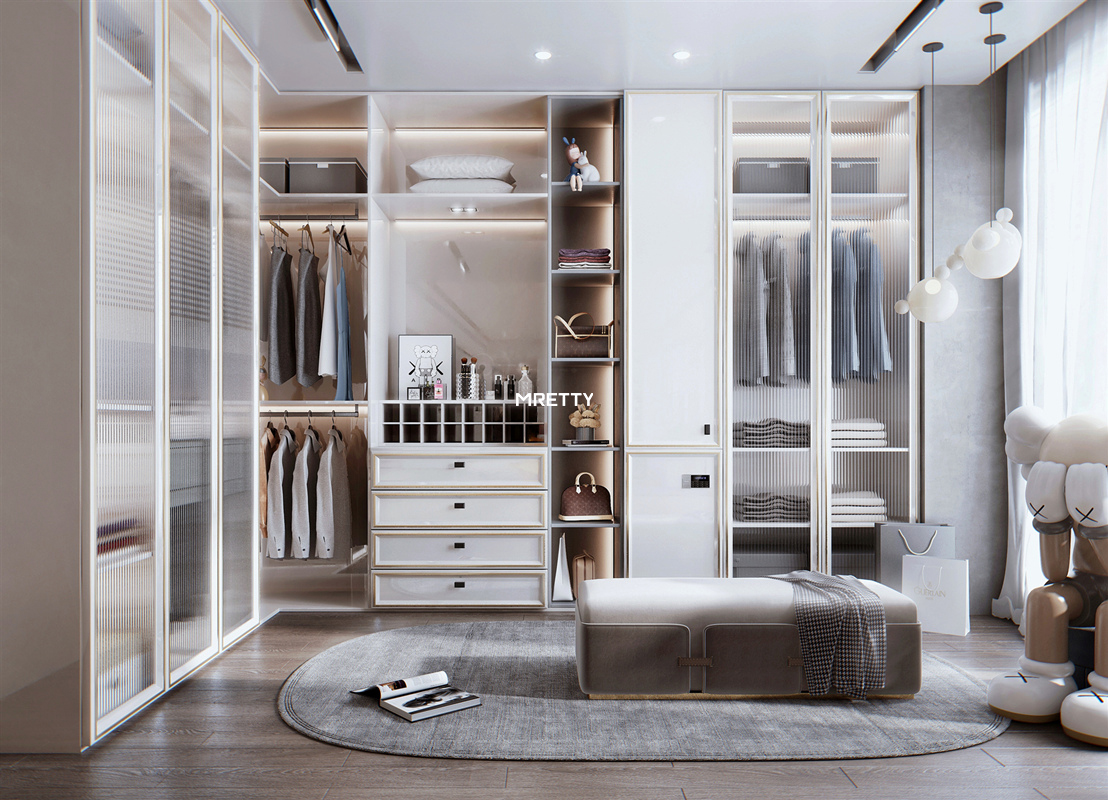
Master Material Systems: Outsmart the Tropical Climate
Material selection is where professional expertise truly surfaces. Singapore’s heat and humidity mean the wrong materials lead to warping, mold, and premature aging. Materials stunning in a European showroom can be a disaster here.
Many default to "Solid Natural Wood = Peak Luxury." But honestly: for Singapore’s climate, many advanced engineered materials are often the smarter choice—frequently outperforming solid wood in durability and stability. Certain natural wood species require constant dehumidification to prevent cupping; high-quality engineered alternatives offer the same tactile feel and beauty without the maintenance nightmare. That is pragmatic luxury.
We prioritize materials that marry beauty with resilience:
Expert Material Recommendations for Singapore:
High-Touch Surfaces: For kitchens and high-traffic zones, specify advanced materials like Fenix NTM—anti-fingerprint, thermally repairable surfaces with extreme durability.
Joinery Elements: Use premium engineered wood veneers on moisture-resistant substrates; if using solid wood, select kiln-dried, specially treated species paired with Blum/Hettich-grade hardware.
* Upholstery: Opt for anti-microbial, mold-resistant performance fabrics for cushions and soft furnishings, especially in coastal areas like Sentosa Cove.
A unified material system is key—limiting the core palette to three or four materials repeated throughout the home creates a sense of calm, cohesion, and expansive sensory effect. This is a core principle of effective luxury residential design.
Clients often bring online images demanding wide-plank European Oak solid wood flooring. I almost always advise against it—unless the subfloor and indoor microclimate are perfectly controlled, Singapore’s high ambient humidity will cause the planks to cup and warp within two years. We steer towards stable multi-layer engineered cores or premium vinyl flooring—visually identical, with zero risk.
What Materials Are Best Suited for Singapore’s Humid Climate?
Beyond engineered wood—consider sintered stone (Dekton/Neolith) for countertops and feature walls; they are non-porous, heat, and moisture resistant. High-pressure laminates have improved dramatically, offering realistic wood or stone textures with greater resilience. For flooring, large-format tiles or the aforementioned engineered wood are far more stable than solid hardwood.
❌ Common Mistake: Selecting materials based on website photos alone, ignoring technical specs or humidity compatibility.
✅ Better Approach: Request physical samples for testing and partner with a design firm with proven local experience—someone who can articulate the pros and cons of each option in the Singapore context.
Choosing the right materials buys your home longevity.
Execute a Methodical Bespoke Process: Ensuring Flawless Delivery
A luxury home is not born from luck, but from a rigorous, controlled process. Transparency in this journey is crucial for managing expectations. MRETTY manages this as a turnkey solution—navigating every stage from concept to handover:
Our process is transparent and structured:
- Phase 1: Deep Dive & Concept (Approx. 4-6 Weeks)—Intensive dialogue on your lifestyle, needs, and aesthetics, producing initial space plans and conceptual schemes via 2D layouts and 3D visualizations.
- Phase 2: Detailed Design & Materialization (Approx. 3-5 Weeks)—Upon concept confirmation, detailed shop drawings are issued for every custom component, finalizing the material palette with you.
- Phase 3: Production Manufacturing (Approx. 8-10 Weeks)—Designers liaise directly with the factory production team, eliminating the communication errors common with outsourcing, ensuring the vision is translated precisely.
- Phase 4: Installation & Handover (Approx. 3-4 Weeks)—Dedicated craftsmen assemble the components on-site; the keys are handed over only after rigorous QC.
How Much Does Singapore Luxury Home Design Cost?
The most frequently asked question, answered honestly: It varies significantly. Three factors drive cost—scale (square footage), complexity (intricate detailing/whole-home automation), and material tier (imported marble vs. premium laminates).
For a comprehensive high-end renovation with full customization in Singapore, a rough estimate ranges from S$150 to S$400+ per square foot. For a 1,500 sq ft prime condominium, the total package could range from S$225,000 to S$600,000+. Transparently discussing the budget upfront is the first step—the goal is not to find the cheapest option, but to allocate funds where they deliver the highest impact.
How to Choose a Luxury Interior Designer in Singapore?
Look for three things:
- Does Their Portfolio Resonate With You? Can you see your own aesthetic reflected in their past work?
- Is Their Process Transparent? Can they clearly articulate the steps, timelines, and quality control measures?
- Do They Demonstrate Technical Depth? Ask about their approach to Singapore’s climate—those who can give confident, detailed answers (how the factory manages quality, why specific hardware is specified) are far more reliable than those who only discuss color palettes.
Checking genuine client reviews and requesting referrals are also key steps.
❌ Common Mistake: Choosing the lowest bidder → leads to compromised quality, hidden costs, and project delays.
✅ Better Approach: View design fees as an investment. A good designer earns their fee back by avoiding costly mistakes, accessing superior supply chains, and elevating your property’s resale value.
A structured process managed by an expert team is the only guarantee of a perfect outcome.
Your Next Step: Towards Your Dream Home
True luxury is not how it looks to others, but that moment you return home every day—when the light, scent, texture, and space respond to you—telling you, "This is my place."
If you are ready to rethink your home holistically, the next step is an honest conversation.
Contact MRETTY to schedule your complimentary 1-on-1 consultation, and let us translate this vision onto paper, into the factory, and onto the walls of your home.
MRETTY: Premium Bespoke Kitchen & Cabinet Systems Provider in Singapore
