
 Singapore
 China
China
A Singapore condo owner recently confessed his biggest fear wasn’t the mortgage—it was the emptiness of the space and the thick stack of MCST renovation regulations. He felt paralysed, convinced any wrong move would lead to a costly mistake. This feeling is universal. But transforming your apartment doesn’t have to be a nightmare. With the right strategy, you can create a spacious, harmonious home that is 100% yours.
TL;DR: Your Apartment Design Cheat Sheet
The 5-Step Plan: Follow our clear roadmap from planning to handover for a zero-stress renovation. Realistic Budgeting: Understand the true costs and timelines for renovating a Singapore apartment in 2026. Climate-First Materials: Learn why material science for our humidity beats brand names. Integrated Design: See how whole-home custom furniture delivers a seamless, high-end result.
Your Apartment Interior Design 5-Step Checklist
Starting a renovation requires a clear roadmap. Over a decade of designing apartments, I’ve distilled the process into five core phases. Follow this checklist for a flawless execution.
- Concept & Space Planning: This is the foundation. We discuss your lifestyle, aesthetic (e.g., Modern Luxury, Minimalism), and functional needs. We then create 2D and 3D layouts, focusing on traffic flow and maximising every square metre. Lock in major decisions here, like an open-concept kitchen.
- Material & Furniture Selection: Here, we finalise textures, colours, and finishes. This ranges from flooring and paint to specific laminate models for built-in wardrobes. We prioritise materials suited for Singapore’s climate to ensure longevity.
- Navigating MCST & BCA Approval: Every condo has a Management Corporation (MCST) with strict renovation by-laws. Your design firm must prepare and submit all necessary documents, including drawings and work schedules. Major works may also require Building and Construction Authority (BCA) permits.
- Production & On-Site Works: Once approved, works commence. With MRETTY, this is a parallel process. Custom furniture is fabricated off-site in our 15,000 sqm smart factory, while on-site works (hacking, electrical, plumbing) proceed simultaneously. This dual-track approach drastically shortens the timeline.
- Installation & Handover: Prefabricated components are delivered and installed. This phase is faster and cleaner than traditional carpentry. After a thorough quality check, we walk through the new home with you and hand over the keys.
Just last quarter, a client wanted to hack a non-load-bearing wall to enlarge the living room. Simple enough, but his MCST required a specific acoustic report for the works. We managed the submission, secured approval, and tweaked the design to meet the requirements—avoiding a costly delay.
❌ Common Mistake: Starting demolition before receiving formal MCST approval. This can lead to fines and a "stop-work" order.
✅ Pro Tip: Always wait for the official renovation permit from your condo management office. A professional firm handles this for you.
Squeeze Every Square Foot with Smart Space-Saving Furniture
For any Singapore apartment interior design, the number one challenge is always space—or the lack thereof. Clever design is your greatest asset. Forget bulky, standalone pieces. The solution lies in integrated, multi-functional furniture.
Here are the four pillars of a space-maximising strategy:
Multi-Functional Furniture: Coffee tables with hidden storage, extendable dining tables, and bed frames with built-in drawers.
Full-Height Wardrobes: Utilise vertical space, eliminating the dusty void at the top. They offer more storage than freestanding wardrobes and create a clean, streamlined look.
Platform Storage: Raising the floor in the bedroom creates massive under-bed storage for luggage, linens, and seasonal items.
Mirrors & Glass: Strategically placed mirrors and glass partitions create an illusion of depth, making rooms feel larger and brighter.
To truly maximise space, you must think vertically and integrate functions. In a project completed in March 2026, we designed a bay window seat with hidden drawers. It turned an awkward corner into a functional reading nook with ample storage. The key is holistic planning, not buying scattered "space-saving gadgets."
❌ Common Mistake: Buying trendy furniture that looks great in a showroom but overwhelms a compact apartment.
✅ Pro Tip: Measure your space precisely. Opt for custom furniture built to your room’s exact dimensions for a perfect fit and balanced proportions.
Decoding the Real Cost of Singapore Apartment Renovations
Budget is always the top concern. While an exact quote requires a detailed floor plan, we can provide reliable estimates based on our 2026 project data. Generally, renovating a new condo is less expensive than a resale.
Here are typical budget ranges for standard renovation packages:
| Apartment Size | Estimated Renovation Cost (New Condo) |
| :--- | :--- |
| 1-Bedroom Condo (~500 sq ft) | S$30,000 – S$50,000 |
| 2-Bedroom Condo (~750 sq ft) | S$40,000 – S$70,000 |
| 3-Bedroom Condo (~1,100 sq ft) | S$60,000 – S$95,000+ |
Note: Figures above estimate design, custom carpentry, and standard works. Costs escalate with luxury materials, major structural changes, or high-end appliances.
A resale flat renovation typically requires an additional 15%–25% in budget. This covers essential rewiring, replumbing, and the removal of old fixtures, potentially pushing the total for a 3-bedder over S$100,000.
❌ Common Mistake: Choosing a contractor based on the lowest quote. This often leads to hidden costs, inferior materials, and expensive repairs later.
✅ Pro Tip: Compare detailed quotations. Insist on itemised material grades and hardware brands. Choose a firm with transparent pricing and a solid portfolio.
Choosing Materials to Conquer Singapore’s Humid Climate
Here is an unpopular opinion.
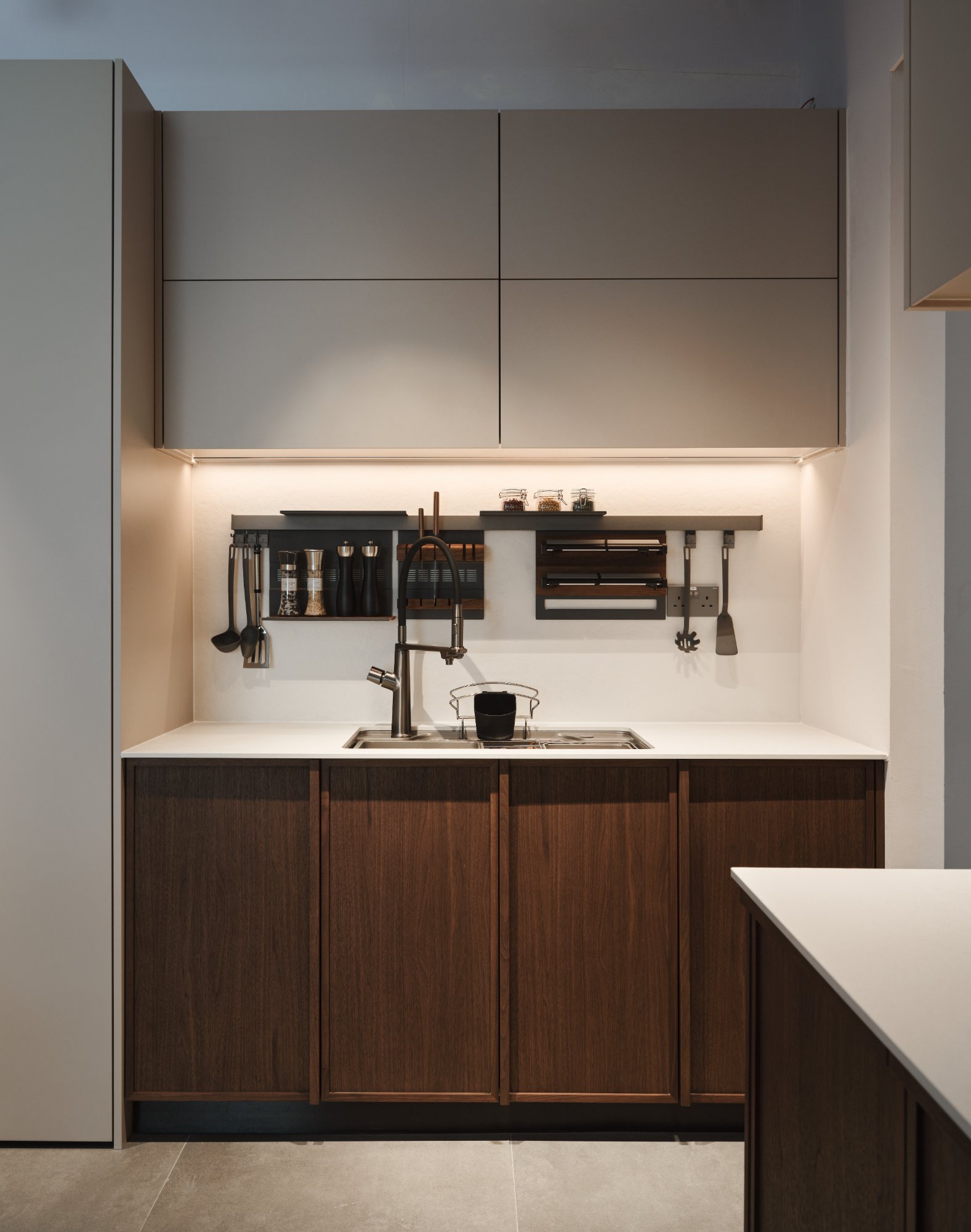
Many believe luxury apartment design is about sourcing Italian marble or designer furniture. But the truth is, in Singapore, true luxury is material science. It’s about selecting components that withstand our average 80%+ humidity without warping, growing mould, or failing. Performance is the new status symbol.
The wrong materials will ruin a beautiful design in just a few years. Here’s what to prioritise:
Core Boards: Standard MDF and particleboard swell in damp conditions. Insist on E0-grade moisture-resistant boards. The "E0" rating also signifies extremely low formaldehyde emissions, crucial for healthy indoor air.
Finishes: Reputable brand laminates are the baseline. Premium materials like Fenix NTM offer a super-matte, fingerprint-resistant, and thermally healable surface that outperforms standard laminates whose edges peel over time.
Hardware: Beautiful carpentry is useless if hinges rust and drawers jam. Quality hardware from brands like Blum or Häfele ensures decades of silent, smooth operation, often backed by a lifetime warranty.
A S$5,000 wardrobe built with moisture-resistant boards and premium hardware is a far smarter investment than a S$7,000 one built with standard materials.
❌ Common Mistake: Focusing only on the colour and texture of materials, ignoring their technical specs and suitability for a high-humidity environment.
✅ Pro Tip: Ask your designer for the technical data sheets of proposed materials. Check the moisture resistance rating and formaldehyde emission class (aim for E0 or E1).
Embracing the MRETTY Philosophy of Integrated Whole-Home Customisation
Ever wonder why homes in design magazines look so cohesive? It’s no accident. It’s the result of a whole-home custom furniture strategy.
This approach treats all carpentry as a single, unified system designed and built together, rather than piecing together off-the-shelf items. This is MRETTY’s specialty.
Why this yields superior results for apartments:
- Maximum Space Efficiency: Every piece is measured to the millimetre, eliminating awkward gaps and dead corners.
- Design Consistency: The same premium materials, colours, and finishes are used throughout, creating a harmonious aesthetic.
- Superior Quality Control: All components are manufactured in a controlled factory environment. MRETTY’s 15,000 sqm smart factory uses German automated machinery, achieving a level of precision impossible with on-site manual work.
- Efficient & Eco-Friendly: Factory prefabrication is faster and generates significantly less dust and noise on-site compared to traditional carpentry.
A whole-home customisation solution is the most effective way to achieve a high-end, integrated look. It solves the headache of finding perfectly sized, stylistically matched furniture, providing a turnkey solution for a harmonious home.
❌ Common Mistake: Trying to piece together a look from different stores. This often leads to mismatched styles, colours, and awkward sizing.
✅ Pro Tip: Engage a firm that offers a whole-home customisation solution. This ensures a unified design and perfect spatial integration from day one.
Mastering the Project Timeline & Key Regulations
"How long will my renovation take?" is every homeowner’s core concern. The timeline heavily depends on the scope and whether it’s a new or resale unit.
Here is a general guide:
New Condo Interior Design: For a 2-bedroom unit with a focus on custom furniture and minimal hacking, expect a design-to-completion period of 8 to 12 weeks.
Resale Condo Renovation: Involving more extensive works (hacking, rewiring, replumbing), the process is longer. A full overhaul can take 12 to 16 weeks or more.
The primary wild card is the MCST approval process, which can take 1 to 4 weeks before any work can commence. A professional design firm manages this paperwork, ensuring your project starts as soon as possible.
Frequently Asked Questions
Q: Do I need to hire an architect for my apartment renovation?
A: For most interior renovations, you do not need an architect. However, if your plans involve structural changes (e.g., hacking structural walls, adding a mezzanine), you will need a Qualified Person (QP), usually an architect or engineer, to submit plans to the BCA. MRETTY can coordinate this process for you.
Q: What is the biggest mistake to avoid during an apartment renovation?
A: Underestimating the importance of MCST regulations and material quality. Ignoring MCST rules leads to fines and delays. Choosing poor materials leads to a home that looks dated and worn out within a few years.
Q: How do I choose the right interior designer in Singapore?
A: Look for a firm with a strong portfolio of projects similar to yours (in size and style). Ensure they are CaseTrust-accredited for financial protection. Most importantly, choose a firm that offers an integrated design-and-build service with its own factory, like MRETTY, to ensure accountability and quality control.
MRETTY: Premium Bespoke Kitchen & Cabinet Systems Provider in Singapore.
