
 Singapore
 China
China
To truly decorate your home efficiently, you must first establish a unified design language and a strategic spatial plan—all before you pick out a single piece of furniture. A cohesive material palette and integrated lighting design account for over 70% of the visual impact in professional-grade renovations. This "whole-home integration" approach ensures every element works in synergy, resulting in a home that is both beautiful and highly functional.
TL;DR: The core of efficient home decoration lies in crafting a coherent, whole-home interior design strategy rather than simply buying furniture. Define your personal design language first; master spatial planning to optimize layouts; use bespoke joinery paired with tailored carpentry storage systems to solve clutter and create seamless continuity; finally, select durable materials and lighting schemes suited to Singapore’s climate, balancing luxury with performance. This structured process guarantees a home that is both stunning and practical.
What is the first step in decorating a house?
The real first step is not picking wall paint colors—it is defining the core "design language" of your home.
This is the guiding philosophy that governs the entire space, determining a consistent set of forms, textures, and overall atmosphere. Think of it as the DNA of your home's aesthetics. Before considering sofas, decide: Is your language Modern Minimalist, Italian Luxury, or Classic French? This choice dictates all subsequent decisions, preventing you from buying expensive items that clash with one another.
In my 14 years at MRETTY, I have seen too many homeowners buy expensive individual pieces that conflict. For instance, in a recent condo project on Orchard Road, we established "Italian Luxury" as the design language—meaning every custom cabinet, every handle, and every fabric had to serve this singular concept. The result was a perfectly harmonious space.
❌ Common Mistake: Starting with a single item (like a sofa or a painting) and trying to build the entire room around it.
>
✅ Better Approach: Define your overall style and color palette first, letting it act as a filter for every potential purchase.
Q&A: What are the seven elements of interior design?
The seven core elements are: Space, Line, Form, Light, Color, Texture, and Pattern. A strong design language integrates all seven. For example, "Space" refers to the physical boundaries of a room, while "Line" shapes contours and guides the eye. Mastering these elements like a pro is key to achieving a high-end look.
How to make every space in your home look cohesive?
Many people think "cohesion" comes from matching colors, but true visual harmony stems from professional spatial planning—the art of arranging space while balancing function and beauty. In Singapore, with its diverse housing types like HDB flats and condos, this is especially critical.
Good spatial planning considers traffic flow, furniture placement, and ergonomic "workflows" in each room. The path you take from the kitchen island to the fridge is just as important as your cabinet colors. A well-planned layout will feel unified even if you mix different styles, simply because the functionality flows seamlessly.
For example, when planning space-maximizing solutions for a 4-room HDB flat, I often use multifunctional custom carpentry: a feature wall that extends into a hidden study desk can replace three bulky off-the-shelf furniture pieces—creating visual unity while freeing up floor area. Effective spatial planning makes living in the space feel effortless.
❌ Common Mistake: Pushing all furniture against the walls, creating a rigid, "bowling alley" effect with no defined zones.
>
✅ Better Approach: Use furniture itself (like a sofa or sideboard) to carve out distinct "zones" within a large space—defining conversation areas, dining areas, and relaxation areas to bring the circulation to life.
Singapore Context: Interior Designer vs. Contractor vs. Custom Specialist
It is crucial to understand who does what. Many clients are unsure whether they need a designer, a contractor, or a company offering a full custom strategy:
| Role | Focus | Best For | Typical Fee Structure |
| :--- | :--- | :--- | :--- |
| Interior Designer | Concept creation, spatial planning, aesthetic control, project management | Homeowners needing a complete creative vision and professional coordination | Design fees (10–15% of project cost) or fixed fees |
| Contractor | Executing construction based on existing drawings: tiling, plumbing, hacking | Homeowners with detailed designs who only need construction execution | Itemized quotes based on labor and materials |
| MRETTY Custom Systems | Implementing a unified design language via tailored, integrated furniture systems | Those wanting a seamless, "furniture-as-architecture" high-end finish where cabinets blend into the structure | Project-based quotes covering design → production → installation |
Q&A: How much does an interior designer cost in Singapore?
As of mid-2026, design consultation fees in Singapore range from S$2,000–S$10,000; full project management typically costs 10%–15% of the total renovation cost. For a typical 4-room HDB renovation costing S$50,000, design fees alone could be between S$5,000–S$7,500.
What are the benefits of whole-home customization?
Whole-home customization is a powerful tool for efficient decoration—its philosophy treats furniture and storage systems as part of your home's architecture rather than standalone items squeezed into corners. It is the difference between ready-to-wear and a bespoke suit.
This approach offers three core advantages:
- Maximized Space Utilization. Awkward corners, low beams, and irregular walls become opportunities for clever custom joinery, wasting zero space.
- Guaranteed Visual Unity. Your wardrobes, kitchen cabinets, and TV feature walls share the same material palette, maintaining a consistent design language without the disjointed feel of mismatched retail pieces. The Houzz Houzz & Home Study consistently identifies "making a home uniquely theirs" as the top motivator for renovations—in their 2025 report, this stood at 62%—and customization is the most direct path to achieving this.
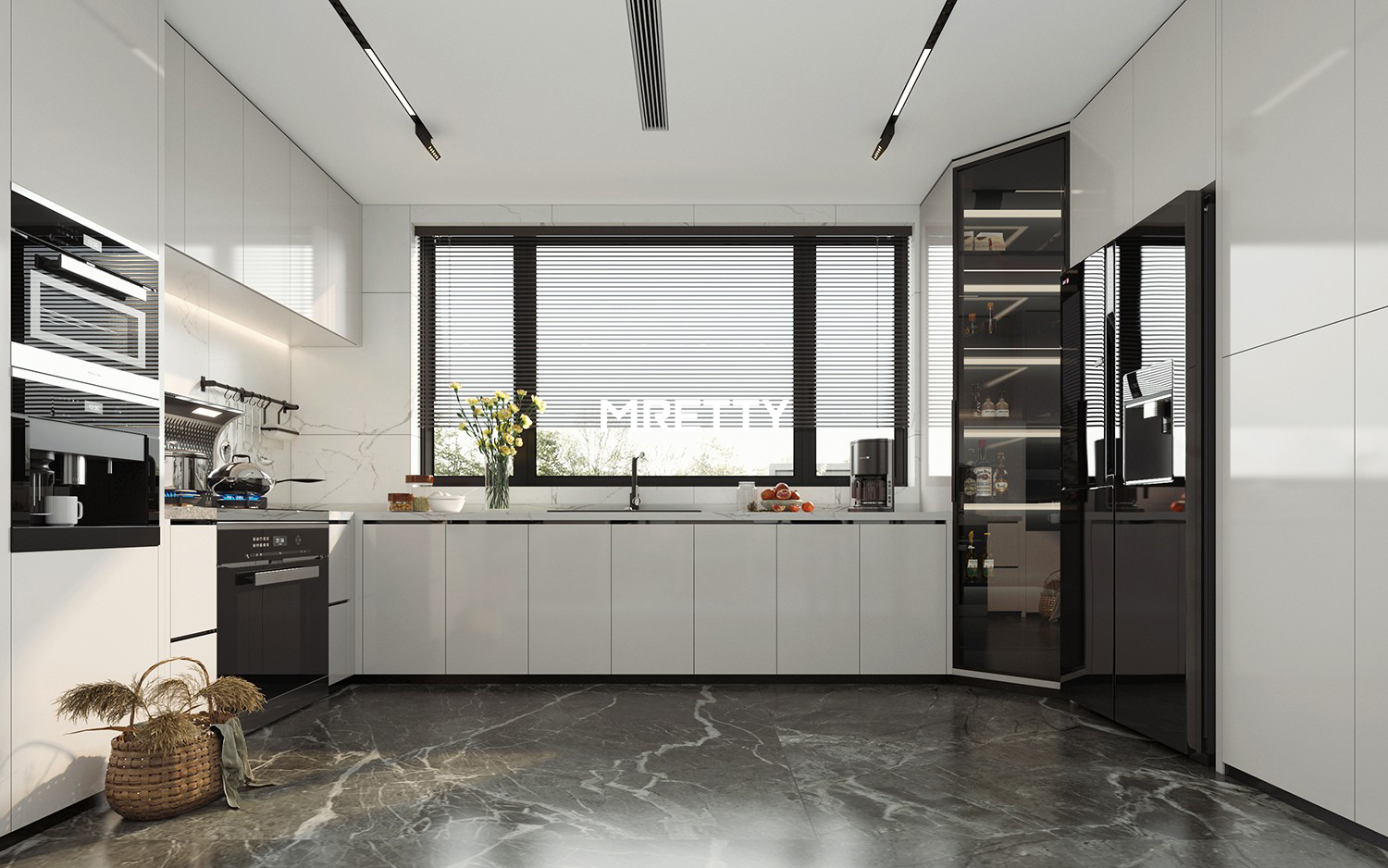
- Elevated Quality. Taking a MRETTY custom kitchen as an example, every detail is controlled by you—from internal hardware (we prefer Blum, known for smooth, silent operation over years) to door finishes—rather than settling for mass-market compromises.
❌ Common Mistake: Forcing freestanding furniture together to "fake" a built-in look—there will always be gaps, uneven heights, and wasted dead spaces.
>
✅ Better Approach: Invest in at least one core custom carpentry piece, such as a full-height feature wall with hidden storage. This one element can anchor the entire room's visual weight while functioning as several separate furniture pieces.
How to choose materials and lighting?
Material and lighting choices are where you bring your design language to life. This is also where mistakes are most common—especially overlooking the impact of Singapore’s humid climate on materials. High humidity can cause solid wood panels to warp and low-quality laminates to peel. A significant part of our job is helping clients curate a material palette that is both beautiful and durable.
Countertops & Surfaces—Performance Matters: For custom kitchen countertops, sintered stone / high-quality quartz (like Caesarstone) is more stain and heat-resistant than many natural stones. For cabinet finishes, opt for high moisture-resistant grades.
Upholstery—Breathability First: When selecting sofa fabrics, linen blends or high-performance anti-mold fabrics are better suited to Singapore’s tropical climate, particularly if you are considering Italian-style custom soft furnishings within the MRETTY system.
Lighting Design—The Three-Layer Method:
| Layer | Function | Examples |
| :--- | :--- | :--- |
| Ambient Lighting | Overall general illumination | Ceiling downlights, cove lighting |
| Task Lighting | Focused functional light | Under-cabinet lights, vanity lights, reading lamps |
| Accent Lighting | Highlighting materials/art/mood | Picture spotlights, wall washer lights, hidden LED strips |
If I could give only one lighting upgrade tip: add task and accent lighting. This is the fastest way to move a home from a "bare-bones" feel to a professionally designed space. Balanced correctly, small rooms feel larger, and large rooms feel cozier.
❌ Common Mistake: Using the exact same wood-grain laminate everywhere, resulting in a flat, fake, and cheap appearance.
>
✅ Better Approach: Curate a 3–5 complementary material palette—e.g., warm wood grain + matte grey Fenix + textured fabric + a touch of brushed brass—then repeat them in varying proportions across different rooms to create a symphonic sense of unity.
How to make an HDB flat look luxurious?
I get asked this weekly. The answer is not buying a specific branded item, but applying "Quiet Luxury" logic to let the space itself exude a tailored, high-end feel. Whether it is an HDB flat or a compact condo, it can absolutely achieve a five-star hotel suite vibe.
Technique 1: Seamless Transitions. Use custom carpentry to "hide" bedroom doors within continuous wall paneling—long, uninterrupted horizontal lines are a hallmark of luxury design language. MRETTY recently applied this to a 5-room flat in Punggol; a full-height wooden system merged the entrance door, storage, and TV area into one, making the space feel significantly larger and more sophisticated.
Technique 2: Integrated Lighting. Ditch the lonely central ceiling light. Use cove lighting with hidden LEDs + under-cabinet wash lights to create soft ambient glow—this "light without seeing the source" effect is the cheapest yet most effective way to add class.
Technique 3: Material Substance. A high-quality laminate paired with a solid countertop edge is enough to elevate a kitchen from "standard issue" to "showroom ready." Details like Blum soft-close hinges—the silent thud of a cabinet closing—contribute more to the perception of quality than any visible logo ever could.
❌ Common Mistake: Cluttering the space with "luxury symbols"—shiny stainless steel, gold foil trim everywhere, velvet overload… this often looks gaudy rather than elegant.
>
✅ Better Approach: Focus on "quiet luxury"—craftsmanship precision (millimeter-perfect door gaps), material grade (the solid heft of a thick door panel), and intelligent design (a clean layout that hides clutter).
Singapore New Home Interior Design Checklist
Renovations can get chaotic. Follow these stages to stay organized. This checklist applies to both HDB flats and private condos:
Stage 1: Discovery & Strategy (1–2 Weeks)
- Define your design language and functional requirements (number of occupants? WFH needs? Pets? Elderly?)
- Set a realistic budget framework (BCA also advises obtaining multiple quotes from contractors for comparison)
- Measure the space and draft base plans, noting architectural constraints (false ceiling height, beams, drainage points)
Stage 2: Design Development (2–4 Weeks)
- Finalize detailed spatial planning and layout plans
- Create a mood board: material palette + primary colors + reference images
- Plan the lighting scheme, marking all socket/switch/data points
- Decide which items will be off-the-shelf and which will be custom joinery
Stage 3: Procurement & Execution (4–12 Weeks)
- Sign contracts with designers or custom specialists (e.g., MRETTY) and lock in production schedules
- Confirm all material samples and technical drawings (don't rely solely on 3D renderings!)
- Conduct site inspections at key milestones: concealed wiring → tiling/carpentry → painting → installation → finishing
Stage 4: Soft Furnishing & Handover (Approx. 1 Week)
- Inspect for defects (scratches, unevenness, door alignment issues)
- Move in soft furnishings: rugs, curtains, decor—buying these last ensures they complement the anchored space.
Design Your Home as a Complete Whole
Learning to decorate your home efficiently is essentially a strategy, not just shopping. Starting with a clear design language, moving through thoughtful spatial planning, and using whole-home customization to "nail" the vision into the architecture—this results in a space that is cohesive, livable, and deeply yours.
MRETTY: Premium Bespoke Kitchen & Cabinet Systems Provider in Singapore
