
 Singapore
 China
China
TL;DR: 60-Second Renovation Brief
- Design for the Hybrid Era: Use multi-functional custom furniture to adapt your home to "living + working + recharging."
- Choose Timeless Styles: Japandi (Japanese Wabi-Sabi × Scandinavian Minimalism) and Modern Luxury retain value better than fleeting trends.
- Invest in "Built-In Storage": In Singapore, this is the most effective way to amplify space and practicality.
- Adopt Long-Term Value Thinking: Partnering with experts like MRETTY for high-end customization is an asset allocation, not just an expense.
"Space is the external manifestation of the dweller's inner spirit; design is the journey that guides one toward self-awareness. In Singapore, this journey is more critical now than ever."
— Aida, Lead Designer at MRETTY
Decoding the Core Drivers Behind Singapore’s Renovation Surge
Having worked as a designer in Singapore for over a decade, I’ve noticed the conversation has shifted. People are no longer satisfied with just "making the home look pretty"; they are redefining how the home functions. The rise in Singapore’s home renovation heat isn’t fundamentally about chasing trends or flipping properties for resale; it’s about reclaiming control.
Why is renovation so hot in Singapore right now?
Many assume it’s a "beauty contest" or driven by "sell high later" motives. But actually, the real driver is a fundamental shift in lifestyle.
The home has become a multi-functional hub. Hybrid work means the dining table doubles as an office desk. The living room must accommodate Zoom calls while remaining a family sanctuary. Amidst efficiency pressures, "every square meter must justify its cost" has become a necessity. A 2025 survey by QBE Insurance highlights this: among those renovating in Singapore, 58% did so to carve out dedicated workspaces.
This demand isn't limited to new BTO flats; owners of older condos and resale HDBs are doing the same—seeking to restore order and personality, shut out urban chaos, and make the home truly serve their families.
❌ Common Pitfall: Focusing only on "aesthetics" and buying more loose furniture.
✅ Smarter Approach: Streamline circulation and function first—a "beautiful home" that obstructs daily movement is, by definition, a failed design.
How to Choose the Hottest Interior Styles of 2026 Without Regret
Choosing a style isn't picking a filter on social media; it’s selecting an atmosphere that improves your daily life. At MRETTY, we see clients increasingly favoring a balance of "beauty" and "utility." Here are the styles most requested in 2026 Singapore interior design, along with my hard advice for execution:
1) Japandi: Minimalism + Warmth, the Philosophy for Small Spaces
Japandi isn't a passing fad; it’s an attitude better suited to local living—Japanese restraint + Nordic order, using light wood, rattan, muted tones, and "less but better" organization to combat clutter and noise. For a standard 4-room HDB flat, it visually "expands and calms" the space. The key execution lever is: high-quality built-in customization. Example: In a Punggol BTO bedroom, we designed a handleless, floor-to-ceiling light oak wardrobe wall. The carpentry "retreated" into the wall, making the room feel a tier larger instantly.
2) Modern Luxury: Hotel Vibes, but "Livable"
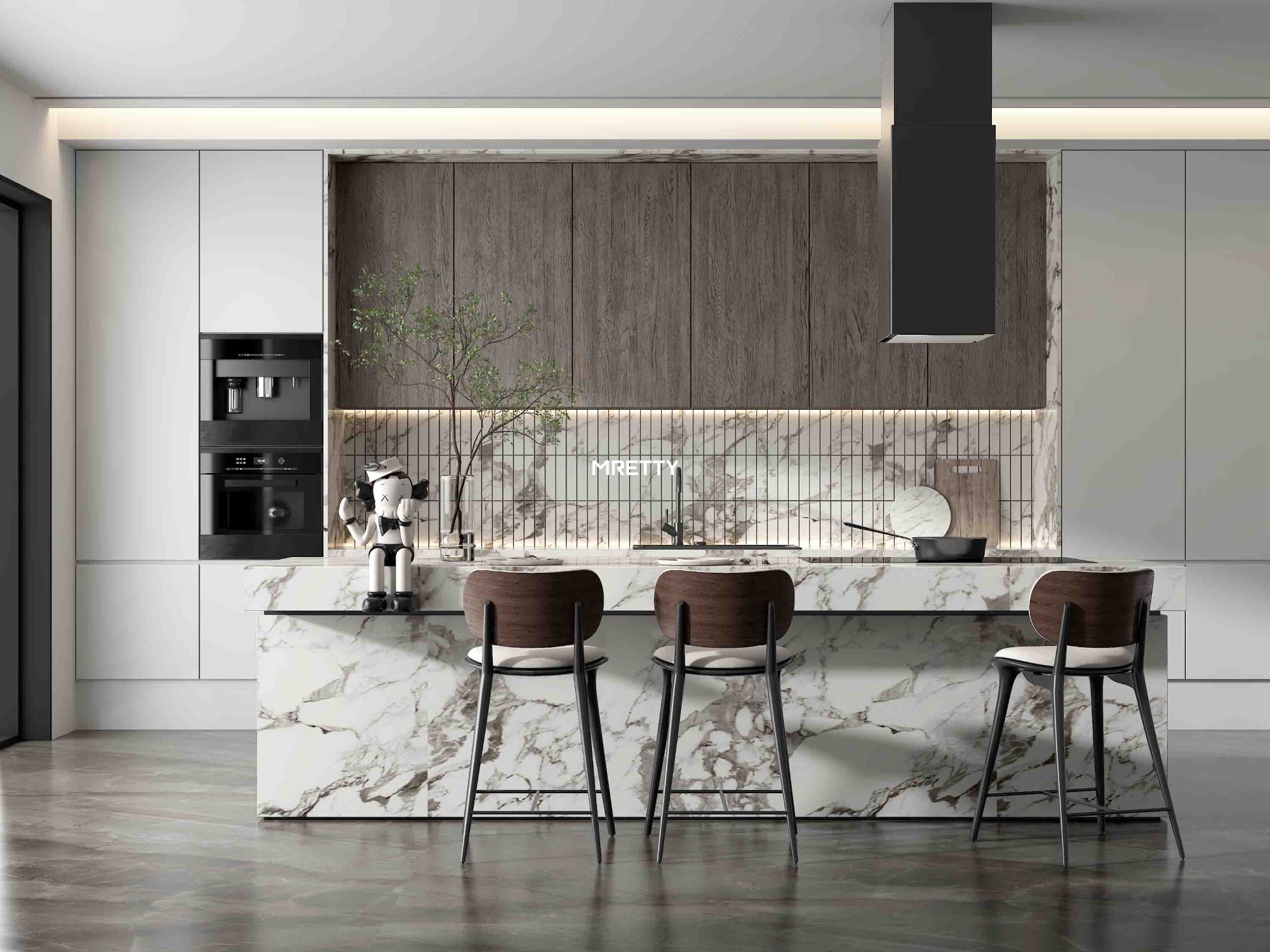
This style is particularly popular with condo clients: sintered stone/quartz, dark wood veneers, hidden LED strips, and "swallowing" appliances and clutter into a single feature wall. The logic isn't about stacking materials, but refinement—hiding mess so premium materials speak for themselves. The sophistication in these Singapore luxury whole-house customization cases usually comes from a seamless facade where "you see no hardware, yet everything works perfectly."
3) Biophilic Design: Unloading Urban Stress Indoors
It’s more than just lining up potted plants—it’s embedding natural light, ventilation, and organic curves into the spatial skeleton. We use the curved language of custom carpentry (rounded island edges, arched transitions, softened joints) to dissolve compactness. It’s becoming a powerful "spatial relaxant" in HDB renovation trends, preventing small homes from feeling like "boxy containers."
Currently Hottest Functional Upgrades (More Practical Than Pure Style):
- Built-in Home Office: Not just a desk in a corner, but a custom niche/recessed cabinet system with integrated storage.
- Multi-functional Kitchen Island: Prep station + dining table + hidden storage in one.
- Walk-in Closet Lite: Even in smaller HDB layouts, cleverly reorganizing boundaries between adjacent spaces can carve out a "boutique dressing zone." (In a recent MRETTY customer feedback survey, we converted a small storeroom into a functional walk-in, significantly elevating the master bedroom.)
❌ Common Pitfall: Copy-pasting Pinterest photos into Singapore without adapting for humidity, dimensions, or storage.
✅ Smarter Approach: Extract the "essence" (Japandi’s lightness and order, Luxury’s proportions) and execute it with materials and layouts suited to local climate and floor plans.
HDB vs. Condo Renovation: Rules Demand Different Strategies
To succeed, you must first accept: Your property type dictates what you can and cannot touch.
- HDB Flats: Regulations are rigid. Certain structural/core elements cannot be altered; flooring and window replacements have boundaries. My team cross-references every scheme with the latest HDB codes before work begins—saving not just time, but real money on rework.
- Private Condos: Governed by MCST (Management Corporation Strata Title). Noise curfews, work hour restrictions, and common area protection are key; however, "openness" is more feasible—non-load-bearing walls are easier to remove (subject to approval), making condo interior design trends like "integrated living/dining/kitchen" easier to execute.
❌ Common Pitfall: Using identical renovation drawings for both HDB and Condo.
✅ Smarter Approach: Engage a design team familiar with both HDB regulations and MCST procedures—this "regulatory experience" is the chassis for a smooth project.
Rules define the boundaries, but within those boundaries, the design can still be highly expressive.
Maximizing Every Square Foot for Lifestyle and Property Value
Space is Singapore’s ultimate luxury. At MRETTY, our design philosophy revolves around space maximization—not magic, but using the right custom furniture to squeeze every millimeter of utility.
How has WFH changed Singapore’s floor plan logic?
Hybrid work has turned every homeowner into a space planner: a corner that doesn’t disturb family and looks presentable on video is now as essential as a comfortable sofa. Thus, multi-functional furniture evolved from gimmick to tool: wall beds, pop-up desks, platform storage. I recently helped a 2-bedroom condo client with a guest room: integrating a "fold-down bed + wardrobe" system freed up the space for a full-time office during the day—proving small areas can run complete life scenarios.
Custom Carpentry vs. Ready-Made Furniture: You’re Buying Space, Not Just Cabinets
Ready-made is fast and cheaper upfront, but it rarely "fits" your home perfectly. That 10cm dead gap beside a wardrobe is burning money in a small layout. Custom carpentry grows according to your room’s actual dimensions:
In my experience, floor-to-ceiling built-in full-height carpentry is the most valuable investment for using custom furniture to reclaim space in Singapore condos: it eliminates dead zones, hides clutter, and creates visual flatness. That "expensive feel" comes from "seamless precision," something ready-made furniture can never match.
It also directly impacts resale appeal. When we review which renovations most boost Singapore property value, integrated storage systems are almost always ranked near the top—buyers perceive "pre-managed clutter" as a hard asset, a tangible value-preservation/premium factor.
Here are a few "small-space but high-impact" custom spots:
- Full-height entry shoe cabinet + integrated bench (turning a corridor into a functional foyer).
- Platform storage bed: One box handling seasonal bedding + luggage, more cost-effective than adding another wardrobe.
- Bay window seat + drawer conversion: Turning a decorative sill into a "usable seating + hidden storage" zone.
❌ Common Pitfall: Stuffing bulky standalone cabinets against walls, fragmenting the room into visual noise.
✅ Smarter Approach: Use a consistent "whole-house custom language" where furniture interfaces tightly with walls—the space will look larger, cleaner, and more premium.
Plan Your Investment: Budgeting for Your Dream Custom Home
High-end renovation is a significant outlay, so costs must be clear. The gap in Singapore whole-house custom furniture pricing usually comes down to three things: material standards, design complexity, and process control.
At MRETTY, we use low-formaldehyde imported boards and top-tier European hardware systems, backed by precision factory equipment to ensure consistency and joint quality. This is indeed higher than the initial quote for "finding a casual carpenter." For a typical 90 sqm 4-room HDB flat, whole-house customization usually starts from around S$30,000, scaling higher depending on materials and structural complexity—this must be viewed as "lifecycle cost," not just entry price.
Is now a good time to renovate your HDB or Condo?
Given the "long-term rising importance of the home + property fundamentals," 2026 is a logical window. Well-executed renovations boost living quality and can realize returns. Knight Frank’s 2025 report suggests that, all else equal, units with systematic renovation/customization sometimes command 10–15% price premiums.
❌ Common Pitfall: Awarding the project to whoever quotes lowest—often resulting in downgraded materials, hidden costs, and future defects.
✅ Smarter Approach: Compare portfolios, material sourcing, factory process chains, and genuine reviews; paying slightly more for "certainty" is often the most economical choice.
When budgeting prioritizes "quality + professional execution," you gain not just a new home, but a place you won’t want to leave for many years.
About the Author
Aida is the Lead Designer for custom home solutions at MRETTY, with over 10 years of deep expertise in shaping residential spaces in Singapore. She believes "space is the external manifestation of the dweller's inner spirit; design is the journey guiding one toward self-awareness," applying this philosophy to every personalized environment—ensuring beauty and utility coexist. She specializes in diverse styles—Modern, Italian, French, Japanese, and Mid-Century—translating them into high-quality, executable solutions tailored to Singapore’s actual floor plans and climate for discerning local homeowners.
MRETTY: Premium Bespoke Kitchen & Cabinet Systems Provider in Singapore.
