
 Singapore
 China
China
The soul of a space often resides in its details. Beyond the grand sweep of walls and the expanse of floors, it is the subtle, masterfully executed elements that impart character and warmth. Among these, architectural woodworking details stand supreme—a timeless language of form, texture, and precision. This is where structure becomes sculpture, and a simple material like wood is transformed into a narrative of elegance and enduring quality. It is an art form that speaks in whispers of heritage and breathes life into modern aesthetics, turning a house into a sanctuary of personal style.
At MRETTY, we believe that true luxury is found in this meticulous craftsmanship. It is the perfect joinery of a cabinet, the graceful curve of a custom moulding, and the seamless integration of a built-in that defines a bespoke interior. Join us as we explore the intricate world of architectural woodworking, a discipline where artistry and engineering converge to create spaces of unparalleled beauty and function.
The Enduring Legacy of Architectural Woodworking
Wood is humanity's oldest building companion. From the rudimentary shelters of our ancestors to the soaring cathedrals of Europe and the serene temples of Asia, woodworking has been central to architectural expression. Historically, it was a symbol of status and artistry. The intricate carvings of a Gothic choir screen, the geometric harmony of Islamic latticework (Mashrabiya), or the robust timber framing of a Tudor home all tell stories of their time, their culture, and the hands that shaped them.
In modern architecture, the role of woodworking has evolved but lost none of its significance. While steel and glass define skylines, wood brings the human element back into focus. It softens minimalist interiors, adds organic texture to stark geometries, and provides a tangible connection to the natural world. From the sleek lines of Scandinavian design to the warm, inviting feel of a contemporary craftsman home, architectural woodworking remains the key to creating spaces that are not just seen, but felt. MRETTY honors this legacy, blending age-old techniques with modern innovation to craft interiors that are both current and timeless.
Deconstructing the Craft: Types of Woodworking Techniques
Architectural woodworking is a broad field encompassing a variety of specialized techniques. Understanding these methods reveals the depth of skill required to achieve a flawless finish.
Joinery: The Art of Connection
Joinery is the cornerstone of woodworking, involving the creation of strong, stable, and often beautiful connections between pieces of wood without relying on metal fasteners.
Mortise and Tenon: A classic, incredibly strong joint where a projecting "tenon" fits snugly into a corresponding hole or "mortise." It is a hallmark of quality furniture and structural framing.
Dovetail Joints: Instantly recognizable by their interlocking, trapezoidal "pins" and "tails," dovetails are prized for their immense tensile strength and decorative beauty. They are the signature of high-end drawer construction.
Box Joints (Finger Joints): A simpler but effective joint, featuring a series of interlocking rectangular fingers. It offers a large gluing surface, making it strong and visually interesting.
At MRETTY, our artisans are masters of joinery. This foundational expertise ensures that every cabinet, wardrobe, and custom feature is not only beautiful but built to last for generations.
Millwork and Moulding: Shaping the Profile
Millwork refers to any ready-made wood components produced in a mill, such as doors, window casings, and mouldings. Mouldings are the decorative strips that add architectural definition.
Crown Moulding: Gracefully transitions the seam between wall and ceiling.
Baseboards: Protect the base of the wall while providing a clean visual foundation.
Casing: Frames doors and windows, adding a finished look.
Wainscoting and Paneling: Adds texture, protection, and a sense of traditional elegance to the lower portion of walls.
These elements, when custom-designed and perfectly installed, orchestrate the architectural rhythm of a room, guiding the eye and creating a cohesive, polished atmosphere.
Cabinetry and Casework: The Heart of Functionality
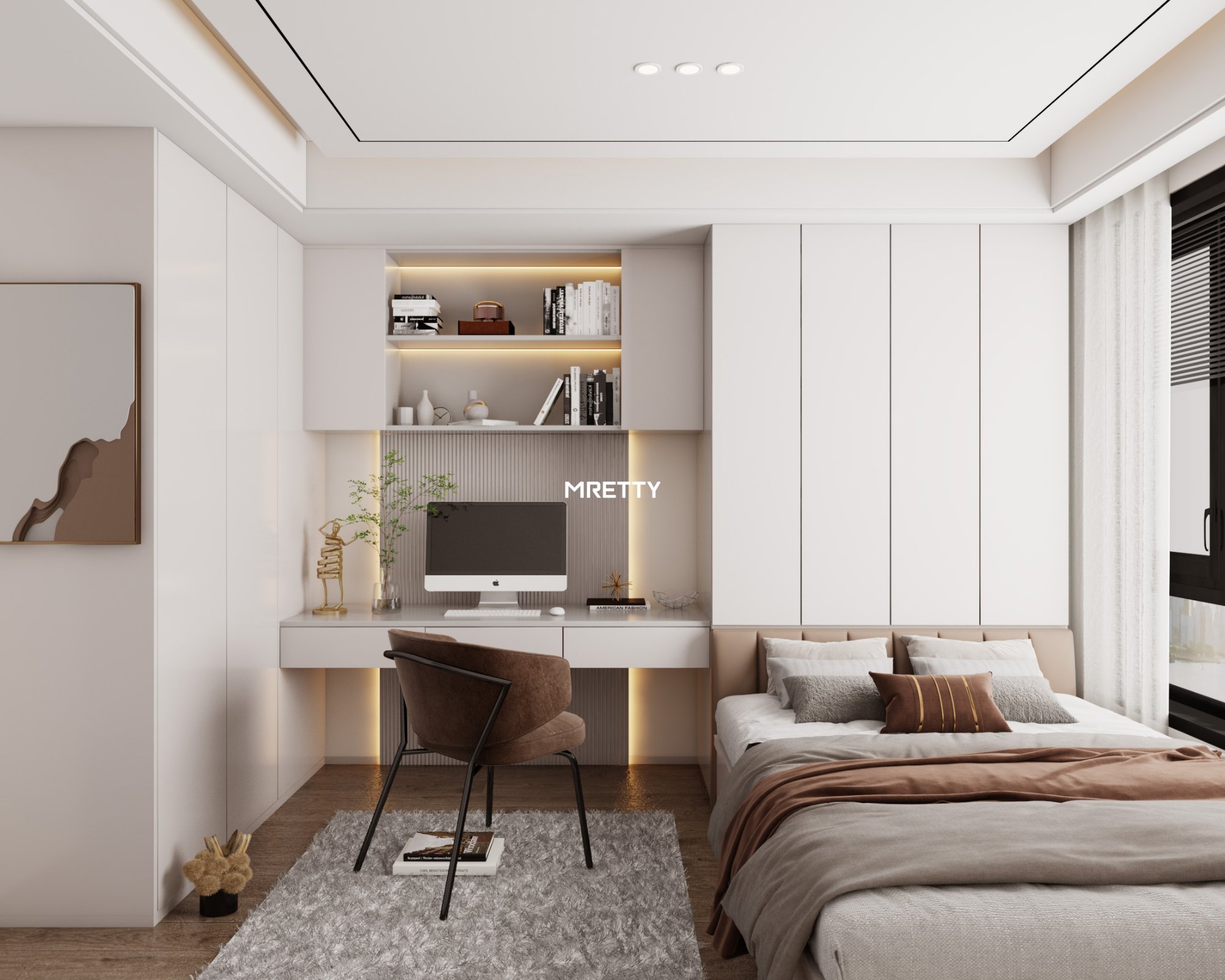
This is perhaps the most visible form of architectural woodworking in a home. It involves designing and building custom storage solutions like kitchen cabinets, bathroom vanities, bookshelves, and wardrobes. High-quality casework is defined by:
Precision Fit: Doors and drawers that align perfectly with whisper-quiet operation.
Superior Materials: Use of solid woods and high-grade plywoods for durability.
Intelligent Design: Layouts that maximize storage and enhance workflow.
MRETTY excels in bespoke cabinetry, transforming everyday storage into statements of sophisticated design that seamlessly integrate with your lifestyle.
Veneering and Marquetry: The Art of the Surface
Veneering involves applying thin slices of beautiful wood (veneer) onto a stable substrate. This technique allows for the use of rare and exotic woods in a sustainable way, and it enables stunning visual effects like book-matching, where two adjoining veneer sheets are opened like a book to create a mirrored grain pattern.
Marquetry takes this a step further, creating intricate pictures or patterns by inlaying different veneers, shell, or ivory into a surface. It is the pinnacle of decorative woodworking artistry.
The Tools of the Trade: A Blend of Hand and Machine
The modern woodworking workshop is a hybrid environment where the precision of advanced machinery complements the irreplaceable touch of the human hand.
Hand Tools: Chisels, hand planes, and saws remain essential for fine-tuning joints, carving details, and achieving a level of nuance that machines cannot replicate. The artisan's connection to the wood through these tools is intimate and immediate.
Power Tools: Routers create decorative edges, table saws make precise cuts, and sanders prepare surfaces for finishing. These tools provide efficiency and consistency.
CNC (Computer Numerical Control) Machines: For complex, repetitive, or highly precise cuts, CNC routers translate digital designs into perfectly executed wooden components. This technology opens new frontiers for creativity while ensuring unparalleled accuracy.
Woodworking's Role in Aesthetics and Functionality
The contribution of architectural woodworking details extends far beyond decoration. It is a powerful tool for solving design challenges and enhancing the livability of a space.
Creating Flow and Definition: Custom built-ins can unite disparate areas of an open-plan home, while well-placed paneling can define a dining space or entryway.
Maximizing Space: In urban environments like Singapore, intelligent woodworking is key. A custom wardrobe can utilize every centimeter of a niche, while a bespoke kitchen island can combine storage, seating, and prep space into one elegant unit.
Concealing and Integrating: Woodwork can artfully conceal structural elements, integrate lighting systems, or hide home technology, resulting in a clean, uncluttered aesthetic.
Acoustic and Thermal Comfort: Wood is a natural insulator and sound absorber. Wood-paneled walls or ceilings can make a room feel quieter, warmer, and more inviting.
The Future of Woodworking: Sustainability and Innovation
As the world moves toward a more sustainable future, woodworking is experiencing a renaissance. Wood is a renewable resource, and when sourced responsibly, it represents one of the most eco-friendly building materials available.
The future lies in combining this inherent sustainability with innovative design. This includes:
Engineered Woods: Products like Cross-Laminated Timber (CLT) are enabling the construction of entire multi-story buildings from wood, showcasing its structural potential.
Smart Integration: Woodworking is adapting to incorporate smart home technology, from integrated charging stations in cabinetry to sensor-activated lighting in wardrobes.
Digital Fabrication: Advanced software and CNC technology allow for the creation of complex geometric forms and parametric designs that were once impossible, pushing the boundaries of architectural expression.
MRETTY's Bespoke Woodwork Collections
Explore our collections where exquisite woodworking is the star:
Bespoke Kitchen Systems: Discover custom kitchens where functionality meets flawless craftsmanship.
Custom Wardrobes: Tailor-made storage solutions designed for your space and style.
- Whole-House Customization: Unify your home with a cohesive vision of bespoke woodwork and elegant design.
Customer FAQs about Custom Woodwork
Q: How do I care for my custom woodwork?
A: We provide detailed care instructions for all our finishes. Generally, a soft, damp cloth is sufficient for cleaning. Avoid harsh chemicals. Regular dusting will maintain its luster for years.
Q: Can MRETTY match a specific wood finish in my home?
A: Absolutely. Our finishing experts specialize in custom stain and paint matching to ensure a seamless integration with your existing décor.
Q: Is custom woodworking a sustainable choice?
A: Yes. MRETTY is committed to sustainability. We prioritize the use of responsibly sourced materials, including woods certified by organizations that promote responsible forest management.
Client Showcase: The Sentosa Cove Residence
"MRETTY transformed our living space. Their attention to architectural woodworking detail is extraordinary. The custom media unit and library they built are not just furniture; they are the heart of our home. The craftsmanship is impeccable." – Mr. & Mrs. Tan, Sentosa Cove
Experience the Art of Bespoke Architectural Woodworking with MRETTY
Architectural woodworking is more than a construction method; it is an art form that enriches our lives, connects us to nature, and imbues our homes with a soul. It is a testament to the idea that the most profound beauty is often found in the things we can touch and feel—the smooth grain of a perfectly finished surface, the crisp line of a well-made joint.
As a leader in bespoke interiors, MRETTY champions this philosophy in every project. Our commitment to excellence is reinforced by our dedication to using high-quality, sustainable materials, including those recognized by FSC (Forest Stewardship Council) certification, ensuring your beautiful home is also a responsible one. We invite you to experience the transformative power of master craftsmanship. Let us help you compose the symphony of details that will make your space uniquely yours.
Book a Free Consultation Now
About the Author and MRETTY
Written by: 潘俊麒 (Pan Junqi)
Pan Junqi is the Lead Designer at MRETTY. He is a celebrated figure in interior architecture, renowned for his minimalist yet warm aesthetic. His work on the "Orchard Boulevard Penthouse" won the Gold Award at the Singapore Interior Design Awards for its innovative use of fluted wood paneling and seamless integrated cabinetry.
MRETTY: Premium Bespoke Kitchen & Cabinet Systems Provider in Singapore.
