
 Singapore
 China
China
Three Things You Will Understand After Reading This Guide
- True Costs: Access a realistic budget benchmark for whole-house customization in Singapore—applicable to everything from 4-room HDB BTOs to luxury condominiums.
- A Transparent Process: Follow the proven 5-step workflow used by MRETTY, so you know exactly what to expect at each stage and avoid being kept in the dark.
- Smarter Choices: Learn which materials survive Singapore’s humidity and why "Price Per Foot Run (PFR)" is not the full story.
The most wasteful spatial design mistake in many new Singapore homes (especially BTOs) is something most people never realize—yet it is easily corrected.
I am a Lead Designer at MRETTY, with over a decade in this industry. To me, a well-planned whole house custom furniture project changes more than just "looks"—it makes your home finally feel truly tailored.
What Is “Whole House Custom Furniture”?
"Whole house custom furniture" is an integrated design philosophy: treating all built-in furniture that needs to be "embedded" or "grown" into your home as one unified system.
This includes: kitchen cabinetry systems, wardrobe/walk-in systems, TV feature walls/consoles, storage beds, study desks, and more.
Its primary goal is to perfect spatial planning and layout—style comes second.
This approach guarantees:
- Visual Unity (consistent materials, colors, and detailing)
- Zero Wasted Space (critical for compact Singapore HDBs and condominiums)
Think of it as a bespoke suit for your home: instead of forcing off-the-rack items into place, everything is cut to fit your floor plan, circulation, and lifestyle.
Recently, a client had an awkward corner in their study where no combination of "off-the-shelf desk + bookshelf" could fit flush. We designed it as an integrated unit: desk + bookshelf + concealed filing storage merged into a single piece that perfectly hugged the irregular wall—making the room feel larger. That is the value of integrated design.
❌ Common Mistake: Treating "customization" as fragmented orders—ordering a wardrobe here, a console there—resulting in a visually disjointed home.
✅ Better Approach: Plan all built-in millwork together: unified material palettes, unified hardware systems, and unified design language. The result should feel "grown from the same DNA," not pieced together.
The Custom Journey: From Idea to Reality in 5 Steps
Customization sounds intimidating, but structured workflows make it simple. MRETTY’s process, refined over hundreds of projects, prioritizes certainty.
1) Needs Analysis × Precision Measurement (Week 1)
We discuss lifestyle, storage lists, cooking habits, and work-from-home needs. Then, re-measurement locks in beam positions, bay windows, electrical panels, and plumbing outlets. This step prevents future "collisions."
2) Material Selection × 3D Visualization (Week 2)
You select finishes/benchtop/hardware directions from MRETTY’s curated systems (e.g., durable laminate systems, quartz/sintered stone). We then use photo-realistic 3D renderings to pre-visualize the future space—checking proportions, panel gaps, socket positions, and lighting coves in advance.
Based on internal reviews since early 2026: thorough 3D validation significantly reduces mid-production change requests (cutting rework and disputes).
3) Precision Manufacturing (Weeks 3–6)
Once drawings are locked, production moves into MRETTY’s 15,000㎡ smart factory ecosystem: CNC/automated cutting and edge-banding follow "sub-millimeter" logic. The benefit: less dust and noise in your home; critical dimensions stay stable.
4) Professional Installation (Weeks 7–8)
Assembly, leveling, and detailing are handled by internal teams familiar with the system, rather than outsourcing to unrelated contractors.
5) Handover & Inspection (Final Day)
We walk through together: every hinge, drawer slide, countertop joint, and skirting board. The standard is simple—would you want to live with it long-term?
Mini-FAQ: How long does whole-house millwork take in Singapore?
For a typical 4-room HDB / 3-bedroom condo, the timeline commonly falls within 6–9 weeks (depending on complexity and scale).
One 4-room BTO family needed to move in before school started. HDB approvals delayed things by about two weeks, but because the factory could pre-fabricate in parallel (components advanced in batches while site tiling/waterproofing was ongoing), the timeline recovered, and we handed over one day ahead of schedule.
❌ Common Mistake: Rushing into production during the design phase, leaving details unresolved—leading to expensive late-stage changes.
✅ Better Approach: Do the "hard work" in the 3D phase: moving a virtual cabinet is always cheaper than dismantling a real one.
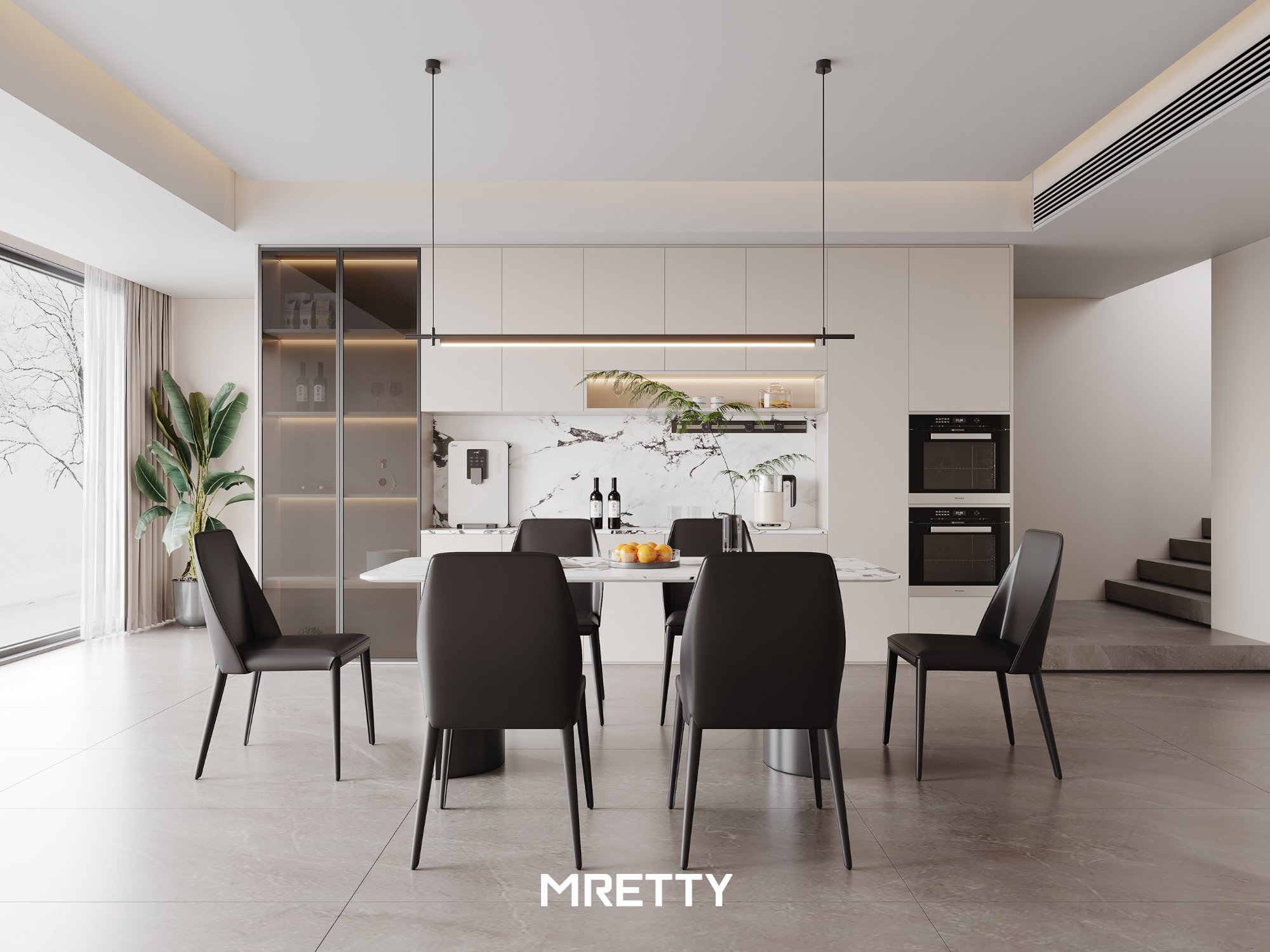
Realistic Pricing Packages for Whole House Custom Furniture in Singapore
The first question is usually: "How much does whole-house customization cost in Singapore?"
Pricing fundamentally depends on three factors: home size/scope, design complexity, and material/hardware grade.
The industry often uses PFR (Price Per Foot Run) as a baseline for "standard linear cabinetry" (though it does not explain everything):
Common PFR Reference Ranges for Custom Millwork in Singapore
- Swing-door Wardrobe: Approx. S$240–S$280 / ft run
- Sliding-door Wardrobe: Approx. S$280–S$350 / ft run
- Kitchen Base + Wall Cabinets (Combined): Approx. S$220–S$400 / ft run (depending on benchtop/hardware/internal configurations).
More Intuitive "Full Project" Budget Ranges (2026 Estimates)
- 4-Room HDB BTO Whole House Package (Kitchen + 2–3 Wardrobes + TV Console, etc.): Typically S$18,000–S$35,000.
- Higher-End Condo Whole House Package (Larger areas, premium benchtops like sintered stone, advanced hardware like Blum Aventos): Can range from S$50,000–S$120,000+ (depending on scale and specifications).
❌ Common Mistake: Focusing only on the lowest PFR. Low prices may signal: non-moisture-resistant cores, thin edge-banding, generic hinges, unstable finish batches.
✅ Better Approach: Insist on an itemized quotation: specifying core board grades (at least E1 low-formaldehyde emission standards, with options for stricter E0), hardware brands (e.g., Blum / Häfele), surface finish systems, and detailing methods.
Higher unit cost with stronger internals = long-term savings.
Choosing Materials That Withstand Singapore’s Climate
Singapore’s year-round heat and humidity mean wrong material choices lead to warping, swelling, and corroded hardware within a few years.
I prioritize in this order: Structural Core > Hardware Skeleton > Surface Finish (even though the finish is most visible).
Recommended Material Directions (for Singapore)
- Core Boards (Structure): Prefer moisture-resistant plywood systems over standard MDF/particleboard—the latter swell more easily in humid environments. We typically use plywood aligned with E1 low-formaldehyde standards, upgradable to stricter E0 grades (near-zero emissions) for greater peace of mind.
- Surface Finishes: Durable laminate systems offer the most practicality. For wood textures, placement and treatment must suit local conditions. Benchtops commonly use quartz / sintered stone for scratch and heat resistance.
- Hardware: This is the joint of your furniture. Premium hardware like Blum / Häfele is not "showing off"—it is validated for reliability (often tested for hundreds of thousands of cycles), delivering a noticeable gap in long-term feel and lifespan.
Many assume customization is just about "picking trendy colors."
But what determines whether furniture survives Singapore’s climate is often the invisible core boards and hardware. No matter how beautiful the finish, a swollen core ruins everything; poor hinges mean doors will sag. Investing in "moisture-resistant cores + reliable hardware" is the secret to durability.
E1 is a strict European standard for formaldehyde release from engineered boards; E0 is stricter (closer to zero). Last quarter, for a Tampines family with young children, we used E0-grade boards in the kids’ rooms. The value of "cleaner air" mattered far more to the homeowner than any visible grain pattern.
Mini-FAQ: What should child-friendly custom design consider in Singapore?
Key points: choose low-VOC / E0–E1 grade boards and adhesive systems; round exposed corners; specify soft-close mechanisms on all doors/drawers to prevent finger trapping; ensure robust anchoring/fixing methods to prevent tipping.
❌ Common Mistake: Selecting materials only because "they look good in the showroom," ignoring humidity and daily wear.
✅ Better Approach: Confirm core board and hardware grades first, then choose surface colors/textures—never reverse the order.
Custom Millwork vs. IKEA: Which Suits Your Singapore Home?
The conclusion upfront: They serve different scenarios. If you are planning a long-term renovation budget, the key is recognizing "how long you will stay and how tailored you want it."
| Dimension | MRETTY Custom Millwork (Whole House) | Ready-Made / Mass-Market Systems (e.g., IKEA) |
|---|---|---|
| Space Utilization | Exceptional: Wall-to-wall, floor-to-ceiling, eliminating dead zones | Limited: Standard sizes leave side/top gaps that collect dust |
| Material Durability (Humidity) | Stronger: Moisture-resistant plywood systems + robust hardware | Mostly particleboard/MDF; lifespan and stability suffer in humidity |
| Lifespan | 15–20 Years+ (with proper care and specs) | Commonly 3–8 Years before showing age/looseness (especially in wet seasons) |
| Visual Unity | High: One consistent design language throughout | Harder: Mixing series often creates a "patchwork" look |
| Upfront Investment | Higher (pays off in fit and long-term peace of mind) | Lower (accessible entry point) |
| Long-Term Value | Asset-like: Elevates living efficiency and home completion | Transitional: Portable, but may require repeated repairs/replacements |
| Best Suited For | Owner-occupiers (BTO/Condo) wanting optimized layouts and storage | Tenants, short-term stays, or very tight transitional budgets |
The biggest pain point in Singapore homes is always storage.
Ready-made wardrobes rarely sit flush against BTO bedroom walls: typically leaving 8–10cm gaps on sides and 20–30cm above—seemingly small, but effectively sacrificing an entire "top storage band."
Built-in customization fills it completely (floor-to-ceiling, wall-to-wall), creating a significant gain in usable storage volume. When applied to kitchens, entryways, and corridors, "whole-house millwork" buys you not vanity, but a less cluttered, more breathable home every day.
Mini-FAQ: Is whole-house customization worth it for HDBs?
Absolutely. Precisely because HDB layouts are compact, they demand integrated solutions that account for beams, half-walls, dead corners, and electrical risers. Otherwise, the home feels increasingly cramped and disorganized over time.
Why MRETTY’s Smart Factory Approach Matters
The difficulty in custom furniture has never been "drawing beautifully"—it is whether what is drawn can be reliably turned into reality with consistent batch quality.
MRETTY houses key manufacturing within its own/controlled smart factory ecosystem (15,000㎡ scale), serving two purposes:
- Superior Consistency in Dimensions & Batches: Unified finishes and cutting logic reduce "color mismatches here, uneven gaps there."
- Cleaner Sites & Smoother Schedules: Most work happens off-site; on-site work focuses on precise assembly and detailing—spare yourself endless construction chaos.
Your Top Questions Answered
- How long does whole-house customization take? Typical 4-room HDB / 3-bedroom condo projects commonly take 6–9 weeks (varies with scope and complexity).
- Is PFR enough to judge value? No. PFR is just "price per length." Lifespan is determined by core materials, edge-banding, hardware, structure, and installation.
- How do I make it safer for kids? Low-emission (E0/E1) materials + rounded corners + soft-close + robust anchoring; invest in the "invisible structure and safety" first.
MRETTY: Premium Bespoke Kitchen & Cabinet Systems Provider in Singapore.
