
 Singapore
 China
China
TL;DR: The Logic Behind Making Your Home More Valuable
- High-ROI Zones: Prioritize budget on the kitchen and bathrooms.
- Smart Storage: Opt for built-in, integrated storage that maximizes space without feeling cramped.
- Timeless Over Trendy: Choose classic styles instead of niche trends.
- Quality Signals Premium Pricing: Material and detail that "look expensive" directly raise buyer perception and offer prices.
Many homeowners assume that any renovation automatically increases property value. Some even believe spending S$50,000 guarantees adding S$50,000 to the valuation.
After 14 years in the industry, I can state plainly: It does not work that way.
Strategic property value enhancement through interior design is fundamentally "smart investing," not blind spending—only modifying what future buyers are genuinely willing to pay for. Drawing on experience from hundreds of Singapore properties, this guide shows you where your money works hardest for the most stable returns.
1. Understanding the Real ROI of Interior Design in Singapore
Let’s talk numbers. The key metric is Return on Investment (ROI). It measures whether the added value from your renovation exceeds the cost itself. Positive ROI = the value increase outweighs your spend.
- For HDB flats, smart partial updates can make your unit stand out significantly among comparable listings.
- For private condominiums, a "quiet luxury" finish and premium hardware details support a higher asking price.
Example: A well-executed kitchen renovation often achieves an ROI of 80% or higher, making it a relatively safe "equity leverage" move.
❌ Common Mistake: Assuming "what I spent equals what I added"—rarely true in practice.
✅ Better Approach: Only make changes that improve both "functionality + timeless appeal"; these are what influence professional valuations and buyer willingness to pay.
Good renovation fundamentally widens your buyer pool: more people want it → faster sale + higher resale price.
2. Designing the 3 Key Zones That Add the Most Value
Not every room carries equal weight with buyers. Across countless projects at MRETTY, we consistently validate that if budget is limited, priority always flows to these three areas.
A. High-ROI Kitchen Renovation (Top Priority)
The kitchen is the heart of the home—buyers know it. A dated, cramped, poorly laid-out kitchen is a classic deal-breaker.
Industry data shows: a comprehensive kitchen overhaul often recoups 60%–120% of its cost (depending on starting condition and finish quality). The key is not splurging on expensive materials, but delivering a "functional + beautiful" package: smooth workflow, ample storage, solid countertop and cabinet quality.
Example: A 5-room HDB flat in the Bishan area had a dark, tight kitchen. We converted it into a semi-open layout with a quartz-top island and floor-to-ceiling MRETTY custom cabinetry. This single upgrade elevated the overall perception, driving a near 15% lift in valuation—far exceeding the S$25,000 project investment.
Another recent case: a 2-bedroom serviced apartment/private residence near Marina Bay had a tired-looking kitchen. We installed a sleek, handleless integrated kitchen system with built-in appliances. The agent reported it became the "easiest unit to pitch" among similar layouts on the same floor—the kitchen made it feel brand new, instantly supporting a higher ask.
B. Bathroom Upgrades with a "Spa Feel" (Second Priority)
Bathrooms rank second. Buyers want: clean, modern, relaxing. You do not need gold-plated faucets, but you must eliminate "old, worn-out vibes."
Focus on three moves:
- Sanitaryware & Hardware: Replace old basins and dripping taps with modern, water-efficient models.
- Layered Lighting: Ambient + task lighting (mirror front/wash area) makes even small bathrooms feel larger.
- Space-Saving Storage: Wall-hung vanity cabinets or mirror cabinets hide clutter—one of the most cost-effective tactics in strategic design to boost HDB resale value.
A S$5,000–S$8,000 "light bathroom refresh" often yields an ROI of 70% or better; more importantly, it signals to buyers that core plumbing and daily fixtures are well-maintained.
C. Multi-Functional Living: Beyond Just Hack Walls—"Zoned Usability" Pays More
Everyone says "open-concept is best for resale," and yes, it makes spaces feel larger and brighter—no argument there.
But we observed a counter-intuitive pattern in 2026 projects: Especially for many HDB and condo buyers (particularly families), fully unobstructed open plans can trigger concerns—worries over cooking odors, noise, and lost privacy.
The real secret: use "built-in storage" to create zoned functionality:
- One full-height integrated TV feature wall (swallowing all clutter)
- Bay window seats with hidden drawers
- Wardrobes embedding a compact study nook
These approaches let buyers intuitively grasp how efficiently life fits into the space. You keep the "open feel" without sacrificing practicality.
❌ Common Mistake: Filling the living area with bulky loose furniture (large coffee tables, thick-back sofas, freestanding low cabinets), fragmenting the space.
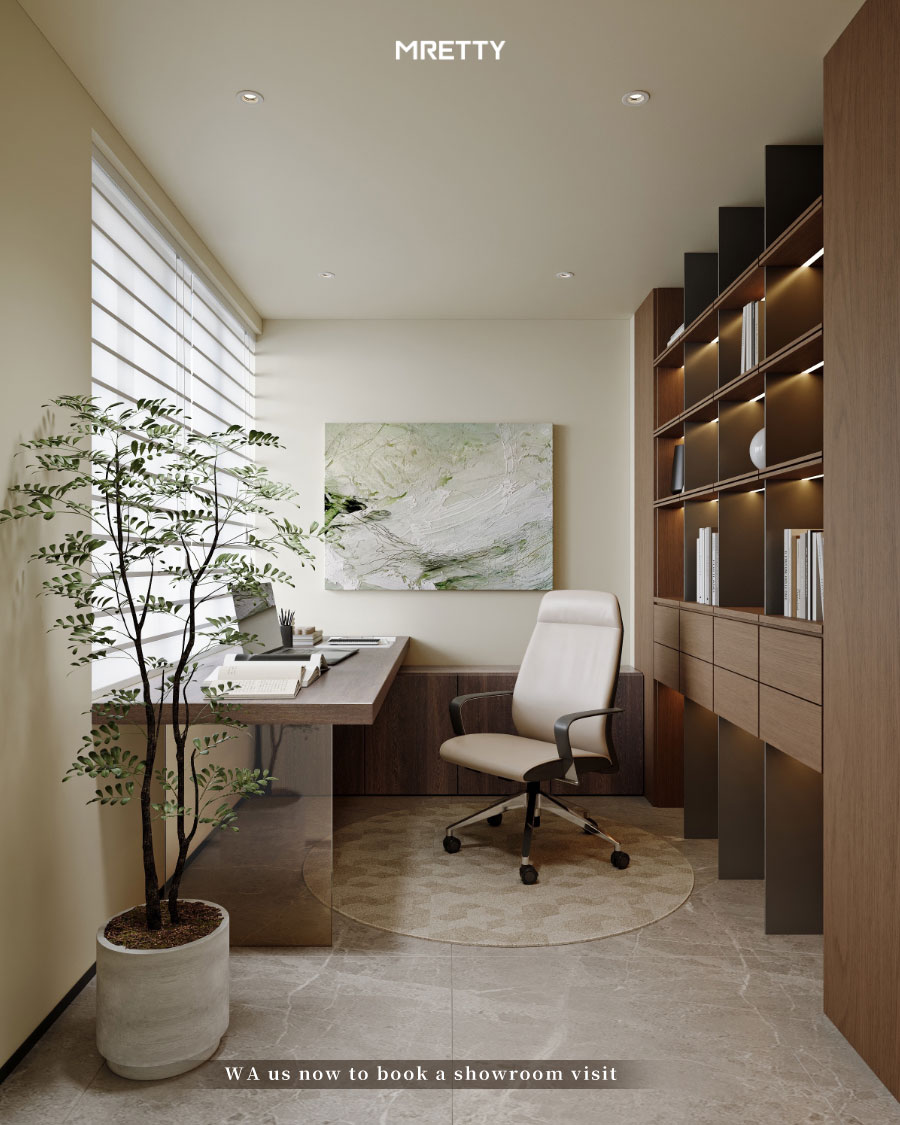
✅ Better Approach: Go for integrated, floor-to-ceiling custom joinery; it "melts" into the wall, feels more cohesive, makes the space appear larger, and naturally defines functional zones.
3. Is Renovating Before Selling Your Condo Worth It in Singapore?
This is one of the most frequent questions from investors. The answer hinges on two points: your condo’s current condition and the prevailing market climate.
- If the unit is already fairly well-kept: major works = wasteful.
- If obvious signs of age are present: targeted renovation is almost always worth it.
The safest "quick-win combo": repaint in neutral tones, restore/clean and polish flooring, update lighting—low cost, high perceptual lift. Total spend around S$3,000–S$7,000, but it often helps you negotiate better, face fewer price cuts, and close faster. The goal is singular: eliminate buyer objections.
Recently, our advice for an older apartment in the East Coast (Marine Parade area) was exactly this: no hacking, no layout changes—just "surface revitalization": fresh paint, updated lighting, a modern vanity set for the main bathroom. That modest investment made the unit look crisp and well-cared-for, securing a sale within two months amid competition from newer nearby launches.
Bottom-line advice for investors:
Do not decorate to your personal taste. Create a "clean, modern, neutral canvas" so buyers can easily picture themselves living there.
4. Strategic Design to Boost HDB Resale Value
To extract a premium from an HDB flat, your approach must fit HDB realities: standardized layouts constrained by Housing & Development Board and Urban Redevelopment Authority rules; your edge comes from "smarter differentiation."
Below are tactics MRETTY repeatedly validates as most effective for "small-format HDB value enhancement":
- Aim for Semi-Open / Island Kitchens: Where HDB regulations permit, partially remove partition walls or introduce an island to instantly amplify the living-dining-kitchen cohesion.
- Maximize Vertical Storage: Under 90 sqm, every centimeter counts; floor-to-ceiling wardrobes and tall kitchen cabinets draw the eye upward and deliver extreme utility.
- Light & Mirror Strategy: A large mirror in a narrow corridor visually doubles the width; light-toned walls (off-white, light grey) maximize natural light absorption.
In 2025, we completed a Punggol BTO project centered on "built-in storage + convertible living." Upon meeting the Minimum Occupation Period, the owner sold at S$40,000 above the median price for similar layouts; the buyer explicitly cited "smart storage design" as the deciding factor.
5. What Truly Moves the Needle: Why Whole-Home Custom Furniture Is Your Best Investment
At this stage, you are moving beyond "basic renovation" into real "value creation." Repainting helps, but high-quality whole-home integrated custom joinery creates a "Wow, this home is different" totality that supports stronger pricing power.
Custom Joinery vs. Loose Furniture: Completely Different Impact on Property Value
Loose furniture is personal movable property—you take it with you when you sell. Custom joinery is affixed to the property, inherited by the next owner—this is a critical distinction in valuation logic.
| Comparison Dimension | Loose Furniture | Custom Joinery (Built-in/Fixed) |
| :--- | :--- | :--- |
| Impact on Property Valuation | Not counted into property value | Treated as fixed installation/renovation asset; supports higher valuation |
| Space Efficiency | Standard sizes; corners often wasted | Millimeter-accurate; converts dead space into usable space |
| Buyer Perception | Temporary solution; easily looks messy | Permanent upgrade; feels inherently part of the home |
| Cohesiveness | Styles may clash | Melds with architectural lines; reads "higher-end" |
Custom solutions from teams like MRETTY deliver value by "solving problems":
- Turning awkward recesses into perfectly fitted wardrobes
- Concealing all wiring within feature walls
- Human-centric, ergonomically sound kitchen systems
The design philosophy is simple: good built-in cabinetry should feel like "part of the building’s skeleton," signaling stable, permanent, quality-assured—rather than "disposable décor." This perception is what makes buyers willing to pay more.
Inside MRETTY’s 15,000 sqm smart production facility, materials lean toward high-density, moisture-resistant cores and European-grade hardware—resulting in cabinets that resist warping and sagging doors. To buyers, this translates into a hidden but powerful selling point: lower likelihood of future repairs.
So: does custom work add value? Yes—provided it avoids cutting corners, garish styling, and excessive personalization. When buyers glance at a MRETTY custom kitchen, they see not "a few cabinet doors," but a "move-in-ready, durable" solution.
Want deeper insight into which styles resell best? Download our complimentary guide: "5 Timeless, High-Resale Design Styles" (with case studies and quick-check pointers).
[Download Your Free Design Guide]
6. Using Timeless Design to Preserve & Grow Property Value
The final puzzle piece: avoid short-lived trends. What is fashionable today will likely look dated by the time you sell five years later.
Design orientations most favorable for resale typically include:
- Modern Minimalism: Clean lines, neutral palettes, uncluttered visuals—widest buyer appeal.
- Japandi: Natural materials + quiet order; enduringly sophisticated without shouting.
- Contemporary Quiet Luxury: Hotel-caliber "restrained elegance" using stone, wood grains, and metallic accents as highlights—never overdone.
❌ Common Mistake: Locking strong personal preferences into "immovable elements"—e.g., an entire bright-red feature wall, or extensive busy patterned tiles.
✅ Better Approach: Keep permanent substrates (flooring, cabinetry, large wall planes) neutral; express personality through replaceable soft furnishings (cushions, rugs, artwork).
This logic ensures your home remains broadly acceptable to the largest buyer pool.
7. Renovation Red Flags: The Most Common Value-Killing Moves
Knowing what not to do is equally critical. I have seen people spend money only to hurt resale prospects.
- Over-Capitalization on Hard Finishes: Installing "gold-plated" features or extensive imported marble in an HDB flat is over-capitalization—costs you will not recover because it mismatches buyer expectations for the district.
- Reducing Bedroom Count: Converting a bedroom into a massive walk-in closet or expanding the living area sounds appealing, but a 3-bedroom unit is always more valuable and attracts more buyers than a 2-bedroom unit of the same size.
- Niche Hobby Rooms: Soundproof recording studios, private cinema pods… your dream may read as "I will need to spend money undoing this" to most buyers.
- Poor DIY Traces: Amateur tiling, sloppy painting, non-compliant wiring—these are red flags that trigger buyer concerns over hidden defects, leading to immediate price pressure.
MRETTY: Premium Bespoke Kitchen & Cabinet Systems Provider in Singapore
