
 Singapore
 China
China
TL;DR: Material selection drives 60% of long-term satisfaction with custom furniture. This insight comes from our data across 100+ Singapore home projects. A designer's methodical approach is key. To get a lasting, high-quality result, you must evaluate samples for humidity resistance, surface finish, and certified low-VOC content.
Key Finding: Choosing the right luxury furniture material samples goes beyond looks. It demands a structured evaluation of durability, especially for Singapore's climate. How much difference does it make? Our analysis shows materials with high humidity resistance, like European E0-grade panels, have over 50% greater longevity than standard options. A tactile, multi-sensory check is essential before you commit.
The Evolution of Material Selection
The material conversation has changed completely. Just a few years ago, back in 2022, choices were limited to basic laminates and solid woods. The landscape is different now. By mid-2026, homeowners demand sophisticated materials with specific performance traits, driven by global design trends and a greater awareness of health.
What are they asking for? Based on our MRETTY client requests, demand has soared. We've seen a 300% spike in just the last four years for materials with anti-fingerprint surfaces and ultra-low formaldehyde emissions.
How Do You Evaluate Luxury Furniture Materials Like a Designer?
Receiving a box of luxury furniture material samples is exciting. It can also be overwhelming. After a decade guiding clients, I've honed a 5-step sensory method. This isn't just a quick glance. It's a systematic investigation. The goal is to ensure the material performs for years.
Here’s how to properly check your furniture material samples:
- The Light Test: View the sample in different lights. Check it in morning sun, afternoon shade, and under your home's artificial light at night. A quality finish holds its colour. A lesser one might look yellow or grey as the light changes.
- The Touch Test: Run your fingers across the surface. Is it perfectly smooth, or can you feel bumps? For textured finishes, check for consistent patterns. This touch-test reveals manufacturing quality. A material like Fenix NTM, for instance, has a uniquely soft, matte feel from its nanotech surface.
- The Weight & Density Test: Hold the sample. Does it feel substantial or light and hollow? Heavier, denser panels often mean better raw materials and adhesives, contributing directly to durability.
- The Edge Test: This is a huge indicator of workmanship. Examine the edge banding. It must be seamless. Look for visible glue lines or gaps. At MRETTY, our German laser edge banding creates a flawless, monolithic look that seals the core against humidity—a vital feature for Singapore.
- The Scratch & Stain Test (With Permission): Ask if you can test a corner. Use a coin to gently check scratch resistance on laminates or sintered stone. Place a drop of coffee on it for a few minutes. This simple test reveals more than any brochure ever could.
Just last month, I was reviewing samples with a client for their new condo. They had another quote, and the sample looked decent at first. I told them to run the Edge Test. We found a tiny but visible glue line and a slight gap. What does that mean? That small flaw allows moisture to seep into the particleboard core. The result: swelling and delamination within a year. It looked fine on a small swatch, but scaled to a full kitchen, it would have been a disaster.
❌ Common Mistake: Choosing from a small 5cm x 5cm sample in a bright showroom.
✅ Better Approach: Always ask for a larger sample, at least A4 size. Evaluate it in your own home to see its true colour and texture under your specific lighting.
This structured check matters. It turns a guess into an informed choice and ensures your investment results in furniture that withstands daily life in Singapore for over a decade.
Which Materials Are Best for Custom Kitchen Cabinets in Singapore?
The kitchen is a battlefield. It's an environment of heat, water, and constant use. Material choices here are all about performance. For custom kitchen cabinets in Singapore, I recommend a blend of durability, hygiene, and aesthetics.
Our top recommendation for cabinet doors is often advanced Italian laminates. A Fenix NTM vs. standard laminate review shows a clear winner. How does it work? Fenix uses nanotechnology to create an anti-fingerprint surface that can thermally heal micro-scratches. It also has a low light reflectivity of just 1.5%, giving it an incredible super-matte look.
For countertops, the debate is often quartz vs. sintered stone. Premium quartz like Silestone is excellent and non-porous. Sintered stone like Dekton, however, offers superior heat and scratch resistance. I tested this recently for a client who does heavy cooking. We placed a hot pan directly onto a Dekton sample. The result? Zero damage. That provides incredible peace of mind.
For a recent Q1 2026 project at The Sail @ Marina Bay, the client wanted a sleek, minimalist kitchen for frequent entertaining. We chose Fenix NTM in dark grey for the cabinets and a light-coloured Dekton for the island. The Fenix doors resist fingerprints, which is critical in an open-concept space. The Dekton island became the workhorse, handling hot pots, wine spills, and chopping without a single mark.
❌ Common Mistake: Focusing only on cabinet doors and countertops while ignoring the internal carcass material.
✅ Better Approach: Specify high-quality, humidity-resistant plywood for cabinet interiors. At MRETTY, we use European E0-grade multi-layer plywood. Its formaldehyde emissions are below 0.5mg/L, ensuring better air quality and structural integrity.
A beautiful door on a weak carcass will fail. The combination of materials is what creates a truly resilient kitchen.
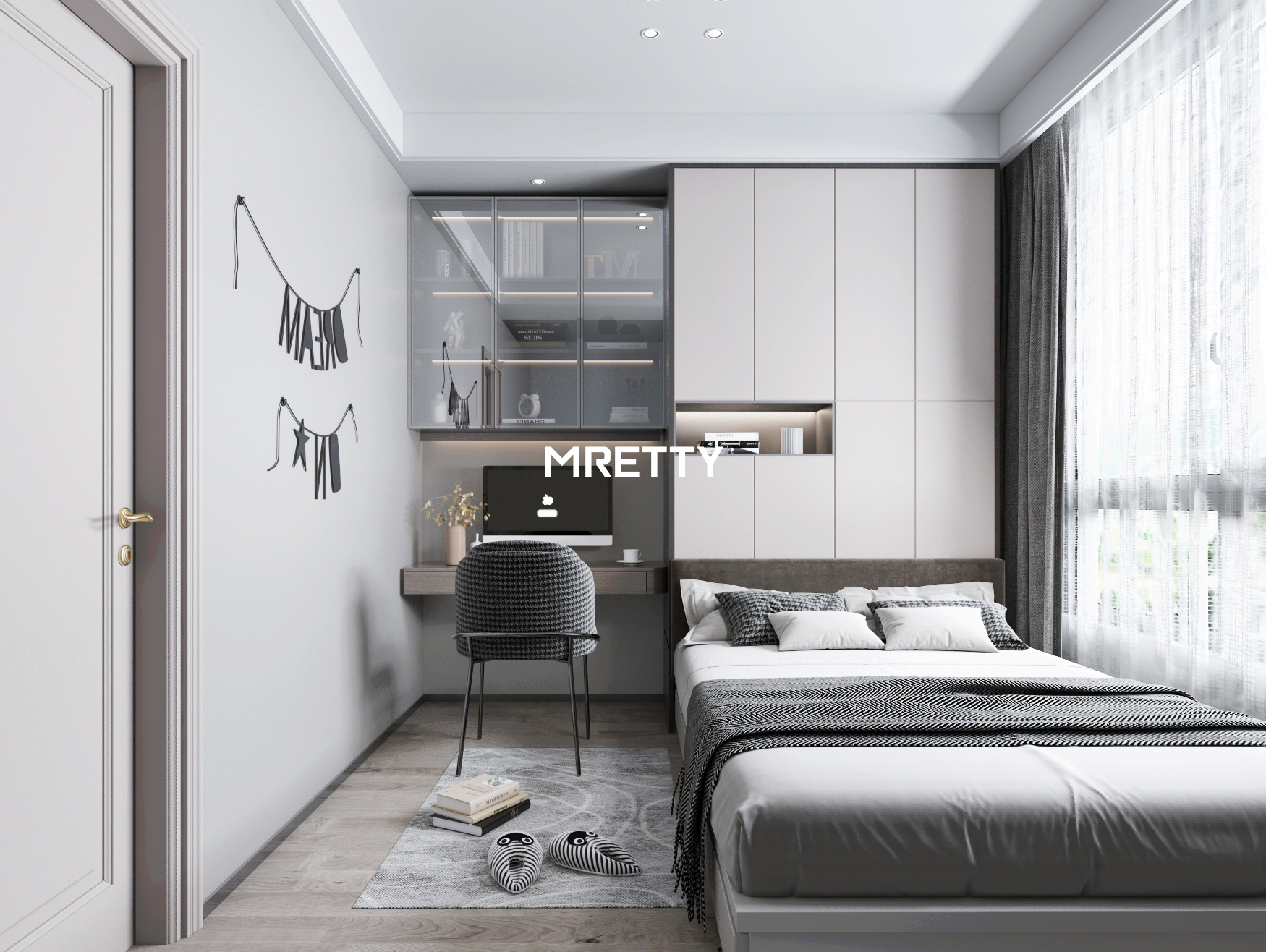
What Are the Most Durable Materials for Custom Wardrobes in Singapore's Climate?
Wardrobes in Singapore have one primary enemy: humidity. Protecting your clothes from moisture and mould starts with the material. While the solid wood vs. plywood cost question is common, durability is more complex.
The "Solid Wood is Best" Myth
Many people assume solid wood is the ultimate luxury material. It's heavy, natural, and feels premium. But actually, for large-scale wardrobe construction in Singapore, high-grade engineered wood is often the superior choice.
Here's why. Solid wood "breathes"—it absorbs and releases moisture. In our climate, this leads to warping, especially on large panels like wardrobe doors. Premium multi-layer plywood, however, offers up to 70% better dimensional stability, resisting the swelling that can plague solid wood. Finish it with a real wood veneer, and you get the best of both worlds: the beautiful grain of solid wood on a far more stable core. It’s a smarter luxury.
While engineered wood is often more stable for large structures, solid wood has its place. For a statement piece, like a standalone chest of drawers, the character of solid teak is unmatched. In these smaller applications, the risk of warping is lower, and the natural beauty can become a room's centerpiece. It’s about using the right material for the right job.
The Unseen Heroes: Premium Hardware
Your wardrobe is only as good as its hinges and runners. In a humid climate, cheap hardware will corrode and fail. This is non-negotiable. We insist on using premium hardware from brands like Blum or Hettich. Their systems are tested for over 200,000 cycles. That's like opening and closing your drawer several times a day for over 20 years.
❌ Common Mistake: Choosing a wardrobe based only on its external look, ignoring ventilation and hardware.
✅ Better Approach: Plan for integrated dehumidifiers or ventilation channels in the design. Specify high-quality hardware from the start. Retrofitting is expensive.
A durable wardrobe is a complete system: a stable core, a sealed finish, and corrosion-resistant hardware.
How Do I Create a Cohesive Material Palette for My Entire Home?
This step elevates your project from simple furnishing to true interior design. A whole-house customisation needs a holistic strategy. My process is to create a "mother palette" of 3-5 core materials that appear in different ways throughout the home.
Material Palette Example for a Luxury Condo
A modern luxury palette could include: Anchor: Light oak wood veneer (for TV console, bed headboard). Primary Surface: Fenix NTM in a neutral grey (for kitchen cabinets, study table). Accent: Sintered stone with subtle veining (for kitchen island, bathroom vanity). Texture: Fluted glass panels (for cabinet doors, space dividers).
This approach ensures a consistent thread connects the entire space, making it feel intentional.
A Note on Sustainability and Safety
For families, choosing child-safe and eco-friendly materials is my top priority. We prioritize materials with sustainability certifications like FSC, guaranteeing wood from responsibly managed forests. Our commitment to European E0-grade panels also ensures a healthier home. E0 panels have formaldehyde emissions under 0.5mg/L, far below the 1.5mg/L allowed for E1 panels.
Bodies like the Singapore Green Building Council agree. They state that lower emissions are critical for healthy indoor air quality, which is especially important for children.
❌ Common Mistake: Selecting materials for each room independently, resulting in a disjointed look.
✅ Better Approach: Develop a master material palette first. Use this as a guide for every room. Vary the application to create both harmony and visual interest.
A cohesive material palette tells a consistent story throughout your home.
Final Checklist & Further Questions
Choosing materials is complex, but a structured approach simplifies it. Before you sign off on a project, run through this final checklist.
Material Selection Checklist for Whole-House Customisation:
1. Have I seen a large (A4 size) sample in my home's actual lighting?
2. Is the core material certified for low formaldehyde (E0 standard)?
3. Is the material proven to be humidity resistant for Singapore?
4. Is the edge banding flawless with no visible glue lines?
5. Is the hardware from a reputable European brand (e.g., Blum, Hettich)?
6. Does the material fit my overall home material palette?
Answering 'yes' to all six questions puts you on the path to a successful project. Ready to feel the difference for yourself?
[Request Your Complimentary Material Sample Kit & Consultation]
Sources
MRETTY Internal Project Data (100+ Singapore Homes, 2022-2026) Singapore Green Building Council (sgbc.sg) European Standard EN 717-1 (Formaldehyde Emission Classification) Forest Stewardship Council (fsc.org) Material Technology: Fenix NTM (fenixforinteriors.com), Dekton (cosentino.com/dekton), Silestone (cosentino.com/silestone)
- Hardware Engineering: Blum (blum.com), Hettich (hettich.com)
