
 Singapore
 China
China
Article Snapshot (TL;DR)
In Singapore, where the average annual relative humidity hovers around a staggering 83.9%, protecting custom wooden furniture requires a systematic strategy. The core lies in selecting the right materials (such as the E0-grade high-density boards used by MRETTY), adopting advanced manufacturing techniques (like PUR seamless edge-banding), and incorporating intelligent home design (such as reserving ventilation gaps). Daily maintenance, such as keeping indoor humidity between 40-60%, is equally crucial. This combined approach comprehensively solves moisture-related issues for wooden furniture, from the source to daily use.
Core Q&A
Successful moisture-proofing for custom wooden furniture in Singapore relies on a systematic methodology, not a single trick. The key is to choose E0-grade high-density boards with a water absorption thickness expansion rate of less than 8%, apply PUR seamless edge-banding to completely block moisture intrusion, and integrate smart ventilation design. This comprehensive strategy is far more effective than superficial maintenance alone, fundamentally preventing furniture from warping, cracking, or molding due to humidity.
Table of Contents
- #1-know-your-enemy-why-singapores-humidity-is-the-1-killer-of-custom-furniture
- #2-the-moisture-proof-system-mrettys-3-core-strategies-to-eradicate-humidity-at-the-source
- #3-moisture-proof-technology-comparison-among-high-end-custom-furniture-brands
- #4-daily-care--first-aid-practical-tips-to-extend-the-life-of-your-mretty-custom-furniture
- #5-debunking-common-moisture-proof-myths
- #6-frequently-asked-questions-faq
- #7-about-the-author-hanson
1. Know Your Enemy: Why Singapore’s Humidity is the #1 Killer of Custom Furniture
Did you know? According to the National Environment Agency (NEA), Singapore’s average annual relative humidity remains at a staggering 83.9% year-round, peaking even higher in certain months.
This isn’t just about feeling “sticky.”
For wooden furniture, this high-humidity environment is a constant assault. Water molecules in the air silently seep into the tiny pores of wood and boards, leading to a cascade of disastrous consequences: board swelling, finish cracking, doors that won’t close, drawers that stick, and—most notoriously—mold growth.
In my 14 years at MRETTY, especially in coastal projects like Sentosa or East Coast, I’ve seen too many cases where neglecting early-stage moisture-proof design led to problems within just 2–3 years of occupancy. Thus, moisture-proofing wooden furniture in Singapore is not an optional maintenance task—it is a systemic priority that must be addressed from the very start of design.
2. The Moisture-Proof System: MRETTY’s 3 Core Strategies to Eradicate Humidity at the Source
Many assume moisture-proofing means buying a dehumidifier or placing desiccant packets. This treats the symptom, not the disease. A truly professional solution is a systemic project that begins before the furniture is even built. At MRETTY, we erect an invisible moisture barrier through three core strategies.
Strategy 1: Selecting the Right Substrate — It’s More Than Just “Solid Wood”
Choosing the right substrate is the first and most critical line of defense. A common misconception is that solid wood is inherently superior to engineered boards. In Singapore, this is not the case.
Natural solid wood (like oak) is beautiful but its fibrous structure means it “breathes”—absorbing and releasing moisture—making it prone to warping or cracking in high humidity. In contrast, high-quality engineered boards—such as the European-imported E0-grade high-density substrates MRETTY insists on—are processed with modern industrial technology. Their internal structure is denser and more uniform, making it harder for water molecules to penetrate. Their “hygroscopic expansion and drying shrinkage” are kept to an extremely low level. Data shows our boards maintain a 24-hour water absorption thickness expansion rate strictly under 8%, far outperforming many standard boards.
❌ Common Mistake: Blindly believing that “solid wood furniture” is automatically moisture-proof and durable.
>
✅ Better Approach: Prioritize certified high-density, low-expansion engineered boards like MRETTY’s E0-grade moisture-resistant boards. Structurally, they are the smarter choice for Singapore’s climate.
Strategy 2: Process Determines Success — Unveiling MRETTY’s PUR Seamless Edge-Banding Technology
If substrate selection is step one, edge-banding is the “final shot” that decides success or failure. The most vulnerable part of any board is always its exposed edge.
Traditional furniture factories often use EVA edge-banding glue, which ages and fails in high heat and humidity, creating visible gaps—highways for moisture intrusion. At MRETTY, we invested years ago in German PUR (Polyurethane Reactive) edge-banding technology. PUR glue is a moisture-reactive adhesive; during curing, it reacts with trace moisture in the air and board, forming an incredibly strong, near-seamless bond. This bond is waterproof, heat-resistant (withstanding up to 150°C), and permanently seals the board’s edge, creating a complete, impenetrable unit.
I often tell clients: A wardrobe is like a ship; PUR edge-banding is the equivalent of giving that ship a top-tier welded hull, ensuring not a single drop leaks in. This is the marriage of Singapore’s best moisture-proof materials and technology.
❌ Common Mistake: Focusing only on door colors and styles when choosing custom wardrobes, ignoring “invisible” details like edge-banding.
>
✅ Better Approach: Actively ask for and choose brands using PUR edge-banding. Request a sample and test the seam with your fingernail to feel the tightness of the bond.
Strategy 3: Optimizing Design — Winning the Moisture War on the Drawing Board
As a designer, my job is not just to make a home beautiful, but to make it comfortable and durable. Regarding moisture-proofing, foresight at the drawing stage is vital.
For example, when designing moisture-proof wardrobes for Singapore’s compact HDB flats, I never press the wardrobe flush against a bathroom wall. We advise clients to reserve a 5–10 cm ventilation gap behind the wardrobe or incorporate ventilation holes into the internal structure. For bookcases near windows or balconies, we suggest raised platforms to avoid direct contact with potentially damp floors from rain. These seemingly minor adjustments, distilled from hundreds of projects, drastically reduce future mold risks.
This is a key part of how to implement moisture-proofing from the source in new home renovations—professional value a standard furniture salesperson cannot provide.
❌ Common Mistake: Demanding designers “maximize” every corner by filling it with cabinetry, leaving no gaps.
>
✅ Better Approach: Communicate moisture sources (west-facing walls, bathrooms, window areas) to your designer. Use structural optimizations during the design phase to create a drier micro-environment for your furniture.
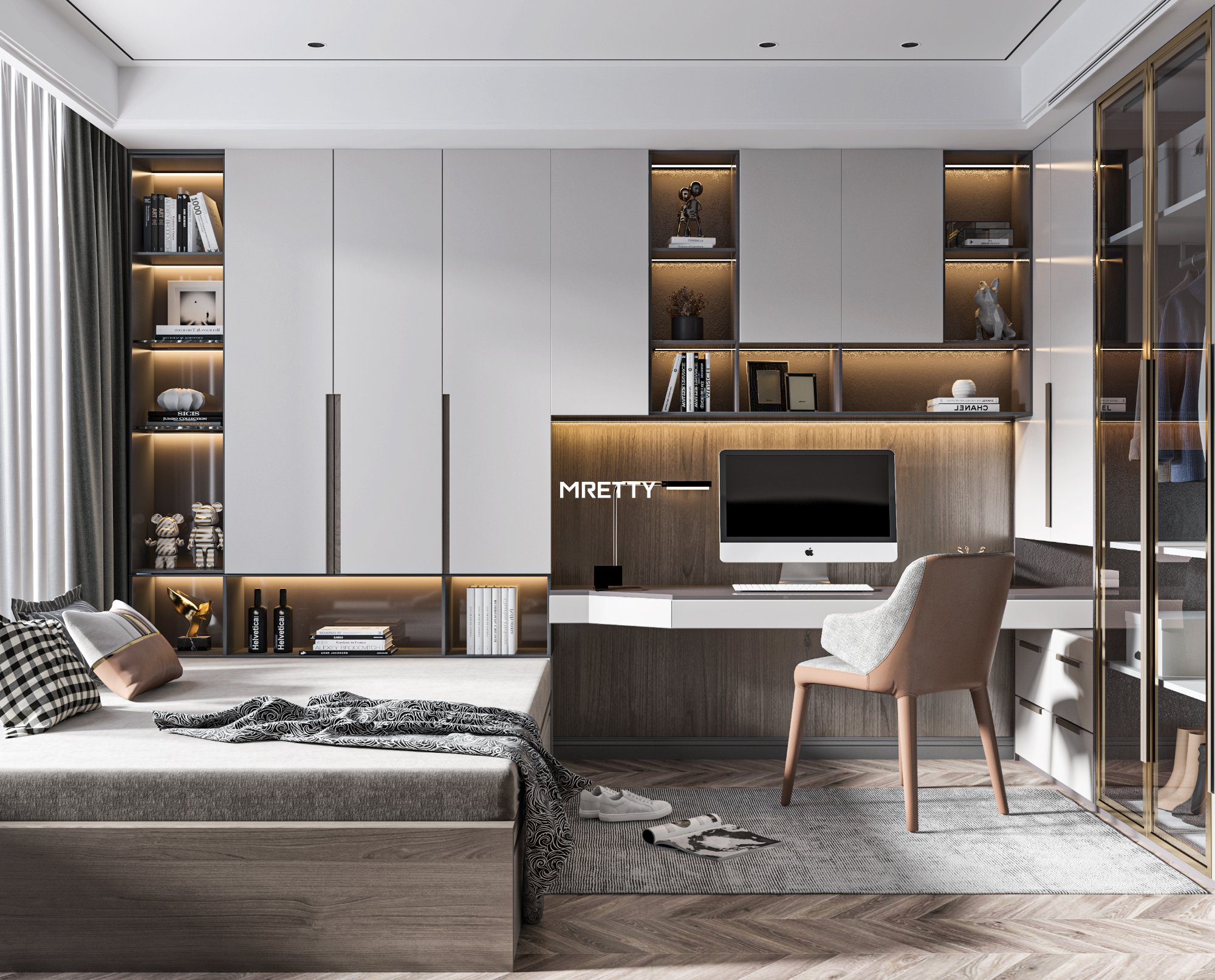
3. Moisture-Proof Technology Comparison Among High-End Custom Furniture Brands
In Singapore’s high-end custom market, brands emphasize different aspects of moisture-proofing. Some highlight the natural moisture resistance of premium solid woods (like teak); others boast of waterproof lacquer finishes. However, MRETTY’s philosophy differs. We believe that for Singapore’s extreme humidity, isolated technical points cannot guarantee lasting protection.
Our methodology resembles a complete “systemic project.” It begins with stringent substrate screening (high density, low expansion), is reinforced by core manufacturing processes (PUR seamless edge-banding), and culminates in structural designs that account for environmental factors. This “Substrate + Process + Design” trinity strategy ensures MRETTY products possess the strongest moisture-proof DNA upon delivery, rather than relying on the homeowner’s “careful handling” afterward. In contrast, furniture relying solely on lacquer for waterproofing fails once scratched; furniture relying solely on wood’s natural properties cannot avoid performance variations between batches.
Want to know which moisture-proof solution suits your layout?
[Click here to download our free MRETTY Singapore Residential Moisture-Proof Design Manual for detailed plans for condos, HDBs, and landed homes.]
4. Daily Care & First Aid: Practical Tips to Extend the Life of Your MRETTY Custom Furniture
Even with MRETTY’s superior moisture-proof craftsmanship, correct daily care keeps your furniture pristine. Like a fine car, it still needs regular maintenance. Here are some 2026 practical tips I constantly remind clients about, especially for moisture-proof care of solid wood furniture.
Daily Moisture-Proof Maintenance Checklist
This list is particularly vital for moisture-proof care of seaside condo solid wood furniture, facing the dual challenge of high salinity and humidity.
Control Humidity: Ideal indoor relative humidity is 40% to 60%. When humidity exceeds 70%, decisively switch on a dehumidifier or your AC’s dry mode. This is the most effective proactive measure.
Ensure Ventilation: On sunny days, open windows for cross-ventilation to carry away indoor moisture. For wardrobes or storage cabinets not used daily, prop the doors open for a few hours every 1–2 weeks.
Use Desiccants Wisely: Place moisture-absorbing boxes or activated charcoal packs inside wardrobes and drawers. Replace them regularly—when the box fills with water or the pack feels heavy.
Prompt Wiping: Immediately wipe up any water spills on furniture surfaces with a soft, dry cloth to prevent seepage.
Emergency Response: What if My Custom Wardrobe Back Panel Molds?
Even with tight protection, occasional mold from accidents like wall seepage can occur. If you spot small patches, stay calm and follow these steps:
- Stop Spread: Immediately remove clothing from the area. Gently brush off surface mold spores with a dry brush or vacuum (with brush attachment).
- Gentle Cleaning: Dampen a soft cloth with 75% alcohol or a specialized mold remover. Gently wipe the affected area. Alcohol effectively kills mold.
- Thorough Drying: Use a fan or hairdryer on a cool setting to completely dry the treated area.
- Prevent Recurrence: Once fully dry, apply a thin coat of wood wax oil or anti-mold protective paint to the area. Investigate the root cause (e.g., wall leakage).
❌ Common Mistake: Scrubbing mold spots vigorously with a wet cloth. This doesn’t eradicate mold; it helps spores spread.
>
✅ Better Approach: Dry-clean surface spores first, chemically eliminate with alcohol, thoroughly dry, then prevent recurrence.
Moisture-Proof Tips for Specific Homes
For moisture-proof tips for small HDB wardrobes, beyond the above, practice “editing down”—avoid overstuffing clothes to maintain airflow. For moisture-proof methods for children’s room eco-wood furniture, prioritize physical methods (dehumidifiers) and natural desiccants (like bamboo charcoal). Avoid chemical anti-mold agents to protect children’s health. How does MRETTY guarantee furniture moisture resistance through craftsmanship? Our PUR edge-banding and high-density boards fundamentally minimize this risk.
5. Debunking Common Moisture-Proof Myths
In conversations with clients, I encounter persistent myths about furniture moisture-proofing. These misconceptions lead to poor decisions and potential damage to expensive custom pieces. Let’s debunk the most common lies.
Myth 1: “Surface Waterproofing” Equals “True Moisture-Proofing”
This is a dangerous fallacy. Many believe that if a furniture surface has waterproof lacquer or premium finishes, they are safe. But the primary path for moisture intrusion is through invisible edges, screw holes, and seams. If edge-banding is subpar, moisture will stealthily seep into the substrate from these weak points, causing the board to swell and mold like a sponge. This is why MRETTY emphasizes PUR edge-banding technology—it achieves true six-sided,全方位 sealing.
Myth 2: “Furniture’s Eco-Grade Has Nothing to Do with Moisture Resistance”
On the contrary, they are closely linked. Take E0-grade eco-boards for example. Beyond representing ultra-low formaldehyde emissions, achieving this grade requires exceptionally high standards for wood species, density, and adhesive quality during manufacturing. Generally, boards with higher density and better adhesion have more stable physical structures, naturally possessing superior moisture resistance. Choosing high eco-grade boards largely means choosing a substrate with better physical moisture resistance.
6. Frequently Asked Questions (FAQ)
Are dehumidifiers useful for solid wood furniture?
Extremely useful. Dehumidifiers are the most effective tool for proactively controlling indoor environmental humidity. For solid wood and high-end panel furniture, maintaining a stable relative humidity between 40–60% minimizes the risk of cracking or warping caused by hygroscopic expansion and contraction—one of the highest-ROI investments you can make.
Is there a relationship between furniture’s eco-grade and moisture resistance?
Yes, a close relationship. High eco-grades (like E0) typically indicate higher manufacturing standards, including higher substrate density and better bonding processes. These traits make the board structure more stable and harder for water molecules to penetrate, naturally conferring better moisture resistance.
During new home renovation, how do I fundamentally plan for furniture moisture-proofing?
Fundamental planning requires intervention during the hard renovation stage. 1) Ensure proper waterproofing of walls and floors, especially shared walls with bathrooms and kitchens. 2) Collaborate closely with your whole-home customization designer (like MRETTY experts) to plan furniture layouts with ventilation gaps during the design phase. 3) Make board moisture resistance and edge-banding process core criteria when selecting your custom furniture brand.
Does the warranty for custom wooden furniture cover moisture damage?
This depends on the brand’s policy. Most standard warranties exclude damage caused by environmental humidity or improper maintenance. However, brands confident in their craftsmanship, like MRETTY, clearly define warranty coverage for product issues (e.g., PUR edge-banding failure). Read warranty terms carefully before purchasing to understand what constitutes a product defect versus an environmental factor.
7. About the Author: Hanson
Hanson, Senior Whole-Home Designer, MRETTY
Hanson brings over 14 years of design and project management experience in high-end kitchen and cabinetry systems, serving as a key pillar of the MRETTY design team. He specializes in crafting solutions that blend aesthetics and functionality for Singapore’s unique living environments, from Condominiums to Landed Houses. In his design philosophy, Modern Minimalist, Italian Light-Luxury, and French styles are not just visual presentations, but deep reflections of lifestyle. For years, Hanson has focused on conquering furniture durability challenges in Singapore’s high-humidity climate, integrating MRETTY’s advanced craftsmanship with forward-thinking design to ensure every creation is both beautiful and built to last. This guide distills his invaluable frontline experience.
MRETTY: Premium Bespoke Kitchen & Cabinet Systems Provider in Singapore
