
 Singapore
 China
China
TL;DR:
This is your complete roadmap for home renovation and major remodeling in Singapore. We break down realistic costs for HDBs vs. Condos, decode strict compliance rules, share climate-proof material choices, and reveal the one secret to a flawless result: involve an integrated design-and-build partner like MRETTY from Day 1, so your storage, style, and function are planned as one system—not patched together afterwards.
1. Deconstruct Renovation Costs to Set a Realistic, Safe Budget
The first step is understanding where the money actually goes. Renovation pricing in Singapore swings wildly based on unit type, scope (cosmetic refresh vs. full gut reno), and material tier. As of mid-2026, material and skilled labor costs remain elevated—so “budget” doesn’t mean hunting the lowest headline number; it means knowing what you’re paying for.
Below is a mid-tier, quality-conscious benchmark (not bare-minimum, not ultra-luxury). Move up into premium stones, imported veneers, and heavy structural/ME works, and totals can easily run +50–100% higher.
| Property Type | Approx. Size (sqft) | Estimated Renovation Cost (SGD) |
| :--- | :--- | :--- |
| 3-Room HDB BTO (New) | ~700 | S$35,000 – S$55,000 |
| 4-Room HDB BTO (New) | ~970 | S$45,000 – S$70,000 |
| 5-Room HDB BTO (New) | ~1,185 | S$55,000 – S$85,000 |
| Resale HDB (4-Room) | ~970 | S$60,000 – S$100,000+ |
| Condo (2-Bedroom) | ~850 | S$40,000 – S$75,000 |
| Landed Property | 2,000+ | S$250,000 – S$800,000+ |
Source: MRETTY internal project data, Q2 2026. Figures typically cover flooring, base electrical/plumbing, painting, and standard carpentry scope.
A client came to us last year with a hard S$50k cap for a 4-room BTO. Because we planned integrated full-height storage from Day 1, they skipped buying several bulky ready-made pieces—then redirected that budget into a higher-grade quartz countertop and better flooring. Same cap, but the finished home felt a tier higher.
Two budget traps to avoid
❌ Mistake: Choosing the cheapest quotation without checking material specs. ✅ Safer approach: Insist on a line-item quote that names board grade, finish type, hardware brand/model, edge-banding process (PUR where needed), and warranty scope. “Cheap” usually hides substrates or hardware that will show problems within 2–4 years in Singapore’s humidity.
❌ Mistake: Forgetting to budget for appliances, loose furniture, and a contingency.
✅ Safer approach: Ringfence 10–15% contingency, and—even better—work with a design-and-build team that can wrap carpentry, millwork, and site works into one transparent, controlled budget instead of three unrelated invoices.
2. Decode Singapore’s Renovation Regulations So You Stay Compliant
Singapore’s building rules aren’t suggestions—they exist to protect safety and structural integrity. The two authorities you’ll deal with most:
- HDB (Housing & Development Board) – governs all public housing (BTO & resale).
- BCA (Building and Construction Authority) – governs private residential (Condos, Landed), plus structural aspects.
HDB Rules (Quick Reality Check)
Most non-cosmetic work needs an HDB Renovation Permit, including:
- Hacking walls/tiles
- Removing or shifting doors/windows
- Rerouting toilet/kitchen wet works
You must engage an HDB-registered contractor to file and oversee this.
Private Properties (Condos & Landed)
Any structural alteration needs BCA approval; for condos you’ll also typically need MCST (Management Corporation) approval for noisy/out-of-hours works, hoarding, and debris handling. If you’re touching boundary walls or extending (landed), expect URA/BCA lead times.
On a landed project we managed recently, clearing BCA + URA for a rear extension alone took about 3 months before a single tile was hacked. Because we baked that float into the programme from Day 1, the homeowner avoided nasty “we’re stuck” delays. That’s the value of experienced project management.
Red flags
❌ “It’s just a small partition wall, no permit needed.” ✅ Rule of thumb: When in doubt, check HDB/BCA guidance or let your registered contractor confirm. Unauthorized works can trigger fines and a reinstatement order (putting everything back at your cost).
❌ Starting demolition before the permit is physically displayed.
✅ Approval paperwork and permit must be in place—and the permit notice posted at the unit door—before works begin.
3. Run a Proven Process to Keep Timeline & Chaos Under Control
A clean process prevents “renovation from hell” stories. Every home is different, but a solid HDB/Condo renovation generally moves through the same fixed sequence. Think of this as your high-level reno checklist:
6-Stage Flow (Typical 8–12 Week Build Phase for Standard Units)
- Stage 1 – Planning & Design (2–4 weeks)
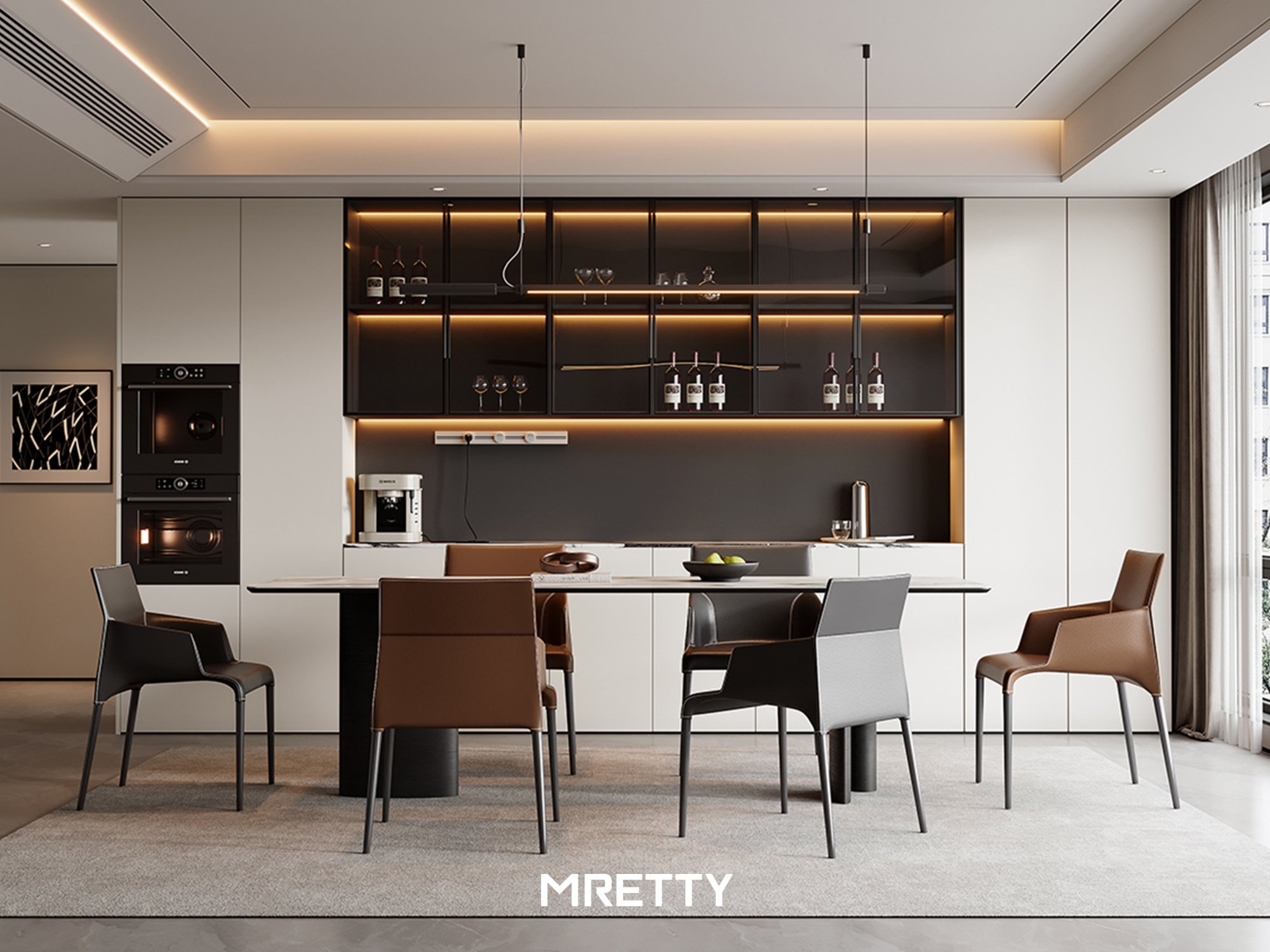
Space planning, mood/texture direction, and integrated carpentry logic (where the TV console, wardrobes, study nook, and shoe storage actually live). 3D visuals lock the vision before anyone lifts a sledgehammer.
- Stage 2 – Permits & Approvals (1–4 weeks)
Contractor submits HDB/BCA drawings; MCST coordination for condos.
- Stage 3 – Demolition & “Wet Works” (1–2 weeks)
Hacking, rough plumbing/electric set-outs, cement screeding, bathroom/kitchen wet-area prep.
- Stage 4 – Electrical, Plumbing & False Ceiling (1–2 weeks)
New points, conduit/pipe routing, aircon trunking, partition framing, false ceiling boxing.
- Stage 5 – Carpentry & Painting (2–4 weeks)
Install of custom cabinets/wardrobes/feature walls (ideally factory-prefabricated for tighter tolerances), followed by painted finishes.
- Stage 6 – Finishing & Handover (≈1 week)
Flooring final cleans, countertop templating/install if stone, lighting/vanity fit-off, then a joint defect walkthrough with you.
A Punggol 5-room BTO owner wanted to “just start hacking” immediately. We asked for one extra week to finalize the built-in wardrobe and study corner layout. That small delay saved them roughly S$3,000 in avoidable rework and reshifting later.
Changes on paper cost nothing. Changes on-site cost thousands.
4. Choose Materials That Survive Singapore’s Humidity & Time
Material choice decides whether your home ages gracefully—or fights you every monsoon season.
A lot of homeowners show up with mood boards pulled from colder climates. Truth is, plenty of those “Instagram-famous” finishes perform poorly in 80%+ humidity.
- Solid timber can look incredible, but in untreated/local indoor climates it’s prone to movement, cupping, and finish failure unless you’re willing to baby it. For most families, high-quality engineered boards with proper moisture-rated substrates + PUR edge-sealing are the saner, longer-lasting call.
- Flooring: Good luxury vinyl (LVT/SPC) systems punch above their weight here—dimensionally stable, water-resilient, and kinder to acoustics in apartments.
- Cabinet substrates: E0/Green-grade moisture-resistant cores in wet zones (kitchen base cabs, vanity, shoe cabinet near entry). Don’t let “invisible” carcasses become the weak link.
- Countertops: Quartz/sintered stone remains the safest high-end workhorse—non-porous, stain-resistant, and far less maintenance drama than natural marble in local cooking conditions.
- Hardware: Spend on Blum/Hettich soft-close hinges and slides. The “upgrade” you feel every single day is usually worth more than a fancier backsplash you only look at.
❌ Mistake: Choosing finishes purely from overseas photos.
✅ Safer approach: Prioritize materials proven in Singapore HDB/Condo conditions, and ask to see local completed project photos, not just studio samples.
5. Plan Built-Ins from Day 1 for a Truly Seamless Home
This is what separates “okay renovation” from great renovation: Don’t design the room first and shop for furniture later—design the room around the integrated storage from the start.
With MRETTY’s design–factory–install model, your carpentry isn’t an afterthought; it’s the spine of the plan:
- In tight BTOs: a platform/storage bed with lift mechanisms reclaims floor space you’d otherwise lose to chests and racks.
- In resale units with awkward beams: full-height wardrobes turn a “dead corner” into a flush, dust-free asset.
- In condos: an integrated TV feature + hidden WFH nook swallows every cable and router so the living room reads minimal, not messy.
The result? Every power point, every shadow gap, every handle height is intentional—not a compromise.
❌ Mistake: Finishing renovation, then trying to “find something off the shelf” to block an outlet or fill a weird nook.
✅ Safer approach: Let the furniture logic drive the lighting layout, switch placement, and even which walls stay or go.
Ready to plan your renovation the right way?
Skip the common traps and keep the journey sane. Download MRETTY’s free Ultimate Renovation Planning Checklist (what to confirm before you sign, permit docs to keep, and the carpentry/factory questions most homeowners forget to ask).
>
[Download Your Free Checklist]
6. Frequently Asked Questions
How much does home renovation cost in Singapore (2026)?
A 4-room BTO full reno commonly lands around S$45k–S$70k; resale 4-room S$60k–S$100k+ depending on hacking, carpentry scale, and material tier. Condos and landed scale up quickly with ME/structural scope.
What are the steps for HDB renovation?
Typically: 1) Design & space planning → 2) HDB permit filing → 3) Demolition & wet works → 4) Electrical/plumbing/false ceiling → 5) Carpentry & painting → 6) Finishing & handover/defect check.
How long does Singapore renovation take?
For a standard HDB/Condo, the build phase is usually 8–12 weeks. Add 3–8 weeks prior for design development + permits (longer if BCA/URA approvals are involved).
Do I need a permit for renovation in Singapore?
Yes—most non-cosmetic works do. HDB works (hacking, shifting sanitary, removing walls) require an HDB renovation permit via a registered contractor. Private properties need BCA approval for structural changes, and condos need MCST coordination.
7. How to Pick the Right Partner (and Lock in Project Success)
Price is the last filter, not the first. Look for:
- Integrated capability: Can they take design → factory → site install under one accountable team? (MRETTY’s in-house smart factory is built for exactly this.)
- Transparent, auditable quotes: Line items for substrates, finishes, hardware brand/models, edge-banding method, and warranty terms.
- Local regulatory muscle: Demonstrable track record with HDB permits, MCST processes, and BCA documentation—so approvals don’t stall your life.
8. About the Author
Hanson, Senior Whole-Home Designer, MRETTY
14 years in Singapore’s high-end residential design and project delivery, specializing in turning tricky HDB/Condo constraints into clean, calm, storage-smart homes. Believes great renovation isn’t about maximalist styling—it’s about proportion, circulation, and making sure the design that leaves the screen survives the humidity, the kids, and the daily routine. Backed by MRETTY’s in-house production and installation ecosystem so promises aren’t just “pretty renders.”
MRETTY: Premium Bespoke Kitchen & Cabinet Systems Provider in Singapore
