
 Singapore
 China
China
Wood possesses a soul, a silent narrative held within its grain. To work with wood is to engage in a conversation, but to finish it is to write its final, most enduring chapter. The journey from raw timber to a luminous, touchable surface is a transformative art, a discipline where patience and precision conjure breathtaking results. It is this final, crucial step—the finish—that protects, beautifies, and ultimately elevates a piece from mere construction to cherished heirloom.
This is the world of high-quality wood finishing techniques, where mastery is measured in microns and beauty is felt as much as it is seen. For those who appreciate fine craftsmanship, understanding the finish is key to recognizing true quality. It is a testament to the maker's skill, a delicate balance of science and artistry. At MRETTY, we believe this pursuit of perfection is not just a process; it is a philosophy where the line is always simple, but the structure—and the finish—is always unexpected. Join us as we explore the methods that turn natural timber into an object of refined luxury.
The Foundation of Excellence: Wood Preparation
A flawless finish does not begin with a brush; it begins with meticulous preparation. Any imperfection on the wood's surface—a dent, a scratch, a speck of dust—will be magnified, not hidden, by the final coats. This stage is non-negotiable and is the true mark of professional work.
The Art of Systematic Sanding
Sanding is not merely about making wood smooth; it is a systematic process of creating progressively finer scratches until they become invisible to the naked eye. The goal is a uniform surface that will accept stain evenly and reflect light with perfect clarity.
The Grit Progression: Begin with a medium grit (around 120) to level the surface and remove any mill marks. Progress sequentially through finer grits—150, 180, and finally 220. Skipping a grit level will leave behind deeper scratches that subsequent grits cannot remove, resulting in a blotchy appearance, especially under a stain.
The Art of the Sanding Block: For flat surfaces, always use a sanding block. This ensures even pressure and prevents the creation of divots or wavy surfaces that can occur with hand-sanding alone.
Raising the Grain: After sanding to your final grit, lightly wipe the surface with a damp cloth. This intentionally swells the wood fibers. Allow it to dry completely, then lightly sand one last time with your finest grit (220). This step prevents the grain from raising when you apply a water-based stain or finish, ensuring a glassy-smooth final product.
Pore Filling for a Glassy Canvas
For open-pored woods like oak, mahogany, or walnut, achieving a mirror-like finish requires filling the pores. Unfilled pores will appear as tiny divots under a high-gloss finish.
Paste Wood Fillers: These are the traditional choice. They are thick, come in various colors to match your wood, and are applied with a stiff brush or cloth, working against the grain to pack the pores. The excess is squeegeed off after a brief drying period.
Modern Epoxy Sealers: For a truly impervious and glass-smooth surface, a thin coat of penetrating epoxy can be applied and sanded back. This not only fills the pores but also stabilizes the wood surface, a technique favored in high-end furniture and cabinetry.
The Soul of Color: Staining and Toning Wood
Staining is where the wood’s character is enhanced. The goal is not to paint the wood, but to add depth and richness while allowing the natural grain to shine through. Different stains have different properties, and choosing the right one is crucial for achieving high-quality wood finishing techniques.
Pigment vs. Dye Stains: Key Differences
Pigment Stains: These contain fine particles of color that lodge in the wood's pores and surface scratches. They are excellent for highlighting the grain of porous woods like oak. However, they can obscure the grain on finely figured woods and are prone to causing "blotching" on woods like pine, cherry, and maple.
Dye Stains: These are microscopic molecules of color dissolved in a solvent (water or alcohol). They penetrate the wood fibers themselves, rather than sitting on the surface. This results in a much clearer, more transparent color that beautifully enhances figured wood like curly maple or quilted sapele. Dyes are the professional's choice for achieving deep, jewel-toned colors without muddiness.
Advanced Wood Coloring Techniques
Toning: This involves adding a small amount of dye to your sealer or lacquer. The colored finish is then sprayed in thin, even coats. Toning allows for incredibly precise color control, enabling a craftsman to even out color variations in a piece of wood or build up a "sunburst" effect seen on fine guitars.
Glazing: A glaze is a thick, pigmented medium applied between sealed coats of finish. It is wiped on, then selectively wiped off, allowing the color to hang up in profiles, corners, and open pores. This technique is used to simulate age, add depth, and create a sophisticated, layered look.
The Protective Veil: Sealing and Top Coats
The top coat is the wood's armor. It protects against moisture, abrasion, and UV light while defining the final sheen and feel of the piece.
Polyurethane: Durability and Protection
Modern oil-based polyurethanes offer excellent durability and resistance to water and chemicals. For an even tougher finish, water-based polyurethanes have evolved significantly, offering a crystal-clear finish that does not yellow over time, coupled with low VOCs and fast drying times. The key to a beautiful polyurethane finish is applying multiple thin coats, sanding lightly with 320-grit paper between each coat.
Shellac: The Timeless Craftsman's Finish
Shellac is a natural, spirit-based finish that has been used for centuries. It imparts a warm, amber glow that is unmatched by synthetic finishes. While not as durable as polyurethane, it is incredibly easy to repair; a new coat of shellac will melt into the previous one, making scratches disappear. A "French Polish" is the ultimate expression of this finish, where dozens of whisper-thin layers are applied with a special pad, resulting in a finish of breathtaking depth and clarity.
Lacquer: The Professional's Fast-Drying Choice
In a professional setting, nitrocellulose and acrylic lacquers are king. They dry almost instantly, allowing multiple coats to be applied in a single day. Applied via spraying, lacquer "melts" into the previous coat, creating a single, unified film of finish. This allows for a finish that can be rubbed out to any sheen, from dead flat to a mirror-like gloss.
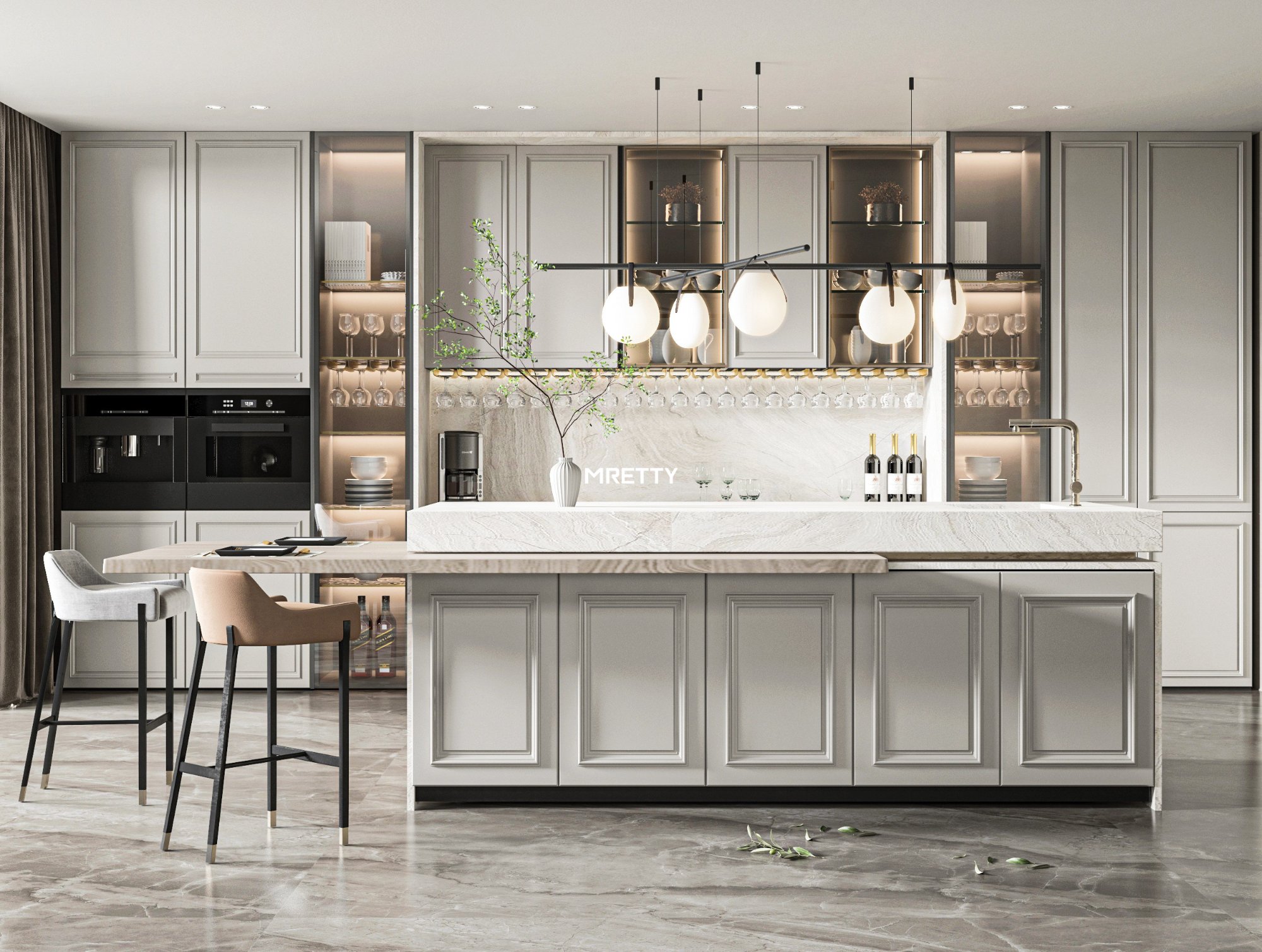
The MRETTY Advantage: Bespoke Finishing for Life
In a market of mass production, MRETTY stands as a guardian of bespoke quality. We understand that a superior finish is not just a coating; it is an integral part of the design, engineered for beauty and longevity.
Sustainable Luxury in Wood Finishing
Our "Green Guard" philosophy ensures your home is a healthy sanctuary. We prioritize low-VOC and formaldehyde-free finishes sourced from leading global suppliers. Our commitment to using timber from FSC-certified forests means that the beauty of your cabinetry does not come at the expense of the environment.
Smart Integration with Flawless Finishes
A smart home should not compromise on aesthetic elegance. Our finishing process extends to every component, ensuring that integrated tech elements are seamlessly incorporated. We craft bespoke panels and covers, finished to match your cabinetry perfectly, so technology is felt, not jarringly seen.
Recommended Products for Finishing Enthusiasts
For those inspired to undertake their own projects, the right products make all the difference. While we guard our proprietary formulas, here are product types we trust:
General Finishes Enduro-Var II: A superb water-based urethane that mimics the warm look of an oil-based varnish without the high VOCs. Perfect for cabinetry and tabletops.
Transtint Dyes: Highly concentrated metal-complex dyes that can be mixed with water, alcohol, or even added directly to your topcoat for toning.
Liberon Black Bison Wax: A premium finishing wax for rubbing out a final finish to a soft, silky sheen and providing an extra layer of protection.
Customer FAQ & Finishing Success Tips
Q: Why does my stained pine look so blotchy and uneven?
A: Pine, cherry, and maple are notorious for blotching with oil-based pigment stains. The solution is to apply a pre-stain wood conditioner. This thin sealer partially seals the wood, forcing the stain to color more evenly. Alternatively, use a dye stain, which colors the wood without relying on pore absorption.
Q: How do I get that perfectly smooth, "factory finish" feel?
A: The secret is in the final rub-out. After your final coat of finish has cured for at least a week, sand it with ultra-fine wet-or-dry sandpaper (starting at 600 grit and moving to 1500 or 2000), using mineral spirits or soapy water as a lubricant. Then, use automotive-grade polishing compounds on a foam pad to bring the surface to your desired sheen. This process levels the finish to a perfect plane.
Case Study: The Sentosa Cove Wardrobe
A client required a full wall of custom wardrobes in American Walnut. The challenge was to achieve a consistent, deep color across multiple panels while maintaining a silky, semi-gloss feel. Our team used a multi-step process: a dye stain to establish the base color, a single coat of sealer, a dark glaze to highlight the wood's pores, followed by three coats of catalyzed lacquer. The finish was then rubbed out by hand with fine steel wool and wax. The result was a surface with stunning depth and a feel that invited touch, perfectly complementing the luxury of the residence.
The Final Polish: Designing for Enduring Beauty
High-quality wood finishing is an act of devotion. It is an investment of time and skill that pays dividends for a lifetime. It is the final conversation between the maker and the material, a dialogue that results in an object of enduring beauty and utility. It transforms a simple wooden box into a treasure chest, and a set of kitchen cabinets into the heart of a home.
At MRETTY, we do not just build and finish cabinets; we craft the backdrops for your family’s most precious memories. Our dedication to the finest finishing techniques ensures that every piece we create is not only beautiful on day one but is built to mature gracefully, developing the rich patina of a life well-lived.
Are you ready to experience the touch of true craftsmanship? Book a Free Consultation Now and let us bring the art of the finish into your home.
About the Author
潘俊麒 (Poon Chun-Kei) is a Master Craftsman & Finishing Specialist. He is the recipient of the 2023 Singapore Furniture Design Award for "Excellence in Finishing". MRETTY is a Premium Bespoke Kitchen & Cabinet Systems Provider in Singapore.
