
 Singapore
 China
China
TL;DR: Efficient home decoration isn't about adding more things—it's about creating a unified system. This guide provides a 7-step professional framework focused on cohesive design language, smart space planning, and whole-home customization. We address Singapore-specific challenges like compact HDB layouts and high humidity. Learn how experts like MRETTY turn integrated furniture into the cornerstone of space, not an afterthought.
Does your home feel like a collection of unrelated items? Maybe the TV console came from one store, the wardrobe from another. The colors seemed to match at the time, but now they clash. The space is functional, but lacks flow.
Now, imagine a home where every element shares the same elegant design language. Kitchen cabinets, bedroom wardrobes, and living room display units echo each other. Textures and tones harmonize. Every corner is practical without sacrificing beauty. This is the result of an integrated approach. This guide shows you how to efficiently decorate your home by designing a complete system.
Critical Questions Answered
What is the first step to renovating a house in Singapore?
Define your "Design Narrative." This is the story of how you want to live. Forget generic styles like "Scandinavian" for a moment. Ask yourself: Do I need a calming space for focus? Or a vibrant social hub? This narrative will guide every choice, from layout to materials. It ensures the home is truly yours.
How do I make a small HDB or condo look bigger through decoration?
Use three core strategies to make small spaces feel larger:
- Extend Upward. Use floor-to-ceiling custom carpentry to draw the eye up.
- Maintain Uniformity. Keep a consistent, light material palette across all rooms. This creates visual continuity.
- Layer Lighting. Use integrated, multi-layered lighting design to eliminate dark corners.
In Q1 2026, I applied this strategy in a 93 sqm 4-room BTO flat. Unified tones and vertical storage made the living area feel at least 20% larger than the floor plan suggested.
7-Step Professional Framework for Effective Home Decoration
Professional results require a structured process. Over ten years designing homes at MRETTY, I refined this seven-step framework. It guarantees coherent, functional outcomes. These are the efficient home decoration strategies we deploy.
- Define Your Design Narrative: Clarify the feeling and function you need. This is your North Star, more important than any style label.
- Master Space Planning: Plan everything before selecting furniture. Map out flow, activity zones, and sightlines. A well-planned space is the foundation of good decoration.
- Establish a Unified Material Palette: Choose a limited, harmonious set of materials. Use these woods, laminates, and metals consistently throughout the home to maintain design continuity.
- Design a Multi-Layer Lighting Scheme: Plan ambient (general), task (functional), and accent (dramatic) lighting from day one. A thoughtful lighting scheme sculpts space.
- Treat Custom Carpentry as Decoration: View custom wardrobes, kitchen cabinets, and TV consoles as primary decorative features, not just storage boxes.
- Select Ergonomic Furniture: Choose beautiful pieces with perfect proportions. They must be designed for human comfort (ergonomics).
- Curate, Don’t Accumulate: The final layer is personal touches like art and textiles. Be selective. If an item isn’t useful or joyful, it’s clutter.
❌ Common Mistake: Buying small decor items like cushions and vases first.
✅ Better Approach: Follow the structured workflow. Start with foundational elements like layout and built-in furniture. Leave small decor for last.
Efficient decoration is a system. It prioritizes planning and integration over random accumulation.
How to Establish a Cohesive Design Language for Lasting Elegance
What is a unified design language? It’s the consistent use of color, material, and form in every room. This creates a unified, seamless experience. It’s the visual thread connecting your living room, bedroom, and kitchen. You get a single, harmonious home, not a collection of separate rooms.
Most homeowners think luxury comes from adding expensive accessories. But in reality, the high-end feel often comes from subtraction. True elegance is built on a rigorous, restrained material palette. Why? A consistent theme makes a space feel intentional, calm, and ordered. Our brains perceive this thoughtful simplicity as luxury. A pile of expensive but unrelated items just looks cluttered.
This is achieved through a strict material palette. In my projects, I advise clients to select only 3–5 core materials and finishes. For example, a palette could be:
Light oak wood-grain laminate
Specific Fenix NTM matte grey finish
Brushed champagne gold metal accents
These exact three elements then appear on the living room feature wall, kitchen cabinets, and master bedroom wardrobe. The result is an undeniable, intentional sense of high-end design. This principle is core to the MRETTY whole-home customization process. It ensures every piece of custom carpentry we create forms a single, integrated system.
❌ Common Mistake: Choosing materials room by room, causing visual chaos.
✅ Better Approach: Finalize the whole-home material palette before any production begins. This ensures every custom element harmonizes.
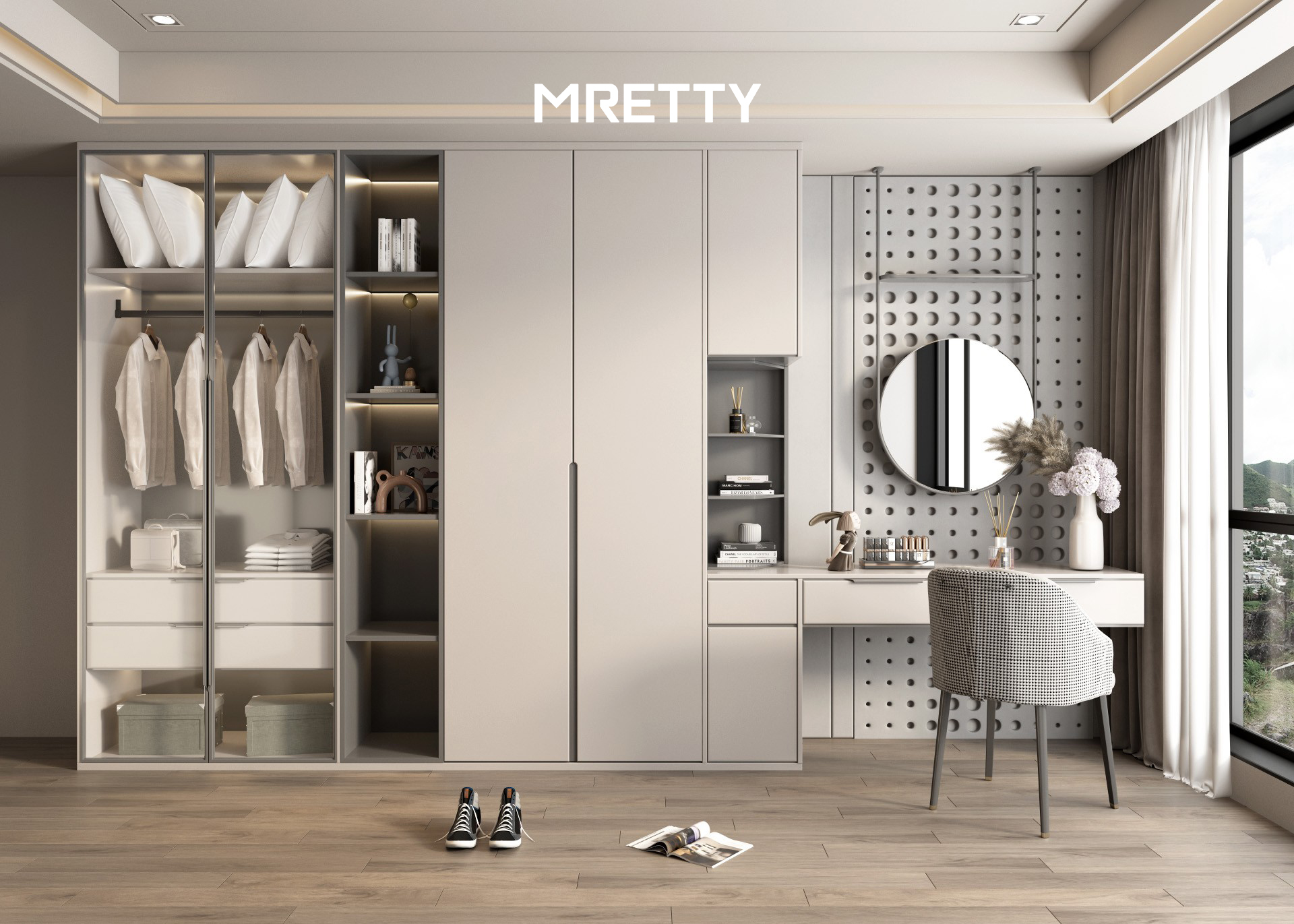
How Whole-Home Customization Delivers Superior Decorative Results
Singapore homeowners often weigh two choices: hiring an interior designer who sources from multiple vendors, or engaging a whole-home customization specialist like MRETTY. While both can produce beautiful results, the specialist approach offers the integration necessary for truly efficient decoration.
Here is a comparative analysis of whole-home customization vs. using a traditional interior designer.
| Feature | Whole-Home Customization (e.g., MRETTY) | Traditional Interior Designer + Multiple Vendors |
| :--- | :--- | :--- |
| Design Cohesion | ✅ Unified System. One team designs and builds all carpentry, ensuring perfect material and finish matching. | ❌ Potential Mismatch. Vision can get lost between different carpenters and suppliers. |
| Spatial Fit | ✅ Precision Engineering. Furniture built to the millimeter, eliminating awkward gaps. | ❌ Compromised Fit. Off-the-shelf or individually commissioned pieces rarely fit perfectly. |
| Material Quality | ✅ Guaranteed Consistency. Selected from a curated premium material library; final product matches samples exactly. | ❌ Finish Inconsistency. "White" laminate from two suppliers can have noticeable color shifts. |
| Project Management| ✅ Streamlined Process. One point of contact for design, production, and installation simplifies everything. | ❌ Complex Coordination. You or your designer must manage multiple contractors, schedules, and quality issues. |
This integration is why the advantages of custom kitchen design extend beyond the kitchen itself. When its design language flows into the custom sideboard in the dining area, the entire floor feels like one large, luxurious space.
❌ Common Mistake: Treating custom furniture as isolated pieces to fill gaps.
✅ Better Approach: View whole-home customization as the system that defines your home’s interior architecture and decorative character.
How to Apply Singapore Home Interior Design Principles for HDBs and Condos
Decorating in Singapore has unique challenges. We have compact HDB and condo layouts, plus persistent high humidity. Generic advice from other countries often fails here. A professional guide for Singapore must address these realities.
Efficiently Decorating HDBs: Maximizing Every Inch
For a typical 90–115 sqm HDB flat, space planning is everything. The goal is multi-functional spaces without visual clutter. In an early 2026 4-room BTO layout project, we designed a floor-to-ceiling TV console that seamlessly integrated a hidden desk, a display cabinet, and concealed storage. This one piece of custom carpentry performed three functions. It freed up valuable floor space. In Singapore, integrated smart storage isn't a luxury; it's a necessity.
Why Lighting Design is Crucial for Efficient Home Decoration
Limited window layouts in many local apartments create dark, unwelcoming corners. A strategic lighting scheme is your most powerful tool. We layer it: Ambient Light: Recessed ceiling lights providing overall glow. Task Light: Under-cabinet LED strips in kitchens and studies. Accent Light: Targeted spotlights illuminating artwork or textures.
This layering creates depth, atmosphere, and the illusion of a larger, brighter space.
Choosing Decor for Singapore’s Humid Climate
Material selection is critical. Warped wood, peeling laminate, and rusty hardware are common problems I see in homes just a few years old. To combat Singapore’s humidity, you must choose materials designed for durability.
Look for high-pressure laminates (HPL) like Fenix NTM, which resist moisture and delamination better than cheap PVC wrapping. For hardware like hinges and handles, insist on stainless steel or powder-coated options that won’t rust. Your custom carpentry should be the most durable element in your home, not the first to fail.
Key Singapore Home Decor Trends for 2026
2026 trends are shifting from pure "minimalism" toward deeper "functional fusion" and "sensory experience." Here are four trends defining high-end Singapore homes next year:
- Functional Fusion: Single furniture pieces will serve multiple roles. For example, a dining table that retracts completely into a wall cabinet when not needed, freeing up space for yoga or a home cinema. Design is no longer subtraction; it's smarter composition.
- Tech-Minimalism: Smart home tech will no longer be a collection of visible screens and control panels. The 2026 trend is hiding Google Home, sensors, and wiring perfectly within custom cabinetry, leaving a clean, distraction-free surface.
- Tactile Textures: As visuals become more minimalist, the demand for material touch increases. We'll see more combinations of Italian-imported Fenix NTM matte boards, natural stone, and warm wood, emphasizing "quiet luxury" and tactile comfort.
- Biophilic Integration: Bringing nature into compact urban living. This isn't just placing potted plants; it's integrating vertical green wall systems into TV console or sideboard designs to improve air quality and create a calming atmosphere.
Frequently Asked Questions
Q: How long does whole-home customization usually take?
A: From final design confirmation to installation completion, it typically takes 10 to 14 weeks. This includes approximately 8 weeks of production and 2–4 weeks for installation and finishing touches. Smart factories like MRETTY ensure stable timelines, avoiding the uncertainties of traditional carpentry.
Q: How do I ensure I stay within budget for decoration?
A: The biggest overruns usually come from mid-project changes and rework. The most effective approach is: 1) Finalize all designs and materials before starting; 2) Set aside 10–15% of your total budget as a contingency fund; 3) Choose companies like MRETTY that provide transparent, itemized quotations to avoid hidden costs.
Q: Is custom furniture really more durable than ready-made furniture?
A: Yes, if the right materials are selected. For Singapore’s climate, custom furniture using E0-grade moisture-resistant boards and PUR edge-banding offers far superior resistance to warping compared to ready-made furniture using standard particleboard. Combined with premium hardware like Blum, its lifespan often exceeds 15 years.
Q: For small apartments, what is the most worthwhile custom project to invest in?
A: The top recommendation is floor-to-ceiling storage cabinets (e.g., wardrobes or living room consoles). They utilize often-wasted vertical space and provide massive concealed storage capacity—the most effective way to keep small homes tidy and feeling spacious. The second priority is multi-functional furniture, such as platform beds with storage or foldable dining tables.
About the Author
Aida, Senior Lead Designer, MRETTY
Aida has over ten years of experience in high-end residential design and is a leading figure in the MRETTY full-home customization team. She firmly believes that "space is the physical projection of a resident's inner spirit, and excellent design is the journey that guides clients toward self-realization."
Aida has delivered custom solutions for hundreds of Singaporean families, from HDB flats to luxury condominiums. She specializes in blending diverse styles—Modern, Italian, French, and Japanese—with Singapore’s unique climatic and spatial constraints. Her deep understanding of material science and ergonomics ensures every project she touches is not only beautiful but also exceptionally durable and functional. Her core mission is to design homes that perform flawlessly for families for a decade.
MRETTY: Premium Bespoke Kitchen & Cabinet Systems Provider in Singapore.
