
 Singapore
 China
China
Whole-house custom furniture delivers an integrated design approach, crafting bespoke pieces tailored for the entire residence to guarantee stylistic coherence and spatial maximization. This is especially critical for Singapore properties—for instance, a full whole-house customization for a typical 4-room HDB BTO ranges from S$20,000–35,000, transforming a space previously pieced together with mismatched furniture into a unified, functional home where every piece fits your lifestyle.
Reimagining Space: Truly Understanding Whole-House Custom Furniture
Whole-house custom furniture approaches home planning with a complete mindset—every piece is designed and built to achieve a unified aesthetic and functional flow. A common misconception among homeowners preparing for renovation is that "customization" means ordering a TV console here, a wardrobe there, and so on.
But the reality is, this piecemeal approach often leads to stylistic fragmentation and wasted space. A true whole-house solution integrates all elements from day one, profoundly impacting your budget, timeline, and ultimate living experience.
Unlike buying off-the-shelf, this process involves meticulous spatial planning, ensuring every cabinet, wardrobe, and feature wall works in harmony to solve specific pain points—whether maximizing storage in a compact HDB or creating a seamless open-concept living area in a new condo.
Last year, I took on a client with a 4-room BTO in Tampines who initially thought "custom" only covered the TV console and wardrobe. When we presented an integrated scheme—including a hidden work corner and seamless storage flowing into a feature wall—their understanding of "what is possible" completely flipped. The core principle: let the furniture adapt to you, rather than finding furniture that merely squeezes into the space.
A clear comparison for Singapore homes:
| Dimension | Whole-House Custom Furniture | Off-the-Shelf Furniture |
| :--- | :--- | :--- |
| Fit & Dimensions | Precision-built to wall dimensions and layout | Standard sizes often leave awkward gaps, wasting space |
| Style Consistency | Single design language throughout | Mixed brands, clashing styles and finishes |
| Functionality | Designed around your lifestyle and storage needs | Generic functions may not match your habits |
| Material Quality | Select your own grade, finish, hardware (e.g., E0, Blum hinges) | Inconsistent quality, often unclear materials |
| Space Utilization | Every centimeter optimized—critical for HDBs | Inefficient use of vertical space and corners |
❌ Common Mistake: Treating custom furniture as individual items—order the wardrobe now, the TV console later, ending up with mismatched styles.
✅ Better Approach: Start with a holistic design. A whole-house customization plan ensures every piece echoes the others in style, material, and function.
Ultimately, whole-house customization delivers a complete solution, resulting in a unified and highly personalized living environment.
Planning the Path: Step-by-Step Guide to Whole-House Customization
Whole-house customization is a structured journey, typically 6–10 weeks from concept to installation. It is a collaborative process where your design partner translates vision into reality. Many homeowners feel overwhelmed by the BTO renovation workflow—a clear process makes it manageable.
Based on a decade of experience, successful projects must pass through these core stages:
- Initial Consultation & Space Planning (1 week): Lay the foundation. Discuss lifestyle, needs, aesthetic preferences, and budget. Precise site measurement, then critical spatial planning to optimize circulation and function.
- Design Concept & Material Selection (1–2 weeks): Ideas take shape as design concepts, including mood boards, color palettes, and material picks. You can handle samples of melamine boards, quartz countertops, and sintered stone, and select premium hardware from brands like Blum or Häfele.
- 3D Visualization & Confirmation (1 week): See your future home. We produce detailed 3D renderings showing exactly how the whole-house custom furniture will look. In Q1 2026, we upgraded our rendering software to simulate natural light at different times of day, significantly helping clients select finishes. This is your final checkpoint to approve every detail before production.
- Manufacturing & QC (3–5 weeks): Once design is confirmed, production begins. This is where an in-house factory shines—at MRETTY, all furniture is built in our 15,000 sq ft smart factory, with strict QC on every joint, finish, and alignment. This streamlined flow typically shortens production cycles by 20% versus outsourced models, getting furniture to you faster. We use only materials meeting E0 formaldehyde emission standards, putting family health first.
- Installation & Handover (1 week): Professional teams deliver and install all custom components. A final walkthrough with you ensures every detail is perfect before formal handover.
❌ Common Mistake: Rushing the design and confirmation stage; changing the plan after production starts = burned money, delays, and rework.
✅ Better Approach: Spend time reviewing the 3D renderings. Open every virtual cabinet door and drawer, verify material codes. Catching details at this stage avoids 99% of downstream headaches.
The entire interior design workflow stays transparent and predictable, guaranteeing final installation matches the approved 3D visuals exactly.
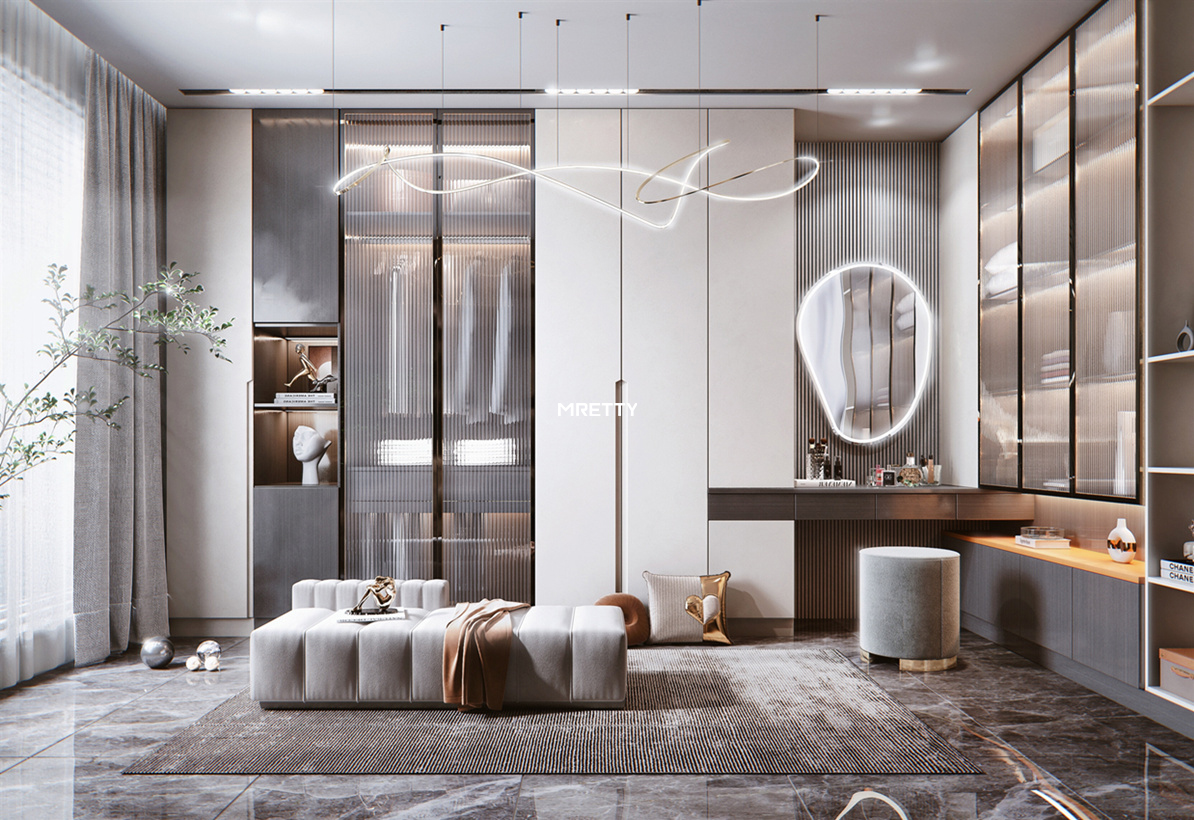
Choosing Materials with Confidence: Expert Material Guide for Singapore Climate
Selecting the right materials for whole-house carpentry in Singapore is critical—high heat and humidity demand durability and longevity. The best materials are engineered for stability, moisture resistance, and pest resistance. Aesthetics matter, but performance should come first.
Materials I regularly recommend to clients:
Structural Core (Plywood): High-quality multi-layer plywood far outperforms MDF and particleboard in our climate—better warp and moisture resistance. Insist on E0-grade formaldehyde emission standards, the strictest rating for indoor air.
Finishes (Laminate): Modern high-pressure laminate (HPL) offers vast color and texture options, including realistic wood grains and stone patterns—durable, easy-clean, scratch and moisture resistant.
Countertops (Quartz & Sintered Stone): Engineered quartz is popular for kitchens and vanities—non-porous and stain-resistant. Sintered stone takes it further—heat, scratch, and UV resistant, ideal for heavy-use zones.
Hardware (Hinges & Runners): Do not skimp here. Premium hardware from Blum or Häfele guarantees soft-close doors and smooth drawers for over a decade. Personally, for high-frequency items like kitchen hinges and soft-close runners, Blum is my non-negotiable—consistently outperforming competitors in stress tests, with better daily tactile feel, it is the most critical piece for long-term satisfaction.
A less obvious but worth-sharing insight on solid wood: many homeowners are drawn to its natural beauty, but the fact is, quite a few solid wood species noticeably warp and expand-contract under Singapore's humidity fluctuations unless meticulously treated and perfectly maintained. For large-surface items like wardrobe doors, high-quality engineered wood often offers better long-term stability and easier maintenance.
❌ Common Mistake: Focusing only on the surface laminate color, ignoring the core board and hardware specs in the quotation.
✅ Better Approach: Ask your designer to specify the brand and grade of internal plywood (e.g., E0), and also the hinge and runner brands (e.g., Blum). This lets you compare quotes apples-to-apples.
Ultimately, selecting climate-adapted, high-performance materials is key to ensuring custom furniture still looks and works beautifully years later.
Tailored to Fit: Customization Strategies for Different Singapore Properties
A successful customization strategy must be tailored to the property—a new 4-room HDB BTO and a 20-year-old resale have different needs. Each property type presents unique challenges and opportunities; a "one-size-fits-all" approach misses details.
New HDB BTO: Every square foot must be squeezed. Prioritize multi-functional furniture. Think bay window seating with built-in storage, TV feature walls hiding fold-down desks, tatami beds with integrated drawers—space-saving thinking is the lifeline here.
Resale HDB: These units often have awkward layouts or structural beams that off-the-shelf furniture cannot handle. Custom work is perfect for hiding flaws—building around structural columns, modernizing spaces per HDB carpentry renovation guidelines. For instance, an older Queenstown HDB I did last year had a prominent structural beam splitting the living room; standard shelving would not fit. We designed full-height custom cabinetry that seamlessly wrapped the beam, turning an eyesore into a highlight with added hidden storage.
Condominiums: The focus often shifts to luxurious seamlessness, using premium materials—full-height feature walls, integrated lighting. High-end surfacing like sintered stone or specialty laminates can create a hotel-calibre refined atmosphere.
❌ Common Mistake: Applying BTO space-saving thinking to a spacious condo—easy to overdo and clutter the space, undermining the luxury feel.
✅ Better Approach: Match the design strategy to the property's character—compact units prioritize multi-functionality; larger spaces focus on material texture and clean lines.
Tailoring design to property type ensures the scheme is not only beautiful but perfectly suited to the spatial context.
Breaking Down Pricing: Understanding Whole-House Custom Furniture Packages
Understanding whole-house custom furniture package quotations in Singapore is key to making informed decisions and avoiding hidden costs. A transparent quote should break down costs clearly—by material, complexity, hardware, and total work volume. This transparency is the mark of a reliable provider.
Pricing is driven by:
Materials: Sintered stone costs more than quartz; E0-grade plywood costs more than lower grades.
Complexity: Flat-panel wardrobes are cheaper than shaker-style doors or ones with fluted glass inserts.
Hardware: Full Blum hinges and runners cost more than no-name brands, but durability and tactile feel are miles ahead.
Labor & Installation: Complexity of the installation process also affects the final price.
Many homeowners search "affordable whole-house custom furniture Singapore." The most effective way to not compromise on quality is to find a company with its own factory. MRETTY's direct-to-client model cuts out intermediaries, typically saving clients 15–20% versus design firms that outsource production—this value-for-money point often comes up when clients research MRETTY whole-house customization reviews.
At the starting stage, creating a detailed custom furniture checklist is the perfect first step to organize ideas and budget.
❌ Common Mistake: Going with the cheapest quote without scrutinizing material and hardware specs. Low prices often hide inferior cores or no-name hardware that fail within years.
✅ Better Approach: Request line-item detail. Compare specified materials (core grade, finish brand, hardware brand) to ensure you are comparing the same tier.
A clear, detailed quotation is the mark of a reliable partner, guaranteeing your investment is transparent and delivers long-term value.
FAQs
Q: How long does the full customization process take?
A: Typically 6–10 weeks from initial consultation to final installation, covering design, material selection, 3D visualization, manufacturing, and installation.
Q: Is custom furniture much more expensive than off-the-shelf?
A: While upfront investment may be higher, custom offers superior space utilization, material quality, and fit—better long-term value than repeatedly replacing off-the-shelf pieces. MRETTY's in-house factory model saves 15–20% versus outsourced production.
Q: What materials best suit Singapore's humid climate?
A: E0-grade high-quality plywood for cores, HPL for finishes, engineered quartz or sintered stone for countertops are all preferred choices. Premium hardware like Blum and Häfele is also essential for longevity.
Q: Can small HDB flats do customization?
A: Absolutely—customization is the best solution for HDBs, especially BTOs, where every inch counts. Incorporate multi-functional pieces, hidden storage, and seamless integration to make small spaces feel larger and more efficient.
Q: How do I ensure material and craftsmanship quality?
A: Get detailed specifications in the quotation, including plywood brand/grade, finish, and hardware. Visit showrooms to handle samples and ask about the manufacturing process. Reputable firms with in-house factories like MRETTY offer steadier QC and transparency.
About the Author
Hanson Whole-House Customization Designer*
Hanson brings 14+ years of design and project management experience and leads MRETTY's premium kitchen and cabinetry system customization. He is a seasoned practitioner in Singapore's custom furniture space, specializing in condominiums and landed homes. His styles span modern minimalist, Italian quiet luxury, and French elegance—leveraging MRETTY's 15,000 sq ft smart factory to integrate sub-millimeter precision and tropical climate adaptation into every piece, guaranteeing long-term durability and family health.
MRETTY: Premium Bespoke Kitchen & Cabinet Systems Provider in Singapore
