
 Singapore
 China
China
TL;DR: Data shows premium hardware brands like Blum withstand over 200,000 open/close cycles—meaning 20+ years of daily use without failure. Focus on engineering components, not just timber. That is the true mark of high-end custom furniture built to last.
Author: Hanson, Lead Full-Home Systems Designer, MRETTY
Many homeowners equate high-end carpentry with selecting the most expensive timber—a common and costly misconception. True high-end carpentry is a complete systems engineering discipline. After 14 years designing custom furniture in Singapore, I know real luxury lies not in the wood itself, but in engineering design, hardware, and millimeter-precise execution.
Last month, I met a homeowner wanting a teak feature wall. To them, "luxury" was all about the wood grain. I had them compare two drawers: one with standard runners, the other with Blum's Legrabox system. The silent, silky glide of the Blum drawer—pure engineering—instantly changed their minds. They realized quality is something you feel daily, not just admire visually.
This guide goes beyond surface aesthetics to dissect what makes durability last.
How to Define Truly Value-Retaining High-End Carpentry
Most equate high-end carpentry with thick solid natural wood. But for Singapore's climate, this is often a mistake. Under persistent high humidity, solid wood can warp or even crack.
The true mark of today's high-end carpentry is an integrated system. It prioritizes long-term stability and functionality, using purpose-designed components working in concert. You often feel the difference before you see it—the silent soft-close of a cabinet door, or the solid heft of a panel. These are direct outcomes of a systematic approach.
Here are the four pillars defining modern high-end craftsmanship:
Quality Core Board: Starts with high-density moisture-resistant boards. These eco-grade boards are engineered for Singapore's humidity, actively preventing warping.
Precision Workmanship: Refers to joinery and finish quality. High-end work employs factory automation, achieving tolerances under 1mm for seamless, durable results.
High-Performance Hardware: This is non-negotiable. World-class brand hinges and runners are essential. Components from manufacturers like Blum or Hettich are built for decades of intensive use.
Deep Customization: Goes beyond color choice. It means tailoring solutions to your specific lifestyle and storage needs—whether HDB or landed.
❌ Common Pitfall: Focusing only on surface laminate or color.
✅ Better Approach: Ask your carpenter to explicitly specify core board and hardware brands. Internal components are what sustain long-term use.
High-end carpentry is an investment in a system where materials, hardware, and craftsmanship deliver 20+ years of superior daily experience.
How to Select Quality Materials for Singapore's Climate
Choosing the right core board is critical—the single most important decision to ensure your carpentry withstands Singapore's high humidity. Pretty laminate over cheap core will eventually fail; swelling and delamination are inevitable.
I witnessed this firsthand last year at a condo project near East Coast Park. The client's old cabinets had fallen apart—not just humidity, but salt-laden air had corroded cheap hinges and caused low-grade particleboard to swell. We replaced it with a system built on high-moisture-resistant boards and premium hardware, solving the problem completely.
Here is how common materials compare:
| Material Type | Best Application | Moisture Resistance | Durability & Lifespan | Typical Use Case |
| Standard Particleboard | Low budget, dry zones | Low | 3–5 years | Temporary or low-frequency furniture |
| MDF | Lacquer, shaped finishes | Low–Medium | 5–8 years | Decorative doors, feature walls |
| Plywood (Standard) | General structural use | Medium | 10–15 years | Standard "premium" cabinetry |
| High-Moisture-Resistant Board | Kitchens, baths, high-humidity zones | High | 15–20+ years | High-end, long-life cabinetry |
| MRETTY Eco-Grade Board | Health-conscious, premium projects | Extremely High | 20+ years | Full-home systems, wardrobes |
Choosing a material like high-moisture-resistant board buys peace of mind. You are buying a solution that actively fights the most common furniture failures in our local climate, avoiding expensive replacement costs.
What is the best material for custom cabinets in Singapore?
For custom cabinets in Singapore, high-moisture-resistant particleboard and quality plywood offer the best balance of durability and cost. They resist humidity far better than standard boards, preventing warping and ensuring longer lifespan.
❌ Common Pitfall: Assuming all plywood is the same.
✅ Better Approach: Clarify plywood grade and origin. Insist on low formaldehyde emission standards (E0 or E1 grade) for better indoor air quality.
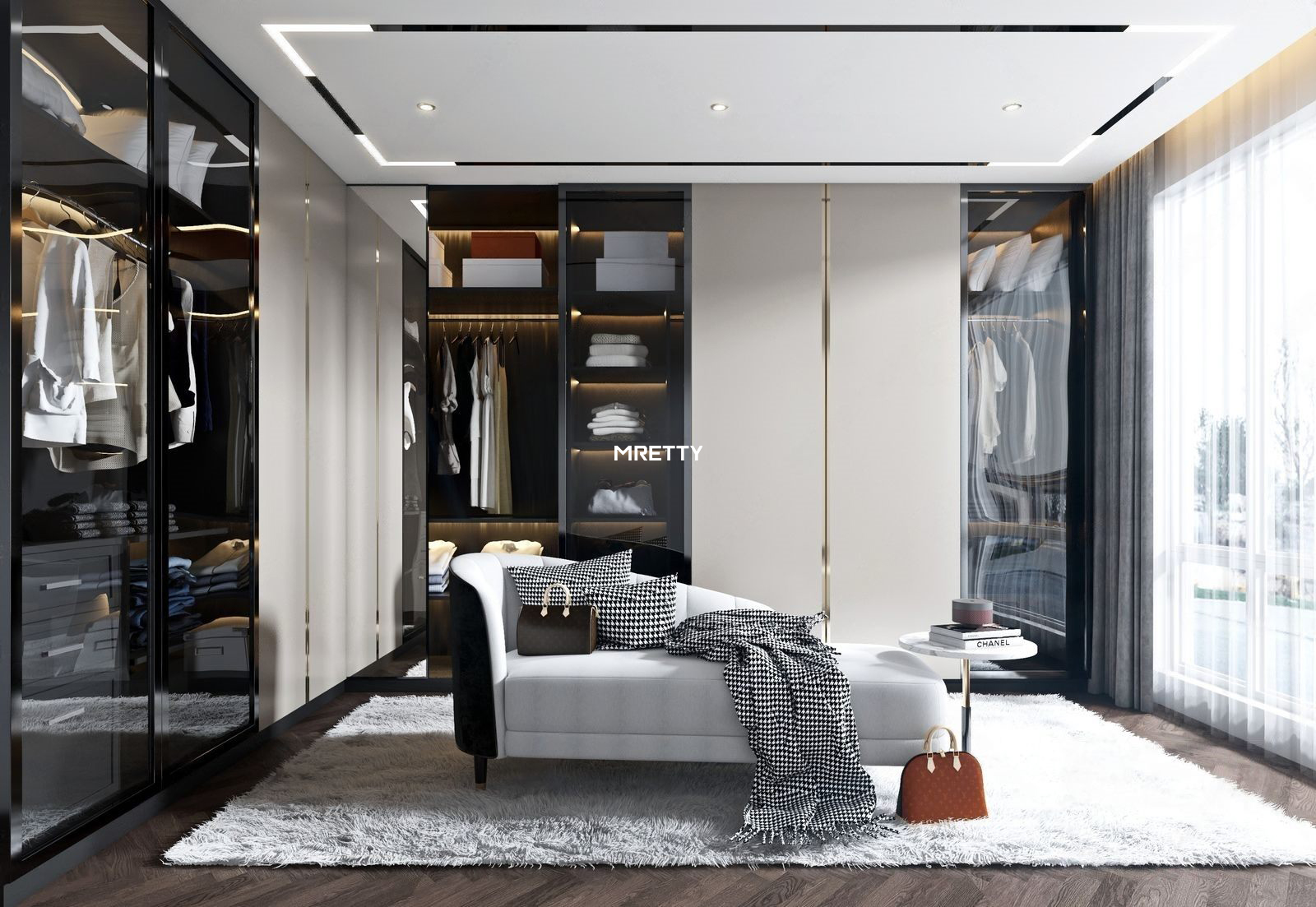
How to Assess Craftsmanship to Avoid Costly Rework
True craftsmanship hides in the details. You must look beyond the face veneer—examine joints, edges, and alignments. These subtleties reveal the precision and care behind the work.
I often tell clients to run a finger along the edge-banding. On a high-end piece, it should feel perfectly smooth. Perfect sealing from automated factory processes blocks moisture from reaching the core—something nearly impossible to achieve with on-site manual work.
This is where the MRETTY factory advantage shows. Our 15,000 sq ft smart factory uses German HOMAG machinery for cutting and edge-banding, consistently achieving tolerances under 0.5mm. What does this mean for you? Gaps between cabinet doors are uniformly tight, creating a seamless visual and better shielding against dust and moisture, extending furniture life.
When vetting a carpenter's work, use this checklist:
Check Edges: Sharp or peeling? Can you see a glue line? These signal poor edge-banding.
Inspect Joints: Visible nail holes or misaligned corners? High-end work uses hidden dowels and cam connectors for clean exteriors.
Operate Doors & Drawers: Silent movement? Smooth soft-close? This tests hardware quality.
Scrutinize Gaps: Are gaps between doors uniform? Uneven gaps indicate cutting imprecision.
View Finishes: Do all panels match in tone and grain? Factory finishes far outperform on-site spraying.
How to select a good carpenter in Singapore?
To select a good carpenter in Singapore, review consistency across past projects and verify transparent specs on materials and hardware. If possible, visit their factory or completed projects and pay close attention to craftsmanship details.
❌ Common Pitfall: Selecting carpentry purely on lowest price.
✅ Better Approach: Choose a partner based on their manufacturing process and proven results. Upfront investment in factory-grade precision saves you thousands in repair costs later.
How to Read a High-End Carpentry Quotation in Singapore
A high-end carpentry quotation must be a transparent document. Pricing is typically per linear foot run, but a good quote details exactly what is included.
In Q2 2026, a client showed me a competitor's quote that was nearly 25% cheaper. Tempting—but it only stated "standard fittings" and "quality wood core" with no brand names. Major red flags. Behind that low price hid unbranded hardware that would fail in 3–5 years and inferior core boards prone to warping.
Here is what to demand in a transparent quote:
- Itemized Pricing: Clear cost per item (e.g., wardrobe, kitchen cabinet) rather than a lump sum.
- Material Specs: Exact type and brand of core board (e.g., "Thai United high-moisture-resistant particleboard, E1 grade").
- Hardware Specs: Brand and model of hinges and runners (e.g., "Blum soft-close hinge").
- Finish Details: Specific series or material of laminate used.
- Warranty Info: Clear terms for structural and hardware warranty.
- Exclusions: Clearly listed items not included (e.g., hacking, electrical).
How much does custom carpentry cost in Singapore?
As of mid-2026, high-end carpentry in Singapore typically runs S$280–550+ per linear foot run. Final price depends on design complexity, materials, hardware brand, and internal fittings.
A detailed quote gives you informed choice and lets you compare like-for-like. You understand you are paying for specific high-quality components that ensure longevity. The discussion shifts from "which is cheaper?" to "which delivers better long-term value?"
❌ Common Pitfall: Accepting vague quotes stating "high-quality materials."
✅ Better Approach: Insist on specific brands and product series in the quotation. Vague terms often mask inferior products.
How to Determine if Built-In Carpentry Suits Your Home
Yes—for most Singapore homes, built-in carpentry is worth it. It is especially valuable in space-tight HDBs and condos, offering space-maximizing and design integration that freestanding furniture cannot match.
A 4-room BTO project we completed in Punggol is a perfect example. We designed a floor-to-ceiling feature wall integrating display cabinets, hidden shoe storage, and a fold-down desk. That single structure delivered three functions while occupying minimal floor space—estimated to boost the living room's usability by 40%.
Value varies by housing type:
For HDBs & Condos: Main advantage is maximizing every inch. Built-ins exploit awkward corners, offer floor-to-ceiling storage, and make spaces feel visually larger.
- For Landed Homes: Value comes from creating architectural coherence. This includes walk-in wardrobes, custom book walls, or entertainment centers that define a room's character.
What is the difference between a carpenter and an interior designer?
A carpenter is the craftsman who builds and installs the wood structure, focusing on execution. An interior designer plans the overall space—layout, aesthetics, and integrated function. High-end services like MRETTY bridge this gap. We offer integrated design-and-build, where designers work directly with factory craftsmen, ensuring the final product matches the design intent perfectly.
MRETTY: Premium Bespoke Kitchen & Cabinet Systems Provider in Singapore.
