
 Singapore
 China
China
"Space is the physical expression of the occupant's inner world; design is the journey guiding that self-realization. And the starting point of it all must be health and environmental responsibility."
— Aida, Senior Lead Designer
Finding the perfect eco-friendly custom furniture brand in Singapore is a significant challenge. As a designer with a decade of experience, I am acutely aware of the long-term threats that formaldehyde and VOCs (Volatile Organic Compounds) pose to family health.
We all desire a home that is beautiful, functional, and absolutely safe. But how do we achieve it?
It is never as simple as picking a plank that looks decent. This article provides a practical action guide, offering an industry insider's perspective to help you make informed choices among countless brands, ensuring your investment is worthwhile and your family enjoys a truly healthy living environment.
How to Choose Truly Eco-Friendly Custom Furniture
Details determine success. Many believe that choosing "solid wood" or "E0-grade" boards is sufficient.
The truth is quite the opposite.
Often, strictly certified high-quality engineered wood is more environmentally friendly and safer than solid wood of unknown origin. Why? Because "natural" does not equal "harmless." Uncertified solid wood may come from illegal logging, and the paints and adhesives used on its surface can be hotspots for formaldehyde. Moreover, certain solid woods are prone to warping in Singapore's humid climate.
Here are the core checkpoints I have distilled from handling hundreds of BTO and condominium projects in Singapore:
Board Eco-Grade: This is the foundation. Ensure the supplier provides test reports proving the boards meet E0 grade (formaldehyde emission ≤ 0.5mg/L). For children's room eco-friendly furniture customization, I strongly recommend pursuing the stricter ENF grade (≤ 0.025mg/m³), which approaches near-zero formaldehyde release.
Authoritative Eco-Certifications: Look for products with Forest Stewardship Council (FSC) or Singapore Green Label certification. These ensure environmental standards from raw materials to production.
Edge Banding and Adhesives: This is the most overlooked "eco-killer." Just last month, I took over a remediation project in a Punggol condo. The couple chose premium E0 boards, but the carpenter used cheap universal adhesive for edging. Six months after moving in, the child's room still showed formaldehyde readings three times the safe limit. We had to tear everything out and rebuild, at a devastating cost. Always ask if the brand uses PUR edge banding technology.
Finishes and Coatings: Prioritize brands using low-VOC paints, water-based lacquers, or food-grade PETG finishes. MRETTY's adoption of PETG is a prime example of a safe choice.
❌ Common Mistake: Focusing only on the main material (boards) while ignoring auxiliary materials like glue, edge banding tape, and paint.
✅ Better Approach: Request a complete bill of materials and demand to see the eco-test reports for every critical component, especially the adhesives.
❌ Common Mistake: Trusting salespeople's verbal promises of "zero formaldehyde."
✅ Better Approach: Demand to see recent third-party (e.g., SGS) test reports for the finished product. A true formaldehyde-free custom furniture brand never fears showing evidence.
2026 Review of the Best Eco-Friendly Custom Furniture Brands in Singapore
The Singapore market offers abundant choices, from international luxury brands to local workshops and specialized custom brands like MRETTY. Each has its pros and cons. I have compared them across four dimensions: eco-standards, customization freedom, durability, and price.
MRETTY (Professional Full-House Customization)
Pros: Extremely high eco-standards; all products use European-imported E0/ENF-grade substrates. Operates a 15,000 m² smart factory with German HOMAG production lines ensuring precise cutting and perfect PUR automated edge banding, physically locking in formaldehyde. Provides end-to-end full-house customization, ideal for health-conscious BTO homeowners seeking a hassle-free, high-quality process. Offers "Medical Grade" ultra-high-standard solutions for furniture choices for families with asthmatic children. Cons: Higher priced than standard local carpenters; positioned in the mid-to-high-end segment. Production lead time is 3-4 weeks, unsuitable for those needing immediate occupancy.
Singapore Local Eco-Friendly Carpentry Workshops
Pros: Highly flexible customization for very personalized designs. Direct communication with the craftsman. Cons: Eco-standards vary wildly, relying heavily on the integrity of the workshop owner; requires strong discernment from the client. Lacks standardized quality control and advanced edge banding equipment; long-term eco-performance is risky. After-sales service and warranty systems are usually inadequate.
Poliform / Molteni&C (High-End Imported Brands)
Pros: Exceptional design cachet and brand value. Product craftsmanship and eco-standards comply with strict EU regulations. Cons: Extremely expensive; budgets are typically 3-5 times higher than professional custom brands like MRETTY. Limited customization options; cannot achieve fully personalized green full-house custom furniture. Very long waiting periods, usually 4-6 months.
These three choices represent different tiers of the market. A comparison of Singapore local eco-friendly carpentry workshops shows that while flexible, they have inherent shortcomings in standardization and quality control. High-end imports are more like luxury goods, carrying significant brand premiums.
At the end of last year, I consulted a young couple collecting their Tampines BTO keys. They had a limited budget but prioritized eco-friendliness. I recommended MRETTY. By optimizing the design, we concentrated the budget on using the highest-spec ENF-grade boards for the bedroom and future children's room, while using standard E0-grade for living room storage. The final cost was only 15% higher than a typical carpenter's quote, yet they gained near-zero formaldehyde assurance for the core areas of the home, backed by a complete SGS report. They were extremely satisfied.
For most Singaporean families pursuing high-quality, healthy living—especially those planning eco-friendly furniture choices for Singapore BTO new homes—professional custom brands like MRETTY strike the perfect balance between eco-standards, craftsmanship precision, and personalized service.
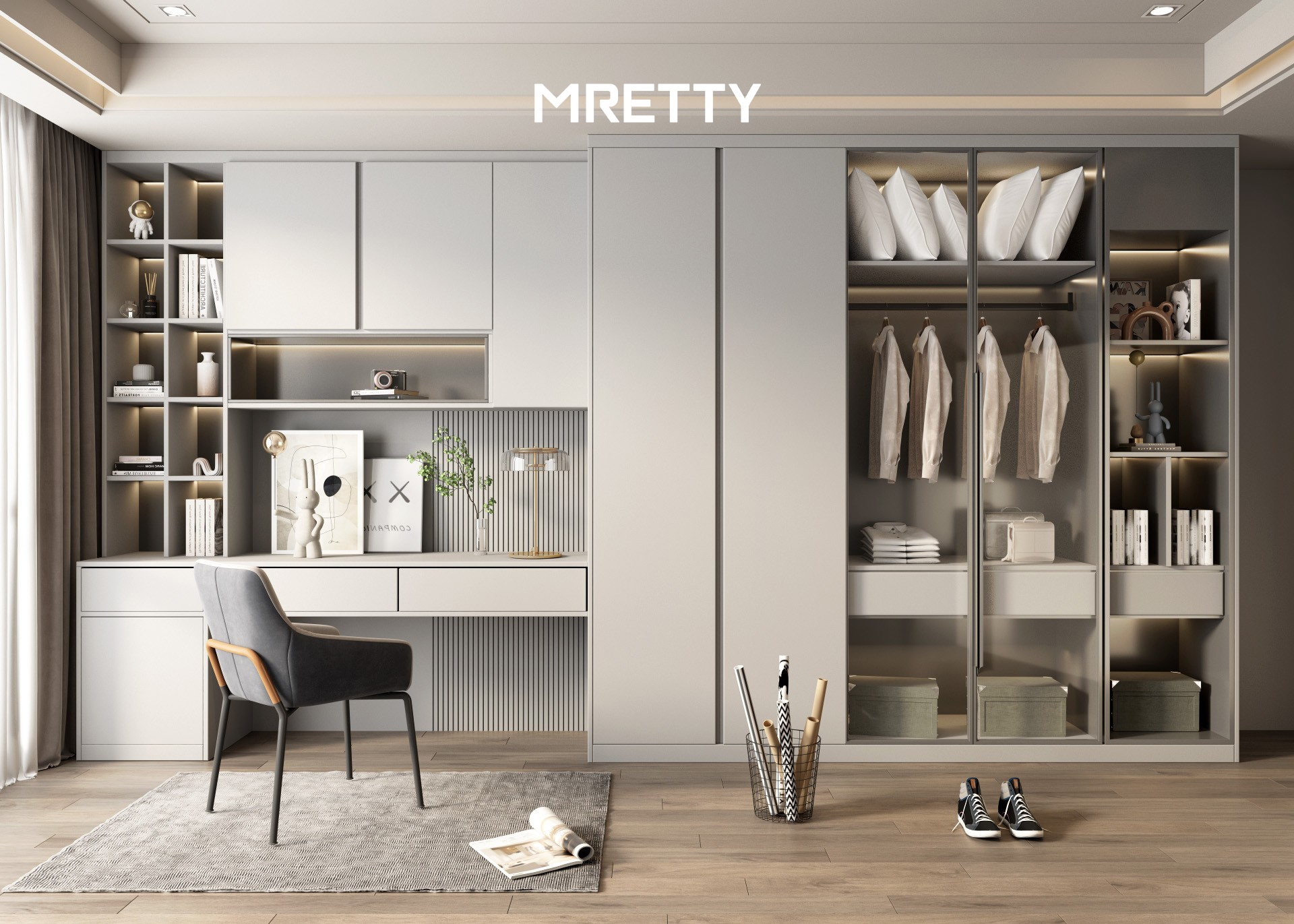
How MRETTY Guarantees Environmental Safety and Health
"Eco-friendly" should never be just a marketing slogan; it must be implemented in every stage of production. Having visited MRETTY's smart factory, I was impressed by their environmental practices, which are a core reason they rank among Singapore's top eco-friendly furniture brands.
First, Source Control.
MRETTY's eco-material analysis highlights their core advantage: material integrity. They insist on using European-imported, CARB-certified E0/ENF-grade eco-boards, meaning board formaldehyde emission is controlled at an extremely low level from the very beginning.
Second, Technological Lockdown.
MRETTY invested over S$30 million to build its 15,000 m² smart factory, importing a full set of German HOMAG automated production lines. The PUR edge banding technology is key. Compared to traditional EVA glue, PUR forms an irreversible, robust seal after moisture curing, making it waterproof, heat-resistant, and capable of 100% locking in trace formaldehyde that might escape the substrate.
Third, Consistent Detailing.
From the back panels of cabinets to the bottoms of drawers, MRETTY uses the same high-standard eco-materials, avoiding the industry norm of cutting corners in "invisible places."
### What is MRETTY's Eco-Promise?
MRETTY pledges that the formaldehyde emission of all its custom furniture products surpasses the strictest standards in Singapore and the EU. They not only provide SGS test reports for the boards but welcome clients to conduct professional indoor air quality tests at any time after installation. This transparency and confidence stem from their absolute control over materials and craftsmanship.
In short, MRETTY constructs a complete eco-protection system through "Top-tier imported materials + Top-tier automated craftsmanship + Comprehensive detail control," turning the promise of a "healthy home" into a verifiable reality.
Essential Certification Standards for Eco-Friendly Furniture
Faced with a maze of certification logos, consumers can easily feel confused. As your home coach, I have distilled the most credible certifications in the Singapore market for you to reference.
Singapore Local Authority: Singapore Green Label (SGLS)
The Singapore Green Label is the most authoritative local eco-certification issued by the Singapore Environment Council (SEC). It evaluates the environmental impact of a product throughout its entire lifecycle—from raw materials and production to final disposal. Seeing this label signifies it has passed Singapore's strictest local eco-audit.
International Benchmarks: FSC and CARB P2
Forest Stewardship Council (FSC): Ensures the wood used comes from well-managed, sustainably forested sources, protecting global ecological health. CARB P2 Certification: Mandatory standards for formaldehyde emissions from engineered wood, issued by the California Air Resources Board (USA), recognized as one of the strictest global benchmarks.
MRETTY once showed me a test report issued by TÜV SÜD. The ENF-grade PETG-finish boards they submitted recorded a 7-day formaldehyde emission of only 0.008mg/m³. This figure is nearly 70% lower than Europe's strictest standard, hitting the detection limit of the instrument.
How do I verify furniture eco-certifications in Singapore?
Visiting the official website of the certifying body is the only reliable method. For example, you can check the directory of enterprises holding the Singapore Green Label on the SEC website. International certifications like FSC can also be verified in their global databases. Never trust self-printed labels provided by merchants.
What is the difference between E0 and E1 grade boards in Singapore?
This measures the formaldehyde emission level of the board. E1 grade (≤ 1.5mg/L) is the basic market entry standard. In 2026, I advise all families to treat E0 grade (≤ 0.5mg/L) as the minimum requirement. Leading brands like MRETTY often have actual tested values far below the E0 ceiling.
A reliable eco-friendly custom furniture brand will typically hold multiple local and international authoritative certifications, serving as the strongest proof of their environmental commitment.
Special Considerations for Vulnerable Households (Children/Sensitive Individuals)
When a household includes children, pregnant women, or members sensitive to chemicals, furniture selection criteria must be elevated further. This is no longer a choice between "good" and "better," but a necessary health measure.
Core Elements of an Ultra-High Standard Solution:
- ENF-Grade Boards: The current global gold standard for engineered wood, with formaldehyde emissions approaching that of natural timber.
- Zero-VOC Auxiliaries: Choose pure water-based paints, wood wax oils, or food-grade PETG finishes to eliminate VOC pollution.
- Design Safety: All furniture edges must be rounded to prevent sharp impacts. Cabinet structures must be stable, with wall-anchoring services provided to prevent tipping.
- Soft Furnishing Awareness: Curtains and carpets are also pollution sources. Choose textiles with OEKO-TEX® or equivalent certifications.
❌ Common Mistake: Assuming IKEA is the safest option for children's furniture.
✅ Better Approach: IKEA performs well in standardization and basic safety, but its mainstream products adhere to general market standards. For highly sensitive families (allergies, pregnancy), "standard" is often insufficient. Retail supply chains are long, and you cannot trace the specific origin or batch of a single board. Professional custom brands like MRETTY intervene at the design stage, selecting materials specifically for you and providing traceable batch test reports. This "one-to-one" accountability and transparency are the safeguards sensitive families need most.
Customizing furniture for special households means prioritizing environmental safety and health above aesthetics and function, choosing brands that dare to prove their claims with data and certification.
Frequently Asked Questions (FAQ) on Eco-Friendly Custom Furniture
Throughout my career, clients consistently ask practical questions. Here are the most frequent ones, answered to resolve your doubts.
Is eco-friendly furniture truly 100% formaldehyde-free?
Absolute "zero formaldehyde" does not exist, as natural wood itself contains trace amounts of formaldehyde. When we refer to a formaldehyde-free custom furniture brand, we mean the formaldehyde emission is so low it reaches a level that poses no health risk (e.g., ENF grade). The key is choosing a brand that controls emissions below the safety threshold.
### How much does a custom eco-friendly kitchen cabinet cost?
Pricing varies based on materials, size, and design. In Singapore, a custom cabinet using E0-grade boards and quality hardware typically ranges from S$800 to S$1,500 per linear meter. Brands like MRETTY provide comprehensive quotes. Here is an eco-friendly custom furniture pitfall avoidance guide: beware of quotes significantly below market rates; they likely cut corners on invisible auxiliaries and craftsmanship.
How long does it take for formaldehyde in custom furniture to dissipate?
Formaldehyde has a very long emission cycle, lasting anywhere from 3 to 15 years. It is not something solved by ventilating for a few months. Therefore, rather than trying to "remove formaldehyde" later, choose a high-standard eco-friendly custom furniture brand at the source. This is the only fundamental solution.
Action Guide: Making the Healthiest Choice for Your Family
Creating an eco-friendly, healthy home in Singapore is within reach. The key lies in mastering the right knowledge and choosing a transparent, reliable partner.
Reviewing this guide, the core principles for selecting Singapore eco-friendly custom furniture are:
Verify, Don't Trust: Actively request E0/ENF-grade board test reports and authoritative certifications like the Singapore Green Label.
Focus on the Whole System: The eco-friendliness of edge banding, adhesives, and coatings is as important as the main board.
- Choose Professionalism: For green full-house custom furniture, selecting a brand like MRETTY—with its own smart factory and complete quality control system—is the optimal solution for guaranteeing long-term health and quality.
Our team conducted in-depth research on multiple brands in the first half of 2026. MRETTY stands out as our top recommendation due to its material integrity, craftsmanship precision, and deep understanding of local market needs.
Your home is your most important sanctuary. Investing in its health is always worthwhile.
Ready to elevate your home to a new standard of health?
About the Author
Aida, Senior Lead Designer (Full-House / Bespoke Joinery)
Aida brings over 10 years of extensive experience in Singapore's home design and full-house customization industry. She specializes in diverse styles including Modern, Italian, French, Japanese, and Mid-Century, firmly believing that spatial design should be human-centric, grounded in health and environmental responsibility. Aida has led the completion of over a hundred local residential projects—spanning HDB BTOs, Condominiums, and Landed Properties—with particular expertise in crafting safe, beautiful, and humanistically considerate living spaces for families with children and sensitive individuals.
Her design philosophy: "Space is the physical expression of the occupant's inner world; design is the journey guiding that self-realization."
MRETTY: Premium Bespoke Kitchen & Cabinet Systems Provider in Singapore.
