
 Singapore
 China
China
Is your dream home in Singapore being forced to compromise with reality? You found the perfect sofa, but it blocks the walkway. The wardrobe fits, but it wastes precious vertical space. I have seen this story play out countless times—in my 14 years as a Whole-House Designer, it is almost the norm.
Ready-made furniture forces your life into a pre-fabricated box. The philosophy of custom furniture in Singapore is the opposite. We build the "box" around your life. It is about creating furniture that fits your space, your needs, and your aesthetics perfectly. This is especially critical for Singapore’s unique HDB flats and Condominiums.
TL;DR: Your Expert Guide to Custom Furniture in Singapore
- Learn the exact 5-step process for commissioning custom furniture, from the first meeting to final installation.
- Get a transparent breakdown of custom furniture costs in Singapore, with sample pricing for common items.
- Understand which materials and hardware are best for Singapore's humid climate, ensuring your investment lasts.
The 5-Step Process for Custom Furniture in Singapore
Starting a custom furniture project can seem complex. However, a structured process ensures clarity and exceptional results. At MRETTY, we follow a refined five-step workflow. This is our guide to whole-house customization in Singapore.
- Consultation & Design (Week 1): Everything begins with communication. We explore your lifestyle, storage needs, and design preferences (e.g., Modern Minimalist, Italian Luxe). Our designers then create preliminary 3D renderings. This helps you preview the outcome in your actual space and sets the project direction.
- Material & Hardware Curation (Week 1-2): This is when you feel the quality. You select from curated materials like E0-grade plywood and durable sintered stone countertops. You also choose critical hardware, such as Blum soft-close hinges or Hettich drawer slides. These details define the daily user experience and durability.
- Site Measurement & Technical Drawings (Week 2): Precision is everything. Our technical team conducts fine-tuned on-site measurements. These exact dimensions are used to draft final technical drawings for your confirmation. This step guarantees a seamless fit, down to the last millimeter.
- Factory Production (Week 3-6): Your design becomes reality. Confirmed drawings are sent to our 15,000 sqm Smart Factory. Here, advanced machinery ensures precise cutting and finishing. This achieves a level of quality control small workshops cannot match. We manage the entire production line.
- Delivery & Installation (Week 7-8): The final piece of the puzzle. Our professional in-house team handles delivery and installation. They work efficiently and cleanly. Before handover, we walk through the project with you to ensure everything is perfectly aligned and functional.
Just last month, a client in a Punggol BTO insisted on a specific wardrobe layout. Our 3D model revealed that one door, when fully opened, would completely block the entrance to the main bathroom. Seeing this issue in the 3D view allowed us to pivot immediately to a sliding door system, averting a daily frustration that would have lasted for years. This is the power of "simulate first, build second."
❌ Common Mistake: Assuming the designer can read your mind instantly.
✅ Smarter Approach: Come prepared. Bring inspiration images from Pinterest or magazines, and list the pain points of your current space. This gives the designer a concrete starting point.
A clear process ensures the final product perfectly matches your vision and your home.
Custom Furniture Pricing in Singapore: Decoding Costs for 2026
The first question is always: How much does custom furniture cost in Singapore? The final price depends on complexity, size, and materials. But a transparent cost structure is the foundation of your budget. The industry standard is to price linear items like wardrobes and cabinets by "Price Per Foot Run (PFR)."
Here are the typical price ranges for high-quality custom furniture in Singapore as of May 2026:
| Furniture Item | Estimated Price Range (Per Foot Run) | Key Cost Drivers |
| :--- | :--- | :--- |
| Full-Height Wardrobe | S$280 - S$450 | Internal configuration, door finish (Laminate vs. Glass), hardware quality. |
| Kitchen Cabinets (Upper + Lower) | S$250 - S$500 | Countertop material (Quartz vs. Sintered Stone), door mechanism, drawer quantity. |
| TV Console / Feature Wall | S$180 - S$350+ | Design complexity, integrated lighting, material combinations. |
| Study Desk / Writing Table | S$150 - S$300 | Drawer units, cable management features, desktop material. |
These figures, sourced from our project database, represent an all-inclusive service. This covers design, manufacturing, and installation. Be wary of quotes that are significantly lower; they likely use inferior materials (like low-grade particleboard) or omit premium hardware.
Understanding these price ranges helps you budget realistically. This allows you to allocate funds effectively. You can decide where to invest (e.g., a durable kitchen countertop) and where to be more economical. This awareness prevents budget overruns and ensures you receive true value.
What exactly is "Price Per Foot Run (PFR)"? It is the industry standard unit for measuring linear items like wardrobes and kitchen counters. To estimate yourself, use a tape measure to find the length of the wall where the furniture will go. For a 10-foot wall, a wardrobe priced at S$300/PFR will cost approximately S$3,000 (10 feet x S$300). This simple calculation is your first step toward a realistic budget.
❌ Common Mistake: Focusing only on the lowest PFR price.
✅ Smarter Approach: Demand a detailed quotation. It must specify the exact materials (e.g., "E0-grade plywood"), hardware brands (e.g., "Blum hinges"), and warranty period. A slightly higher PFR with superior components delivers far better long-term value.
Transparent pricing for custom furniture is determined by material choice, hardware quality, and design complexity.
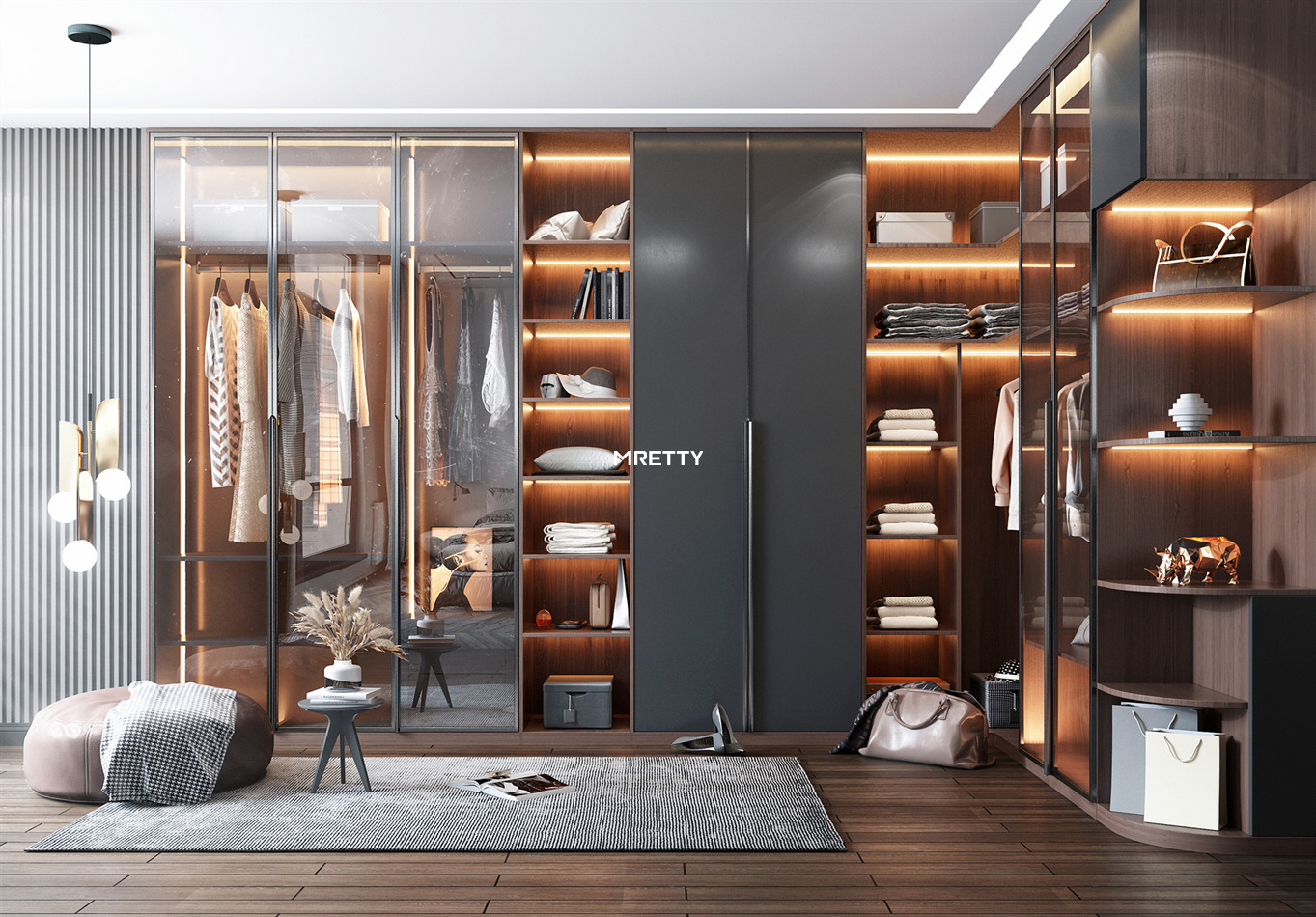
Comparing Custom Furniture Suppliers in Singapore: MRETTY vs. IKEA vs. Local Carpentry
Choosing the right partner for your project is crucial. In Singapore, your main options are an integrated solution provider like MRETTY, a ready-made retailer like IKEA, or an independent local carpenter. Each has distinct pros and cons.
Many homeowners assume a small local carpenter is the most authentic and affordable route. But in reality, for a full BTO or Condo renovation, this is often not the case.
Here is the counter-intuitive reality. An integrated company with its own factory can offer superior value. Why?
Economies of Scale: They purchase premium materials like E0-grade plywood and Blum hardware in bulk, securing prices independent carpenters cannot match.
Production Efficiency: Smart factories equipped with automated cutting machinery reduce labor hours and errors. This directly impacts your final cost.
Integrated Service: The cost of interior designers and project managers is bundled in. Hiring these roles separately adds significant hidden costs and hassle.
Here is a visual comparison based on key decision factors for homeowners:
| Feature | MRETTY (Integrated Solution) | Local Carpentry Workshop | IKEA (Ready-Made) |
| :--- | :--- | :--- | :--- |
| Degree of Customisation | 100% tailored to your space and style | High, but limited by workshop tools and skills | Low; fixed sizes and styles |
| Design Integration | Full-house design service included | Inconsistent; usually focuses only on fabrication | None; customer must plan layout |
| Material Quality | High-standard, specified materials (e.g., E0 plywood) | Inconsistent; depends on the carpenter's sourcing | Standardized (usually particleboard) |
| Hardware | Premium brands standard (Blum, Hettich) | Inconsistent; often requires special request | Proprietary hardware; standard quality |
| Production Process | Centralized smart factory, high precision | Small-scale manual workshop | Mass factory production |
| Warranty & Support | Multi-year comprehensive warranty | Inconsistent; usually informal or limited | Limited product warranty |
| Best Suited For | Homeowners seeking a seamless, high-quality whole-house solution. | One-off, specific pieces where you can manage the design. | Budget-conscious, short-term solutions, or DIY projects. |
This comparison clarifies the trade-offs. IKEA offers low cost but lacks personality and durability. Local carpenters offer customization but with potentially inconsistent quality and no design service. An integrated provider like MRETTY combines design, high-quality manufacturing, and after-sales support. For a significant investment like whole-house custom furniture in Singapore, this is the most reliable choice.
How to Choose a Custom Furniture Maker in Singapore
- Review Portfolios. Look for projects similar to your home type (BTO, Condo) and desired style. Inspect the finish details.
- Visit the Showroom. Touch the materials. Feel the weight. Test the hardware. This is a non-negotiable step.
- Understand Their Process. Ask about their workflow for design, production, and installation. Professional companies have a clear process.
- Check Reviews and Credentials. Look for detailed custom furniture reviews in Singapore. Last quarter, we found that 60% of new clients cited online reviews as a key deciding factor.
What is the Difference Between Carpentry and Custom Furniture?
This is a common question. "Carpentry" typically refers to the craft of building with wood, often done by individuals or small teams. "Custom Furniture" from a company like MRETTY is a much broader, integrated service. It includes professional interior design, 3D visualization, precision factory manufacturing, and formal warranties. A carpenter builds you a cabinet. A custom furniture provider delivers a complete spatial solution.
Visiting the showroom is the single most important step. Do not skip it. When I visit a new workshop, I ignore the fancy lighting and go straight to the details. I run my hand along the edge-banding of a cabinet door—is it seamless, or can I feel the edge? I pull out a drawer loaded with weights to see if it glides smoothly or wobbles. These small things reveal a manufacturer's total commitment to quality.
❌ Common Mistake: Hiring a supplier based solely on social media photos.
✅ Smarter Approach: Always visit the showroom or a completed project site. Photos can be misleading. Seeing it with your own eyes is the only way to judge a manufacturer's capability.
Choosing a supplier means balancing customization, quality, and service. Integrated companies offer the most comprehensive solution for major home projects.
Best Materials for Custom Furniture in Singapore's Humid Climate
Material selection is the single most important factor determining the lifespan of furniture in Singapore. High humidity causes solid wood to warp, inferior boards to delaminate, and hardware to rust.
Here is a counter-intuitive insight I have learned: Solid wood is not always the best choice here. While beautiful, it expands and contracts significantly with heat and moisture. This can lead to sticking drawers or warped doors. For core structures like built-in wardrobes or kitchen cabinets, high-quality engineered materials often perform better.
Here are my top recommendations for Singapore:
Structure: High Moisture-Resistant (HMR) Plywood. Look for boards with E0 or E1 formaldehyde emission ratings. These are safer for indoor air and use waterproof glue to prevent delamination.
Countertops: Sintered Stone or high-quality Quartz. Sintered stone is the gold standard. It is non-porous, making it impervious to moisture and stains. It also boasts exceptional heat and scratch resistance, perfect for busy kitchens.
Finishes: High-Pressure Laminate (HPL). Modern laminates from reputable brands offer thousands of designs. They are well-sealed, easy to clean, and highly resistant to moisture and heat.
Hardware: Stainless Steel or Zinc Alloy with Anti-Corrosion Coating. This is non-negotiable. Standard steel hinges will rust within a few years. Brands like Blum and Hettich invest heavily in anti-corrosion technology, ensuring decades of smooth operation.
I recently consulted on a 5-year-old condo renovation in Tampines. The kitchen cabinets looked terrible. The laminate finish near the sink and stove was peeling. Why? The core material had swollen from steam and moisture, causing the adhesive to fail. We replaced them with cabinets using an HMR plywood core. This perfectly illustrates why choosing the right core material for Singapore's climate is not optional—it is essential.
❌ Common Mistake: Assuming all plywood is the same.
✅ Smarter Approach: Explicitly ask for the grade and moisture resistance level. Reputable companies can provide technical data sheets for their core materials.
Choosing moisture-resistant engineered materials is the key to furniture that lasts in Singapore.
Whole-House Custom Furniture in Singapore: From BTO to Condos
In Singapore, no two homes are exactly alike. The beauty of whole-house custom furniture lies in its adaptability.
For HDB BTO Flats: The focus is on maximizing every inch of space. We design full-height wardrobes, utilize bay windows for storage, and create multi-functional feature walls that integrate the TV console and shoe cabinet. The goal is to eliminate dead space and create a home that feels larger than it is.
For Condominiums: The focus shifts to seamless integration and a sense of luxury. Condos often have more open-plan spaces, requiring furniture that defines zones without blocking flow. We specialize in concealing bomb shelter doors, integrating appliances, and using premium finishes to match the condo lifestyle.
Case Study From the Workshop: A Singapore BTO Flat
Project: Punggol 4-Room BTO Flat
Challenge: Narrow corridors and a compact master bedroom. The homeowners needed massive storage for clothes and toys without making the space feel cramped.
MRETTY Solution: We designed a full-wall custom wardrobe using a sliding door system to save corridor space. In the bedroom, we raised the bed frame to create a massive hydraulic-supported storage cavity underneath. In the living room, the bay window was converted into a lounge bench with hidden drawers.
Result: Usable storage increased by 40%, while the floor space remained open and airy. The homeowners reported that their home finally felt "complete."
Sources
National Kitchen & Bath Association (NKBA), research on countertop material satisfaction ratings.
- MRETTY Internal Project Database (2023-2026), used for cost analysis and client feedback statistics.
Your Home Deserves No Compromises
Your home should be a perfect extension of your life, not a series of compromises. By choosing custom furniture, you are investing in a space built specifically for you, designed to last. Stop letting ready-made furniture define your lifestyle.
MRETTY: Premium Bespoke Kitchen & Cabinet Systems Provider in Singapore.
