
 Singapore
 China
China
TL;DR: Your Action Blueprint for Custom Furniture in Singapore
- Stop buying "piece by piece": To make your home feel like a cohesive design, plan with a whole-home integrated customization mindset instead of doing the wardrobe this year and the TV console next year.
- Budget Benchmark (4-Room HDB Comprehensive Package): Approximately S$15,000–S$40,000+, depending on scope, materials, and hardware specifications (detailed breakdown below).
- Singapore Climate = Material First: Insist on moisture-resistant substrates and premium hardware (e.g., Blum/Hettich), or you risk edge peeling, swelling, and squeaks within 3–5 years.
- Choose an Integrated System with an In-House Factory (e.g., MRETTY): Design, production, and installation under one roof offer superior control over fidelity, lead time, and quality.
Table of Contents
- #1-mrettys-core-philosophy-less-is-more-but-every-inch-must-work
- #2-why-whole-home-integration-beats-room-by-room-procurement
- #3-materials-and-hardware-for-singapores-climate-the-key-to-lasting-5-years
- #4-budget-and-pricing-logic-how-to-read-a-quote-beyond-price-per-foot
- #5-where-to-check-reviews-and-select-a-factory-filtering-out-suppliers-who-look-good-but-perform-poorly
- #6-start-your-whole-home-customization-journey
- #7-about-the-author
1. MRETTY’s Core Philosophy: Less is More, But Every Inch Must Work
"The measure of good design is often not what you add, but what you dare to leave out. In Singapore, this means leaving out wasted space—using the right methods to make it feel larger and more functional."
— Hanson, Design Lead at MRETTY
Every square meter in Singapore is expensive. Making an HDB BTO or condo livable isn't just a decorating issue; it's a spatial strategy issue. The true meaning of custom furniture isn't "filling empty slots," but making space work for you: smooth circulation, precise storage, clean visuals, and alignment with your lifestyle and aesthetics.
Compared to "close-enough" ready-made furniture, customization offers:
- Perfect Fit: Especially around angled walls, beams, columns, AC ledges, and pipe recesses—standard sizes eat into usable area.
- Complete Personalization: Materials, finishes, dimensions, internal layouts, and functions (hidden lighting/charging ports/safety locks/child-safe corners) are tailored to your life.
- Unified Design Language: Treating kitchen cabinets, living room feature walls, bedroom wardrobes, and study storage as one system stabilizes your home's character.
Common Misconception: Many assume custom furniture's mission is to "fill every possible cabinet space."
The Expert Approach: The highest level of design often creates breathing room and flow. Last month, we designed a set of floating TV consoles in a 90 sqm unit. Deliberately leaving the base off the floor "lightened" the visual load, making the living room feel larger. Sometimes, "what you don't build" is more valuable than "adding one more compartment."
2. Why Whole-Home Integration Beats "Room-by-Room" Procurement
The old way: Find a contractor for the kitchen this year, another for the living room next year, and tackle the bedroom later. This is the classic "Singapore Fragmented Carpenter Model." With 14 years in this industry, I've seen too many consequences of this piecemeal approach: mismatched color batches, inconsistent edging logic, misaligned height lines, and varying edge banding grades—resulting in a home that looks like a mismatched jigsaw puzzle.
The Better Way: Whole-Home Custom Furniture (Integrated System)
Treat kitchen cabinets, living room feature walls/storage, bedroom wardrobes, and study storage as one design system: one material logic, one edging system, one hardware and detail language.
Real-World Lesson: A homeowner I spoke to last week tried to save on management fees by hiring Carpenter A for the kitchen and Carpenter B for the living room. The result? The whites weren't the same—one was a cool white, the other a creamy white—clashing visibly under light. This small saving became a permanent compromise. Had the same integrated team controlled material batches and details from the start, this could have been avoided.
The Standard Process for Custom Furniture in Singapore (How MRETTY Controls Risk)
- Consultation & Space Planning (Week 1): Understanding your routine, storage list, and aesthetic preferences; precise on-site re-measurement; marking structural constraints (load-bearing walls, ducts, DB boxes).
- Scheme Design & Material Selection (Week 2): 3D visualization lets you "walk through" the space; selecting boards/finishes/hardware (Blum, Hettich grade) from our library.
- Shop Drawings & Freeze Point (Week 3): 3D finalization → conversion to production drawings → your sign-off to freeze scope; preventing future scope creep.
- Precision Factory Manufacturing (Weeks 4–7): Entering the 15,000㎡ Smart Factory, CNC executes millimeter-accurate instructions, minimizing human variance.
- Installation & Handover Acceptance (Weeks 8–9): In-house installation team; joint final inspection with you; warranty activation.
Since rolling out and refining this "structured process" from 2023, our average project cycle is about 15% shorter than the common relay model in the industry (key driver: less rework and fewer disputes).
3. Materials and Hardware for Singapore’s Climate: The Key to Lasting Past Year 5
Singapore’s killer isn't aesthetics; it's humidity—it swells inferior substrates, debonds edge banding, and corrodes cheap hardware. Therefore, when discussing high-end custom furniture, materials aren't an "aesthetic choice"—they are the durability baseline.
Material Quick-Reference Guide (by Usage Scenario)
| Category | Singapore Preference | Why | Typical Application |
| :--- | :--- | :--- | :--- |
| Cabinet Substrate (Wet/Heavy Load Zones) | Moisture-Resistant Plywood / HDMR | Resists moisture expansion, superior screw-holding strength, lower warping risk | Kitchen base cabinets, vanity bases, entry shoe cabinets, wardrobe bottoms |
| Surface Finish (Durability Focus) | High-Pressure Laminate (HPL) / Premium PET | Scratch-resistant, easy to clean, consistent batch color | Cabinet doors, countertop fascias, desks, feature walls |
| "Wood-Look" Premium Finish | Quality Engineered Veneer + Tight Edge Banding | Looks like solid wood but dimensionally stable; resists humidity-induced cracking | Living room display cabinets, master bedroom doors, premium suites |
| Countertops (Kitchen/Bath) | Sintered Stone / Quartz | Low porosity, water and heat resistant, ideal for local usage | Kitchen counters, islands, vanity tops |
| Hardware (Don't Skimp Here) | Blum / Hettich (Soft-close hinges, slides, lift systems) | Smooth, silent, corrosion-resistant; good hardware = 10 years of peace of mind | All doors, drawers, lift-up elements |
Real Case: A Punggol BTO project. The client chose moisture-resistant substrates; their neighbor saved approx. S$800 by using cheaper MDF-based cores for kitchen base cabinets. After a minor leak under the sink, the neighbor's cabinets swelled like sponges, doors wouldn't close, and the entire set required redoing. Our moisture-resistant structure in the same location remained unaffected.
❌ Common Mistake: Downgrading substrates to regular MDF/low-density boards to cut costs—the cost of water absorption and swelling usually far exceeds the initial savings.
✅ Better Approach: Lock at least "wet zones + high-frequency load/heavy drawer cabinets" into moisture-resistant substrates; specify hardware brands/models clearly in writing, not just "soft-close."
Is Custom Furniture "Worth It" in Singapore?
If you only look at upfront cost: ready-made is cheaper.
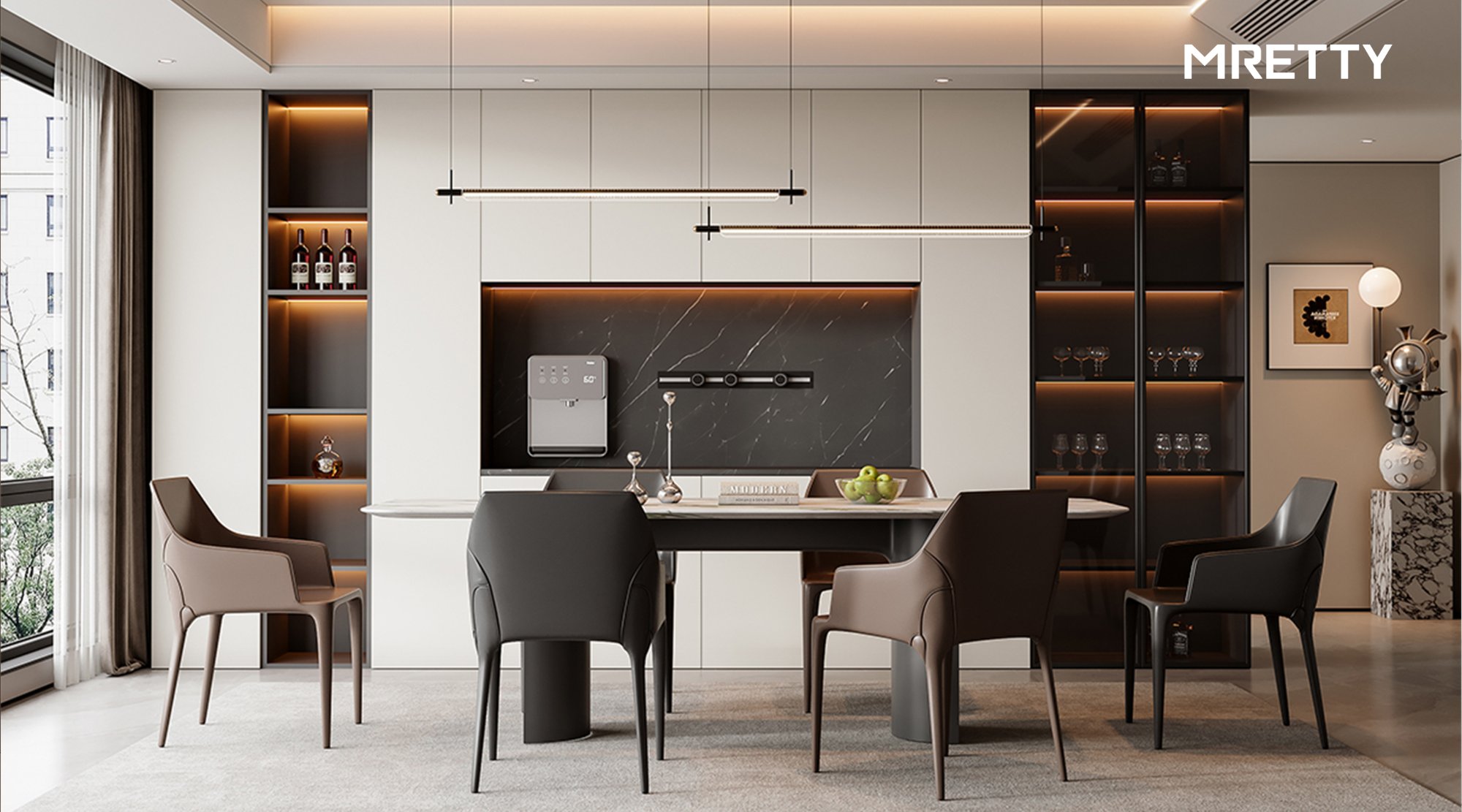
But factoring in per-square-meter property value (easily S$15k+/sqm), customization earns its keep by: converting dead space into usable storage, smoothing circulation, and unifying visuals. The long-term value far outweighs the price difference. In a 90 sqm BTO, a good custom cabinet system often yields ~30% more usable storage/usable width compared to "buying ready-made pieces"—this is how you extract maximum value from your floor area.
4. Budget and Pricing Logic: How to Read a Quote Beyond "Price Per Foot"
Cost anxiety usually stems from opacity. Below are 2026 market benchmarks (based on "moisture-resistant substrate + quality finish + Blum-grade hardware").
Rough Price References for Common Items
- Floor-to-Ceiling Wardrobe: Approx. S$280–S$450 / pfr (per foot run) (internal drawers/glass doors/lighting/complex internals push pricing higher).
- Kitchen (Upper + Lower Cabinets): Approx. S$250–S$400 / pfr.
- TV Console / Feature Wall (Complete Unit): Approx. S$1,200–S$5,000+ / set (length, depth, floating design, embedded equipment spaces greatly affect cost).
- Storage Bed Frame (Queen): Approx. S$2,000–S$3,500 / unit (depends on platform storage, gas strps, veneer grade).
Faster Budgeting with "Unit Package" Estimates (Common Scope: Kitchen + Master Bedroom + Living Feature Zone)
- 3-Room HDB BTO (~65 sqm): Approx. S$12,000–S$20,000.
- 4-Room HDB BTO (~90 sqm): Approx. S$15,000–S$28,000.
- 5-Room HDB BTO (~110 sqm): Approx. S$20,000–S$40,000+.
- 2-Bedroom Condo (~70 sqm): Approx. S$18,000–S$35,000+.
❌ Looking only at "price per foot" is a common trap: S$220/pfr vs. S$350/pfr may differ in substrate grade, edge banding process, hardware brand, and inclusion of hidden reinforcement and edging systems.
✅ Request itemized quotes stating clearly: substrate type, finish type, hardware brand/model, edge banding process (PUR?), warranty scope—lack of clarity creates room for compromise.
Where "MRETTY Factory-Direct" Differs from Pure Luxury Import Brands (e.g., Poliform)
Top European brands certainly have superior product and design language; but a large portion of their price is brand premium + European labor + international logistics. MRETTY's leverage point lies in: bringing production, QC, and material batch management in-house via our Smart Factory, reducing middleman subcontracting and information distortion—allowing you to invest more of your budget into the "cabinet skeleton + hardware + finish" rather than multi-layer channel markups. My principle is simple: prioritize spending on the "bones" (core substrate/hardware/structural details). Only chase that premium when a specific brand's "iconic design identity" is a non-negotiable point for you.
5. Where to Check Reviews and Select a Factory: Filtering Out Suppliers Who Look Good But Perform Poorly
The market is crowded. You aren't looking for "someone who can cut boards," but for a partner capable of delivering bespoke furniture Singapore-grade project management + process consistency.
- Search best custom furniture Singapore reviews on Qanvast / HomeRenoGuru / Google Reviews, but focus on: how reviewers describe the "process/communication/after-sales," not just the finished photos.
- Visit Showrooms: You can touch edge banding, feel coatings, and test drawer damping—more honest than 30 polished photos.
- Ask the Key Question: Do you have your own factory (like MRETTY) or subcontract to third-party workshops? Subcontracting isn't inherently bad, but "fidelity/batch consistency/accountability" becomes more reliant on luck.
- Quotes Must Be Auditable: Substrate, finish, hardware brand, edge banding process, warranty duration—none should be missing.
Quick Factory Selection Checklist
- [ ] Physical showroom available / material samples viewable (not just iPad proposals).
- [ ] Can clearly explain why substrates are moisture-resistant and how edge banding is done (preferably PUR).
- [ ] Hardware specified with brand names like Blum/Hettich, not vague terms like "soft-close hinge."
- [ ] Has real completed cases matching your housing type (HDB/Condo).
- [ ] Contract clearly states: delivery timeline, payment milestones, warranty scope, and response protocol.
6. Start Your Whole-Home Customization Journey
If you want your home to stop being "furniture filling voids" and instead become a spatial strategy + unified character + craftsmanship that withstands Singapore's climate, don't start with "price comparison"—start with "system":
First, list what your home must solve (storage list, circulation pain points, equipment spaces, future changes), then discuss style and color palettes—the right order ensures money is spent wisely.
MRETTY operates a unified design-factory-installation control system: consistent batches, unified detailing, and traceable warranty accountability.
Want to feel the material texture, inspect edge banding details, and get a preliminary direction tailored to your floor plan? Book a 1-on-1 consultation, and let's put your blueprint on paper.
7. About the Author
Hanson, Design Lead at MRETTY
14 years of experience in high-end kitchen/cabinetry system design and project execution in Singapore, handling projects from HDB BTOs to Condominiums and Landed properties. Believes "good design isn't about stacking decorations, but making proportion, circulation, storage, and materiality feel natural"—and uses the certainty of an in-house factory to bring designs back from 'renderings' to 'millimeter-accurate installation sites.'
MRETTY: Premium Bespoke Kitchen & Cabinet Systems Provider in Singapore
