
 Singapore
 China
China
TL;DR
- Custom cabinetry can boost vertical storage capacity by 32%.
- As of 2026, budget roughly S$150/ft for kitchen cabinets.
- PUR-edgebanded moisture-resistant boards effectively prevent warping.
- CNC-driven smart factory production eliminates cutting errors entirely.
What Is Whole-Home Custom Furniture?
Whole-home custom furniture in Singapore is a systematic service that integrates bespoke cabinetry throughout the entire home, maximising day-to-day functionality and overall aesthetic harmony.
Buying off-the-shelf furniture is a high-risk move—it’s like showing up to an important meeting in an ill-fitting suit. It covers the basics, but there’s zero finesse. As a Senior Lead Interior Designer, I’ve spotted a clear trend: homeowners are struggling more and more as HDB layouts keep shrinking.
In Q2 2026, my team reviewed floor plans for 40 new BTO units. Apartment sizes are genuinely creeping down, and ready-made furniture often leaves awkward 15cm gaps. Those dead zones collect dust—and I hate cleaning.
Singapore custom furniture eliminates those gaps. We design layouts wall-to-wall, floor-to-ceiling. This integrated approach works brilliantly, ensuring the wood grain on your TV console flows seamlessly into your kitchen cabinetry.
❌ Common Pitfall: Thinking "custom" just means hiring a carpenter to build a few standalone cabinets.
✅ Better Practice: Treat whole-home custom as part of the interior architecture. Use a one-stop service to achieve seamless material matching.
Custom vs. Ready-Made Furniture for Singapore HDBs?
Most homeowners hit a wall when they collect their new BTO keys: retail sofas often block key walkways, and standard wardrobes leave a 40cm gap below the ceiling.
Custom carpentry makes full use of vertical height. Our data shows custom wardrobes increase usable storage volume by 32%, easily beating ready-made options.
I always remind clients to watch out for structural beams. Ready-made furniture can’t wrap around an HDB structural column, but custom carpentry hides it perfectly, creating a flush, seamless storage wall.
Custom vs. Ready-Made Comparison:
| Dimension | Ready-Made Furniture | Custom Carpentry |
|:---|:---|:---|
| Storage Capacity | Wastes vertical space | Maximises full height (+32%) |
| Fit | Awkward 15cm gaps | Seamless wall integration |
| Structural Beams | Cannot conceal structure | Perfectly hides columns |
❌ Common Pitfall: Buying bulky ready-made pieces first, then forcing the carpenter to work around them.
✅ Better Practice: Finalise custom cabinetry layout first—let it define your circulation flow.
What Does a 4-Room BTO High-End Whole-Home Package Cost?
High-end whole-home pricing varies. For a 4-room BTO, budget typically falls between S$22,000–S$35,000. Pricing depends heavily on material choices, and internal hardware specs will also move the final bill.
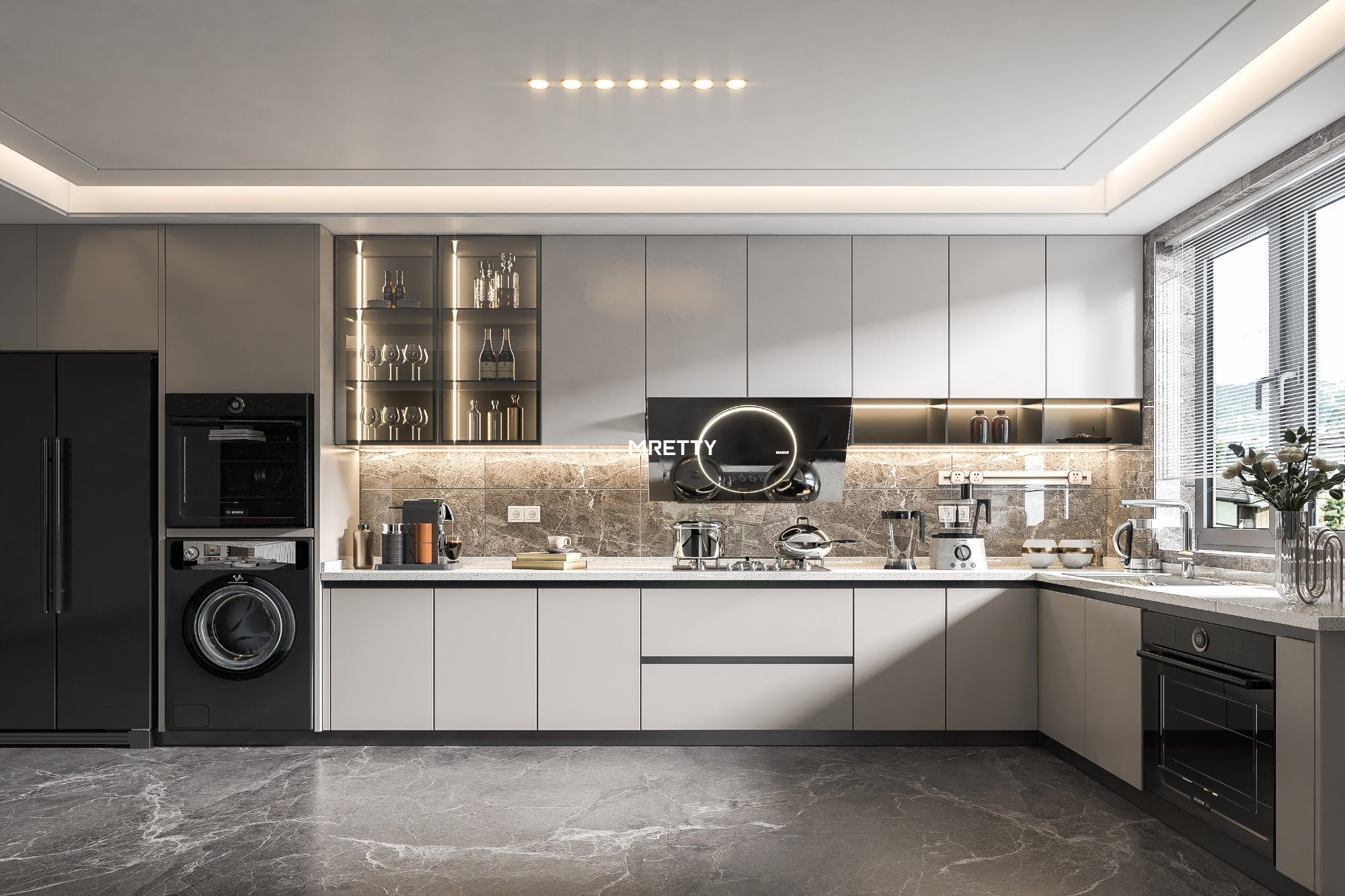
Clients always want an exact figure upfront. High-end custom brands usually quote per linear foot (per ft). Standard kitchens run S$120–S$180/ft, depending on laminate thickness.
What Are Custom Carpentry Costs for a 2026 BTO?
As of 1 March 2026, raw material logistics have stabilised. Custom kitchens currently average around S$150/ft. Full-height wardrobes run about S$250/ft.
Breakdown: master bedroom wardrobe ~S$3,500; living room feature wall ~S$4,200.
❌ Common Pitfall: Accepting a quote that only lists a lump sum with no material details.
✅ Better Practice: Request an itemised quote that clearly states laminate thickness.
Why Space-Saving Custom Design Matters for Singapore Apartments?
Last week I visited a new launch in District 15. The master bedroom barely fit a king bed—standard bedside tables had nowhere to go.
We designed a floating headboard with integrated cantilevered nightstands. Hidden compartments recovered that lost square footage.
Wait—space optimisation isn’t just about shrinking things down.
The real trick is making items "multi-task." Think a custom study table that folds out from a bookshelf, instantly creating a functional home office, then tucking away to turn a narrow corridor into usable space by day.
❌ Common Pitfall: Relying on bulky plastic under-bed storage boxes.
✅ Better Practice: Design a multi-functional platform with flush deep drawers built in.
Best Cabinet Materials for Singapore’s Humid Climate?
Here’s the key point most homeowners miss: many assume marine-grade plywood is the absolute gold standard for Singapore’s wet-zone kitchens.
Actually, high-density particleboard performs better. Why? Once the edging on standard plywood fails, it warps fast—moisture seeps straight into the exposed layers. High-density board with PUR (polyurethane) edge-banding forms a dense, plastic-like protective seal that blocks moisture intrusion entirely.
Why Imported Boards Are the First Choice for Singapore’s Humidity?
Material choice must look beyond local options. Singapore’s mean relative humidity sits at 84%
Standard local MDF will swell and crumble within three years. MRETTY custom furniture uses specialised imported core boards paired with premium imported hardware, keeping hinges rust-free for the long haul.
❌ Common Pitfall: Focusing on external looks while ignoring the moisture-resistance rating of the internal core.
✅ Better Approach: Specify V313-grade moisture-resistant boards for all wet-zone cabinetry.
How a 15,000㎡ Smart Factory Elevates High-End Custom Carpentry in Singapore?
Traditional carpentry relies on handheld circular saws—dusty sites, chipped cut edges, measurement errors measured in millimetres.
I stopped using traditional carpenters five years ago. Instead, we run production through a 15,000㎡ mega facility that controls every variable precisely.
How Does a Smart Factory Improve Custom Furniture Precision?
Smart factories use advanced CNC cutters—cutting and drilling tolerances held within 0.1mm. Software converts 3D designs directly into cutting instructions.
No manual re-interpretation needed. That eliminates the scary human error factor at the root, guaranteeing near-perfect assembly.
❌ Common Pitfall: Assuming on-site carpentry is more "customisable" than factory modules.
✅ Better Practice: Choose a brand with smart factory production for flawless edge-banding.
What Is the Whole-Home Custom Process for a New BTO?
Renovation planning can be chaos. Rule number one: finalise carpentry layout before laying floor tiles, so you don’t end up with awkward gaps later.
How Long Does Custom Furniture Production Take?
Total timeline is 4–6 weeks, covering smart factory production. On-site installation then takes another 1–2 weeks.
Timeline matters—delays cost money. Factory production can run in parallel with on-site masonry works.
Expert Checklist for Inspecting Completed Cabinets
Always inspect the final product closely. Open every cabinet door—veneer transitions must be seamless.
Final Handover Checklist:
- Check that gaps between all cabinet doors are consistently 2mm.
- Ensure no visible glue bleed at edge-banded seams.
- Test drawer slides under load for smooth travel.
❌ Common Pitfall: Paying the final balance before testing hinges and internal alignment.
✅ Better Practice: Shine a torch along internal edge-banding for a thorough check.
About the Author
Aida
Senior Lead Interior Designer
With 10 years of high-end interior architecture experience, Aida specialises in optimising compact HDB and apartment layouts. She is proficient across Modern, Italian, Japanese, and Mid-Century Modern styles. By combining imported premium materials with precision smart-factory processes, Aida consistently delivers bespoke living spaces where engineering precision meets everyday function.
MRETTY: Premium Bespoke Kitchen & Cabinet Systems Provider in Singapore.
