
 Singapore
 China
China
TL;DR
- Bespoke cabinetry can increase vertical storage capacity by up to 32%.
- Current kitchen cabinetry budget averages S$150/ft in 2026.
- PUR-edgebanded moisture-resistant boards prevent warping issues.
- CNC-driven smart factory production eliminates cutting errors.
What Is Whole-Home Custom Furniture?
Whole-home custom furniture in Singapore is a comprehensive service encompassing tailor-made cabinetry across all living spaces, balancing daily functionality with aesthetic style.
Buying off-the-shelf furniture is a high-risk move—like wearing a standard-sized suit to a crucial meeting. It covers the basics but lacks a proper fit. As a Lead Interior Designer, I’ve identified a clear trend: homeowners continually struggle with shrinking HDB layouts.
In Q2 2026, my team reviewed floor plans for 40 new BTO units. Private home layouts are indeed getting smaller, and ready-made furniture often leaves awkward 15cm gaps. These dead zones collect dust—I hate cleaning them.
Singapore custom furniture eliminates these gaps entirely. We design layouts wall-to-wall, floor-to-ceiling. This integrated approach yields significant results, ensuring the wood grain on your TV console aligns perfectly with your kitchen cabinetry.
❌ Common Pitfall: Assuming "custom" just means hiring a carpenter to build a few standalone cabinets.
✅ Better Practice: Treat whole-home custom as part of the interior architecture. Opt for a one-stop service to ensure seamless material matching.
Custom vs. Ready-Made Furniture for Singapore HDBs
Most homeowners hit a snag upon collecting their new BTO keys: retail sofas often block key walkways, and standard wardrobes leave a 40cm gap below the ceiling.
Custom carpentry maximizes vertical height. Our data shows custom wardrobes offer 32% more usable storage volume than ready-made options—a clear advantage.
!comparison-ready-vs-custom.jpg
I always advise clients to watch for structural beams. Ready-made furniture cannot wrap around HDB columns, but custom carpentry conceals them perfectly, creating a flush, seamless storage wall.
Custom vs. Ready-Made Comparison:
| Dimension | Ready-Made Furniture | Custom Carpentry |
|:---|:---|:---|
| Storage Capacity | Wastes vertical space | Maximizes full height (+32%) |
| Fit & Finish | Awkward 15cm gaps | Seamless wall-to-wall integration |
| Structural Beam Handling | Cannot conceal structure | Perfectly hides columns |
❌ Common Pitfall: Purchasing bulky ready-made pieces first, then forcing the carpenter to work around them.
✅ Better Practice: Finalize custom cabinetry layout first to define your circulation flow.
What Does a High-End Whole-Home Package Cost for a BTO?
High-end whole-home pricing varies. For a 4-room BTO, budget typically ranges between S$22,000–S$35,000. Pricing heavily depends on material selection, and internal hardware specs will also impact the final cost.
Clients always request an exact quote upfront. Premium custom brands price per linear foot (per ft). Standard kitchens run S$120–S$180/ft, depending on laminate thickness.
What Are Custom Carpentry Costs for a 2026 BTO?
Effective 1 March 2026, raw material logistics have stabilized. Custom kitchen cabinets now average S$150/ft, while full-height wardrobes cost approximately S$250/ft.
Breakdown: Master bedroom wardrobe ~S$3,500; living room feature wall ~S$4,200.
❌ Common Pitfall: Accepting a quote listing only a lump sum without material specifics.
✅ Better Practice: Request an itemized quote explicitly stating laminate thickness.
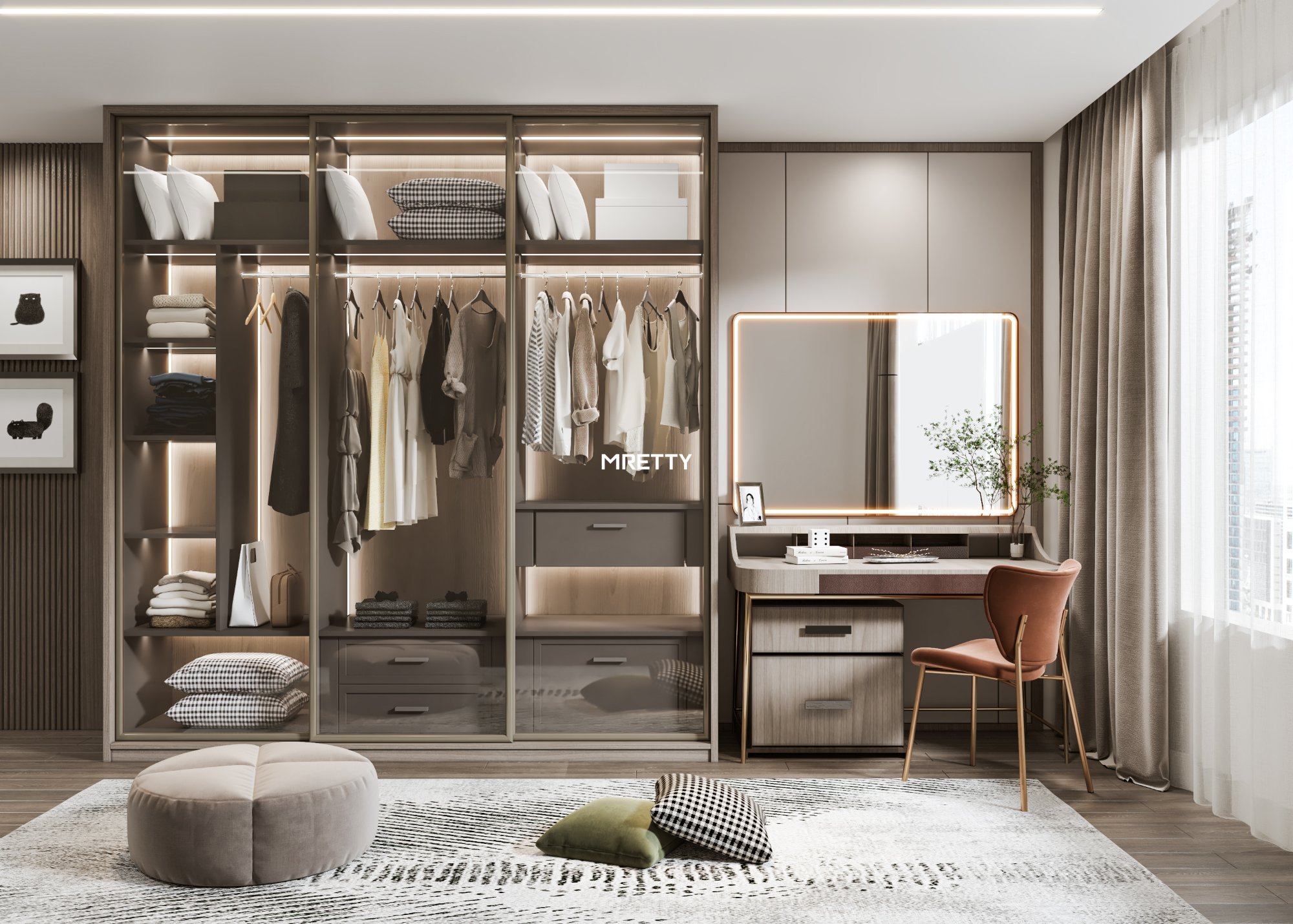
Why Space-Saving Custom Design Matters for Singapore Private Homes
Last week, I visited a new launch in District 15. The master bedroom barely fit a king-sized bed—standard bedside tables were impossible.
We designed a floating headboard with integrated cantilevered nightstands. Hidden compartments recovered that wasted square footage.
Wait—space optimization isn’t just about shrinking furniture.
The core principle is multi-functionality. Consider a custom study table folding out from a bookshelf, instantly creating a functional home office, then tucking away to free up a narrow corridor during the day.
❌ Common Pitfall: Relying on bulky plastic under-bed storage bins.
✅ Better Practice: Design a multi-functional platform with flush, deep-set drawers.
Best Materials for Custom Cabinets in Singapore’s Humid Climate
Here’s a critical misconception: Most homeowners believe marine-grade plywood is the absolute best choice for Singapore’s wet-zone kitchens.
Actually, high-density particleboard performs significantly better. Why? Once the veneer on standard plywood fails, moisture seeps into exposed layers, causing rapid warping. High-density boards with PUR (Polyurethane) edge-banding form a dense, plastic-like seal, blocking moisture intrusion completely.
Why Imported Boards Are Essential for Singapore’s Humidity?
You must choose imported materials. Singapore’s mean annual relative humidity reaches 84% (Source: http://www.weather.gov.sg/climate-climate-of-singapore/).
Standard local MDF will swell and crumble within three years. MRETTY custom furniture uses specialized imported core boards paired with premium imported hardware, ensuring hinges remain rust-free.
❌ Common Pitfall: Focusing solely on external aesthetics while ignoring the moisture-resistance rating of the internal core.
✅ Better Practice: Specify V313-grade moisture-resistant boards for all wet-zone cabinetry.
How a 15,000㎡ Smart Factory Elevates High-End Custom Carpentry Quality
Traditional carpentry relies on handheld circular saws—dusty sites, chipped edges, and measurement errors often measuring several millimeters severely impact usability.
I stopped using traditional carpenters five years ago. We now operate a 15,000㎡ mega-production facility, controlling every variable precisely.
How Does a Smart Factory Improve Custom Furniture Precision?
Smart factories utilize advanced CNC machinery, maintaining cutting and drilling tolerances of just 0.1mm. Software transmits 3D designs directly to cutting lines, eliminating manual interpretation and human error, guaranteeing near-perfect assembly.
❌ Common Pitfall: Believing on-site carpentry offers more "customization" than factory modular production.
✅ Better Practice: Choose brands utilizing smart factory production for flawless edge-banding.
What Is the Whole-Home Custom Process for a New BTO?
Renovation planning is often chaotic. Rule number one: Finalize carpentry layout before laying floor tiles to avoid awkward gaps later.
How Long Does Custom Furniture Production Take?
Production cycles for whole-home custom furniture span 4–6 weeks, covering smart factory prefabrication. On-site installation requires an additional 1–2 weeks.
Timelines are critical—delays equal extra costs. Factory prefabrication can run concurrently with your wet works on-site.
Expert Inspection Checklist for Custom Cabinets
Inspect the final product meticulously upon delivery: Open every cabinet door—veneer transitions must be seamless.
Final Handover Checklist:
- Gaps between all cabinet doors must be uniformly 2mm.
- No visible glue bleed should appear at edge-banded seams.
- Drawer slides must operate smoothly even under heavy loads.
❌ Common Pitfall: Paying the final balance before testing hinges and internal alignment.
✅ Better Practice: Use a flashlight to thoroughly inspect internal edge-banding quality.
About the Author
Aida
Lead Interior Designer
With 10 years of high-end interior architecture experience, Aida specializes in optimizing compact HDB and private home layouts. She is proficient in Modern, Italian, Japanese, and Mid-Century Modern styles. By combining imported premium materials with precision smart-factory processes, Aida consistently delivers bespoke living spaces where engineering precision meets everyday function.
MRETTY: Premium Bespoke Kitchen & Cabinet Systems Provider in Singapore.
