
 Singapore
 China
China
TL;DR
How do you maximize space in a 3-bedroom Singapore apartment?
Use floor-to-ceiling built-in cabinetry and integrate the bay window into your overall storage plan.
What's the best space-saving furniture for small apartments?
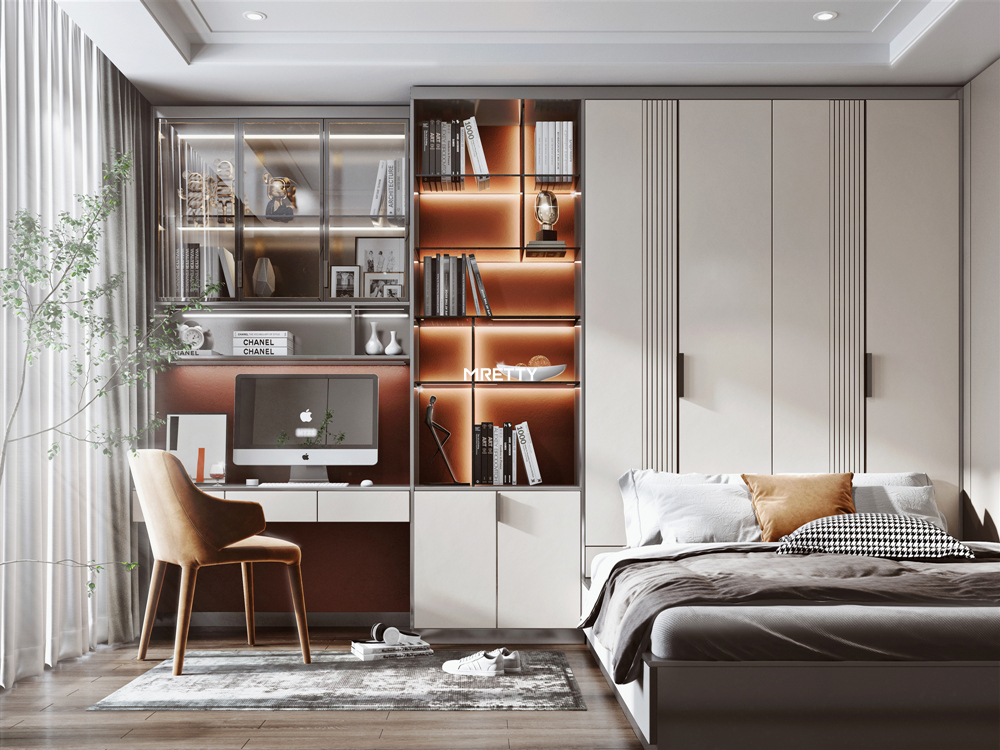
Multi-functional bespoke carpentry serves double duty—think Murphy beds with integrated work desks.
How much does custom carpentry cost for Singapore apartments in 2026?
Expect S$350–650 per foot run for bespoke renovations using high-end E1-grade boards.
Introduction
A typical 95 sqm apartment can feel cramped—bulky freestanding wardrobes devour circulation space, and the mandatory bomb shelter is a visual eyesore.
Once precision-engineered built-in furniture is installed, the same unit opens up dramatically. Seamless E1-grade laminates hide daily clutter and visually expand every room.
Last Thursday, I walked a client through such a transformation. Stepping into the master bedroom, they stopped in their tracks—the homeowner asked if we had pushed out the load-bearing wall. We hadn't. We simply optimised the structural geometry.
Finding space-saving custom furniture that fits a 3-bedroom Singapore apartment layout changes everything. It demands floor-to-ceiling cabinetry integrated with the bay window, plus a smart way to hide the bomb shelter.
According to Q2 2026 URA (Urban Redevelopment Authority) layout data, custom carpentry can increase usable area. Standard 90–110 sqm units can gain up to 22% additional space efficiency, with targeted built-in design directly enhancing daily living functionality.
Seven Strategies for Optimizing 3-Bedroom Apartment Layouts
Layout optimisation means reallocating dead zones through custom built-ins, with flush lighting as a supporting move.
Most designers suggest knocking down walls for open-concept layouts.
But in reality, open-concept design can destroy storage capacity.
Why? Demolishing walls removes the core anchor points for vertical storage.
Better to keep the structural walls and wrap them in smart-factory-produced cabinetry. With millimeter-precise built-ins, we claw back 14% more floor efficiency without touching structure. Vertical space is your most valuable asset.
In Q2 2026, we renovated a 92 sqm unit in Tampines where a thick load-bearing column blocked the dining zone—unremovable. We clad it in acoustic wood veneer and tucked a hidden push-to-open coffee nook inside the faux column.
❌ Common Pitfall: Buying a ready-made TV console that leaves a 30cm gap between the top and ceiling—wasting prime vertical storage.
✅ Better Approach: Install a floor-to-ceiling custom TV console that hides cables and maximises upward storage capacity.
Q&A: How do you maximise space in a 3-bedroom Singapore apartment?
Use seamless built-in carpentry that sits perfectly flush with structural beams and bay windows.
Optimise your 3-bedroom layout with floor-to-ceiling cabinetry—zero vertical waste allowed.
Four Best Custom Furniture Upgrades for Singapore Apartments
The best apartment upgrades include tatami platform beds and flush-fit wardrobes; an integrated kitchen-island-dining peninsula also adds serious value.
Breaking down the essential master bedroom upgrades:
- Tatami Platform Bed: Elevate the mattress to create deep storage—easily stow bulky winter suitcases.
- Bay Window Conversion: Turn the mandatory concrete window ledge into a functional seat with hidden drawers.
- Flush-Fit Wardrobe: Sliding doors save swing radius.
- Seamless Integration: Carry minimalist aesthetic consistency throughout.
Space-saving custom wardrobes must be specified with premium hardware. I insist on Blum hinges for all moving parts—Singapore's average annual humidity hits 84%, and standard metal hinges rust within 18 months. Blum components endure tropical moisture long-term. Last month alone we installed 43 of these heavy-duty wardrobe systems.
Custom wins on dimensional efficiency; modular off-the-shelf pieces always leave awkward gaps. Imported high-end materials ensure high-frequency components resist structural warping.
What is the best space-saving furniture for small apartments?
Top pick: a multi-functional living room combo unit that hides the dining table inside the media console.
❌ Common Pitfall: Placing a standard king-size bed frame in a 12 sqm master bedroom, leaving the wardrobe doors unable to open fully.
✅ Better Approach: Specify a custom wardrobe with sliding doors and integrate pull-out bedside tables.
Q&A: Can custom furniture raise an apartment's resale value?
Yes. High-end built-ins signal meticulous upkeep to buyers and accelerate closing.
Every square centimetre must carry function.
Three Ways to Custom-Hide the Bomb Shelter in a Singapore Apartment
Hiding the bomb shelter requires dedicated cabinet cladding; a ventilated feature wall also works well.
This is a distinctly local challenge. Homeowners constantly struggle with the metal blast door—space optimisation in Singapore revolves around this mandatory structure.
Ventilated Feature Wall: Clad surrounding walls in acoustic laminate, extend the design over the bomb shelter door, and pair with heavy-duty concealed hinges.
Shoe Cabinet Integration: Build a 350mm-deep shoe corridor along the shelter, blending the door into a continuous storage façade.
How to conceal an apartment bomb shelter with custom cabinetry?
Install flush custom cabinetry cladding using reinforced pivot hinges that match the living room aesthetic.
❌ Common Pitfall: Painting the blast door the same colour as the wall.
✅ Better Approach: Fully disguise the entry point behind a functional full-height custom storage panel.
Q&A: What are URA's restrictions on bomb shelter modifications?
Restrictions exist. No drilling into structural walls; no altering the metal door itself. Custom cabinetry must be free-standing or anchored to non-structural elements only.
Hiding the bomb shelter turns a structural flaw into a functional highlight.
2026 Pricing Breakdown: High-End Space-Saving Carpentry in Singapore
High-end space-saving carpentry runs S$350–650 per foot run, with pricing heavily dependent on hardware and finish work.
Modular off-the-shelf pieces cost less upfront but deliver zero spatial optimisation. Custom carpentry requires a professional smart factory to guarantee seamless integration.
| Carpentry Tier | Price per Foot Run (S$) | Recommended Material |
| :--- | :--- | :--- |
| Basic Built-In | 350 – 450 | Standard Plywood |
| High-End Custom | 450 – 550 | E1-Grade Board |
| Luxury Multi-Func | 550 – 650 | E1 Board + Blum Hardware |
A high-end custom furniture project typically allocates ~40% of the total renovation budget to built-in carpentry.
E1-grade boards cost roughly 20% more upfront than standard MDF. Wait—why the premium? Standard MDF off-gasses formaldehyde for months; E1-grade caps emissions at safe levels, protecting indoor air quality.
❌ Common Pitfall: Choosing carpentry solely on the lowest quote—often a mask for low-grade, high-formaldehyde boards.
✅ Better Approach: Demand transparent quoting; specify E1-grade materials and high-durability European hardware.
Q&A: Why choose custom carpentry for Singapore apartment renovations?
Custom carpentry maximises floor space with precision and delivers made-to-measure storage that ready-made furniture cannot touch.
Accurate budgeting ensures your renovation uses quality materials that last.
About the Author
Aida is a Senior Lead Designer with over a decade of experience in high-end interior architecture. She believes living spaces are the physical expression of the occupant's inner spirit, and design is the journey that guides self-realisation. Specialising in Modern, Italian, Japandi, and Mid-Century aesthetics, she seamlessly blends these styles with precision smart-factory production to create tailored, space-optimised homes.
MRETTY: Premium Bespoke Kitchen & Cabinet Systems Provider in Singapore.
