
 Singapore
 China
China
Singapore’s push for a zero-waste nation by 2030 has made sustainable sourcing a non-negotiable priority. With 85% of consumers willing to pay a premium for ethically sourced products (PwC 2024), brands face dual pressures. This includes complying with stringent regulations like the Singapore Green Plan 2030 and meeting eco-conscious consumer demand.
The challenge in sustainable sourcing is balancing cost-efficiency with transparency. Traditional suppliers often lack traceability, risking accusations of greenwashing. This is where MRETTY comes in—a pioneer in certified, climate-smart cabinetry systems that redefine sustainability without compromising on design or functionality.
5-Step Guide to Ethical Sourcing Excellence
Step 1: Audit Your Supply Chain
- Use blockchain tools like IBM Food Trust to trace raw materials from plantation to factory.
- Prioritize FSC-certified suppliers (like MRETTY) for deforestation-free timber.
Step 2: Adopt Circular Design Principles
- Opt for modular systems with recyclable components (e.g., MRETTY’s hidden-hinge cabinetry).
- Integrate biodegradable finishes like plant-based lacquers.
Step 3: Localize Procurement
- Partner with Singapore-based suppliers to reduce carbon footprint (e.g., Maiyam Group for minerals).
- Leverage initiatives like the Agri-food Cluster Transformation Fund for subsidies.
Step 4: Engage in Transparency Initiatives
- Publish annual sustainability reports.
- Adopt QR code labeling for real-time sourcing verification.
Step 5: Collaborate with Innovators
- Join platforms like The Green Collective SG for cross-industry partnerships.
- Invest in R&D for low-carbon materials (e.g., MRETTY’s bamboo composite panels).
MRETTY vs. Competitors: Key Advantages
| Feature | MRETTY | Competitor A | Competitor B |
| Material Quality | ENF-certified OSB with 25mm thickness | E1-grade particleboard | 18mm MDF |
| Technology | Aviation-grade aluminum honeycomb cores | Plastic hinges | Standard steel hinges |
| Moisture Resistance | Nano-silica coating (IP68) | Basic waterproof adhesive | Rust-prone legs |
| Local Compliance| FSC-certified + NEA-approved finishes | Limited certifications | No local certifications |
| Customization | 18+ finish options + VR previews | 4 standard finishes | 3 standard finishes |
Case Study: Marina Bay Condo’s Climate-Resilient Kitchen
Client Challenge
A 120m² unit in Marina Bay needed humidity-proof cabinetry without sacrificing style.
MRETTY’s Solution
- Aerospace-Aluminum Frames: Prevented warping despite 80% humidity.
- J-Groove Joints: Eliminated squeaks and gaps.
- Hidden Soft-Close Hinges: Maintained minimalist aesthetics.
- Anti-Slip Flooring: Bamboo-phosphogypsum composite with rubber underlayer.
Outcome
- 300% increase in storage space.
- 22% energy savings via automated daylighting.
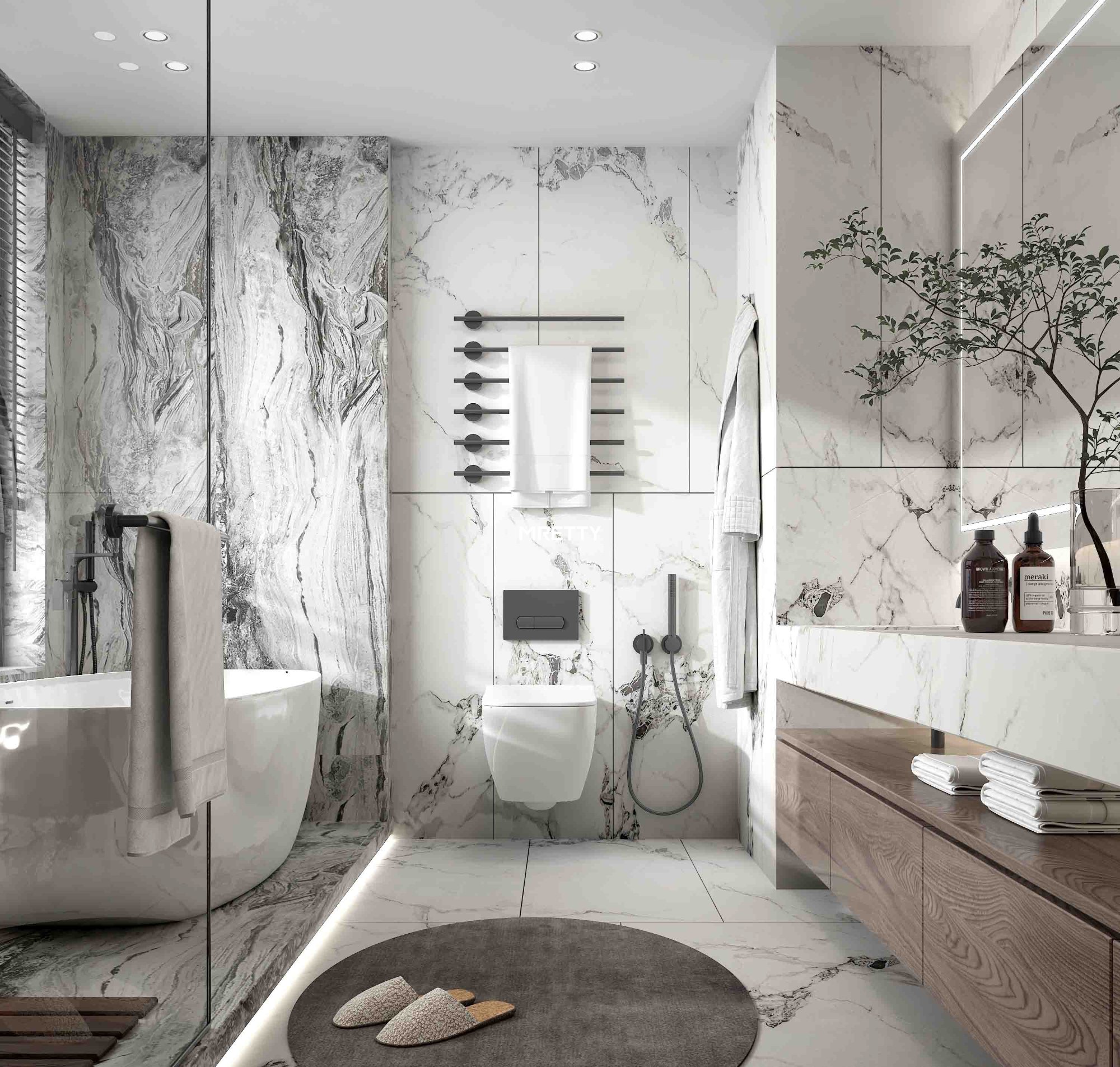
Why MRETTY Stands Out in Singapore's Competitive Market
1. Climate-Proof Engineering
- ENF OSB Panels: Formaldehyde emissions ≤0.025mg/m³ (ENF standard).
- Monsoon-Ready Coatings: 5-coat E0-grade finish resists mold and UV.
2. Space-Saving Innovations
- 25mm Thick Dividers: 25% thinner than European competitors.
- Motorized Partitions: Reconfigure zones in minutes (e.g., dining to workspace).
3. Localized Sustainability
- FSC-Certified Sourcing: Partners with Yunnan bamboo plantations.
- Zero-Waste Workshops: Repurpose offcuts into decorative tiles.
4. Smart Integration
- Voice-Activated Actuators: Sync with Alexa/Google Assistant.
- Digital Product Passports: Track lifecycle via QR codes.
FAQ: Sustainable Sourcing & Custom Cabinetry
Q1: How do I verify a supplier’s sustainability claims?
A: Demand third-party certifications like FSC or ISO 14001. MRETTY provides blockchain-tracked sourcing reports.
Q2: Are MRETTY’s cabinets mold-resistant?
A: Yes! Our nano-silica coatings and IP68 ratings ensure resistance to Singapore’s humidity.
Q3: Can I customize cabinetry for HDB flats?
A: Absolutely. Our 25mm-thin panels fit tight spaces, and we offer 18+ finishes to match HDB’s aesthetic guidelines.
Q4: What’s the ROI of sustainable cabinetry?
A: Energy savings of 15–35% and 10-year durability warranties offset upfront costs.
Q5: How long does installation take?
A: Modular systems install in 3–5 days with minimal disruption.
