
 Singapore
 China
China
TL;DR: Core Takeaways
- Systems Win. Explore why whole-home customization outperforms buying piecemeal space-saving items.
- Every Centimeter Counts. Learn the core principles for reclaiming wasted space in HDBs and apartments, from vertical storage to transforming furniture.
- No Compromise on Materials. Understand why premium components like Egger boards and Blum hardware are non-negotiable for durability in Singapore’s climate.
Frequently Asked Questions (Answered First)
Is custom furniture worth it for a small HDB flat?
Yes. While the initial cost is higher, custom furniture is an asset. It maximizes every square centimeter, enhances resale value, and provides cohesive functionality that standalone pieces cannot match. For a typical 2-room BTO, a custom solution can reclaim space equivalent to an extra storage room.
How much does custom furniture cost for a micro-apartment in Singapore?
Whole-home customization for a compact apartment or flat typically ranges from S$15,000 to S$50,000+. The price of custom furniture for micro-homes in Singapore depends on three factors: First, material choice (e.g., standard laminate vs. premium Egger boards); second, complexity (static platform bed vs. motorized Murphy bed); third, total volume of carpentry required.
Core Challenge: Outfitting Singapore’s Micro-Homes
As an interior designer with over a decade of experience in Singapore, I have witnessed one overwhelming challenge: space. According to the Housing & Development Board (HDB), the average new 2-room Flexi BTO flat is only 36-45 square meters (387-484 square feet). This reality demands a new approach.
Most people think the key is buying small, individual furniture. This seems logical. But in practice, this approach often backfires. A room filled with many small items creates visual clutter. A fragmented layout makes the space feel smaller. The real solution is counterintuitive: use larger, singular, integrated furniture. One seamless, wall-to-wall custom unit that combines a TV console, storage, and a desk creates clean lines and clear floors. This makes the entire room feel more spacious and serene.
Last month, a client initially tried a DIY setup for his new BTO. He bought a slim table, a narrow bookshelf, and a small media console online. None fit perfectly against the walls, leaving awkward 10-15cm gaps that only collected dust. The mismatched wood tones and styles made his living room look chaotic and cramped. He ended up spending more time and money fixing the problems he had created. We replaced all those pieces with one unified, full-height unit, solving all the issues at once.
How to Maximize Space in a Micro-Apartment with Furniture?
To truly maximize space, we must treat the home as a cohesive whole. My analysis of hundreds of floor plans shows these strategies are most effective for successful micro-home custom furniture projects.
- Adopt a "Whole-Home" System Mindset. Design all built-in furniture—wardrobes, TV consoles, kitchen—as one interconnected system. This creates a unified design language and eliminates ugly gaps.
- Integrate Multi-Functional Mechanisms. Go beyond simple storage sofas. A true system integrates functions. Think TV walls that hide folding dining tables, or platform beds with deep drawers.
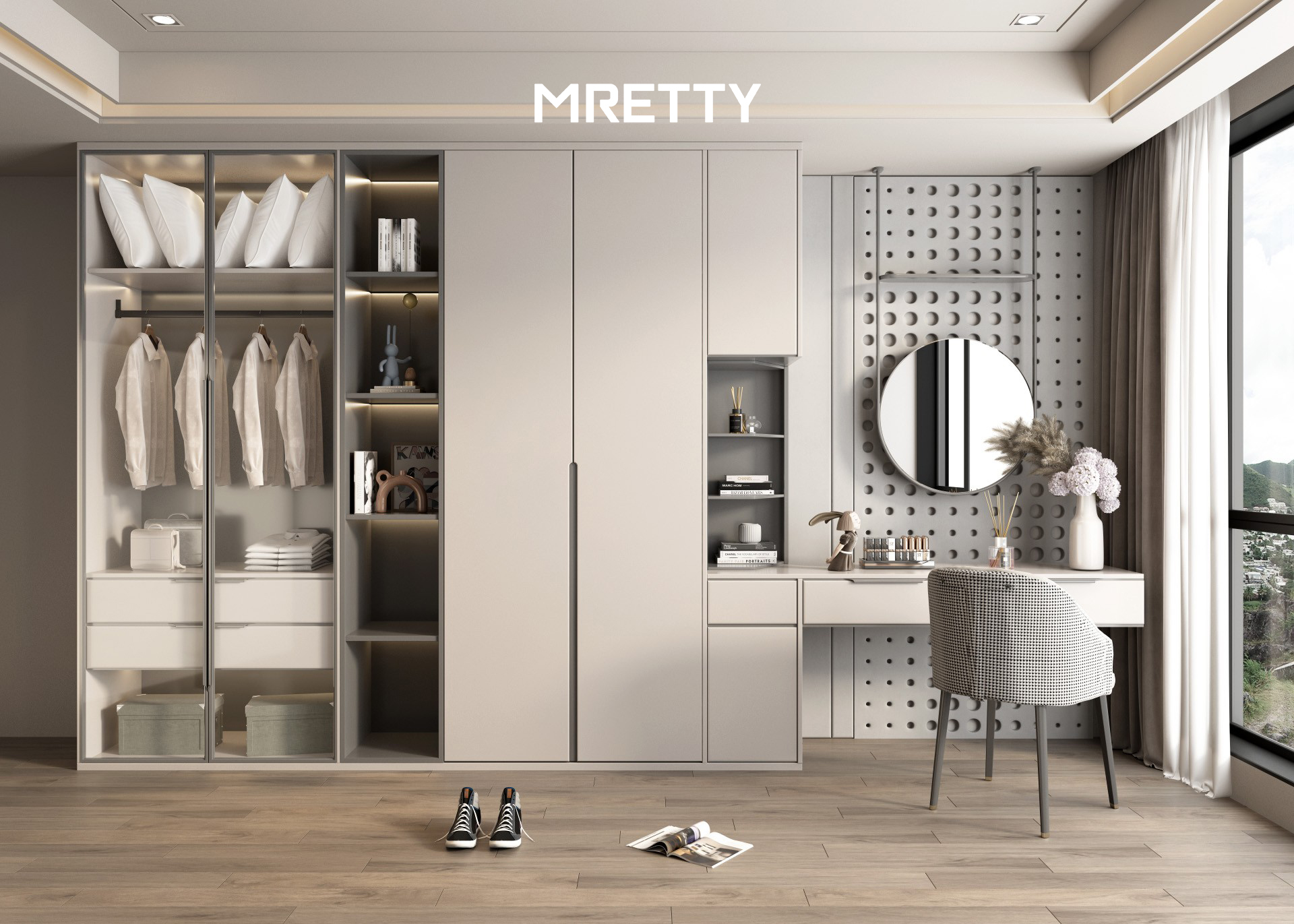
- Utilize Vertical Space Intelligently. Build full-height cabinets that reach the ceiling. This provides massive storage and draws the eye upward, making the room feel taller. This single technique alone often reclaims 20-30% more storage volume.
- Choose Transforming Furniture, Not Just "Small." Instead of a small coffee table, choose one that elevates to seat six. Your furniture should adapt to your needs.
- Design for Specific Layouts. Generic solutions fail in unique spaces. For a 40 sqm apartment with an irregular shape, a custom L-shaped banquette with storage is far superior to a standard sofa.
❌ Common Mistake: Buying multiple "space-saving" items from different stores.
✅ Better Approach: Commission a single, unified whole-home custom system from experts.
❌ Common Mistake: Leaving a 30cm gap above the wardrobe.
✅ Better Approach: Design full-height carpentry to maximize vertical space and create a clean, built-in look.
For a client living at The Interlace, the iconic hexagonal layout prevented a standard rectangular dining table from fitting. We designed a custom trapezoidal table that fit perfectly into an alcove. It was paired with curved banquette seating with integrated storage underneath. This turned a "wasted" corner into the home’s primary dining and social hub—a solution no off-the-shelf furniture could ever provide.
Best Custom Furniture Makers for Small Singapore Homes: Key Criteria
Choosing the right partner is critical. Do not just look at their portfolio. True experts possess deep technical expertise and have a factory capable of executing complex designs flawlessly.
Expert Insight: The Factory Matters
"A flashy showroom is one thing. Precision and durability come from the factory. A company’s investment in a large, modern factory allows them to control quality from start to finish. This ensures mechanical structures like sliding partitions and Murphy beds operate perfectly for years."
Here are the evaluation criteria:
In-House Process: Can they handle design, manufacturing, and installation? A single point of contact prevents miscommunication and ensures accountability.
Material Expertise: Do they explain the pros and cons of materials for Singapore’s climate? They should discuss moisture resistance, not just color.
Hardware Specification: They must use premium hardware from brands like Blum or Hettich. This is vital for transforming furniture that moves daily.
The biggest red flag is an unusually low quote. When I reviewed three quotes for a client in Q1 2026, one was 40% cheaper. It was a trap. It meant using cheap, unbranded particleboard instead of moisture-resistant boards. It likely meant generic hardware that would fail within a year, rather than certified Blum hinges. You pay less now, but you will pay more later in repairs and frustration.
Step-by-Step Guide to Designing Furniture for a 2-Room BTO
The journey from an empty BTO to an optimized home is a clear, collaborative process. The designer’s role is to translate your lifestyle into functional space. Here is a typical methodology.
Step 1: Deep Consultation
This is the most critical phase. We don't just measure. We discuss your daily routine, storage pain points, and future plans. Do you work from home? Do you entertain guests? How many pairs of shoes do you own? These data points drive every design choice.
Step 2: Conceptual System Design
We create a unified 3D model of the entire home. Here, we propose smart solutions, such as platform beds that connect bay window seats to wardrobes. Before anything is built, you see how all built-in storage solutions work together.
Step 3: Material and Hardware Selection
We move from concept to reality. We present material samples like high-moisture-resistant Egger boards. We demonstrate the silent, smooth action of Blum hardware. You feel the quality and understand its long-term value.
Step 4: Precision Manufacturing and Installation
The smart factory produces each component with sub-millimeter accuracy. The on-site team then assembles the system, ensuring perfect alignment and functionality. This is far more controlled than traditional on-site carpentry.
Custom Carpentry for Small Apartments vs. IKEA
How does a custom system compare to IKEA DIY solutions? Here is a 5-year cost and performance analysis for a 45 sqm apartment.
| Feature | Custom System | IKEA Ready-Made Furniture |
| :--- | :--- | :--- |
| Fit and Finish | Millimeter-perfect fit, no gaps. | Standard sizes create awkward gaps and wasted space. |
| Space Efficiency | 100% space utilization. | Up to 30% potential storage loss. |
| Material Durability | High-density, moisture-resistant boards. | Particleboard, weaker resistance to humidity. |
| Hardware Quality | Blum hardware with lifetime warranty. | Basic hardware, prone to failure under heavy use. |
| Functionality | True multi-functionality and transformability. | Limited to basic functions. |
| Resale Value | Increases property value. | Minimal added value, seen as personal chattel. |
| 5-Year Total Cost of Ownership | Higher upfront, minimal repairs. | Lower upfront, expected replacement/repair costs. |
The table reveals a key insight: total cost of ownership. The upfront price of custom furniture for micro-homes in Singapore is higher. However, the durability of a professional system makes it more economical over 5-10 years. This is the principle of "buy once, buy well." Whole-home customization for a compact apartment is an investment in your property's infrastructure, not just a purchase.
Why Materials Matter for Custom Furniture in Singapore Micro-Homes
In a small home, every surface is a high-traffic area. The material of your furniture is not just an aesthetic choice; it is an engineering decision. In Singapore’s humid environment, the wrong material leads to warping, peeling, and failure within a few years.
Data Point: Material Performance
According to manufacturer testing, European-manufactured Egger boards are certified to be 40% more moisture-resistant than standard particleboard. This is critical for kitchens and bathrooms.
Similarly, hardware is the heart of multi-functional furniture. A Murphy bed used daily requires robust mechanics. Premium Blum hardware is tested for over 200,000 cycles—equivalent to more than 20 years of use. This is the hidden difference between something that looks good and something that performs flawlessly for decades. Choosing the right materials and hardware is the foundation of a space that is not only beautiful but also functions perfectly for decades.
Final Questions on Micro-Home Furniture
If you are ready to transform your small space, the next step is a detailed consultation. A true expert will guide you through material selection and explore design possibilities that unlock your home's true potential.
References
Housing & Development Board (HDB), Singapore Egger Group, Wood-based materials manufacturer Blum GmbH, Furniture hardware manufacturer
MRETTY: Premium Bespoke Kitchen & Cabinet Systems Provider in Singapore.
