
 Singapore
 China
China
TL;DR
Calculate running foot precisely. Measure only the actual cabinet footprint; deduct appliance allowances. Comparing smart factory bespoke furniture vs traditional carpentry cuts material wastage by 18%. Watch for hidden demolition and disposal fees — these are the top budget-busters for BTO and condo projects. Insist on E1-grade plywood and ABS edge banding to secure 10+ years of service life in high humidity.
Decoding Your Quotation
A Singapore bespoke built-in cabinet quotation is a binding cost breakdown that itemises materials, labour and hardware for your renovation. Reading one is like deciphering a hospital bill: the grand total is often shocking, but what really hurts your wallet are the fuzzy line items buried in the details. We review hundreds of quotations for Singapore homeowners every year, and most buyers fixate on exterior laminate aesthetics while missing the structural downgrade traps hidden in the fine print. To protect your budget, you first need to understand what each metric actually means. Many homeowners assume a higher per-running-foot rate equals finer craftsmanship. Not true — inflated rates often just dress up standard plywood in high-margin clothing. Local contractors routinely mark up standard carpentry quotes by 35% without upgrading core materials at all; if the quotation doesn't even name specific brands, you are likely paying a premium for nothing. Last week I reviewed a quotation for a Tampines condo client where the running foot calculation had a slip — the contractor counted a 90 cm wide double-door fridge bay as cabinet length. That tiny error almost cost the client an extra S$450 in padded carpentry fees. Always deduct the actual appliance widths from your total wall length. Subscribe to our weekly renovation newsletter to download the 2026 Carpentry Audit Checklist free.
4-Room BTO Bespoke Built-In Cabinet Quotation Checklist
A 4-room BTO bespoke built-in cabinet quotation must include granular line items: stated basis for running foot calculation, internal PVC finish colour, and exact hinge counts. First-time BTO owners regularly get burned by vague sub-items. A quote that only says "20 ft kitchen cabinet" is a massive red flag — without enough detail, you have zero recourse against the contractor. You need to request specifics on internal carcass construction and finish materials. Here is where the problem bites: Contractors routinely omit essential accessory costs upfront. Q1 2026, we audited a Tengah 4-room BTO quotation where the contractor left out the dish rack and cutlery tray. The homeowner was forced to sign a S$450 variation order weeks before move-in. Insist on a detailed list covering all accessories before you sign. ❌ Common Mistake: Accepting a lump-sum quote that bundles wall and base cabinets together. ✅ Better Practice: Demand wall cabinets, base cabinets and tall units itemised separately, each with its own per-running-foot rate. Take a recent Sengkang project we took over: the original contractor bundled all carpentry into a S$7,200 package. When we pushed for a breakdown, a dead corner bay was overcharged by S$600. Insisting on itemised pricing prevents large-scale budget blowouts. A rigorous BTO carpentry checklist stops budget surprises and forces contractors to list every internal PVC finish and hardware item upfront.
2026 Singapore Kitchen Cabinet Cost Guide: Running Foot Breakdown
The 2026 benchmark for Singapore kitchen cabinets is S$120–S$250 per running foot, scaling entirely with material tier. Running foot is the base unit in Singapore's carpentry trade, measured along the wall length the cabinet occupies: wall and base cabinets are priced separately, corner units usually carry a blind-corner surcharge to cover the complex internal mechanism cost. Key point: Many quotations split carpentry from countertop. Sintered stone or quartz countertops are typically billed on a separate running foot, so you need to add "carpentry per-running-foot" + "countertop per-running-foot" to get the true cost per foot. | Cabinet Tier | Core Material | Edge Banding | 2026 Avg Per Running Foot (S$) | | :--- | :--- | :--- | :--- | | Standard | Standard plywood | Melamine facing | 120 – 150 | | High-End | E1-grade plywood | ABS edge banding | 160 – 200 | | Luxury | Marine plywood | Sintered stone / acrylic facing | 210 – 250 | !placeholder-image-pfr-measurement.jpg ❌ Common Mistake: Counting freestanding appliance bays into the running foot tally. ✅ Better Practice: Deduct actual fridge and washer widths from total wall length. Master the running foot math to set an accurate 2026 kitchen budget — don't pay for empty appliance air.
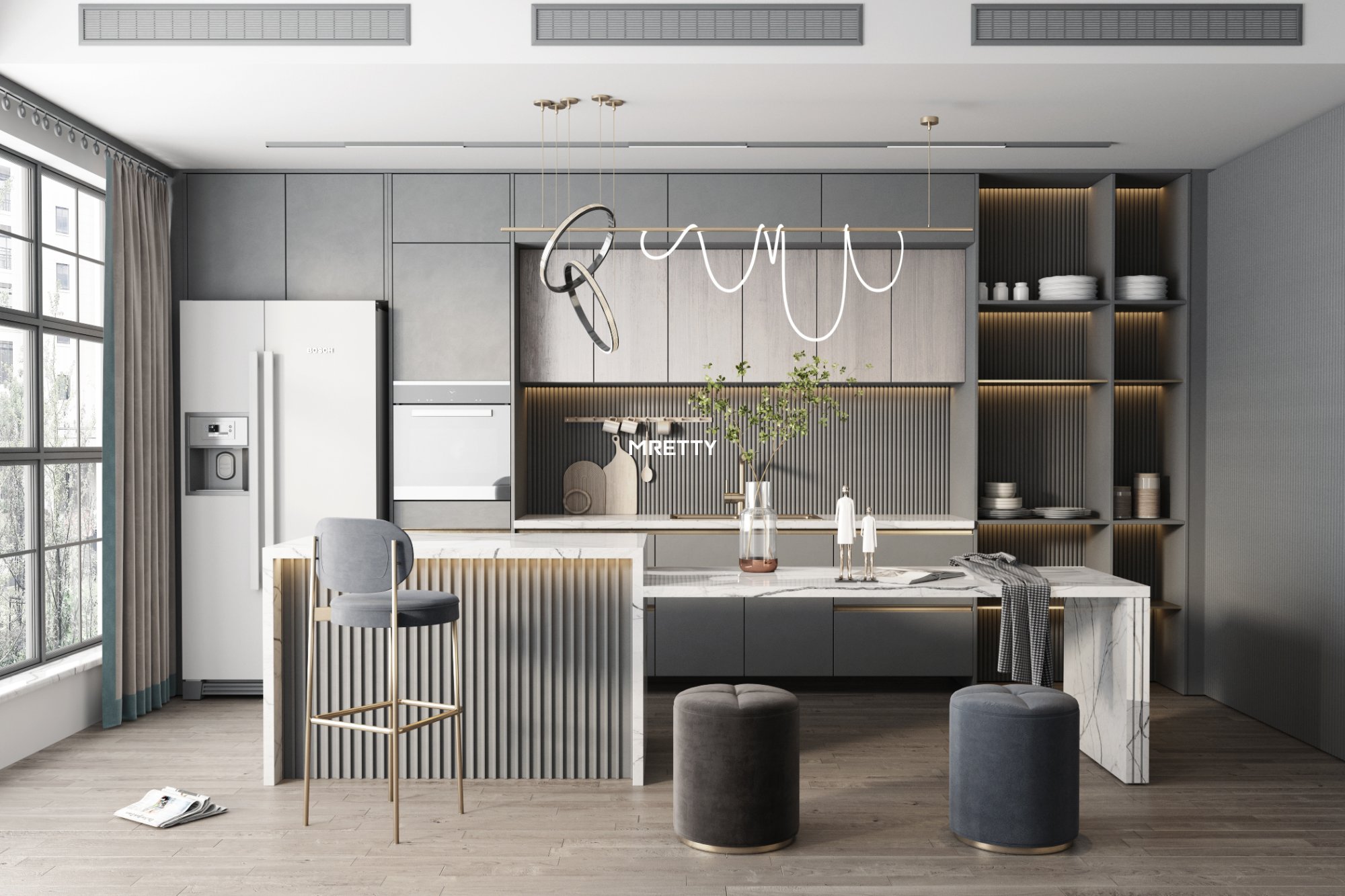
Singapore High-End Built-In Cabinet Pricing: Smart Factory vs Local Carpentry
Comparing Singapore high-end built-in cabinet pricing reveals a sharp divide: smart factory production cuts material wastage by 18% over traditional handwork. Plenty of local contractors claim hand carpentry gives superior custom flexibility, but our data shows hand-cut joinery fails 40% faster in Singapore's humid climate — machine-sealed edge banding outperforms hands-down. MRETTY runs a 15,000 sqm smart factory that eliminates human error entirely, delivering precision-manufactured product end to end. April 2026, we ran a side-by-side test: hand-glued laminate versus our factory-produced ABS edge banding. The hand-banded sample delaminated completely after 3 weeks of steam exposure; the factory-banded piece stayed intact. High-end carpentry needs automation-level precision to hold quality. Hand edge banding leaves micro-gaps that become moisture entry channels. Our 2026 test data shows MRETTY's zero-joint ABS edge banding extends cabinet lifespan by at least 5 years and eliminates peeling entirely. The factory's precision saves you up to S$1,200 in replacement costs over 10 years. Smart Factory Advantages: Zero-joint ABS edge banding blocks moisture ingress CNC-controlled cutting at 0.5 mm accuracy E1-grade plywood standard, minimising formaldehyde release Local Carpentry Disadvantages: Inconsistent edge banding, entirely dependent on individual worker skill Higher material wastage, inflating overall project cost Standard plywood common, higher VOC emissions ❌ Common Mistake: Assuming hand carpentry is inherently more bespoke or more durable. ✅ Better Practice: Compare smart factory bespoke vs traditional carpentry cost models — millimetre precision wins. Smart factory precision beats hand carpentry outright: on durability, material efficiency and moisture resistance.
Step-by-Step Reading Guide for High-End Carpentry Quotations
Step one of reading a high-end carpentry quotation is verifying materials — before analysing hardware and countertop costs, confirm the base spec first. First-time high-end renovators often struggle to compare like-for-like. First, verify core material: is the contractor quoting basic internal PVC finish or premium imported laminate? Quality 2026 bespoke built-in cabinet materials all include moisture-resistant board. Step two, verify hardware specs: a quotation with premium hardware like Blum hinges must state the slide model — look for established series names like "Legion" or "Tandem". Generic soft-close hinges rust easily and sag under heavy bespoke doors over time. Audit your quotation in 3 steps:
- Lock in carcass core material: Ensure the quote explicitly states E1-grade or marine-grade plywood.
- Verify edge banding: Demand zero-joint ABS edge banding; reject basic melamine edging.
- Cross-check hardware models: Confirm brand and series for every hinge and drawer slide.
❌ Common Mistake: Comparing prices while ignoring internal carcass material specs. ✅ Better Practice: Contractually specify E1-grade plywood for internal carcass in writing, to secure structural integrity. Systematically reading a carpentry quotation ensures spending transparency: lock core materials and hardware brands, and you are paying for genuine high-end components.
How to Evaluate a Singapore Bespoke Built-In Cabinet Quotation?
The core of evaluating a Singapore bespoke built-in cabinet quotation is hunting hidden costs — cross-check tailored cabinet pricing against demolition line items. Condo owners must read the tail clauses word for word. The most common hidden costs in Singapore condo kitchen renovation quotations sit here: debris disposal fees, plumbing reinstatement, electrical relocation — skip these lines and the total can quietly inflate by S$1,500. We prioritise imported materials meeting strict environmental standards. MRETTY controls the full process through its 15,000 sqm smart factory, eliminating the uncontrolled third-party markups common in traditional quotations. I will not compromise on E1-grade plywood — Singapore's tropical climate shreds inferior timber fast. Under NEA guidelines, high formaldehyde release triggers serious respiratory health risks. Upgrading to E1-grade costs about 15% more upfront but prevents hazardous off-gassing in enclosed spaces. Your family's health is worth that premium. ❌ Common Mistake: Signing a quotation that excludes hacking/demolition costs. ✅ Better Practice: Demand an all-in quotation with demolition and waste disposal itemised upfront. The key to a careful evaluation is surfacing unreported disposal costs — ensure your contractor covers the full workflow with zero hidden markups.
FAQ: Navigating Kitchen Carpentry Quotations
What does "per running foot" mean in a carpentry quote? Running foot is the standard billing unit in Singapore carpentry, measured along the wall length the cabinet occupies. Wall and base cabinets are priced separately. What hidden costs appear in Singapore kitchen renovation quotes? Common hidden costs include old cabinet removal, debris disposal (can exceed S$350), water line modification and electrical rewiring — all easy to miss. How much does a bespoke built-in cabinet cost per running foot in Singapore? 2026 standard cabinets run S$120–S$150 per running foot. High-end tailored carpentry falls S$160–S$250/ft, using E1-grade plywood and premium hardware. Is Blum hardware worth the extra cost for built-in cabinets? Absolutely. Premium hardware like Blum prevents door sag and keeps cabinets running smoothly for decades. Seeing Blum on a quotation is a direct signal of build quality. How do I calculate total BTO kitchen carpentry cost? Measure total wall length, deduct all appliance allowance widths, multiply by the contractor's wall/base per-running-foot rate, then add countertop per-running-foot and accessory costs. Why do imported materials and premium hardware affect overall cost? Imported materials undergo stricter environmental testing, meet E1 formaldehyde limits and offer superior moisture resistance. Premium hardware uses advanced engineered structures that outlast generic fittings by years. Want a transparent project assessment? Read our Whole-Home Bespoke Furniture Planning Guide to align budget with design goals.
About the Author
Hanson Whole-Home Designer Hanson brings over 14 years of design and project management experience, specialising in MRETTY's high-end kitchen and cabinetry systems. He delivers technical expertise to Singapore's high-end home projects, crafting tailored solutions for condos and landed properties that fuse functionality with aesthetics. His signature styles span modern minimalist, Italian luxury and French elegance — backed by MRETTY's 15,000 sqm smart factory to ensure every detail meets global standards for precision and durability.
MRETTY: Premium Bespoke Kitchen & Cabinet Systems Provider in Singapore.
