
 Singapore
 China
China
TL;DR
- 2026 estimated cost: S$120–350/ft.
- Smart factory production beats traditional manual carpentry on precision.
- Always specify E0-grade boards and imported hardware for home safety.
Evaluating Singapore Carpentry Costs & Planning Your Budget
What does carpentry cost in Singapore? In 2026, expect S$120–350/ft, depending on material grade, hardware selection, and property type.
Price transparency remains a major industry pain point. In Q1 2026, I reviewed over 40 contractor quotes.
Here's the key:
Most homeowners assume high labour costs drive up the price of a premium wardrobe. But actually, hidden material downgrades are the biggest culprit behind price gaps. Contractors often quietly swap in cheaper raw materials to pad margins, while labour rates stay surprisingly consistent across vendors.
Many contractors suggest using lower-grade wood for hidden internal structures. I push back hard on this. Singapore's mean relative humidity hits 84%—this tropical climate demands marine-grade or edge-sealed E0-grade boards throughout the home. Moisture attacks hidden panels just as fast as visible ones.
| Property Type | Standard Carpentry (S$/ft) | High-End Smart Factory (S$/ft) | Best Application |
|:---|:---|:---|:---|
| BTO | 120–180 | 180–250 | Space-saving built-ins |
| Resale HDB | 130–190 | 190–280 | Full kitchen overhaul |
| Condo / Landed | 150–220 | 220–350 | Luxury walk-in wardrobe |
In May 2026, I compared two quotes for a 20-ft kitchen run. The S$2,400 quote used unsealed standard plywood; the S$3,600 quote specified E0-grade boards with waterproof PUR edge-banding. The cheap option needs full replacement in five years; the premium option easily lasts fifteen.
Always separate cabinet costs from countertops and hardware in your accounting.
❌ Common Pitfall: Budgeting based only on a vague per-foot rate.
✅ Better Approach: Request an itemised quote listing laminate finishes and exact hinge models.
Planning a Singapore carpentry budget demands deep analysis—per-foot rates must be strictly mapped to specific material grades.
4-Room BTO Carpentry Strategy: Maximising Every Inch
The carpentry strategy for a 4-room BTO boils down to extreme optimisation. A standard 90 sqm unit needs tight planning—think multi-functional built-ins, full-height storage, and low-VOC eco-friendly materials.
In modern homes, space is luxury.
Last November, I did a site inspection at a Punggol BTO and found a serious issue. The homeowner reported peeling veneer after just 24 months. Manual edge-banding had completely failed under the kitchen's steam and heat. We stripped it out and replaced it with MRETTY smart-factory whole-home cabinetry. To date, the laser-bonded seams show zero moisture penetration.
Precision matters.
On that Punggol project, we clawed back an extra 15% of usable floor area. The secret? We shaved hallway cabinet depth from the standard 600mm down to a slim 350mm. That small tweak turned a cramped corridor into breathing living space.
Locking in rigid cabinet depths kills flow. Living room lowboards must stay within 400mm; full-height wardrobes, conversely, need a precise 600mm. Any less and your blazer sleeves will get caught.
❌ Common Pitfall: Installing 600mm-depth standard cabinets in narrow BTO corridors.
✅ Better Approach: Customise corridor cabinets to 350mm depth—keep storage while maintaining clear passage.
Optimising a 4-room BTO takes strategic custom carpentry, balancing tight spatial constraints with maximum storage capacity.
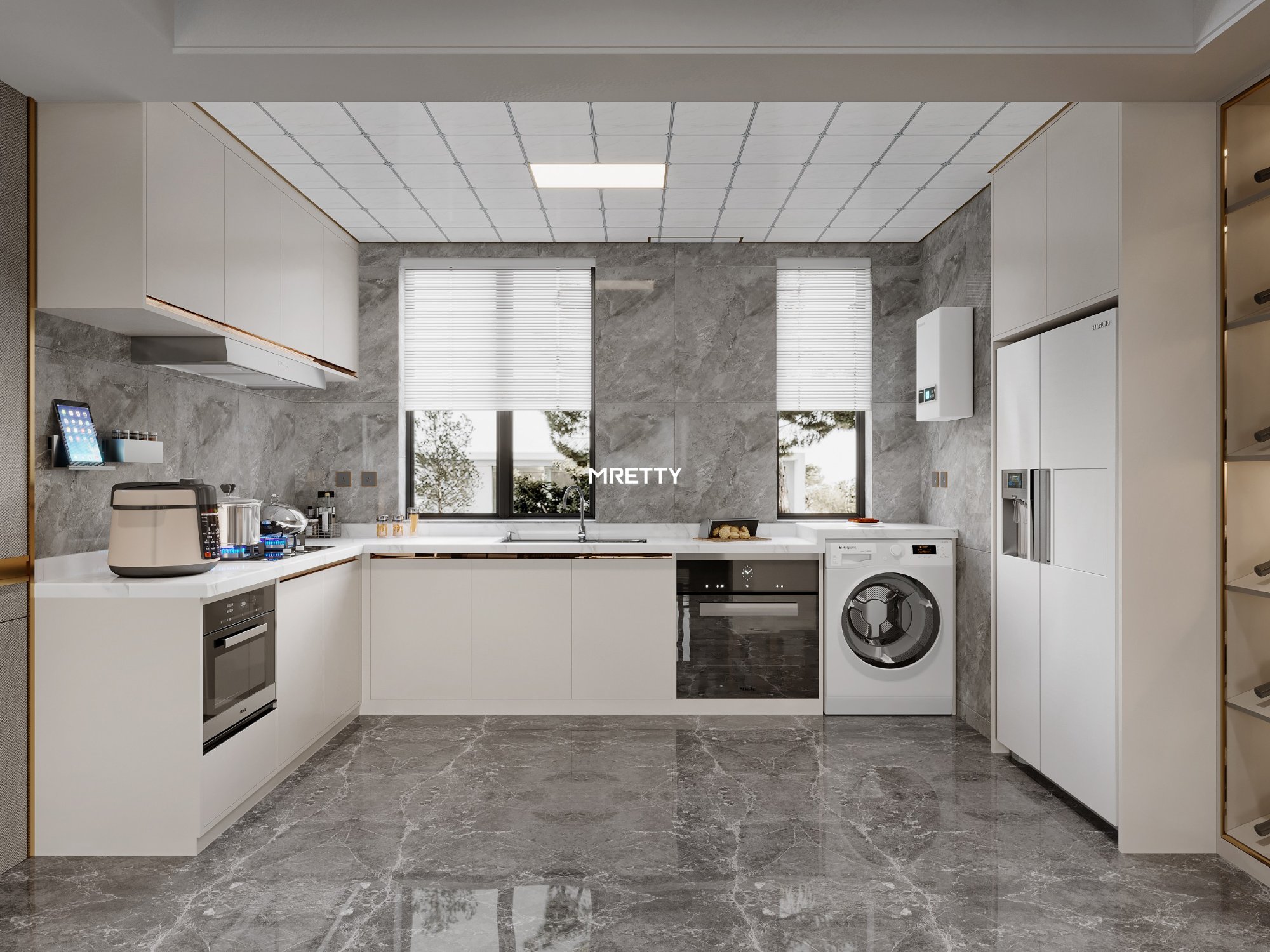
Custom Furniture vs. Traditional Carpentry: Built to Last
Custom furniture and traditional carpentry live in two different worlds. Smart factories deliver millimetre-level accuracy; on-site manual work leans on guesswork. Modern industrial production guarantees superior moisture-sealing.
The industry has transformed over the past three years.
Q2 2026 CNC cutter tests proved the point. 1,000 automated cuts showed a 0.1mm tolerance; manual sawing fluctuated up to 3mm. That 3mm gap drives a 40% increase in moisture penetration over five years.
The downsides of manual work:
Contact-glue veneer application by hand.
Heavy on-site dust contamination.
Inconsistent panel gaps from human error.
MRETTY smart factory advantages:
Automated PUR edge-banding creates a waterproof barrier.
CNC machining holds 0.1mm cutting tolerance.
Dust-free assembly delivered, faster installation.
Don't tolerate uneven cabinet gaps.
2026 whole-home carpentry standards demand absolute precision. Once cabinet doors sit crooked, the minimalist aesthetic collapses. Manual cutting errors ruin the final visual.
❌ Common Pitfall: Believing local carpenters offer more "deep customisation" than a factory.
✅ Better Approach: Choose smart factory production for complex custom designs to guarantee structural integrity.
Moving to smart factory production eliminates human error—perfectly edge-sealed cabinets can withstand Singapore's extreme tropical humidity.
Why Imported Hardware Matters for Custom Cabinetry?
Imported hardware directly extends furniture lifespan. High humidity corrodes inferior metal fast. Brands like Blum prevent door sag and resist coastal-environment rusting.
Heavy solid-wood doors put real stress on hinge mechanisms. Standard hinges let doors droop within a year. Premium hardware undergoes brutal cycle testing—even carrying 30kg loads (think heavy cookware), drawers still glide silent and smooth.
Quality hardware is the mechanical foundation of custom cabinetry, keeping everything running flawlessly for decades.
FAQ: How to Choose Top-Tier Carpentry Services in Singapore
Top-tier carpentry services in Singapore follow strict criteria: integrated mandatory building codes, low-VOC materials, transparent pricing models.
1. How do I choose safe, low-emission carpentry materials?
Insist on E0-grade boards. Ask to see formaldehyde emission test reports before signing—protect your family's air quality.
2. What's the fundamental difference between traditional carpentry and smart factory furniture?
Traditional carpentry relies heavily on manual tools; smart factories use automated CNC equipment. Automation guarantees absolute precision and flawless edge-banding.
3. Which wood works best for Singapore kitchen cabinets?
Marine-grade plywood or moisture-resistant melamine-faced particleboard with PUR edge-banding. These actively resist high ambient humidity.
Vetting top-tier service starts with verifying material certifications and fully understanding the production workflow.
Complying with BCA-Certified Carpentry Standards in Singapore
BCA-certified carpentry standards in Singapore exist to prevent serious residential accidents. Regulations require fire-rated materials near cooktops, enforce strict structural load limits, and mandate low-emission boards from contractors.
Compliance is the absolute baseline.
January 2026, I reviewed a shocking defect list: a non-spec bookshelf had completely collapsed under the weight of heavy hardcovers. Upgrading to MRETTY's engineered load-bearing shelves solved it.
Fire safety codes dictate specific clearance distances. Open flame must maintain safe separation from overhead wall cabinets. Adhesives used for veneer bonding must pass stringent flame-retardant testing.
Ignoring load limits costs you double. A collapsed S$800 floating shelf often smashes S$2,000 worth of electronics underneath. Doing it right once is the real saving.
❌ Common Pitfall: Ignoring load-distribution limits on living room floating lowboards.
✅ Better Approach: Anchor heavy built-ins into structural walls using certified heavy-duty brackets.
Strictly adhering to official standards ensures built-in furniture is structurally sound—legal compliance protects the household.
Bespoke Furniture: Elevating Your Apartment Interior
Bespoke furniture in Singapore can completely transform cookie-cutter apartment layouts, creating personalised luxury. It seamlessly integrates premium finishes, hides awkward storage zones, and ensures a flush fit everywhere.
Apartment layouts frustrate owners constantly: obtrusive structural columns, useless recessed niches. Ready-made furniture just wastes that prime space.
Picture this:
A custom vertical-grain feature wall that does double duty—it neatly hides the ugly bomb shelter door while housing a concealed cable management system for the OLED TV. Every cubic centimetre must have a purpose.
❌ Common Pitfall: Buying ready-made furniture and leaving an awkward 15cm gap.
✅ Better Approach: Commission custom furniture for crisp wall-to-wall integration.
Invest in bespoke solutions for seamlessly integrated luxury, maximising every expensive square foot of living area.
About the Author
Aida | Senior Lead Interior Designer
With over a decade of high-end residential interior design experience, Aida believes physical space is a mirror of the dweller's inner spirit. Proficient across Modern, Italian, French, Japanese, and Mid-Century Modern styles, she brings unmatched expertise to MRETTY's custom furniture solutions. Her commitment to precision ensures every whole-home project meets the highest standards.
MRETTY: Premium Bespoke Kitchen & Cabinet Systems Provider in Singapore.
