
 Singapore
 China
China
In the world of bespoke cabinetry and refined interiors, the smallest details create the most significant impact. Clean lines, uninterrupted surfaces, and a sense of seamless flow are the hallmarks of sophisticated design. This is where the magic of the hidden hinge comes into play. A departure from traditional, visible hardware, the hidden hinge offers a sleek, modern aesthetic that elevates the look of any cabinet or door.
Proper hidden hinge installation is not just a technical task; it is an art form that ensures functionality meets elegance, creating a silent and smooth experience every time you open a door. For homeowners and design aficionados who appreciate precision and a minimalist feel, mastering this process is key to achieving a truly high-end finish.
At MRETTY, we believe that luxury is found in both the seen and the unseen. Our commitment to flawless design extends to every component, including the hardware that brings our creations to life. We understand that the beauty of a custom kitchen or wardrobe lies in its cohesive and uncluttered appearance.
Hidden hinges are central to this philosophy, allowing the quality of the materials and the purity of the design to command attention. They provide the strength and durability you need without compromising the visual harmony of your space. This guide is crafted from our deep expertise in bespoke furniture, offering you a comprehensive walkthrough to ensure your hidden hinge installation is perfect, reflecting a standard of excellence that defines every MRETTY piece.
What Are Hidden Hinges and Why Choose Them?
Hidden hinges, also known as concealed hinges or European hinges, are an ingenious piece of hardware engineered to be completely invisible from the outside when the cabinet door is closed. This innovation is a cornerstone of modern and minimalist design, allowing for the clean, uninterrupted lines that define contemporary kitchens, bathrooms, and custom furniture.
Unlike traditional butt hinges that are mounted on the exterior of the cabinet frame and door, hidden hinges are installed on the inside, creating a sophisticated and uncluttered look.
Benefits of Hidden Hinges
The benefits of choosing hidden hinges extend far beyond their sleek appearance:
Aesthetic Purity: The most apparent advantage is the clean, seamless look they provide. By concealing the hardware, hidden hinges allow the beauty of your cabinetry's material and finish to take center stage. This is particularly crucial in minimalist, modern, and transitional designs where visual clutter is purposefully avoided.
Enhanced Adjustability: One of the most significant functional benefits of hidden hinges is their three-way adjustability. After installation, you can easily adjust the door's position vertically (up and down), horizontally (left and right), and in depth (in and out). This ensures perfect alignment, even if the cabinet box isn't perfectly square, resulting in uniform gaps and a professional finish.
Soft-Close Functionality: Many modern hidden hinges come with integrated soft-close mechanisms. This feature prevents doors from slamming shut, reducing noise and minimizing wear and tear on both the door and the cabinet frame. It adds a touch of quiet luxury to your daily interactions with your cabinetry.
Wide Opening Angle: Hidden hinges are available in a variety of opening angles, often ranging from 95 to 170 degrees. This provides greater access to the cabinet's interior compared to many traditional hinges, making it easier to store and retrieve items.
Increased Strength and Durability: Designed for reliability, high-quality hidden hinges are incredibly strong and durable. They are built to withstand tens of thousands of open-and-close cycles, ensuring your cabinets function smoothly for years to come. MRETTY exclusively uses hinges that meet rigorous testing standards, guaranteeing longevity and performance.
Tools and Materials for Flawless Installation
Gathering the correct tools and materials before you begin is essential for a smooth and accurate installation process. Having everything at hand will prevent interruptions and help you achieve a professional-quality result.
Essential Tools
Drill or Driver: A cordless drill is ideal for its convenience. You will need it for drilling pilot holes and driving screws.
35mm Forstner Bit: This is the most critical specialty tool. A 35mm Forstner bit is required to drill the large, flat-bottomed cup hole in the cabinet door where the hinge sits.
Concealed Hinge Jig (Recommended): While not strictly necessary, a hinge jig is highly recommended, especially for beginners. It ensures precise placement of the cup hole and screw holes, eliminating guesswork and reducing the risk of error.
Measuring Tape: For accurate measurements of the door and cabinet.
Pencil or Marker: For marking drilling locations.
Combination Square or Straightedge: To ensure your lines are straight and your measurements are square.
Screwdriver (Phillips Head): For manually tightening screws and making adjustments.
Safety Goggles: Always protect your eyes from wood dust and debris when drilling.
Clamps: Useful for holding the door steady while you work.
Materials
Hidden Hinges: Ensure you have the correct type and number of hinges for your project. Consider the overlay type (full, half, or inset), opening angle, and whether you want a soft-close feature.
Screws: Most hidden hinges come with the necessary mounting screws. Double-check that you have them.
Cabinet Door and Cabinet Box: The pieces you will be joining together.
Step-by-Step Guide to Hidden Hinge Installation
Installing hidden hinges is a process that rewards precision. Follow these steps carefully for a flawless outcome.
Step 1: Measure and Mark the Cabinet Door
The first step is to determine the location for the hinge cups on the cabinet door.
Determine Hinge Placement: Typically, hinges are placed between 3 and 4 inches (7.5 to 10 cm) from the top and bottom of the door. For taller doors (over 40 inches), a third hinge in the center is recommended for support.
Mark the Center Point: Using your measuring tape and combination square, measure from the top and bottom edges of the door and mark the center height for each hinge.
Mark the Backset: The backset is the distance from the edge of the door to the center of the 35mm cup hole. This distance is typically 22.5mm, but always check the manufacturer's instructions for your specific hinges. A concealed hinge jig will have this measurement preset. Mark this point for each hinge. You should now have a crosshair mark indicating the exact center for drilling.
Step 2: Drill Hinge Cup Holes Precisely
This is the most critical step. A misplaced or improperly drilled hole can ruin a cabinet door.
Set Up Your Drill: Attach the 35mm Forstner bit to your drill. If your drill has a depth stop, set it to the depth of the hinge cup (usually around 11-13mm). If not, you can wrap a piece of tape around the bit as a visual depth guide. It is crucial not to drill all the way through the door.
Drill the Hole: Align the center point of the Forstner bit with the crosshair mark you made on the door. Keeping the drill perfectly perpendicular to the door surface, drill the hole to the required depth. The flat bottom created by the Forstner bit is essential for the hinge to sit flush.
Clear Debris: Blow or wipe away the wood shavings from the newly drilled hole.
Step 3: Install Hidden Hinges on the Door
Once the cup holes are drilled, it's time to secure the hinges to the door.
Insert the Hinge: Place the hinge cup into the hole you just drilled. The hinge should sit snugly and its flange should be flush with the door surface.
Mark and Drill Pilot Holes: Straighten the hinge so its arm is perpendicular to the door edge. Use a pencil to mark the locations for the two small mounting screws. Remove the hinge and drill small pilot holes on your marks. This prevents the wood from splitting when you drive the screws.
Secure the Hinge: Place the hinge back into the cup and fasten it securely with the provided screws. Do not overtighten.
Step 4: Attach Mounting Plates to the Cabinet Box
Now, shift your focus to the cabinet box.
Determine Plate Location: The position of the mounting plate on the cabinet frame must correspond to the hinge location on the door. Use your measuring tape to transfer the hinge-center measurements from the door to the inside of the cabinet frame.
Mark for the Mounting Plate: The mounting plate's position relative to the front edge of the cabinet depends on the door overlay you desire. Your hinge instructions will provide the correct setback measurement. Use a combination square to mark a line at this distance from the front edge.
Position and Mark Screw Holes: Align the mounting plate with your vertical and horizontal marks. Mark the screw hole locations.
Drill Pilot Holes and Attach: Drill shallow pilot holes and then screw the mounting plates securely to the cabinet frame.
Step 5: Hang the Door and Fine-Tune Adjustments
This is the final and most satisfying step, bringing your cabinetry to life.
Connect Hinge to Plate: Most European hinges have a two-part design. Open the hinge arm on the door and hook it onto the mounting plate. Secure the connection, which often involves tightening a screw or snapping a clip mechanism into place.
Check Alignment: Close the door and check its alignment. It will likely need some fine-tuning.
Adjust the Hinges: Use the three adjustment screws on each hinge to perfect the door's position:
Side-to-Side (Horizontal): This screw moves the door left or right, adjusting the gap between doors.
Up-and-Down (Vertical): The mounting plates often have elongated holes that allow you to shift the door vertically.
In-and-Out (Depth): This screw adjusts the gap between the door and the cabinet frame.
Fine-Tune: Make small, incremental adjustments, checking the alignment after each turn, until all gaps are uniform and the door opens and closes smoothly.
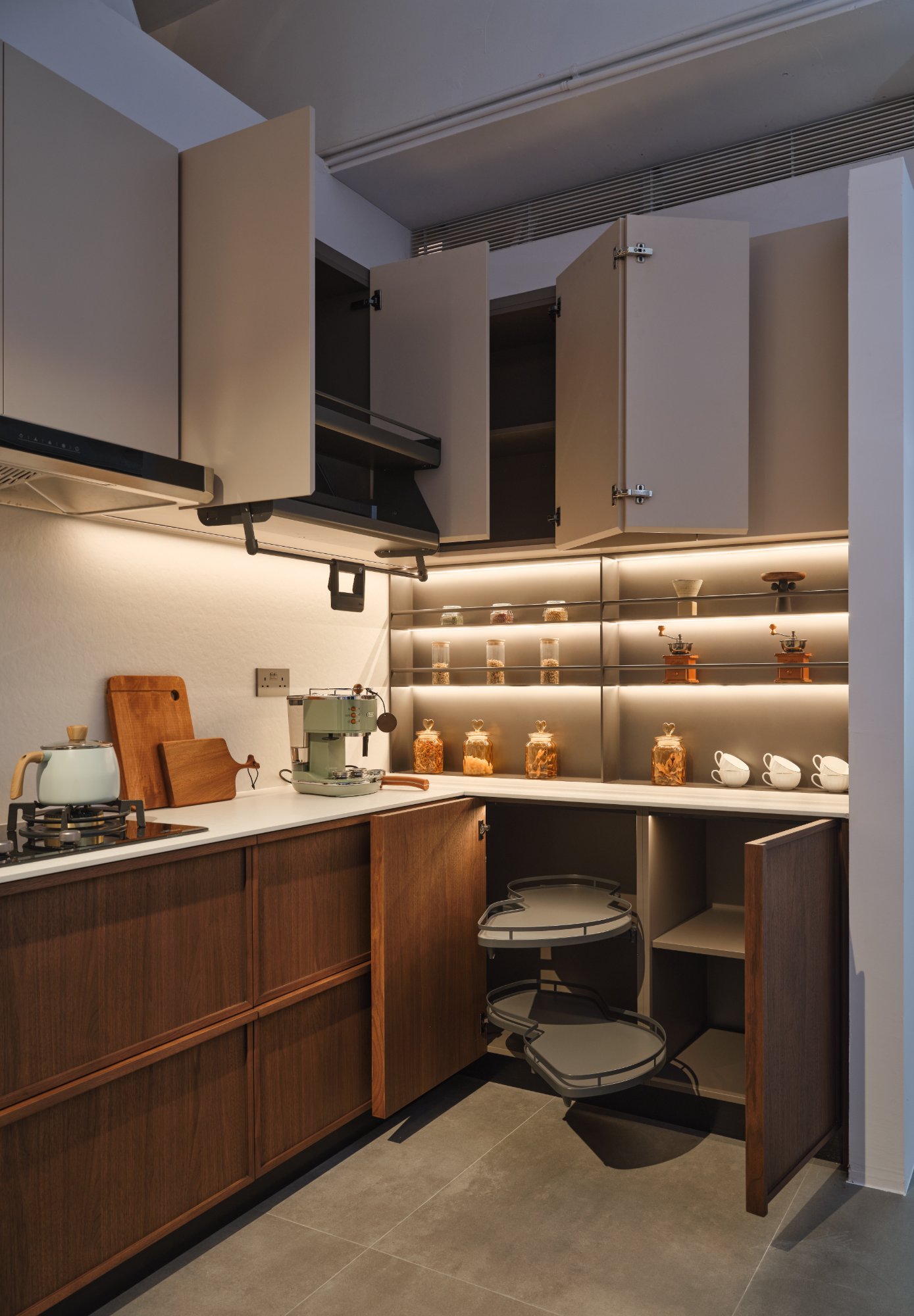
Common Hidden Hinge Installation Mistakes to Avoid
A successful hidden hinge installation hinges on avoiding a few common pitfalls:
Drilling the Cup Hole Too Deep: Drilling through the front of your cabinet door is an irreversible mistake. Use a drill press with a depth stop or a tape marker on your bit and practice on a scrap piece of wood first.
Incorrect Backset Measurement: Placing the cup hole too close to or too far from the door's edge will cause the door to bind or have an improper overlay. Double-check the manufacturer's specifications and measure carefully. A jig makes this step foolproof.
Misaligned Mounting Plates: If the mounting plates on the cabinet frame do not align perfectly with the hinges on the door, the door will not hang straight. Measure twice, drill once.
Skipping Pilot Holes: Driving screws directly into hardwood or MDF without pilot holes can cause the wood to split, compromising the screw's hold and damaging your cabinet.
Over-Tightening Screws: This can strip the wood, making the connection weak. Tighten screws until they are snug, but avoid using excessive force.
Maintenance Tips for Hidden Hinge Longevity
High-quality hidden hinges require minimal maintenance, but a few simple practices will ensure they continue to function perfectly for years.
Regular Cleaning: Wipe down the hinges with a dry or slightly damp cloth every few months to remove dust and grime that can accumulate in the mechanism. Avoid harsh chemical cleaners.
Check for Looseness: Over time and with heavy use, screws can sometimes become loose. Periodically check that all hinge and mounting plate screws are snug. Tighten any that have loosened.
Lubrication (If Necessary): Most modern hinges are self-lubricating. However, if you notice any squeaking, a small application of a silicone-based lubricant can resolve the issue. Avoid oil-based lubricants like WD-40, which can attract dust.
Re-adjustment: Cabinets can settle over time, and doors may fall slightly out of alignment. Use the three-way adjustment screws to quickly and easily realign your doors as needed.
Explore MRETTY's Bespoke Cabinetry and Related Services
Whole-House Customization
The line is always simple, the structure is always unexpected.
Ligne toujours simple, structure toujours inattendue.
Kitchen Cabinetry
Ingenious conception in mind, a good life in the kitchen.
Conception ingénieuse à l'esprit, une belle vie dans la cuisine.
Frequently Asked Questions About Hidden Hinges
Q: How many hidden hinges do I need for my cabinet door?
A: For standard cabinet doors up to 40 inches (100 cm) tall and weighing up to 15 lbs (7 kg), two hinges are sufficient. For taller or heavier doors, we recommend adding a third hinge in the center for additional support and to prevent warping.
Q: Can I install soft-close hidden hinges on my existing cabinets?
A: Absolutely. Upgrading to soft-close hinges is a popular and straightforward DIY project. You will need to remove your old hinges and follow the installation steps outlined in this guide. Ensure you purchase hinges with the same overlay as your existing setup.
Q: What is the difference between full overlay, half overlay, and inset hinges?
A:
Full Overlay: The cabinet door completely covers the front edge of the cabinet box. This is common in modern, frameless cabinetry.
Half Overlay: The door covers half of the front edge, allowing two doors to be mounted back-to-back on a single partition.
* Inset: The door sits inside the cabinet frame, flush with the front edges. This provides a classic, high-end furniture look.
What Our Customers Say About MRETTY
"The attention to detail from MRETTY is second to none. Our new kitchen cabinets close silently and are perfectly aligned. The hidden hinges make everything look so clean and modern."
- Rachel T., Singapore
"I was hesitant to install the hinges myself, but this guide was incredibly clear. The recommendation for a jig was a lifesaver. My DIY wardrobe looks professionally built!"
- David L., Singapore
Proper hidden hinge installation is a defining element of high-quality cabinetry. It is a skill that blends technical precision with an eye for design, resulting in a finished product that is both beautiful and functional. By following these detailed steps and using the right tools, you can achieve a seamless look that speaks volumes about your commitment to quality.
At MRETTY, we build our bespoke kitchens and cabinet systems upon a foundation of excellence. Every component is chosen and installed with meticulous care, ensuring a flawless result that stands the test of time. Our processes are backed by certifications like the Forest Stewardship Council (FSC), reflecting our dedication to not only superior craftsmanship but also environmental responsibility. We invite you to experience the MRETTY difference, where elegance is built into every detail.
Book a Free Consultation Now
About the Author
Yang Song is an award-winning senior designer at MRETTY, celebrated for his work on the "Orchard Residence Minimalist Kitchen" project, which won the Singapore Interior Design Award for Best Kitchen Design. His philosophy centers on creating spaces that are as functional as they are beautiful.
MRETTY: Premium Bespoke Kitchen & Cabinet Systems Provider in Singapore.
