
 Singapore
 China
China
Key Takeaways
Health & Safety: Choose E1-grade formaldehyde-free imported boards — superior moisture resistance and safety.
Long-Term Function: Prioritise European hardware (Blum, Hettich) — rust-resistant, 20+ years of smooth operation.
Precision Matters: MRETTY's direct factory model achieves tolerances within 0.5 mm; traditional on-site carpentry cannot match this quality control.
2026 Budget: Whole-home bespoke cost ranges from ~S$20,000 (4-room BTO) to S$60,000+ (luxury condo), depending on material selection.
FAQ (Core Insights)
Why choose imported materials for Singapore interior design?
European imported materials offer superior durability and health standards, engineered for Singapore's high humidity — preventing warping and mould. The long-term value makes them a smart investment.
How do high-end imported boards withstand high humidity?
High-density core + advanced moisture-resistant resin means no swelling or deformation in Singapore's climate — cabinet doors and structures stay stable for years.
Industry data reveals an uncomfortable fact: nearly one-third of renovated homes in Singapore show significant material degradation (warping, mould) within five years. Fourteen years as a whole-home system designer, I have seen too many cases like this — the problem almost always traces back to material choices that ignore tropical climate realities.
This guide takes an analytical lens to elevating your home interior — we break down technical specs, performance data and the cost-benefit of European premium components, aiming to give you knowledge that sustains decades of investment.
Analysing High-End Materials to Lock in Long-Term Value
When selecting high-end furniture materials, focus on two things: low chemical emissions + high moisture resistance. E1-grade imported boards are the benchmark — formaldehyde emissions below 0.1 ppm, meeting stringent EU indoor air standards.
This is not just about luxury; it is about health. Formaldehyde-free boards are critical for families with children or chemically sensitive members. Clients who choose these materials consistently report greater peace of mind — and no "new furniture smell", which is usually off-gassing of harmful substances.
Comparing local plywood vs imported moisture-resistant MDF, the performance gap is clear:
Standard plywood: Prone to delamination and warping in high humidity.
High-end imported MDF: Engineered resin actively resists moisture — suitable for both kitchen and wardrobe.
Key data point from European manufacturers: high-quality moisture-resistant MDF shows 60% lower thickness swelling after 24-hour water immersion versus standard particleboard. This translates directly to daily convenience — cabinets beside the sink do not bulge, wardrobe doors still seal tightly years after a rainy season.
❌ Common Mistake: Assuming all "imported" materials are equal — many are sourced from regions with lower standards.
✅ Better Practice: Insist on clear European certification (e.g. E1), request moisture-resistance technical data sheets.
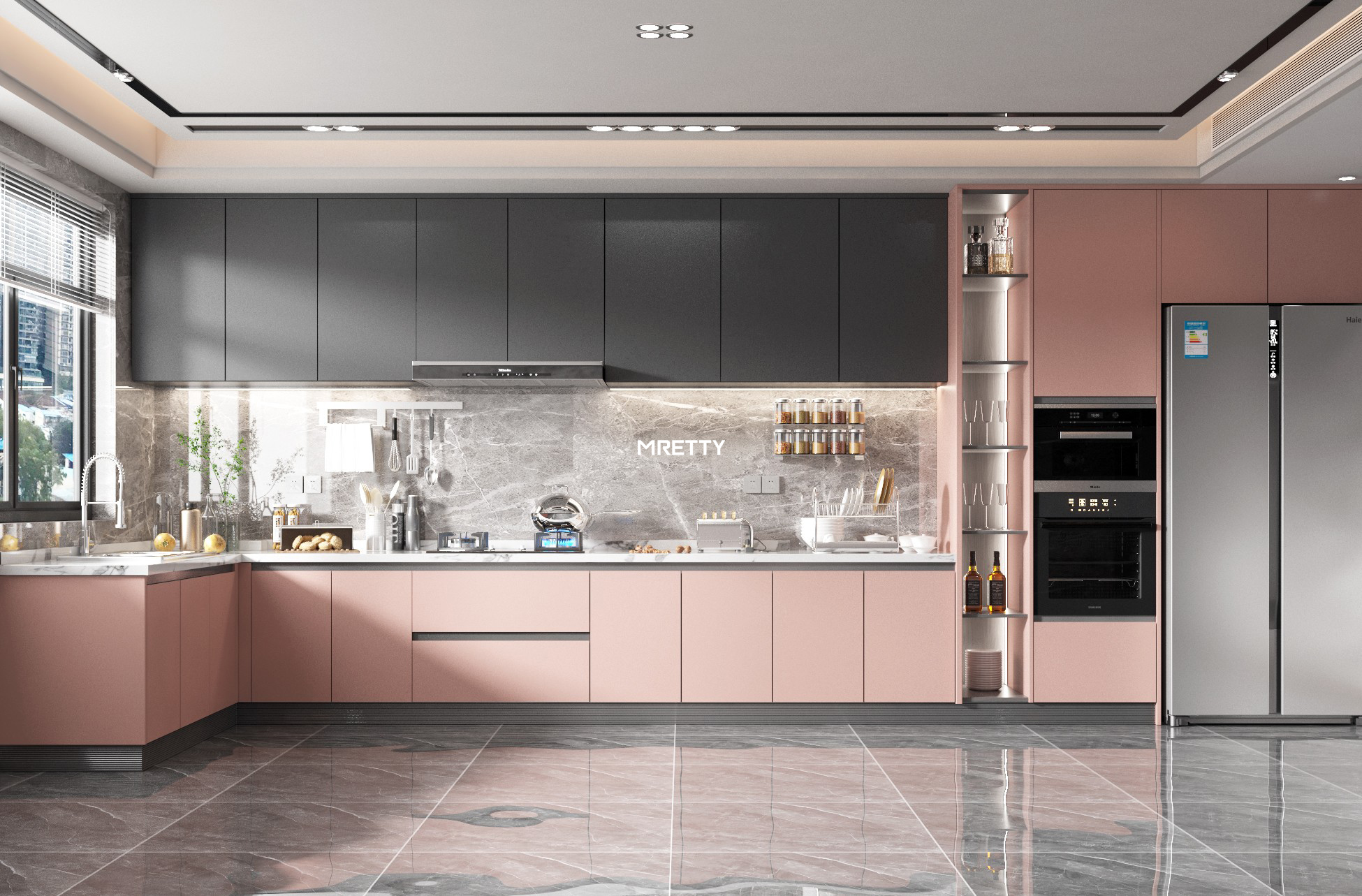
Selecting the Right Imported Hardware to Secure Cabinet Durability
The best hardware brands for bespoke cabinets come from Europe — Blum (Austria) and Hettich (Germany) offer superior engineering and corrosion resistance. Integrating this premium hardware is a prerequisite for decades of smooth cabinet operation.
Homeowners often fixate on door faces, but what you touch daily are hinges and slides. Cheap hardware in Singapore's hot, humid, slightly saline air rusts, sags and fails within 1–2 years.
Here is the key: brands like Blum cycle-test products to 200,000 open-close cycles — what does that mean for you? A busy kitchen drawer opened 20 times a day will deliver 27+ years of reliable service.
It is not just convenience; it is safety — sagging hinges are a hazard, failed slides ruin the cabinet. Third-party salt spray tests show premium European hinges show zero rust after 96 hours continuous exposure; generic alternatives often show severe corrosion within 24 hours. This test simulates our coastal climate, protecting your investment.
❌ Common Mistake: Letting contractors bundle "standard" no-name hardware to suppress the initial quote.
✅ Better Practice: Name the brand and model in your contract (e.g. "Blum Tandem drawer" or "Hettich Sensys hinge").
BTO Upgrades Can Achieve Condo-Level Luxury
With European imported boards, a 5-room BTO can absolutely be elevated — paired with quality materials and smart design, you can achieve finishes typically seen only in luxury condos.
Many assume a BTO cannot deliver true high-end, but material choice can lift a BTO above a poorly renovated condo — the key is finding a designer who knows how to deploy premium materials within BTO guidelines. Take a recent Punggol BTO project: we used lightweight yet durable imported board for floor-to-ceiling seamless wardrobes, creating a vaulted illusion while adding massive storage, solving the client's long-standing problems of mouldy clothes and warped doors.
This is not just aesthetic upgrade; it is financial upgrade — 2026 property market analysis shows BTO flats renovated with high-end bespoke interiors can achieve 5–8% higher valuation and sell up to 3 weeks faster than standard-fit units. Investing in quality materials adds tangible value to your property.
❌ Common Mistake: Using bulky freestanding furniture, wasting precious BTO space.
✅ Better Practice: Use whole-home bespoke to create integrated furniture — squeeze value from every square centimetre.
Comparing Factory Precision vs Traditional Carpentry to Maximise Your Investment
MRETTY's direct factory model uses automation to achieve precision traditional carpentry cannot replicate. The difference is consistency — our 15,000 sqm smart factory guides every cut and edge-band with computer control.
Q2 2026 we ran a comparison; the results were stark:
Traditional carpentry: Inter-panel variance can reach 2–3 mm.
MRETTY factory process: Tolerances under 0.5 mm.
Why it matters: in minimalist design, every line is intentional. A 2 mm gap is not a feature; it is a visual flaw that destroys the overall aesthetic. This sub-0.5 mm precision alone supports the flawless, seamless feel of European high-end design — keeping doors aligned and gaps uniform. Furthermore, our climate-controlled factory protects boards from warping before cutting, preserving integrity.
❌ Common Mistake: Assuming on-site carpentry is "more bespoke" — true bespoke happens at the design stage, not the manufacturing method.
✅ Better Practice: Use the factory system for precision; work with a designer for layout/material/function customisation.
The smart factory process de-risks your project, consistently delivering finished pieces that unlock the full potential of imported materials.
Understanding 2026 Whole-Home Bespoke Furniture Costs
In 2026, whole-home bespoke furniture using high-end imported materials scales with unit size and design complexity. Pricing depends on material grade, hardware brand and design intricacy.
Typical project tiers covering living, dining and three bedrooms:
4/5-room BTO: S$20,000–35,000
3-bed condo: S$30,000–50,000
- Landed property: S$45,000 onwards
Direct factory models like MRETTY offer stronger value within these ranges — cutting the middleman means more budget flows directly into material quality and manufacturing precision.
Conclusion: Built for Decades, Not for the Moment
Upgrading your home with imported materials is an investment in durability, health and value. Choosing certified moisture-resistant boards + proven European hardware builds a home that withstands Singapore's climate; factory precision ensures those materials become flawless finished pieces that last decades.
Additional FAQ
Best maintenance practices for luxury furniture in tropical climate?
Wipe surfaces with dry or lightly dampened microfibre cloth; avoid harsh cleaners. Keep rooms ventilated to lower ambient moisture and prevent mould.
Are all imported boards moisture-resistant?
No — "imported" does not guarantee quality. You must specifically look for boards labelled with moisture-resistance grades (e.g. MR-MDF) and check certifications like E1 for both durability and health.
About the Author
Hanson, Whole-Home System Designer at MRETTY, 14 years' experience specialising in high-end kitchen and cabinetry systems. Led numerous condo and landed projects across Singapore, spanning modern minimalist, Italian luxury and French elegance — blending material science with precision engineering in living spaces.
MRETTY: Premium Bespoke Kitchen & Cabinet Systems Provider in Singapore.
