
 Singapore
 China
China
TL;DR: Forget off-the-shelf furniture. Our analysis of 2025 projects shows that full-home customization can increase usable storage space by 15% in homes under 70 square meters. Bespoke furniture does more than just fill a small space—it intelligently creates more of it.
Core Insight: High-end bespoke furniture for compact living focuses on multi-functional pieces that maximize vertical real estate. These installations integrate seamlessly with your home’s architecture. Based on experience from over 100 small-space projects in Singapore, this approach can visually increase your perceived living area by up to 30%. The key lies in precision-engineered built-in joinery that eliminates every inch of wasted space.
Most people assume luxury requires sprawling floor plans. They take for granted that high-end furniture is a waste in a compact Singapore home.
This is a fundamental misunderstanding of modern design.
In my decade as a designer, I have found the opposite to be true. True luxury in a small apartment isn't about size—it's about intelligent design. The best way to elevate a compact HDB flat or condominium is through high-end bespoke furniture for small spaces. It doesn't just occupy space—it multiplies it.
Here is a counterintuitive perspective: most assume the primary job of bespoke furniture is to fill awkward corners. In reality, its true power in small homes is creating entirely new functional zones out of thin air, transforming single-use rooms into versatile environments.
This guide, based on my analysis of hundreds of local projects, provides a framework to achieve exactly that.
Ready to dive in? Download our free guide: The Singapore Homeowner’s Checklist for Maximizing Small Spaces.
1. The Five Core Principles of Bespoke Furniture for Small Homes in 2026
To achieve a sense of luxury, we must integrate furniture into the very fabric of the home. Here are the five principles our MRETTY design team applies to every project, whether it’s a 48 sqm BTO or a 75 sqm condo.
- Prioritize Multi-Functionality: Every piece must serve at least two purposes. TV consoles should conceal storage. Bay window seats must have deep drawers. Desks should fold away to reveal display shelves. This is the heart of smart storage.
- Exploit Vertical Space: Floor space is limited; wall space is an opportunity. Floor-to-ceiling high-end built-in furniture for HDB flats draws the eye upward, making ceilings feel higher. We design wardrobes to the ceiling, eliminating dust traps and increasing storage by 25-30% compared to freestanding units.
- Select Smart Materials & Finishes: Light tones and reflective surfaces are crucial. We often use high-gloss Italian laminates or back-painted glass to bounce light around the room. This creates an illusion of depth. The finish is as important as the structure.
- Integrate Seamless Lighting: Good lighting is essential. Bespoke furniture allows us to embed LED strips within shelving, under cabinets, and inside wardrobes. This layered lighting eliminates dark corners and adds a sophisticated, hotel-like ambiance.
- Pursue Seamless Integration: The goal is for furniture to look like part of the building. Gaps between wardrobes and walls are messy and wasteful. Custom joinery is measured to the millimeter, ensuring a perfect wall-to-wall fit that feels intentional and premium.
❌ Common Mistake: Buying beautiful but bulky freestanding furniture. This creates awkward, unusable gaps.
✅ The Right Approach: Invest in one wall-to-wall custom piece that integrates functions like wardrobes, desks, and display shelves into a single coherent unit.
Last month, we completed a project in a 65 sqm condo at The Crest. The master bedroom felt cramped due to a large bed and a standard wardrobe. We replaced the wardrobe with a floor-to-ceiling unit that wrapped around the headboard. It integrated the wardrobe, bedside tables, and overhead storage into one piece of furniture. The room instantly felt larger and more serene because visual clutter vanished. We didn't just add storage; we restored tranquility.
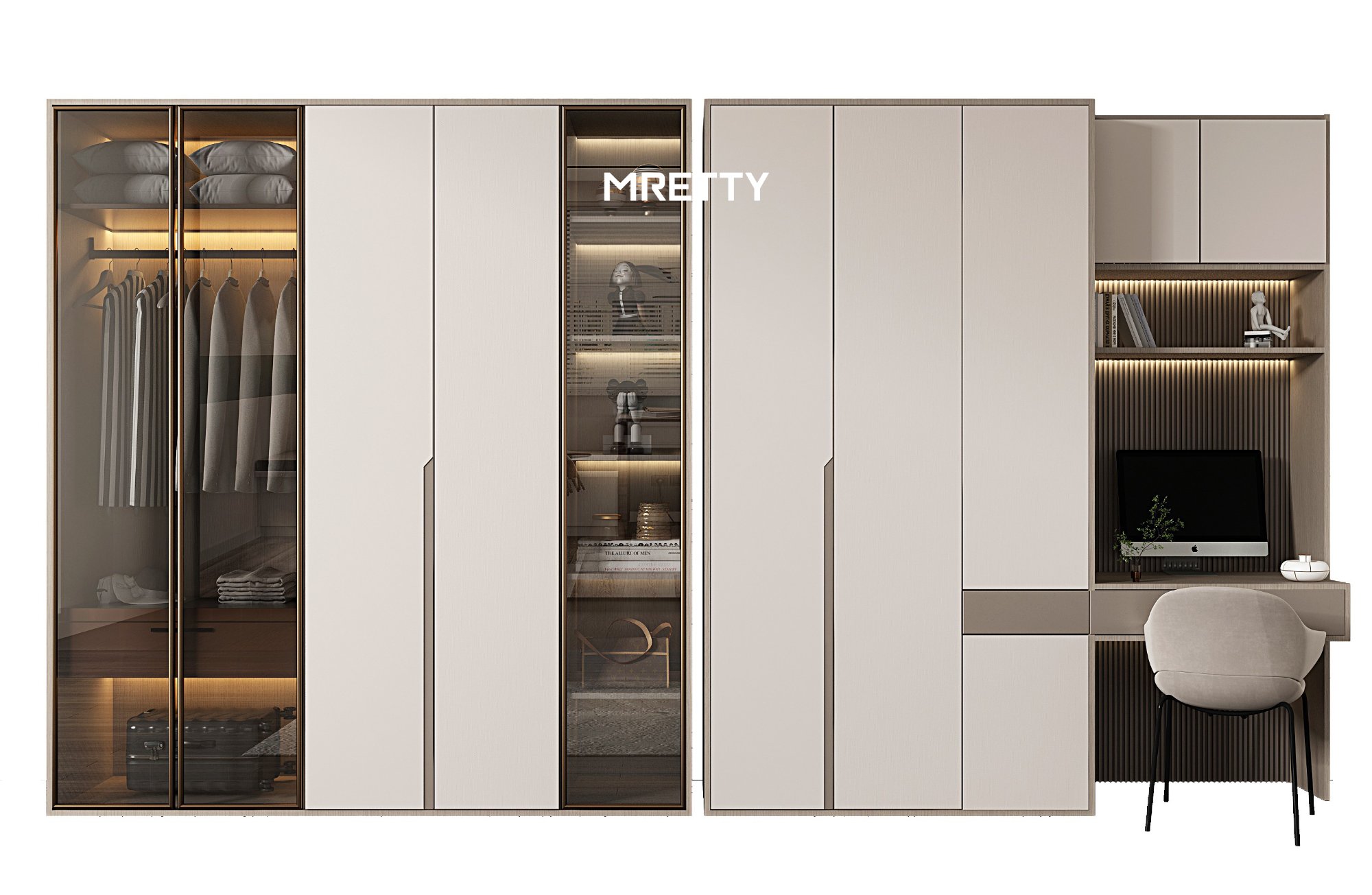
2. Custom Joinery vs. Imported Modular Systems: A False Dichotomy?
A key decision for Singaporeans is choosing between local custom joinery and imported modular systems. Both have merits, but my experience shows significant trade-offs exist for small spaces.
Here is a direct comparison based on our project analysis.
| Feature | Local Custom Joinery | Imported Modular Systems (e.g., Poliform) |
| :--- | :--- | :--- |
| Fit & Flexibility | Excellent. Adapts to any odd corner. | Poor. Limited by standard module sizes, leaving gaps. |
| Finish & Quality | Inconsistent. Heavily reliant on individual carpenter skill. | Excellent. Factory-grade precision and finishes. |
| Materials | Standard locally sourced boards. | Premium certified materials and hardware. |
| Cost | Generally lower initial cost. | High price tag, plus the "cost" of wasted space. |
This is where MRETTY's hybrid model offers an advantage. We combine the precision and materials of imported systems with the perfect-fit customization of local joinery. This is made possible by our own 15,000 sqm smart factory. We use globally sourced eco-friendly panels and top-tier hardware like Blum or Hettich. Then, we manufacture every piece to the exact millimeter of your home.
In the MRETTY vs. Poliform for small spaces comparison, MRETTY delivers similar material quality but with total customization capability. This eliminates the wasted space inherent in modular systems.
In a recent Punggol BTO project, an air-raid shelter protrusion created an irregular living room shape. A modular system would have left a 15 cm gap. We designed a media console and storage unit that integrated perfectly around it. Contrast this with a 1990s condo we worked on in East Coast Road. We had to contend with low beams and uneven walls. Our "factory-first" process allowed us to produce panels with precise non-standard angles, achieving a true floor-to-ceiling seamless fit.
❌ Common Mistake: Assuming imported brands offer truly tailored fitting. They often just adjust standard modules, leaving costly gaps.
✅ The Right Approach: Seek a factory-direct solution that designs furniture to your home's exact dimensions for a true wall-to-wall finish.
3. Step-by-Step Guide to Bespoke Furniture for Compact Homes
Transparency in process is key to a successful outcome. At MRETTY, we have streamlined our workflow to be clear and client-centric. This is the step-by-step guide to bespoke furniture for small homes.
- Deep Consultation. This is more than measuring. We discuss your lifestyle, storage pain points, and aesthetic goals. We analyze your floor plan for opportunities in vertical space and multi-functional design.
- 3D Visualization & Material Selection. Our designers create detailed 3D models of your space with the proposed furniture. You see exactly how it looks. You then select finishes from our curated library, from Italian laminates to durable quartz.
- Precision Manufacturing. Once you approve the design, the plan moves to our smart factory. Advanced CNC machinery cuts every panel with sub-millimeter accuracy. This precision is unattainable with manual on-site joinery.
- Professional Installation. Our in-house team assembles the furniture on-site. All parts are pre-fabricated to exact specifications. This makes installation clean, fast, and minimally disruptive—often 70% faster than traditional carpentry.
This factory-driven process is why MRETTY Singapore bespoke furniture reviews consistently highlight our quality and precision.
The most common misconception I see in consultations is clients asking for "as many cabinets as possible." They focus on the quantity of storage, not the quality. I steer the conversation toward usability. Do you need deep drawers for pots or shallow ones for cutlery? Do you need space to hang long dresses? A few well-designed, easily accessible compartments are far more valuable than a dozen deep, dark cabinets you can't reach into.
❌ Common Mistake: Focusing only on the final design while ignoring the manufacturing process. Poor production ruins a great concept.
✅ The Right Approach: Ask your provider how and where the furniture is manufactured. A dedicated factory ensures higher precision, better finishes, and greater durability.
4. Best Material Choices for Bespoke Furniture in Singapore’s Climate
Material selection is about durability, especially in Singapore’s humid environment. The wrong material will warp, grow mold, or de-laminate. My focus is on specifying materials that are both beautiful and resilient.
According to the Meteorological Service Singapore, our average relative humidity frequently exceeds 80%. This is a critical factor in furniture material science.
Here are the best materials for bespoke furniture in Singapore’s climate:
High Moisture Resistance (HMR) Substrates: Standard particleboard swells in damp conditions. We use High Moisture Resistance particleboard or Medium Density Fiberboard (MDF) as substrates. They offer superior stability against moisture.
European Standard Laminates: The surface is the first line of defense. We use high-pressure laminates (HPL) from reputable Italian and German suppliers. They are thermally fused to the substrate, creating a non-porous, scratch-resistant surface.
Low-Formaldehyde Adhesives: Indoor air quality matters. MRETTY uses only boards that meet or exceed the European E1 standard for low formaldehyde emission. This ensures a healthier home environment, especially in smaller apartments.
- Austrian & German Hardware: Moving parts are common failure points. We use soft-close hinges and drawer runners from brands like Blum or Hettich. They are tested for over 200,000 open-close cycles, ensuring your BTO multi-functional furniture checklist operates smoothly for decades.
MRETTY provides a lifetime functional warranty on all Blum and Hettich mechanisms we install. This is a significant upgrade from the typical 1-2 year workmanship warranty offered by most local carpenters, which usually excludes hardware failure. Our warranty reflects our confidence in using components built to last.
❌ Common Mistake: Choosing materials based on the lowest Singapore high-end bespoke furniture price without checking moisture resistance or emission standards.
✅ The Right Approach: Prioritize certified E1 low-emission materials and HMR substrates. It is a slightly higher initial investment that prevents costly replacements down the road.
Conclusion: Reimagining Your Space
The notion that small homes cannot be luxurious is outdated. Through smart design, precision manufacturing, and climate-adaptive materials, custom furniture designed specifically for Singapore’s compact residences can significantly elevate your space. It enhances both utility and value.
The solution is not more square meters, but smarter square meters.
MRETTY: Premium Bespoke Kitchen & Cabinet Systems Provider in Singapore.
