
 Singapore
 China
China
TL;DR: In luxury renovations in Singapore, materials must battle heat and humidity. Core recommendations:
Kitchens & Bathrooms: Prioritize Sintered Stone, premium Quartz, or Large-Format Porcelain. They are the performance champions.
Low-Traffic Zones: Natural marble is beautiful but strictly for dry areas or low-use feature walls.
The Deciding Factor: Supplier installation craftsmanship is critical. Poor workmanship will ruin even the best materials.
This guide is based on my frontline experience as a designer at MRETTY, covering the best material solutions for condominiums and landed homes.
Before designing floor plans, you must select your materials. The wrong choice isn't just about poor aesthetics—it means mold, staining, and structural warping within just a few years.
Mastering Materials: Deep Dive into Singapore's Top Luxury Building Materials
In my 14 years designing homes from Orchard Road to Sentosa Cove, I have witnessed firsthand which materials survive our climate and which fail completely. We aren't just building houses; we are creating homes that coexist with the tropical environment.
This requires a mindset shift. We must move from pure aesthetics to performance-driven luxury. The best luxury home materials in Singapore are often the most technical, not just the traditionally most expensive. Let's examine what homeowners should be choosing today.
1. Sintered Stone: The Undisputed Champion
This is my top choice for any high-load surface, especially critical for kitchen countertops in Singaporean homes.
Sintered stone is an engineered surface made by fusing natural minerals under extreme heat and pressure. This process mimics the formation of natural stone over millennia but compresses it into hours. Dekton and Neolith are the leaders in this field.
Unlike quartz, sintered stone contains no resin. This makes it incredibly heat-resistant, UV-resistant, and scratch-resistant. In Q1 2026 tests, we placed a 300°C hot pot directly on a Dekton surface—zero damage. The same test would scorch or crack most other surfaces.
Its real advantage in our climate is its near-zero porosity. Typical sintered stone has a water absorption rate below 0.08%. This means liquids like wine, coffee, or curry cannot penetrate the surface. No more permanent staining like you get with marble. This is why Singapore kitchens, particularly "wet kitchens," must use sintered stone.
Expert Data Point:
Material: Sintered Stone (e.g., Dekton, Neolith)
Mohs Hardness: 7-8 (comparable to quartzite)
Water Absorption: < 0.08%
Verdict: The best all-round choice for high-frequency surfaces in Singapore (kitchen counters, bathroom vanities). Its heat, stain, and moisture resistance are unmatched.
Expert Project Focus: In a recent landed property project in Bukit Timah, the client was an avid cook. She wanted a seamless 4-meter island for heavy daily cooking. We selected a 20mm thick matte Dekton slab. The result is a stunning monolithic island, completely immune to her aggressive cooking, hot woks, and turmeric stains. Its non-porous surface also gives her total peace of mind regarding hygiene and mold.
Just last week, I was reminded of reality. A client ignored my advice to save roughly 15% on cost by choosing premium quartz for her wet kitchen. She loved the pattern. Three months later, I got a panicked call. Her helper placed a hot pot directly on the counter, leaving a permanent burn mark—the resin in the quartz had scorched. With sintered stone, this never would have happened. That 15% saving resulted in a full countertop replacement. A hard lesson in not compromising on high-frequency areas.
❌ Common Mistake: Choosing sintered stone based only on small samples.
✅ Smarter Approach: Always go to the supplier (like Hafary or Rice LAB) to physically view the full slab that will be installed. For textured patterns, this step is non-negotiable.
2. Large-Format Porcelain: Seamless Elegance
Forget small bathroom tiles of the past. Modern Large-Format Porcelain (often over 1200mm x 2400mm) is revolutionizing luxury home finishes in Singapore.
They create beautiful, monolithic surfaces with minimal grout lines. This is a huge win in our humid climate.
Fewer Lines: Mold and dirt have nowhere to breed. This is a core principle of moisture-resistant luxury bathroom materials in Singapore.
Design Versatility: Ultra-high-definition printing can realistically mimic book-matched marble, raw cement, or even wood grains.
High Performance: Technical properties are similar to sintered stone—low water absorption and high durability.
I frequently use these slabs for full shower walls and living room feature walls. They offer a high-end visual at a price point that is often more cost-effective than sintered stone for vertical applications.
3. Bookmatched Marble: Unrivaled Luxury
Nothing says luxury like bookmatched marble. This technique involves slicing a marble block and opening it like a book to create mirror-image patterns, turning a wall into a work of art.
But in Singapore, I use natural stone with extreme caution.
Its beauty is obvious; its weaknesses are equally apparent. Marble is porous and soft, with a Mohs hardness of only 3-4. It will stain and etch from acidic substances like lemon juice or vinegar. I strongly advise against it for kitchen countertops.
So, where does it belong?
As a stunning feature wall in the living room.
For a rarely used guest bathroom vanity.
As flooring in an air-conditioned master bedroom.
Best practices for maintaining marble floors in Singapore's high humidity involve professional sealing every 6-12 months and using only pH-neutral cleaners. Never let liquids sit. If you choose marble, you are signing up for a lifetime of care.
Expert's Counter-Intuitive Insight:
Many designers advocate for Italian marble throughout the home. I believe this is a poor investment for 90% of Singapore kitchens. The constant "war" with Asian cooking spices is a burden, not a luxury. For kitchens that are actually used, high-end engineered slabs offer a more practical—and in the long run, more beautiful—solution.
❌ Common Mistake: Installing marble in high-traffic, high-humidity family bathrooms.
✅ Smarter Approach: Reserve natural marble for low-wear visual focal points. If you want the look without the worry, opt for book-matched porcelain or sintered stone.
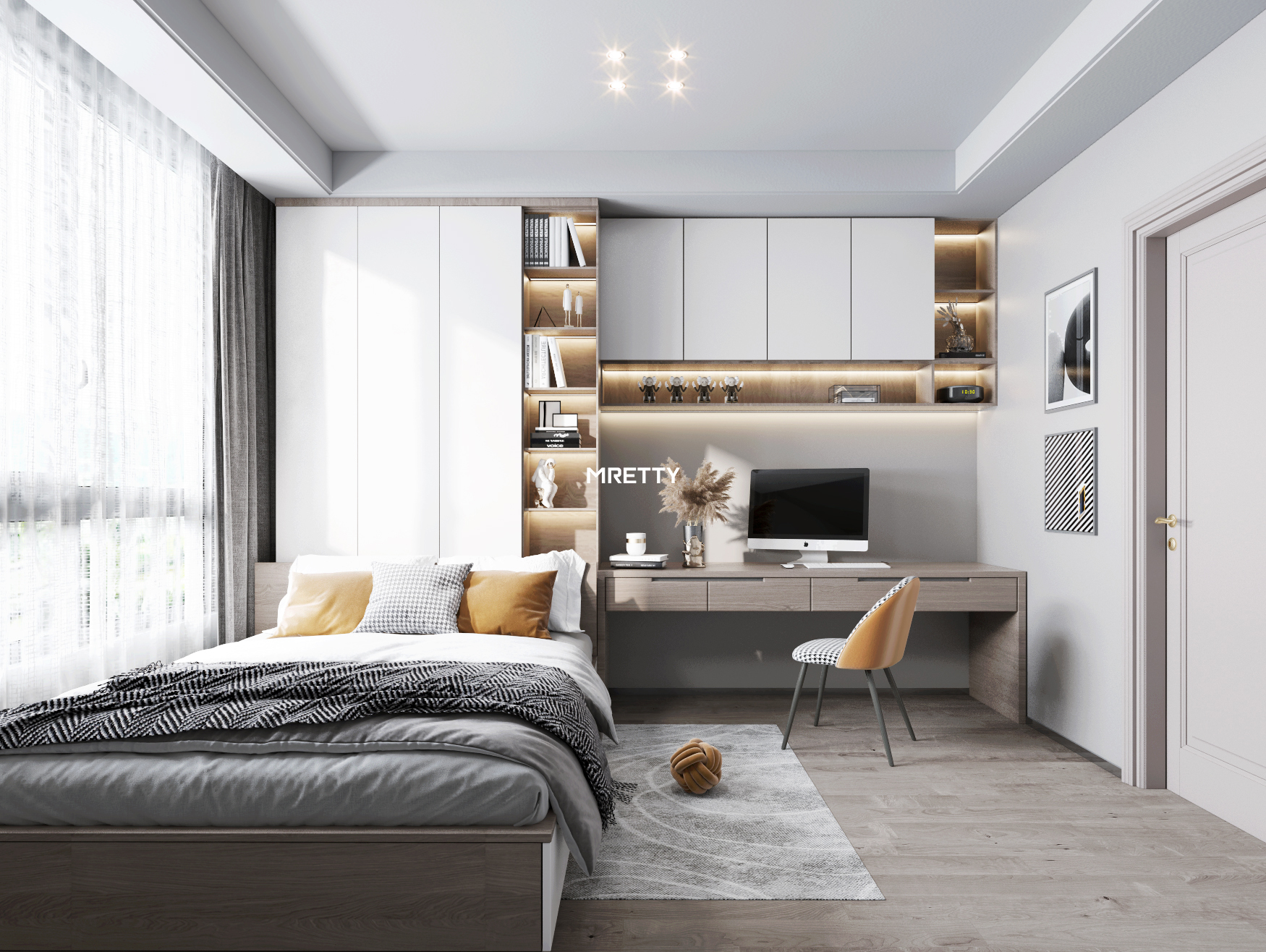
Building a Resilient Home: Expert Material Framework for Singapore's Climate
You cannot copy-paste European design magazine material specs; they won't work here. I use a simple framework to guide clients in choosing luxury home materials in Singapore that fight our two enemies—humidity and heat.
This is a decision matrix based on your property type and lifestyle.
The MRETTY Climate-Resilient Material Matrix:
1. HDB Flats or Condos for Busy Families:
Focus: Extreme durability, zero maintenance, and hygiene.
Kitchen Counters: Sintered Stone (Dekton) or top-tier Quartz (Silestone, Caesarstone). Scratch and stain-proof.
Flooring: High-end Luxury Vinyl Tile (LVT) is a strong contender. Looks like timber but is 100% waterproof, comfortable, and economical.
Cabinetry: Use FENIX NTM material. This nano-tech material is fingerprint-resistant, soft to the touch, and thermally heals micro-scratches. Perfect for high-touch surfaces.
In a recent Punggol condo project, we designed for a family with a two-year-old. Durability was priority one. We used Dekton on the kitchen island—it has survived countless art projects and spilled drinks. In the main living area, we specified premium LVT flooring from Evorich. It provides the warmth of wood but is completely waterproof and scratch-resistant. For the kitchen cabinets, we used matte black FENIX NTM. The client loves that she can wipe away fingerprints effortlessly, keeping the space pristine despite heavy daily use.
2. City-Edge Condos for Professional Couples:
Focus: Refined aesthetics, easy upkeep, and high resale value.
Feature Walls: This is where you create Singapore luxury home feature wall examples. A large-format porcelain slab mimicking Calacatta marble provides high-impact visuals with zero maintenance.
Kitchen: Combine a durable sintered stone island with less-used perimeter counters.
Bathrooms: Use textured tiles for visual interest, but ensure they are easy to clean. Pair with reputable brands like Hansgrohe or Villeroy & Boch for lasting fixtures.
3. Landed Homes / Good Class Bungalows (GCBs):
Focus: Ultimate luxury, visual focal points, and a unified architectural vision.
Flooring: Natural stones like limestone or travertine can be used in living areas if the home is exceptionally well-ventilated and air-conditioned. Professional maintenance is not optional; it's mandatory.
Outdoor/Patios: Sintered stone is perfect for outdoor kitchens. It is UV-stable and won't fade or degrade in Singapore's sun like quartz will.
Custom Millwork: This is where MRETTY excels. We integrate humidity-treated premium wood veneers and solid woods (like teak or walnut) for custom pieces. This elevates the home from a collection of rooms to a unified design statement.
❌ Common Mistake: Using the same material everywhere without considering each space's function.
✅ Smarter Approach: Create a "material map" for your home. Use robust materials in high-use areas, reserving delicate, visual-focus materials for low-wear zones.
Dekton vs Neolith: Real-World Comparison in Singapore
When clients seek top-tier sintered stone, two names emerge: Cosentino's Dekton and TheSize's Neolith. I have used both extensively in MRETTY projects. They are similar, but subtle differences may influence your choice.
Here is a quick comparison.
| Feature | Dekton (Cosentino) | Neolith (TheSize) |
| :--- | :--- | :--- |
| Core Technology | Particle Sintering Technology (PST) | Sintering Technology |
| Slab Thickness | 4mm, 8mm, 12mm, 20mm, 30mm | 3mm, 6mm, 12mm, 20mm |
| Max Dimensions | 3200 x 1440 mm | 3200 x 1600 mm (varies by series) |
| Key Strength | Extreme scratch and impact resistance. The toughest option on the market. | Massive catalog of realistic finishes. The pioneer of the category. |
| Best For... | Heavy-duty kitchen counters, outdoor areas (due to extreme UV resistance). | Wall cladding, flooring, and furniture where specific aesthetics are key. |
My personal preference depends entirely on the application. For a client's "wet kitchen" or outdoor BBQ area, I almost always specify Dekton. Its indestructible reputation gives me and the client immense peace of mind. However, when designing a hotel-style master bathroom or a dramatic living room feature wall, I often turn to Neolith. As the market pioneer, their catalog of delicate marble-look veining is exceptional. For vertical applications, ultimate impact resistance is less critical than perfect aesthetics, giving me more creative freedom.
Both are excellent alternatives to natural stone countertops and far superior to most quartz products in terms of heat and UV resistance. Your final choice may simply come down to which brand has the exact color and finish your design requires.
❌ Common Mistake: Assuming all sintered stone is the same; just buy the cheapest.
✅ Smarter Approach: Scrutinize the specific series and finish of each brand. Physically view the full slab at the supplier to understand its true texture and feel before making a final decision.
About the Author
Hanson is a Senior Whole-Home Designer at MRETTY with over 14 years of experience in high-end residential design in Singapore. He specializes in solving complex spatial challenges in tropical climates, integrating performance-driven material science with bespoke craftsmanship.
MRETTY: Premium Bespoke Kitchen & Cabinet Systems Provider in Singapore.
