
 Singapore
 China
China
TL;DR
Understanding the core difference between a Home Extension and a Renovation is crucial for Singapore homeowners. Renovation involves upgrading within your existing footprint; extension literally adds new floor area. They differ vastly in engineering scope, structural impact, regulatory approvals (URA / HDB / BCA), costs, and timelines. This MRETTY guide provides a clear comparative framework to help you make an informed choice based on your needs, budget, and design vision—especially when integrating bespoke furniture and whole-home custom systems.
1. Introduction: Upgrading Your Singapore Home
Singapore homeowners often face the same question: How do I make my current living space work better? This leads to a core choice—Home Extension or Renovation? Both paths can elevate your property, but the processes, costs, and outcomes are worlds apart. Understanding these fundamental differences allows you to align your decision with your lifestyle, budget, and long-term asset planning. With deep expertise in high-end bespoke furniture and interior design, MRETTY is here to help you think through, calculate, and flawlessly execute this choice.
2. What is a Home Extension in Singapore?
A Home Extension = Adding brand-new physical space to your existing building structure. This means your total gross floor area (GFA) literally increases.
Typical examples include:
- Adding a multi-functional room at the rear of the house
- Building an attic or half-level upwards
- Pushing the living area outward to enlarge the communal zone
These projects typically involve new foundations, additional load-bearing walls/columns, and roof system extensions, often altering the building's external facade. For Landed Property, this means adding floors or expanding sideways within legal limits. For HDB flats, options are strictly limited to very few exceptions, with expansion being fundamentally prohibited.
3. What is a Home Renovation in Singapore?
A Home Renovation = Enhancing the quality of your existing space within the legal footprint. It doesn't increase total area, but it can transform your home inside out.
Renovation can be "lightweight"—repainting, retiling, updating kitchen/bathroom finishes—or "heavy-duty" internal reconfiguration. This might involve hacking non-load-bearing walls to create open-plan living-dining-kitchen layouts, overhauling the storage system, or introducing a whole-home custom cabinetry system. The goal is: Without getting bigger, make every square meter more beautiful, more livable, and more aligned with your life. This is precisely where high-caliber Singapore interior design delivers maximum value.
4. Core Comparison: Key Differences Between Extension and Renovation
Knowing "Where exactly do extensions and renovations differ?" impacts every step from initial conception to final handover. Here is a quick overview:
| Dimension | Home Extension | Home Renovation |
| Primary Goal | Increase usable space, grow total square footage | Enhance aesthetics, function, and comfort within existing area |
| Structural Impact | Major: New foundations, walls, roofing; affects structural integrity | Usually Non-structural: Internal reconfiguration, finish updates |
| Approval/Compliance | Complex: URA for Landed; BCA for structural safety; HDB virtually prohibits it | Relatively Simplified: Standard HDB permits for internal works; lighter processes for non-structural changes in condos/landed |
| Cost | Higher—New construction + materials + longer timeline = higher labor & hidden costs | Highly flexible; generally lower than extensions, but high-end renovations (imported materials + major reconfiguration + premium finishes) can also be costly |
| Timeline | Longer—Typically 6–12 months for landed properties (design + permits + construction + finishing) | Shorter—Large-scale renovations typically take 2–4 months, offering more predictability |
| Impact on Property Value | Significant appreciation (legal added area is hard asset value) | Improves livability and appeal; appreciation is usually less direct than "adding a room" |
4.1 Structural Changes and Space Addition {#Structural Changes and Space Addition}
- Extensions involve substantive structural intervention—new foundations, new vertical load systems, new roof drainage paths... Its purpose is to physically enlarge the home, directly affecting structural integrity and the building footprint.
- Renovations operate mostly within non-structural limits. The most "destructive" act is removing partitions and rezoning functions. It does not increase total area but focuses on making the existing volume more functional and visually appealing.
4.2 Approvals and Regulations: URA, HDB, and BCA {#Approvals and Regulations URA HDB and BCA}
- Extensions require passing several checkpoints. The Urban Redevelopment Authority (URA) governs land use and planning envelopes (for landed properties); the Building and Construction Authority (BCA) reviews structural safety and contractor qualifications. Extensions are fundamentally disallowed in the HDB context.
-
Renovations have a much friendlier permit threshold,
especially when no load-bearing or exterior wall alterations are involved. HDB homeowners cannot extend but can proceed with internal modifications (hacking non-load-bearing walls, redoing kitchens/bathrooms, installing whole-home custom joinery systems) via standard application processes.
💡 Key Point: Many assume "renovation = hack anything." In reality, HDB has strict rules on which walls can be touched, how deep false ceilings can be, and whether you can hack down to the cement screed—ignoring these rules leads straight to trouble.
4.3 Cost Investment and Property Value {#Cost Investment and Property Value}
- Extensions require larger upfront investment: civil works, concrete, waterproofing, new M&E lines... Longer timelines also increase labor costs and potential temporary accommodation expenses (budget overruns can reach 15–25% of initial estimates).
- Conversely: Every legally added square meter directly injects net asset value—especially for landed properties extending within URA's envelope.
- Renovations are generally cheaper than extensions, but—
> Here is a "counter-intuitive" fact: Many default to thinking renovations are cheap. But when you go high-end—large-scale reconfiguration + imported countertops + whole-home custom joinery systems + premium hardware and smart lighting—the per-square-foot cost can rival or even exceed a "basic version" extension. So don't just look at the absolute total; look at what outcome you are buying.
4.4 Timeline and Complexity {#Timeline and Complexity}
- Extensions involve a multi-disciplinary chain: Architectural drawings → URA/BCA submissions → Civil contractor mobilization → Structural inspections → Interior finishing. Variables (soil conditions, weather, neighbor complaints, permit revisions) make project management demanding.
- Renovations follow a more linear, predictable rhythm. A deep renovation for a 4-room HDB flat (including hacking + whole-home custom cabinets + kitchen/bathroom overhaul) typically falls within an 8–12 week timeframe.
5. Regulations and Permits for Singapore Home Projects {#Regulations and Permits for Singapore Home Projects}
In Singapore, compliance is not "administrative paperwork"; it is the bottom line determining whether your project survives delivery. As of 2026, guidelines continue to evolve, with regulators paying increasing attention to sustainable construction, facade integrity, drainage, and structural safety.
5.1 URA Home Extension Guidelines {#URA Home Extension Guidelines}
For Landed Property owners, the Urban Redevelopment Authority (URA) sets strict red lines:
- Gross Floor Area (GFA) Limits—How much you can build depends on the plot ratio and zoning controls.
- Setbacks—Minimum distances required from roads/boundaries.
- Eave Height/Storey Limits—You cannot build as high as you wish.
- Facade Character—Certain conservation areas have requirements for exterior materials and window proportions.
Any extension plan must be submitted to URA for planning permission via a qualified architect. "Unauthorized extensions" = forced dismantling back to the original state + fines, costing far more than the time saved skipping procedures.
5.2 HDB Renovation vs. Extension: Your Options {#HDB Renovation vs Extension Your Options}
HDB flats are fundamentally standardized public housing, therefore:
- ✅ Renovation: Widely practiced—updating kitchens/bathrooms, hacking non-load-bearing walls for open layouts, replacing floor finishes, installing whole-home built-in custom cabinet systems.
- ❌ Extension: Fundamentally disallowed. You cannot push your unit outward by an inch or enclose balconies into living space.
Approximately 90% of HDB home improvements fall under the "Renovation/Internal Modification" category. HDB requires formal applications/registrations for almost all work scopes—especially those involving wall alterations, floor hacking, or pipe relocations.
5.3 BCA Safety Regulations for Extensions {#BCA Safety Regulations for Extensions}
The Building and Construction Authority (BCA) governs baseline safety. Any extension involving structural elements must undergo BCA review and be endorsed by a Qualified Person (QP, typically a registered structural engineer/architect). BCA focuses on: whether new load transfer paths are logical, whether connection nodes between old and new structures are reliable, and whether safety measures for adjacent properties are in place during construction. This is not a negotiable step; it is a mandatory statutory threshold.
6. Crunching the Numbers: Extension vs. Renovation Costs
Money is unavoidable. The cost spectrum for Extensions vs. Renovations in Singapore is wide, but some patterns hold:
| Cost Driver | Home Extension | Home Renovation |
| :--- | :--- | :--- |
| Hard Structure Costs | High (Concrete, steel, scaffolding, waterproofing, roofing) | Low/None (unless heavy hacking is involved) |
| Design & Permits | Architect + QP + URA/BCA fees | Interior Designer/Firm fees (no structural permit costs) |
| Custom Interior Fit-out | New spaces still require high-quality interior finishing | Whole-home custom cabinets/kitchen systems are the main cost center |
| Hidden Costs | Long timeline → Temporary accommodation, buffer for overruns | More controllable, but contingencies are still necessary |
When MRETTY assists clients with budget planning, our core principle is: Invest where it defines visual unity and daily durability—such as a unified whole-home material system (consistent finishes/hardware standards), high-frequency usage countertops/hardware, and holistic storage architecture that eliminates clutter. Compared to the "multiple payment trap" of buying furniture piecemeal, a calculated custom system often yields higher long-term ROI (Return on Investment perception).
7. How to Choose the Best Option for You: Extension or Renovation?
The "best option" is never about which sounds more impressive, but which matches your property type + actual needs + affordability.
7.1 Landed Property Homeowners {#Landed Property Homeowners}
You have more room to maneuver. Extensions can allow a landed home's layout to truly breathe—adding an extra bedroom, expanding the kitchen into a prep pantry, or adding a master suite with a rooftop terrace. But this must strictly adhere to URA GFA/Setback limits and pass BCA structural scrutiny. If your plot has already maxed out its plot ratio, then "internal renovation + wall removal for openness" becomes the optimal solution.
7.2 HDB Flat Owners {#HDB Flat Owners}
The reality is straightforward: Your option = Renovation (Internal Modification). Since you cannot steal space outward or upward, you must win the battle through smarter spatial planning—
- Using built-in custom joinery to "grow" storage into walls, freeing up visual floor space.
- Hacking non-load-bearing partitions for an integrated living-dining-kitchen layout, eliminating wasteful corridor space.
- Using material and lighting strategies to make a ~90 sqm 4-room flat feel expansive.
Many clients initially feel "it's hopeless without an extension." After implementing a whole-home custom solution, they realize: The bottleneck for HDB flats is often not square footage, but cluttered storage and fragmented layouts.
7.3 Growing Families {#Growing Families}
Children growing up, elderly parents moving in, permanent work-from-home arrangements—these force a recalculation of spatial needs. If you are landed and legally allowed to extend, the value of an extra room is direct. If extension is not an option, focus your renovation on:
- Multi-functional zones (studies that can be hidden or opened).
- High-density hidden storage (toys/files/seasonal items all go into the walls).
- More durable finish systems (impact-resistant, easy to clean, age-proof).
7.4 Extension vs. Renovation Planning Checklist {#Extension vs Renovation Planning Checklist}
Before deciding, go through this checklist item by item:
| ✅ Step | Key Question to Ask Yourself |
| :--- | :--- |
| 1. Needs Definition | Do I lack space (need Extension) or lack efficiency/aesthetics (Renovation suffices)? |
| 2. Budget Baseline | What is the real cash available? Is there a 15–20% emergency buffer? |
| 3. Property Type Constraints | HDB / Condo MCST / Landed URA controls—what is your legal operating radius? |
| 4. Time Pressure | Can you withstand a 6–12 month extension period? Or is a 2–3 month completion more realistic? |
| 5. Long-term Asset View | Is this spending for self-enjoyment, or also a bet on resale appeal? |
| 6. Professional Timing | Who comes in first—Architect/QP/ID/Custom Fabricator? Early alignment = fewer reworks. |
8. Integrating Interior Design and Custom Furniture into Your Project
Whether you choose extension or renovation, the ceiling of the final quality is not determined by "how expensive the tiles are," but by how tightly your custom systems integrate with your interior language. MRETTY's whole-home custom philosophy centers on this: furniture should not feel like separately bought items, but like structures that "grew" with the house.
8.1 How MRETTY Empowers Newly Extended Spaces {#How MRETTY Empowers Newly Extended Spaces}
An extension is a blank canvas, but it must be stitched visually and functionally to the old zone—not like a shipping container welded to the side. MRETTY's interior planning intervenes early, ensuring the new space's material palette, linear proportions, appliance, and storage logic form a single, unified design language with the existing areas. Custom furniture is cut to the precise dimensions of the extended space—no unsightly filler strips, no compromised sizing, just an innate sense of "it was always meant to be this wide."
8.2 Custom Furniture Strategy in Renovated Homes {#Custom Furniture Strategy in Renovated Homes}
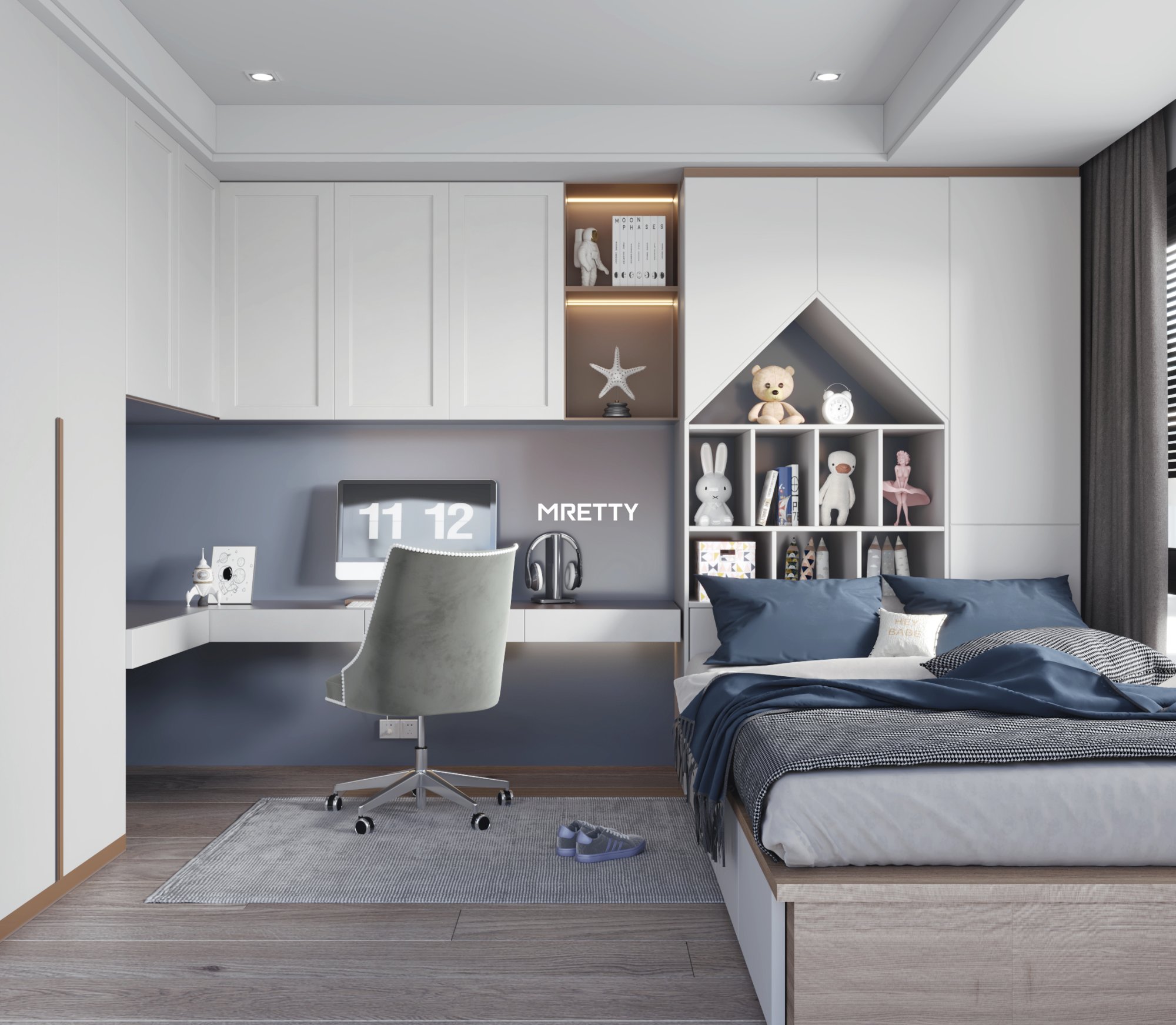
Even without adding area, customization revolutionizes the experience. MRETTY's premium kitchen and whole-home cabinetry systems can turn:
- Previously wasted recesses in load-bearing walls → Into floor-to-ceiling storage columns.
- Previously scattered low cabinets → Into a clean horizontal mass (TV/display/hidden storage in one).
- Previously "homeless" clutter → Into fully hidden systems.
The result: Visual noise plummets, and the sense of space actually "expands."
8.3 Impact of Extensions on Custom Furniture Design {#Impact of Extensions on Custom Furniture Design}
Extensions alter the home's circulation flow and sightlines—the living room may shift, the dining area may gain a new exterior wall, corridors may shorten. These directly rewrite the scale and layout logic of the furniture. Therefore, custom solutions must be synchronized at the stage when the extension layout is finalized (not waiting until after civil works to "see what fits"), ensuring:
- Correct proportions (cabinet depth/counter height/clearance widths meet ergonomics).
- Stylistic continuity (same material batches for old and new zones, no color mismatch).
- Functional closure (storage capacity expands proportionally with added area, not randomly).
9. Frequently Asked Questions (FAQ)
Q: Can HDB flats really not be extended at all?
Fundamentally, you cannot expand outward or add levels without authorization. HDB's standard answer: all spatial improvements are achieved via internal renovation/reconfiguration. The only "external" operations (like replacing/installing approved laundry racks or specific window grilles) must strictly follow HDB's permitted list.
Q: How long does it take to add a level to a landed property?
From design to completion, the common range is 6–12 months, with the permit phase alone potentially taking 2–3 months (depending on URA/BCA back-and-forth). Don't trust verbal promises of "3-month handover"—ask how they plan to pass legal compliance.
Q: Will renovation be much cheaper than extension?
Not necessarily. Light renovations are certainly cheaper, but if your goal is "comprehensive reconfiguration + whole-home custom joinery systems + high-end finishes + full M&E rewiring," the bill climbs quickly. The benchmark should always return to: What level of change do you actually need?
Q: Does whole-home customization (Joinery) count as renovation or extension?
It falls under interior fit-out within renovation (does not alter the building envelope/structure), but it is the one aspect of renovation that most elevates the look to "post-extension luxury"—because unified materials + hidden storage + seamless lighting are the three pillars of high-end quality.
10. Conclusion: Your MRETTY Transformation Awaits
The essential divergence between Extension and Renovation boils down to two statements:
- Home Extension answers: "I need more legal space and am willing to trade a longer timeline and more complex process for it."
- Home Renovation answers: "Within my existing shell, I want to maximize every inch, upgrading texture, storage, and living flow."
Neither is inherently superior. Only one is right for your house, your wallet, your timeline, and your family stage. As long as you see the regulatory boundaries clearly, calculate the real costs, and use a consistent design language to unify the execution—regardless of the path, the result will be a home that understands you better, lasts longer, and possesses holistic aesthetic integrity.
MRETTY is here to translate this complex choice into a clear plan, and then nail that plan into reality.
11. About the Author
(Author bio placeholder)
12. References
- Urban Redevelopment Authority (URA)
- Housing & Development Board (HDB)
- Building and Construction Authority (BCA)
MRETTY: Premium Bespoke Kitchen & Cabinet Systems Provider in Singapore
