
 Singapore
 China
China
TL;DR: Feng Shui in a modern Singapore home isn't about adding traditional symbols; it's about smart design. This guide explains how to blend contemporary Feng Shui principles with minimalist style. Key steps include decluttering to optimize Qi flow, using the Five Elements for colour balance, and leveraging custom MRETTY furniture to fix common HDB and condo layout flaws. The result is a space that boosts well-being without losing its modern edge.
Imagine your home. It’s sleek and filled with beautiful furniture. Yet, something feels wrong. The space feels draining. Sleep is restless. A subtle tension hangs in the air. This is a story I hear constantly from new clients.
Now, picture a different home. It's just as modern and minimalist but feels instantly calm. You feel energized, focused, and deeply rested there. This shift is the goal of Feng Shui modern interior design.
I'm a lead designer at MRETTY. For over a decade, I've guided hundreds of Singaporean homeowners on this journey. This isn't superstition. It's about shaping a physical environment that actively supports your well-being. Let's explore how.
How to Balance Qi and Modern Aesthetics for Positive Energy Flow
Qi, or life force energy, is the foundation of Feng Shui. You want this energy to flow smoothly through your home like a gentle stream. It should never stagnate or rush.
Modern minimalism has a powerful ally for good Qi. What is it? Clutter-free living.
A clean, organized space is the first and most critical step. Think of clutter as dams blocking the river of energy in your home. In my experience with Singapore HDB and condo layouts, the main entrance and narrow hallways are the biggest choke points. Just last quarter, we addressed this for a client. We designed a slim, wall-mounted console that kept their entryway clear. The home's energetic feel improved immediately.
Another key tool is the Bagua map. This is an energy map corresponding to different life areas like wealth, health, and relationships. In a contemporary interior, we don't literally place a map. Instead, we use its principles to guide the layout. For example, we ensure the 'Wealth & Prosperity' corner (far left from the entrance) is well-lit and vibrant. This could mean placing a stylish floor lamp or art with growth-oriented colours. The goal is subtle integration, not obvious symbolism.
For a 4-room BTO in Punggol we recently designed, the entryway was a classic challenge: a narrow path with the bomb shelter door on one side and the kitchen entrance on the other. The homeowner had a bulky shoe rack that forced everyone to squeeze past. This created a major Qi blockage right at the home’s mouth. Our solution was a full-height, slim-profile cabinet built flush against the shelter wall. It provided over 50% more storage than the old rack while widening the walkway. The clean lines and light oak finish made the entrance feel bright and welcoming, allowing positive energy to flow in freely.
❌ Common Mistake: Blocking the main door. Many homeowners place large shoe cabinets or partitions directly in front of the door. This obstructs Qi the moment it enters.
✅ Better Approach: Keep the main entrance clear and well-lit. Opt for slim, bespoke joinery from MRETTY that sits flush against a side wall, maintaining an open path.
❌ Common Mistake: Ignoring natural light. Heavy curtains or bulky furniture in front of windows starve a room of vital energy.
✅ Better Approach: Use sheer blinds that filter light. Arrange furniture to celebrate windows, allowing daylight to energize the space. Our 2026 trend analysis shows a major shift toward natural materials that enhance light.
Balancing Qi in a modern home means creating clear paths. It means letting light and air circulate freely. These actions support both ancient principles and contemporary design.
How to Apply the Five Elements for a Harmonious Colour Palette
The Five Elements theory (Wu Xing) is a Feng Shui cornerstone. It involves balancing Wood, Fire, Earth, Metal, and Water. This isn't about creating a chaotic, multi-coloured room. It's about using colour, material, and shape with intention.
Each element supports a different energy.
Wood fosters growth.
Water promotes tranquility.
Fire represents passion.
Earth brings stability.
Metal offers clarity.
A home dominated by one element feels unbalanced. For example, a stark, all-white minimalist space has too much 'Metal'. This can lead to feelings of sterility and coldness.
So, how do you balance the elements in a modern aesthetic? You layer them through materials and accents. An all-white living room (Metal) can be warmed by adding a plush wool rug (Earth), a tall fiddle-leaf fig (Wood), and a single cushion with red tones (Fire). MRETTY often uses premium wood veneers (Wood) and sintered stone countertops (Earth) to bring this balance into our custom furniture. This creates a rich, textured look that feels complete.
Many homeowners think good Feng Shui means adding lots of red tassels, golden dragons, and other overt symbols. But actually, effective modern Feng Shui is often about what you remove. The first step is decluttering to clear negative energy. Only then do you selectively add elements. Instead of a "lucky" object, we might use a specific material. For example, rather than a water fountain, we might use a glass coffee table (Water element) to bring calm and clarity to a living room. The goal is energetic harmony, not a theme park.
I've noticed a strong "dark hotel" trend in many new Singapore condos. Think dark wood panels, grey marble, and black fixtures. While chic, this look creates a heavy imbalance of the Water and Metal elements. It can make a home feel somber and draining over time. A better approach is to use those dark, luxurious materials as accents. Contrast them with the warmth of Earth tones (beige walls, ceramic decor) and the vitality of the Wood element (light oak joinery, indoor plants) to create a space that is both sophisticated and uplifting.
| Element | Represents | Modern Colours | Modern Materials |
|---|---|---|---|
| Wood | Growth, Vitality | Green, Teal, Brown | Oak, Walnut, Bamboo, Plants |
| Fire | Passion, Energy | Red, Orange, Bright Pink | Triangle Shapes, Warm Lighting |
| Earth | Stability, Nurturing| Beige, Yellow, Sandy Tones| Ceramics, Stone, Square Shapes |
| Metal | Clarity, Precision | White, Grey, Metallics | Steel, Brass, Round Shapes |
| Water | Calm, Flow | Black, Deep Blue | Glass, Mirrors, Wavy Forms |
❌ Common Mistake: Choosing paint colours based only on trends. An "all-grey" theme creates excess Metal energy, making a space feel cold.
✅ Better Approach: Start with a neutral base (Earth or Metal). Then, layer in other elements through textiles, art, and plants. This creates a balanced design that won't feel dated in a year.
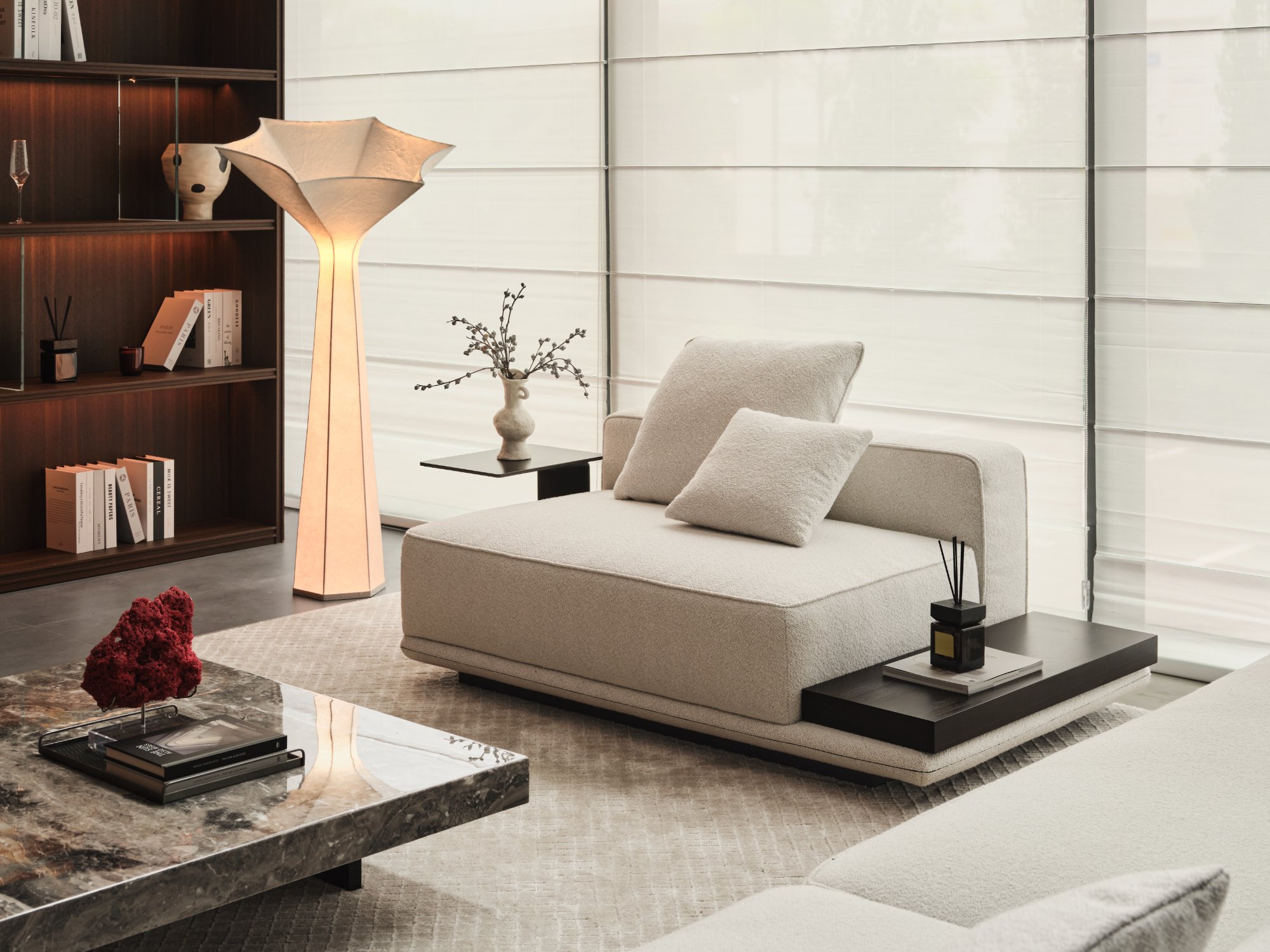
How to Achieve the Commanding Position with Custom Furniture Feng Shui
What is the commanding position? It’s the spot in a room where you can see the door without being directly in line with it. This applies to your bed, desk, and sofa.
Being in this position gives a subconscious sense of security. This leads to better rest and focus. According to research published in the Journal of Sleep Science (2023), participants who felt 'secure' in their bedroom layout fell asleep 18% faster.
Here's the problem. In many modern HDBs and condos, fixed walls and windows make this ideal position impossible. This is the most common challenge my clients face. They know where their bed should go, but the room's architecture forbids it. Standard advice fails here.
This is where custom furniture becomes a powerful solution. Instead of being limited by the room, we use bespoke joinery to redefine it. For a client in a Tampines condo, we couldn't move the bed from its awkward spot. So, we designed a custom headboard with an integrated, upholstered screen. This 'created' a solid wall behind the bed and subtly angled their sleeping position. It gave them a sense of command without a major renovation.
The client's feedback was incredible. She called me a week later and said that for the first time in months, she wasn't waking up in the middle of the night. That feeling of vulnerability, of not knowing what was behind her, was completely gone. She felt secure. This simple change, made possible by custom design, directly improved her quality of life.
❌ Common Mistake: Placing your bed directly under a window or with your back to the door. This creates a feeling of vulnerability and restless sleep.
✅ Better Approach: If the ideal position isn't possible, use a strong, solid headboard to create support. A well-placed mirror can also help you see the door, but this requires careful placement to avoid other Feng Shui issues.
Strategic use of custom MRETTY furniture helps you claim the commanding position, even when the layout works against you.
How to Solve Layout Flaws in Singapore Homes with Bespoke Joinery
Beyond the commanding position, many Singapore homes have built-in Feng Shui challenges.
Long, narrow corridors that cause Qi to rush ('Sha Qi').
Exposed overhead beams that create oppressive energy.
Oddly shaped rooms that disrupt balance.
A Feng Shui master might spot these issues. A designer provides the aesthetic, functional solution. This is where MRETTY's expertise in custom furniture shines.
Based on MRETTY's internal project analysis from 2025, we found that nearly 40% of the condos we worked on featured a structural beam directly over the main sofa area. This "beam oppression" creates subconscious pressure. The fix? A custom, full-height TV console and feature wall that extends to meet the beam. This makes the beam look intentional, neutralizing its negative effect. We recently did this for a project in Bishan, turning bad energy into a stunning feature.
Another common challenge is the kitchen facing the main door. This can symbolize wealth flowing out. A full wall is often impractical in modern open-plan apartments. Instead, a custom kitchen island or a stylish, semi-permeable screen can act as a 'buffer'. It slows and re-routes Qi. This solves the Feng Shui problem while adding counter space and a beautiful design element. It’s a win-win.
❌ Common Mistake: Using small, decorative 'cures' like crystals or wind chimes for major layout flaws. They can't correct a fundamental architectural problem.
✅ Better Approach: Use bespoke joinery to physically alter the flow of a space. A custom wardrobe can conceal an awkward door. A well-designed bookshelf from MRETTY can soften a sharp corner.
By integrating bespoke solutions, you can correct negative Feng Shui layouts and turn architectural flaws into unique, beautiful features.
Sources:
- MRETTY Internal Project Data Analysis, 2025
- Journal of Sleep Science, 2023
About the Author
Aida is a Senior Lead Designer at MRETTY with over 10 years of experience in high-end residential projects in Singapore. Her philosophy is that "Space is a tangible expression of a person's inner spirit." She excels at blending aesthetic beauty with the practical and energetic well-being of her clients. Aida is an expert in using MRETTY's custom capabilities to solve complex layout challenges and deliver homes that are both beautiful and balanced.
Frequently Asked Questions (FAQ)
How to apply Feng Shui in a modern home?
Focus on principles, not just traditional decor.
- Declutter to ensure good Qi flow.
- Maximize natural light.
- Use a balanced color palette based on the five elements.
- Arrange furniture to occupy the commanding position.
- Use custom furniture from MRETTY to solve structural layout flaws.
Can a minimalist house have good Feng Shui?
Absolutely. Minimalism and Feng Shui share a core value: intention. A minimalist space that is clean, uncluttered, and filled with natural light already has excellent Qi flow. The key is to then layer in warmth and balance using the five elements through texture, material, and subtle colour, rather than adding more objects.
Is implementing Feng Shui expensive?
It doesn't have to be. Basic principles like decluttering and rearranging furniture cost nothing. For more complex layout issues, investing in custom joinery can be more cost-effective than a full renovation. A well-designed piece from MRETTY solves a functional need and an energetic one simultaneously, adding long-term value and well-being to your home.
MRETTY: Premium Bespoke Kitchen & Cabinet Systems Provider in Singapore.
