
 Singapore
 China
China
A well-chosen entryway cabinet is more than mere furniture; it is the first greeting your home extends. This essential piece sets the tone, blending seamless functionality with a whisper of your personal style. Selecting the perfect entryway cabinet is an art of precision, where dimensions dictate both form and utility. An oversized cabinet can overwhelm a delicate space, while one too small may seem insignificant and fail to meet your storage needs. This guide illuminates the path to choosing an entryway cabinet of impeccable proportions, ensuring your home’s first impression is one of elegance and thoughtful design.
Why the Right Size Matters for Your Entryway Cabinet
The entryway is a threshold—a space of transition between the outside world and the inner sanctuary of your home. The furniture here must be perfectly balanced to create a sense of welcome, not obstruction.
The Impact on Flow and Functionality
The primary role of an entryway is to provide a clear and easy path into your home. A cabinet that is too large can create a bottleneck, disrupting the natural flow of movement. This is especially critical in smaller apartments or HDB flats where every square centimetre counts. A correctly sized cabinet ensures that walkways remain open, allowing for comfortable passage even when carrying groceries or welcoming guests.
It offers necessary storage for shoes, keys, and mail without sacrificing precious floor space. The goal is to enhance the area's utility, turning a simple passage into an organized and efficient zone.
Crafting the First Aesthetic Impression
Your entryway cabinet is a prologue to your home's design story. Its scale and proportion significantly influence the aesthetic atmosphere. A cabinet that harmonizes with the scale of the entryway feels intentional and sophisticated. It contributes to a sense of order and visual calm.
In contrast, a poorly sized piece can make the space feel cluttered, cramped, or empty. By selecting a cabinet that complements the architectural features and dimensions of your entrance, you create a curated and inviting vignette that captivates from the moment someone steps inside. MRETTYspecializes in crafting these bespoke moments, ensuring every piece is a testament to refined taste.
Standard Dimensions and Custom Variations
Understanding the typical sizes of entryway cabinets provides a solid foundation for your selection process. However, the true beauty of modern design lies in the ability to customize, creating a piece that is uniquely yours.
Common Cabinet Dimensions: A Starting Point
While "standard" can be a fluid term in home design, most ready-made entryway cabinets adhere to a general range of dimensions:
- Height: Standard heights typically range from 75 cm to 90 cm (approx. 30-36 inches). This counter-height surface is convenient for placing keys, mail, or decorative items. Taller, wardrobe-style cabinets can reach 180 cm (70 inches) or more, offering extensive vertical storage.
- Width: The width is highly variable. Slim console-style cabinets might be as narrow as 60 cm (24 inches), ideal for tight corridors. More substantial pieces can extend to 120 cm (48 inches) or wider, providing ample surface area and storage capacity for larger entryways.
- Depth: This is a crucial dimension for maintaining clear pathways. Standard depths range from 30 cm to 40 cm (12-16 inches). Slimmer profiles, around 20-25 cm (8-10 inches), are excellent for narrow halls where space is at a premium.
The MRETTY Advantage: Bespoke Creations
Standard sizes serve a purpose, but they often fall short of perfection. Irregular layouts, specific storage needs, and personal aesthetic preferences demand a tailored solution. This is where the power of bespoke design shines.
With a custom solution from MRETTY, you transcend the limitations of off-the-shelf furniture. We craft entryway cabinets that are precision-engineered to fit your exact space and lifestyle.
- Perfect Fit: Does your entryway have a challenging nook or an unusual wall length? We design cabinets that integrate flawlessly, maximizing every inch of your space.
- Personalized Storage: Need dedicated drawers for shoes, hooks for keys, or a specific compartment for bags? We build the functionality you need directly into the design.
- Unified Aesthetics: Your entryway cabinet can be crafted to match the materials, finishes, and style of your other custom furnishings, creating a cohesive and harmonious design language throughout your home.
With MRETTY, your entryway cabinet is not just a piece of furniture; it is a custom-designed statement of quality and personal style.
How to Measure Your Entryway Space Accurately
Precision is paramount. Taking accurate measurements is the non-negotiable first step in selecting or commissioning an entryway cabinet that fits perfectly.
Step 1: Measure the Available Wall Space
Using a reliable tape measure, determine the total width of the wall where you intend to place the cabinet. Measure from one corner to the other, or from a door frame to the wall's end. Note this measurement down. This is your maximum available width.
Step 2: Determine Maximum Depth
Measure the depth of the space from the wall outwards. Consider any obstacles like doors that swing open into the space. A general rule is to leave at least 90 cm (approx. 36 inches) of clear walking space in front of the cabinet. Measure from the wall to the point that marks this clearance boundary. This measurement is your maximum allowable depth. For a narrow hallway, this is the most critical measurement to avoid creating a cramped feel.
Step 3: Consider Height Constraints
Measure the vertical space from the floor to the ceiling. Note any elements on the wall, such as light switches, thermostats, or wall art, that could interfere with the cabinet's placement or use. If you are considering a tall cabinet, ensure it will not block these features. If you plan to hang a mirror or artwork above the cabinet, factor that into your height calculations.
Pro Tips for Measurement:
- Measure Twice, Order Once: Double-check all your measurements to ensure accuracy.
- Account for Baseboards: Measure the width at different heights (floor level, counter level) as baseboards can slightly reduce the available floor space.
- Visualize with Tape: Use painter's tape to mark the cabinet's potential footprint (width and depth) on the floor. This provides a tangible sense of how the cabinet will occupy the space and affect traffic flow.
Selecting the Perfect Size: Functionality Meets Aesthetics
With your measurements in hand, you can now focus on choosing a size that balances your practical needs with your design aspirations.
Functionality First: What Will You Store?
Before falling for a particular style, consider what you need your entryway cabinet to do.
- Shoe Storage: If your primary goal is to organize footwear, look for a cabinet with sufficient depth and internal shelving or drawers. A slim, tip-out shoe cabinet can be an excellent space-saving option.
- Everyday Essentials: For keys, mail, and wallets, a cabinet with a counter-height surface and a few small drawers is ideal. The width should be enough to provide a functional landing strip without feeling cluttered.
- Bulky Items: If you need to store bags, umbrellas, or children's school backpacks, you will require a more substantial piece. Consider a taller unit with hooks or a deeper cabinet with larger compartments.
The Aesthetics of Scale and Proportion
The visual harmony of your entryway depends on the principle of proportion.
- Balancing the Scale: The cabinet should be in scale with the entryway itself. A large, grand foyer can accommodate a wider, more substantial cabinet that acts as a focal point. A small, narrow hall calls for a slender, floating, or leggy console that creates an illusion of space.
- Visual Weight: A dark, solid cabinet will appear visually heavier than a light-colored one with open shelving or glass doors. In a small space, choose a design with a lighter visual weight to maintain an airy feel.
- The Rule of Thirds: For a pleasing composition, aim for a cabinet that occupies roughly two-thirds of the wall width it is placed against. This leaves breathing room on either side, preventing the piece from looking crammed.
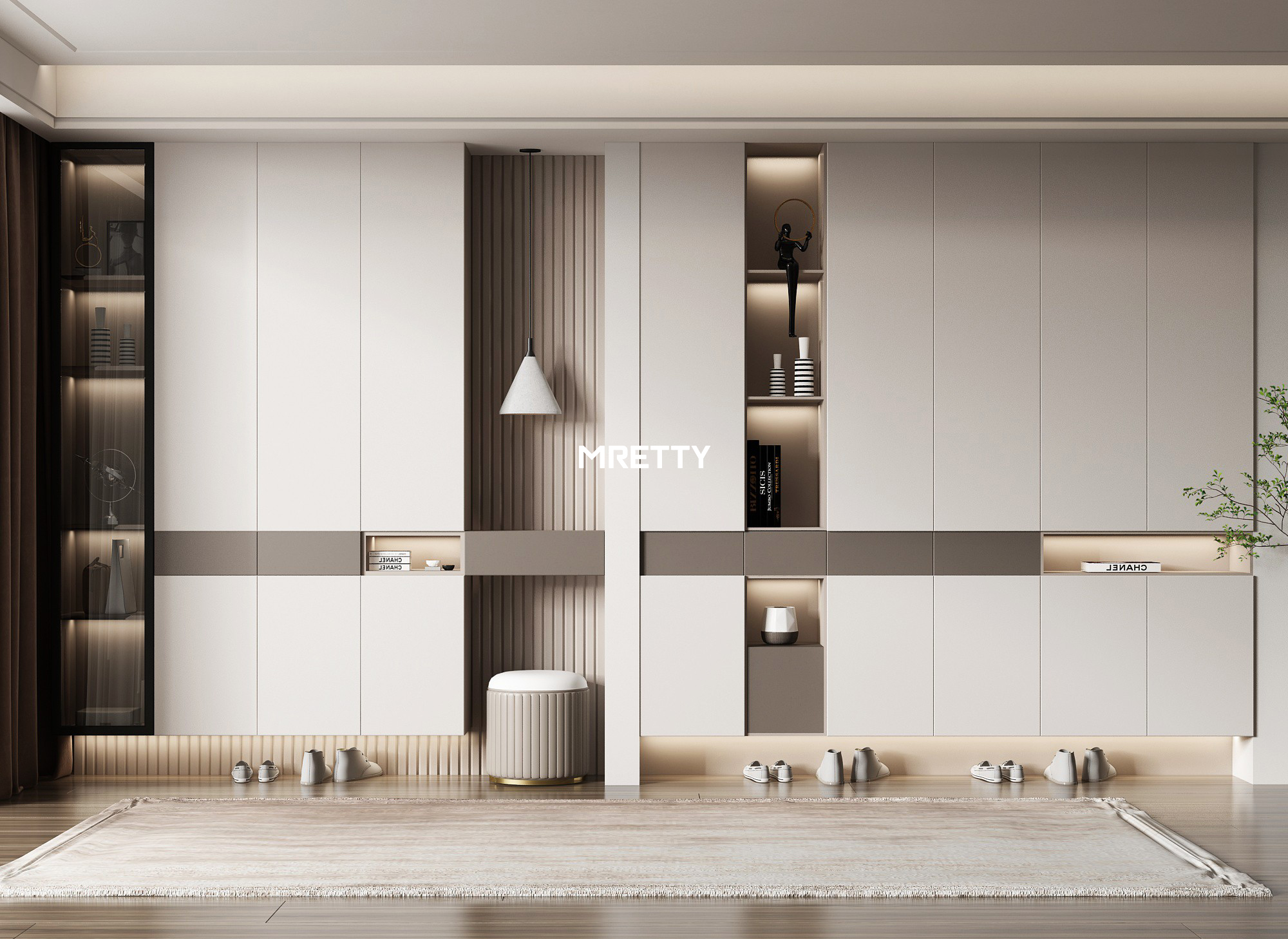
Design Examples for Various Entryway Layouts
How do these principles apply in real life? Let's explore cabinet solutions for different types of entryways.
The Narrow Hallway
In a narrow corridor, the priority is to preserve walking space.
- Ideal Cabinet: A slim console table or a floating cabinet is perfect. Look for depths of 20-30 cm (8-12 inches). A piece with long, slender legs can also create a sense of openness by allowing you to see the floor underneath.
- Example: A 90 cm wide, 25 cm deep floating cabinet mounted on the wall. It provides a surface for keys and a small decorative lamp, with storage drawers below, all while keeping the floor clear.
The Small, Square Foyer
A compact, boxy entryway can feel confining if not handled correctly.
- Ideal Cabinet: A corner cabinet can be a brilliant solution, utilizing often-neglected space. Alternatively, a small, rounded or demilune (half-moon) cabinet can soften the corners and improve flow.
- Example: A custom corner unit that rises vertically, offering stacked storage. Its footprint is minimal, but its height provides ample space for shoes, bags, and other essentials.
The Open-Plan Living Space
When the front door opens directly into a living area, the entryway cabinet must define the space.
- Ideal Cabinet: A slightly wider, counter-height cabinet (e.g., 120 cm) can act as a subtle room divider. A design that complements the living room furniture is key to a cohesive look.
- Example: A stylish credenza from MRETTY that matches the finish of the living room's media unit. It defines the entryway zone while providing significant storage, seamlessly bridging the two areas.
The Grand Foyer
A large entryway is a canvas for a statement piece.
- Ideal Cabinet: This is where you can use a substantial, commanding piece of furniture. A wide, double cabinet or a long console with a matching mirror can anchor the space beautifully.
- Example: A 180 cm wide bespoke cabinet with intricate door panels and elegant hardware. It serves as a stunning focal point, offering extensive storage and a grand surface for a floral arrangement or a collection of art objects.
Common Mistakes to Avoid
Choosing the right cabinet size involves sidestepping a few common pitfalls.
- Forgetting Clearance Space: The most frequent error is selecting a cabinet that is too deep, obstructing pathways and door swings. Always prioritize at least 90 cm of clear walking space.
- Ignoring Vertical Scale: A cabinet that is too short can look lost on a tall wall, while one that is too tall can feel overpowering. Consider the entire wall elevation, including any mirrors or art you plan to hang above.
- One Size Fits All Mentality: Assuming a standard-sized cabinet will work without measuring your unique space is a recipe for disappointment. Every entryway has its own quirks.
- Prioritizing Form Over Function (or Vice Versa): The perfect entryway cabinet does both. Don't choose a beautiful piece that offers no storage, or a highly functional one that clashes with your home's aesthetic. A bespoke solution from MRETTY ensures you never have to compromise.
Elevate Your Home with MRETTY
Your entryway deserves more than just a piece of furniture; it deserves a thoughtfully designed solution that embodies elegance and purpose. At MRETTY, we specialize in creating bespoke cabinet systems that are tailored to your life and your space. Our commitment to excellence is reflected in our use of premium, sustainable materials, including those certified by the Forest Stewardship Council (FSC), ensuring your design is both beautiful and responsible.
Let us help you create an entryway that is a true reflection of your style.
Book a Free Consultation Now
Related Products
- Custom Wardrobes: Extend the seamless design and personalized storage from your entryway to your bedroom.
- Bespoke Bathroom Vanities: Create a cohesive aesthetic with custom vanities that match your home's elegant style.
- Kitchen Systems: Discover how our tailored kitchen designs can transform the heart of your home.
Customer FAQs & Testimonials
- Q: My entryway is very small. Can you still create a functional cabinet?
A: Absolutely. Our expertise lies in maximizing small and irregular spaces. We can design slim, floating, or corner cabinets that provide essential storage without overwhelming the area.
- Q: How do you ensure the style of the entryway cabinet matches the rest of my home?
A: During our consultation, we discuss your overall design vision. We can match materials, finishes, and hardware to your existing or planned furniture, ensuring a harmonious and unified aesthetic throughout your home.
Client Story:
"Our HDB entryway felt so cramped and cluttered. MRETTY designed a stunning floating cabinet that completely transformed the space. It’s sleek, gives us the shoe storage we desperately needed, and makes our home feel so much more welcoming. The quality is exceptional." - The Tan Family, Singapore
Written by Yang Song
Principal Designer at MRETTY, Yang Song is celebrated for his innovative approach to spatial design. His work on the "Sentosa Cove Residence" project won the prestigious Singapore Interior Design Award for its masterful blend of functionality and minimalist elegance.
MRETTY: Premium Bespoke Kitchen & Cabinet Systems Provider in Singapore.
