

How to choose Joinery Suppliers in Australia for Durable Custom Kitchen Cabinet?
Whether you are renovating a contemporary apartment, designing a family home or creating a high-end luxury kitchen, the right joinery supplier should be able to turn your ideas into practical cabinetry that fits the space precisely and remains functional for years. This guide explains what to look for when comparing joinery suppliers in Australia and how to evaluate the quality of their custom kitchen solutions.
Table of Contents
- What Is a Joinery Supplier?
- Why Does Joinery Experience Matter?
- How to Evaluate Cabinet Materials
- What Makes Custom Kitchen Cabinets Durable?
- How Important Is Kitchen Cabinet Design?
- Why Cabinet Hardware Matters
- Look for Custom Storage Solutions
- What to Look for in a Luxury Kitchen
- Ask About Manufacturing and Quality Control
- Why Professional Installation Matters
- Questions to Ask Joinery Suppliers in Australia
- Common Mistakes When Choosing a Joinery Supplier
- Conclusion
- FAQ
What Is a Joinery Supplier?
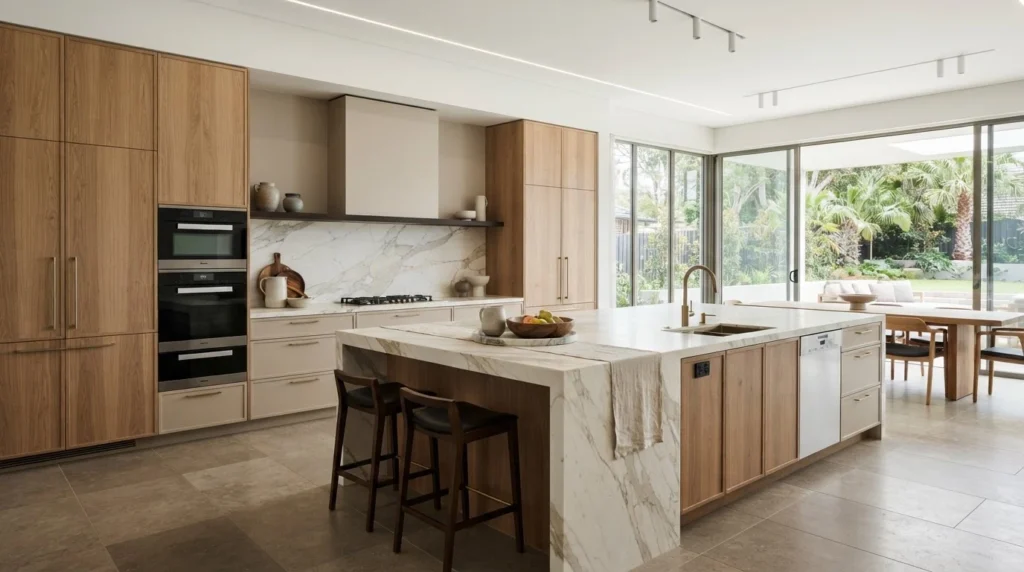
In the Australian residential market, a joinery supplier typically provides made-to-measure cabinetry and built-in furniture for kitchens, wardrobes, bathrooms, laundries, living spaces and other areas of the home. Depending on the company, the service may include design, material selection, manufacturing, delivery and installation.
Unlike off-the-shelf kitchen units, custom joinery is designed around the dimensions and requirements of a particular property. This makes it possible to work around unusual walls, structural columns, windows, plumbing locations and specific storage requirements.
When searching for joinery suppliers in Australia, homeowners should therefore consider whether the company is simply supplying cabinets or providing a complete design and manufacturing service.
Why Does Joinery Experience Matter?
Experience can make a significant difference when designing and manufacturing bespoke cabinetry. An experienced joinery supplier is more likely to understand how different materials behave, how cabinetry should be constructed and how to deal with challenging site conditions.
Look at the supplier’s previous residential projects rather than relying only on showroom displays. A strong portfolio should demonstrate different kitchen layouts, material combinations and levels of customisation.
It is also useful to check whether the supplier has experience with properties similar to yours. A compact apartment, a large detached house and a high-end architectural residence can require very different approaches to cabinetry design and installation.
How to Evaluate Cabinet Materials
Material selection is one of the most important factors affecting the long-term performance of kitchen cabinetry. The kitchen is exposed to moisture, heat, food stains, frequent cleaning and repeated opening and closing, so cabinet materials need to be selected carefully.
Ask potential suppliers about the substrate used for the cabinet structure, the thickness of panels, moisture resistance, surface finishes and edge treatment. A supplier should be able to clearly explain why particular materials are suitable for kitchen applications.
For homeowners comparing custom kitchen cabinets, it is also worth asking whether the same material is used throughout the cabinet or whether different materials are selected for doors, carcasses, backs and internal components.
Quality finishes are important as well. Depending on the desired appearance, options may include natural wood veneers, laminates, textured finishes, painted surfaces and premium decorative panels.
What Makes Custom Kitchen Cabinets Durable?
Durability does not depend on a single material. The overall construction of the cabinet system matters just as much. Panel thickness, joint construction, edge treatment, hardware and installation all contribute to how a kitchen performs over time.
A durable cabinet should remain stable under normal household use and maintain its alignment after repeated opening and closing. Doors and drawers should operate smoothly, while hinges and runners should be appropriate for the weight and frequency of use.
Edge banding is another detail worth discussing with a supplier. Properly finished edges can help protect the panel from moisture penetration and everyday wear, particularly around sink areas and frequently used cabinets.
When reviewing a supplier’s samples, do not focus only on the front of the door. Open the cabinets, inspect the internal construction and look closely at the edges, hinges, drawer runners and connections.
How Important Is Kitchen Cabinet Design?
Good kitchen cabinet design is not simply about choosing attractive doors and colours. It should also consider how the kitchen will be used every day.
The position of the refrigerator, sink, cooktop, oven and preparation areas should support a practical workflow. Frequently used cookware should be stored close to the relevant work area, while less frequently used items can be placed in higher or less accessible cabinets.
The cabinet layout should also respond to the architecture of the room. Full-height cabinetry can maximise vertical storage, while an island can provide additional preparation space and storage. In smaller kitchens, carefully planned tall units and integrated appliances can help maximise available space without making the room feel crowded.
A professional supplier should be able to explain the reasoning behind the proposed layout rather than simply presenting a catalogue of cabinet styles.
Why Cabinet Hardware Matters
Hardware is often overlooked because it is less visible than cabinet doors and countertops. However, hinges, drawer runners, lift systems and internal accessories can have a major impact on everyday usability.
High-quality hardware should operate smoothly and consistently under regular use. Soft-close hinges and drawer systems can also reduce impact and noise while improving the overall feel of the cabinetry.
For larger drawers, pantry units and heavy storage, it is particularly important to ensure that the hardware is designed to support the expected load. Ask your supplier about the brands, specifications and load ratings used in the kitchen.
Look for Custom Storage Solutions
One of the biggest advantages of bespoke joinery is the ability to create custom storage solutions around the way you actually live.
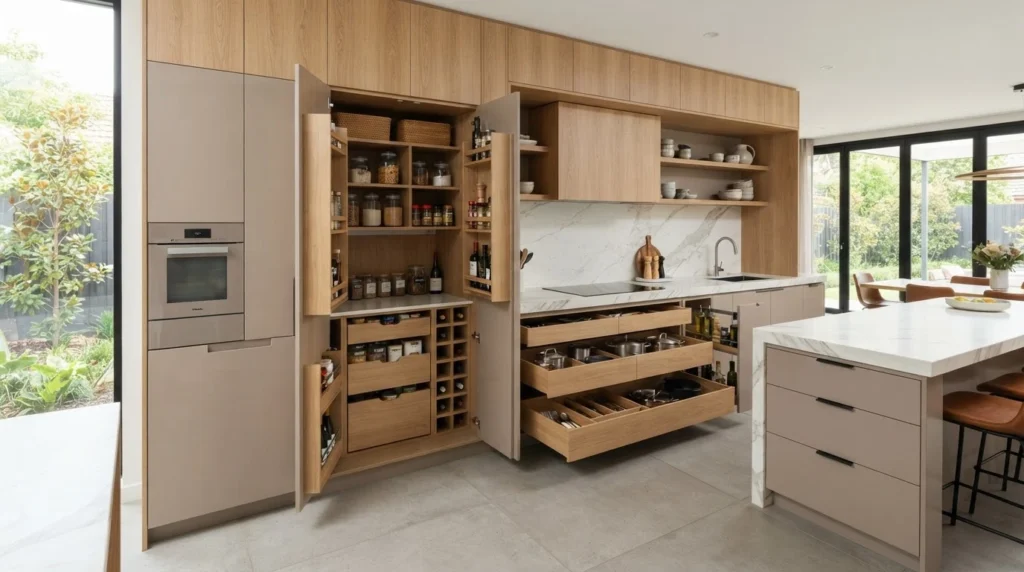
Instead of filling the kitchen with standard-sized cabinets, a custom system can include deep drawers for cookware, dedicated pantry storage, pull-out units, appliance garages, integrated bins, corner solutions and specialised internal organisers.
This is particularly valuable for Australian homes where kitchen layouts can vary considerably between apartments, townhouses and detached properties.
Custom storage can also extend beyond the kitchen. A joinery supplier with broader capabilities may be able to coordinate kitchen cabinetry with wardrobes, laundry storage, entertainment units and other built-in furniture, creating a consistent design throughout the home.
What to Look for in a Luxury Kitchen
A luxury kitchen is not defined simply by expensive materials. Proportion, detailing, functionality and consistency are equally important.
In a well-designed luxury kitchen, appliances can be integrated into the cabinetry, storage can be carefully concealed and material transitions can be handled with precision. The cabinetry should feel like part of the architecture rather than a collection of individual boxes.
For a sophisticated luxury kitchen design, homeowners may consider natural stone or premium engineered surfaces, refined timber finishes, integrated lighting, handleless cabinetry and carefully selected hardware.
However, visual quality should not come at the expense of practicality. A luxury kitchen still needs sufficient storage, comfortable working areas and easy access to everyday items.
Ask About Manufacturing and Quality Control
Before selecting a joinery supplier, ask where the cabinetry is manufactured and how quality is controlled throughout the production process.
A reliable supplier should be able to explain how design drawings are approved, how measurements are checked, how components are manufactured and how finished cabinetry is inspected before delivery.
Digital design and CNC manufacturing can improve precision, but technology alone does not guarantee quality. Skilled design, manufacturing and installation teams are still essential, particularly for complex bespoke projects.
Ask whether the supplier provides detailed shop drawings before production. This gives homeowners an opportunity to confirm cabinet dimensions, finishes, appliance positions and other important details before manufacturing begins.
Why Professional Installation Matters
Even high-quality cabinetry can perform poorly if it is installed incorrectly. Walls and floors are rarely perfectly level, so professional installation requires careful adjustment and accurate on-site measurement.
Experienced installers should be able to align doors and drawers, level cabinets, manage gaps and ensure that appliances integrate correctly with the cabinetry.
Ask whether installation is handled by the supplier’s own team or outsourced to independent contractors. A supplier that manages design, manufacturing and installation directly may have greater control over the final result.
It is also important to clarify what happens if an installation issue appears after handover. A clear warranty and after-sales process can provide additional confidence when making a significant investment in custom cabinetry.
Questions to Ask Joinery Suppliers in Australia
Before making a decision, prepare a list of questions for each supplier. Comparing answers can make it easier to identify differences that are not obvious from showroom displays.
- What materials are used for the cabinet structure?
- What thickness are the cabinet panels?
- How are the cabinet edges finished?
- Which hardware brands and systems are used?
- Where are the cabinets manufactured?
- Does the supplier provide detailed design drawings?
- Who takes the final site measurements?
- Who handles installation?
- What custom storage options are available?
- What warranty is provided?
- How are defects or installation issues handled?
- Can the supplier coordinate cabinetry across different rooms?
The answers can help you compare suppliers based on the complete service rather than simply comparing the initial quotation.
Common Mistakes When Choosing a Joinery Supplier
One common mistake is choosing a supplier based mainly on the lowest price. Custom joinery involves many variables, including materials, hardware, construction methods, design time, installation and after-sales service. Two quotations that appear similar may actually include very different specifications.
Another mistake is focusing too heavily on appearance. A beautiful door finish does not necessarily indicate high-quality cabinet construction. Always inspect the internal components and ask about the materials behind the visible surfaces.
It is also important not to underestimate installation. Poor measurements or installation can affect alignment, appliance integration and the overall appearance of the finished kitchen.
Finally, avoid designing the kitchen entirely around current trends. A well-planned kitchen should remain functional even when design preferences change. Timeless cabinetry combined with carefully selected finishes can provide a more durable long-term solution.
Conclusion
Choosing the right joinery supplier in Australia requires more than comparing kitchen styles and prices. For homeowners investing in Custom Kitchen Cabinets, the most important factors include material quality, cabinet construction, hardware, kitchen cabinet design, manufacturing precision, installation and after-sales support.
A good supplier should be able to combine these elements into a kitchen that looks refined while working efficiently for everyday life. Whether you are planning a compact apartment kitchen, a family home or a sophisticated luxury kitchen design, taking the time to evaluate the supplier behind the cabinetry can make a significant difference to the finished result.
Plan Your Custom Kitchen
If you are exploring bespoke cabinetry for a new home or renovation, MRETTY combines custom cabinetry, design planning and professional installation to create kitchens tailored to individual spaces and lifestyles.
Explore MRETTY Kitchen Solutions or contact our teamto discuss your project and cabinetry requirements.
FAQ
What should I look for in a joinery supplier in Australia?
Look at the supplier’s experience, cabinet materials, construction quality, hardware, design capabilities, manufacturing process, installation service, warranty and after-sales support. Reviewing completed projects can also help you understand the quality of their work.
Are custom kitchen cabinets worth the investment?
Custom kitchen cabinets can be worthwhile when you need cabinetry that fits a specific space, maximises storage or achieves a particular design. They can also provide greater flexibility in materials, finishes, internal storage and appliance integration compared with standard cabinet systems.
What makes a luxury kitchen different from a standard kitchen?
A luxury kitchen typically places greater emphasis on material quality, precise detailing, integrated appliances, refined hardware, storage planning and overall design consistency. The result should combine visual sophistication with practical everyday functionality.
How long should custom kitchen cabinets last?
The lifespan of custom kitchen cabinets depends on the materials, construction, hardware, installation and level of use. High-quality cabinetry that is properly manufactured and installed can provide many years of service when maintained appropriately.
What are custom storage solutions for kitchens?
Custom storage solutions are cabinetry features designed around specific storage needs. Examples include full-height pantry cabinets, pull-out shelves, deep drawers, corner storage, appliance garages, integrated bins and specialised organisers.
Should I choose a local Australian joinery supplier?
A local supplier can provide advantages such as easier site visits, local project experience and more convenient communication. However, the most important considerations should still include manufacturing quality, design capability, installation standards and after-sales support.