
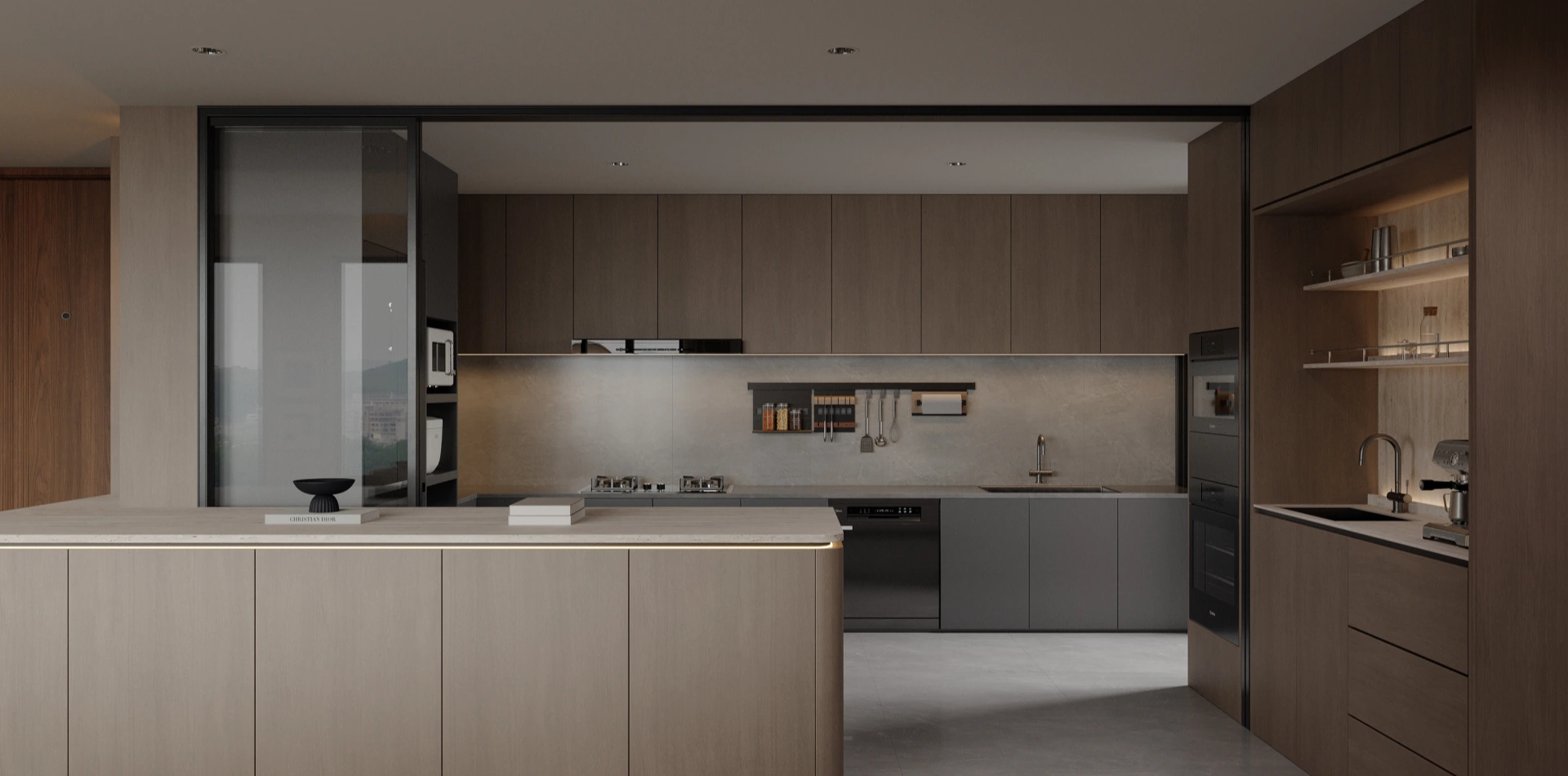
Top 9 Premium Cabinet Hardware & Material Brands for Luxury Homes
Key Takeaways
- Cabinet hardware affects everyday usability, opening performance and long-term maintenance.
- Hinges, drawer systems and sliding door mechanisms serve different functions and should be selected according to the cabinet design.
- Decorative veneers and surface coatings influence the appearance, texture and maintenance requirements of cabinetry.
- The right components depend on the intended application, cabinet construction, installation conditions and budget.
- For whole-home custom cabinetry, coordinating hardware and finishes across different rooms helps create a consistent interior.
Quick Comparison: 9 Cabinet Hardware & Material Brands
These brands cover different areas of furniture hardware, sliding systems and decorative surfaces. Their suitability depends on the specific product range and application rather than brand name alone.
| Brand | Category to Explore | Considerations for Custom Cabinetry |
|---|---|---|
| KAWAJUN | Furniture hardware and interior fittings | Design coordination, finish and everyday usability |
| LAMP by Sugatsune | Functional furniture hardware | Movement, space efficiency and installation requirements |
| O.M.M. | Verify the relevant product range | Confirm specifications and intended application |
| Salice | Cabinet hinges and opening systems | Door weight, opening angle and adjustment |
| SEMAR | Verify the relevant product range | Confirm product type and compatibility |
| Hawa | Sliding door systems | Door dimensions, weight and available clearance |
| ICA | Wood coatings and surface finishes | Appearance, application and maintenance |
| ALPI | Decorative wood veneers | Grain, colour consistency and surface design |
| BASISTEM | Verify the relevant product range | Confirm specifications and project suitability |
1. KAWAJUN: Hardware and Interior Details
KAWAJUN is a Japanese brand associated with architectural hardware, furniture fittings and interior accessories. Its product range makes it a brand worth exploring when coordinating the functional and decorative details of a residential interior.
In custom cabinetry, hardware contributes to the overall visual language of a space. The shape, finish and placement of fittings can complement cabinet fronts, wall panels, doors and other interior elements.
What to Consider
- Choose finishes that complement cabinet colours and other metal details.
- Consider comfort, ease of use and cleaning requirements.
- Check product dimensions and mounting requirements before finalising cabinet drawings.
For luxury homes, consistent detailing across the kitchen, wardrobes and living areas can help create a more cohesive interior.
2. LAMP by Sugatsune: Functional Furniture Hardware
LAMP is a product brand associated with Sugatsune, a Japanese manufacturer known for functional hardware and architectural fittings. Its product portfolio includes different types of hinges, catches, supports and other specialised mechanisms, depending on the range.
For custom cabinetry, the appropriate mechanism depends on how a cabinet is intended to open, how much space is available and how frequently it will be used. Specialised fittings can be useful where conventional hardware does not meet the design requirements.
What to Consider
- Match the mechanism to the cabinet’s size, weight and movement.
- Check installation clearances and adjustment requirements.
- Confirm availability of replacement parts and technical documentation.
Always select a specific product based on its published specifications rather than assuming that every fitting is suitable for every cabinet.
3. O.M.M.: Verify the Product Range Before Specification
When evaluating O.M.M. for a custom cabinetry project, start by confirming the exact manufacturer, product category and model offered by the supplier. Brand abbreviations can refer to different businesses or product ranges, so accurate identification is important before making technical comparisons.
What to Check
- The manufacturer’s official name and website.
- The specific product category and model number.
- Technical specifications, installation instructions and warranty terms.
- Compatibility with the cabinet design and other selected components.
Reliable product identification helps designers and homeowners compare products on practical criteria instead of relying on a name alone.
4. Salice: Cabinet Hinges and Opening Systems
Salice is an Italian furniture hardware manufacturer known for cabinet hinges and opening systems. Its product portfolio includes solutions for different cabinet door configurations and furniture applications.
Hinges are among the most frequently used components in a kitchen or wardrobe. Their selection affects door movement, alignment, opening angle and the ability to make adjustments after installation.
What to Consider
- Confirm the cabinet door’s dimensions, thickness and weight.
- Choose the correct hinge type for the door overlay and cabinet construction.
- Check opening angle, adjustment options and installation clearances.
- Consider the intended frequency of use and future maintenance.
For whole-home cabinetry, consistent hardware specifications and careful installation help maintain reliable operation across multiple rooms.
5. SEMAR: Confirming Product Suitability
Before including SEMAR in a hardware or material specification, confirm the exact brand identity and product range with the relevant supplier. This is particularly important when a brand name appears in a collection of products covering multiple categories.
A useful evaluation should focus on the actual component being supplied, its technical documentation and whether it meets the requirements of the cabinetry design.
What to Check
- Product function and intended application.
- Material composition and finish, where relevant.
- Installation requirements and compatibility.
- Availability, after-sales support and warranty conditions.
These checks help ensure that selected components are suitable for the intended project rather than being chosen on brand recognition alone.
6. Hawa Sliding Solutions: Space-Saving Door Systems
Hawa is a Swiss brand known for sliding hardware and door systems used in furniture and architectural applications. Sliding systems can be particularly useful when a conventional hinged door requires more clearance than the room can comfortably provide.
In wardrobes, room dividers and integrated interior systems, sliding doors can support a clean visual appearance while making efficient use of available space.
What to Consider
- Check the maximum door dimensions and weight supported by the chosen system.
- Allow for the required track, mounting and clearance space.
- Consider how the door will be accessed, cleaned and maintained.
- Coordinate the door panels with adjacent cabinetry and wall finishes.
The correct system should be selected according to the actual door construction and installation conditions. Not every sliding mechanism is suitable for every opening.
7. ICA: Wood Coatings and Surface Finishes
ICA is associated with wood coatings and finishing products. Surface treatments play an important role in the appearance of timber and wood-based interior components, influencing colour, sheen, texture and the visual character of a finished space.
In custom cabinetry, the coating specification should be considered alongside the substrate, decorative material and intended use. A finish selected for a display cabinet may have different requirements from one intended for a frequently used kitchen surface.
What to Consider
- Review colour samples and sheen levels under the home’s actual lighting conditions.
- Confirm compatibility with the substrate and application method.
- Understand cleaning, maintenance and repair requirements.
- Request the relevant technical and safety documentation for the specific product.
Always follow the coating manufacturer’s instructions. Durability and suitability depend on the particular product, application process and conditions of use.
8. ALPI: Decorative Wood Veneers
ALPI is an Italian company known for decorative wood veneers. Decorative veneer can create a distinctive wood-grain appearance and provide greater control over the visual character of cabinetry and interior surfaces.
For luxury interiors, veneer selection involves more than choosing a colour. Grain direction, pattern continuity, surface texture and how different panels meet can significantly affect the finished appearance.
What to Consider
- Review full-size samples whenever possible.
- Check grain direction and pattern matching across adjacent panels.
- Confirm the substrate, edge treatment and finishing specification.
- Understand maintenance requirements and suitability for the intended location.
When used across kitchens, wardrobes and living areas, coordinated decorative surfaces can help create a consistent material palette throughout the home.
9. BASISTEM: Verify the Specific System and Application
When considering BASISTEM for a custom cabinetry project, confirm the exact product range and manufacturer details before specifying it. The correct evaluation depends on whether the product is a fitting, structural component, surface material or another type of system.
What to Check
- Confirm the official product catalogue and technical specifications.
- Check compatibility with the proposed cabinet or door construction.
- Review installation requirements and relevant performance information.
- Clarify warranty coverage and local product support.
Accurate specifications help ensure that every component selected for a project serves a clear purpose and works with the wider design.
How to Choose Cabinet Hardware and Materials for a Luxury Home
Brand reputation can be a useful starting point, but the best choice depends on the product, the cabinet design and the way the home will be used. Consider the following factors before confirming your specifications.
1. Start with the Intended Function
Identify what each component needs to do. Hinges, drawer runners, sliding systems and decorative surfaces have different functions. Select products based on the actual application rather than choosing a brand first and trying to adapt the design afterwards.
2. Check Technical Compatibility
Cabinet dimensions, panel thickness, door weight, mounting space and opening clearance can affect product suitability. Confirm these details during design development and before production.
3. Coordinate Finishes Across Rooms
For whole-home cabinetry, establish a coordinated palette for wood grains, painted surfaces, metal finishes and other materials. This helps connect the kitchen, wardrobes, living room and dining area without making every space look identical.
4. Consider Singapore’s Climate and Everyday Use
Humidity, ventilation, cleaning routines and exposure to water can affect the performance of cabinetry materials. Choose suitable products for each location, and pay attention to edge sealing, installation details and the manufacturer’s maintenance guidance.
5. Review Samples and Documentation
Whenever possible, review physical samples and request technical data before making a final decision. Confirm product specifications, care requirements, warranty terms and replacement-part availability.
6. Evaluate the Complete Installation
Even suitable hardware can perform poorly if installed incorrectly or paired with incompatible components. Accurate measurements, proper installation and final adjustments are essential to the overall result.
How MRETTY Integrates Hardware and Materials into Whole-Home Custom Cabinetry
At MRETTY, custom cabinetry is considered as part of the wider home rather than as a collection of unrelated cabinets. Kitchens, wardrobes, living room storage, dining cabinetry and selected door and wall systems can be coordinated around the home’s layout, functional requirements and preferred interior style.
Hardware and decorative materials should support both the design and the intended use of each space. Hinges and sliding systems influence movement, while veneers, coatings and finishes shape the overall appearance. Their selection needs to be coordinated with cabinet construction, dimensions and installation requirements.
For homeowners planning a renovation or a new home in Singapore, an integrated approach can help maintain consistency across multiple rooms and reduce the risk of making disconnected material choices.
Explore our custom cabinetry and home design solutions to learn more about MRETTY’s approach to residential interiors.
Planning a new kitchen or a whole-home cabinetry project? Contact MRETTY on WhatsApp to discuss your requirements.
Frequently Asked Questions
What are the most important hardware components in custom cabinetry?
Common components include hinges, drawer runners, handles, catches and sliding systems. The right selection depends on cabinet design, door and drawer dimensions, intended use and installation requirements.
Are premium cabinet hardware brands always the best choice?
Not necessarily. A reputable brand can offer useful product options, but the specific model must suit the application. Compatibility, technical specifications, installation quality, maintenance and budget all matter.
What is the difference between cabinet hardware and decorative materials?
Cabinet hardware includes functional components such as hinges, runners and sliding mechanisms. Decorative materials include veneers, coatings and other surface finishes that influence the appearance and surface characteristics of cabinetry.
How should I choose cabinetry materials for a home in Singapore?
Consider the location, humidity exposure, ventilation, cleaning routine and intended use. Ask your designer or supplier to confirm the suitability of the specific board, coating, veneer and hardware selected for each application.
Can different hardware and material brands be used in one whole-home project?
Yes. Different brands can be specified for different functions. The important factors are compatibility, consistent design coordination, technical suitability and the quality of installation.