
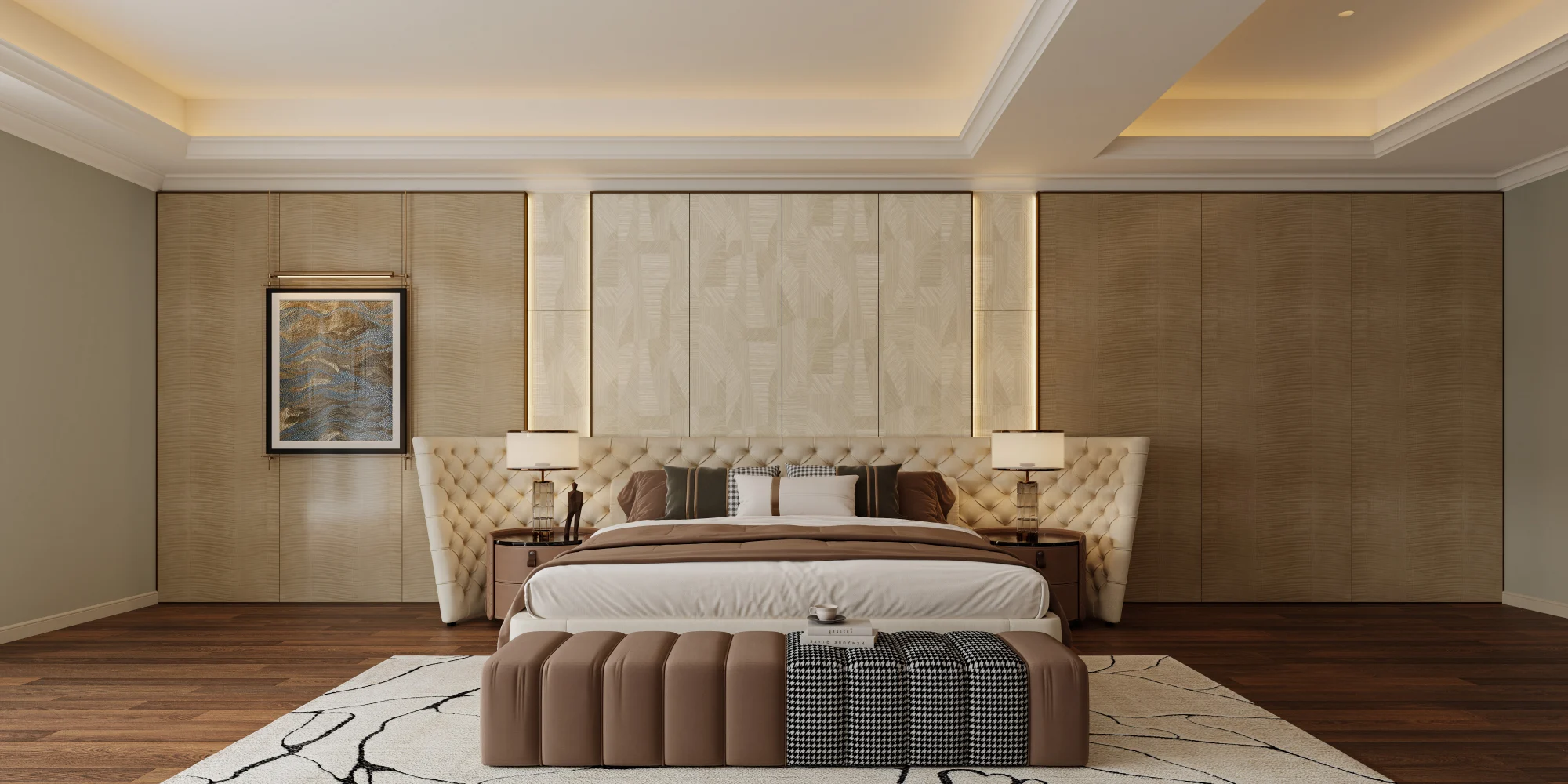
How to Choose a Custom Wardrobe Manufacturer for Your Home
Choosing a wardrobe manufacturer is not simply about finding a company that can build a cabinet to fit a wall. A well-designed wardrobe needs to work with the dimensions of your room, your storage habits, your interior style and the way you use the space every day. This becomes even more important when you are planning a full set of built-in wardrobes for a master bedroom, walk-in dressing room, apartment or villa. From material selection and internal storage to hardware, finishing and installation, every detail can affect the final result. Whether you are comparing manufacturers for a single custom closet or planning an entire home with custom closets, understanding what to look for before you choose a supplier can help you avoid costly compromises later.
Table of Contents
- What Does a Custom Wardrobe Manufacturer Do?
- Why Choose Custom Wardrobes?
- 1. Look at the Manufacturer’s Experience
- 2. Check Their Custom Closet Design Capability
- 3. Ask About Materials and Cabinet Construction
- 4. Look at the Internal Storage System
- 5. Check Hardware and Functional Details
- 6. Understand How the Cabinets Are Manufactured
- 7. Pay Attention to Installation
- 8. Review Completed Projects
- 9. Compare Quotations Carefully
- 10. Consider Design and After-Sales Service
- Custom Wardrobe Manufacturer vs Carpenter
- Choosing a Wardrobe Manufacturer in Singapore
- Conclusion
- FAQ
What Does a Custom Wardrobe Manufacturer Do?
A custom wardrobe manufacturer is responsible for more than producing cabinet doors and shelves. In a properly managed project, the process can include site measurement, layout planning, material selection, cabinet design, manufacturing, hardware installation, delivery and on-site installation. The manufacturer should be able to translate the available space into a storage system that fits accurately and functions well.
This is one of the main differences between buying a ready-made wardrobe and working with a company that specialises in custom cabinetry. Standard furniture usually comes in predetermined sizes, while a custom manufacturer can design around sloping ceilings, structural columns, unusual corners, windows, doors and other architectural conditions.
For homeowners who are planning multiple rooms, the scope can be much broader. A supplier may need to coordinate bedroom wardrobes, a walk-in dressing area, living room storage and other built-in cabinetry so that the materials and finishes remain consistent throughout the home.
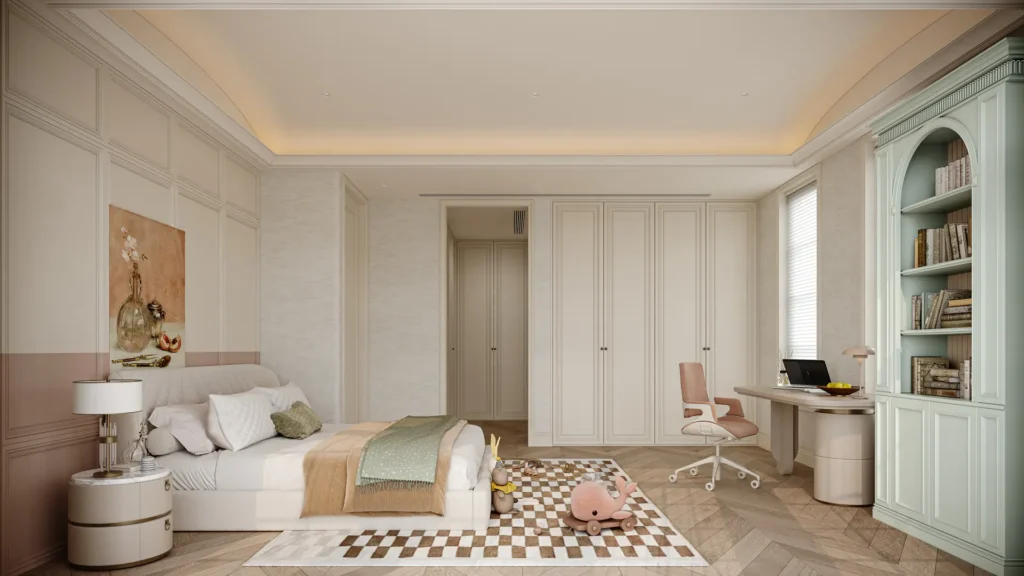
Why Choose Custom Wardrobes?
The biggest advantage of custom cabinetry is that the storage is designed around the room rather than forcing the room to accommodate a standard piece of furniture. This can be particularly valuable in apartments where every centimetre matters, as well as in larger homes where the wardrobe needs to accommodate a significant amount of clothing, accessories, luggage and personal belongings.
A custom wardrobe can use the full available height of a room, incorporate different hanging zones, provide dedicated drawers and shelving, and create concealed storage for less frequently used items. It can also be designed to match the architectural character of the bedroom instead of looking like a separate piece of furniture.
For a larger residential project, custom closet systems can go even further by combining wardrobes with islands, drawers, shoe storage, display shelving and integrated lighting. The result is less about simply adding storage and more about creating a complete dressing environment.
1. Look at the Manufacturer’s Experience
Experience matters because custom cabinetry involves many small decisions that are difficult to understand from a showroom display alone. A manufacturer with experience across different residential projects is more likely to understand how to deal with irregular walls, tight spaces, ceiling variations, appliance coordination and other practical issues that appear during installation.
When reviewing a company’s portfolio, do not only look at the most impressive photographs. Try to find projects that are similar to yours in terms of property type, room size and design style. A manufacturer experienced with large luxury villas may approach a compact city apartment very differently from a company that regularly works on space-efficient residential interiors.
It is also worth checking whether the manufacturer handles the complete process or outsources important stages to different contractors. Clear responsibility can make a significant difference when design changes or installation issues arise.
2. Check Their Custom Closet Design Capability
A good wardrobe is the result of good planning. Before choosing a manufacturer, look at how much attention they give to the design stage. A professional custom closet design should consider what you need to store, how frequently you use different items and how easily you can access them.
For example, everyday clothing may need to be placed at a comfortable height, while seasonal items can be stored higher up. Long garments may require full-height hanging space, while folded clothes can be organised through drawers or adjustable shelving. Bags, shoes, watches and accessories may each need a different storage solution.
The external appearance also matters. Door proportions, handle design, colours, wood grain, glass panels and lighting can all influence how the wardrobe relates to the bedroom. In a well-designed home, the wardrobe should feel like part of the interior architecture rather than an object that was added afterwards.
3. Ask About Materials and Cabinet Construction
Material selection is one of the areas where different wardrobe manufacturers can vary significantly. Do not be satisfied with a description such as “premium board” or “high-quality material”. Ask what the actual substrate is, how thick the panels are, what finish is used and how the edges are treated.
Depending on the design, wardrobes may use engineered wood panels, plywood, MDF, veneer, laminate, lacquered surfaces, glass, metal or combinations of different materials. Each has different characteristics in terms of appearance, stability, maintenance and cost.
The visible door is only one part of the cabinet. The internal structure, back panel, shelves, drawer boxes and connection methods all contribute to the quality of the finished wardrobe. When comparing suppliers, make sure you are comparing the complete cabinet specification rather than just the surface finish.
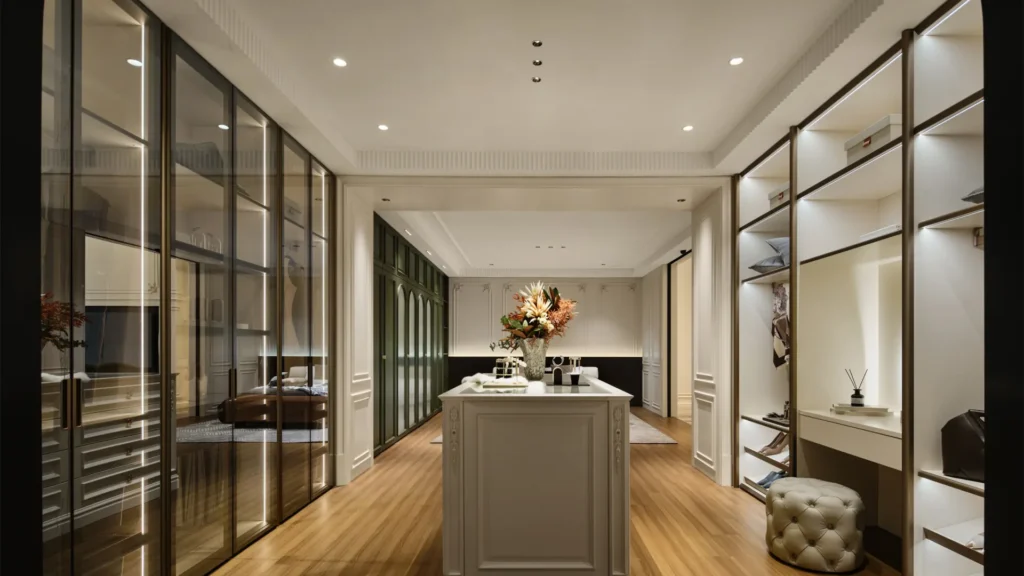
4. Look at the Internal Storage System
One of the most common mistakes when planning wardrobes is to focus too heavily on the exterior. A beautiful wardrobe can still be frustrating if the internal layout does not match the way you actually store your belongings.
A professional manufacturer should be able to discuss different storage configurations and explain why particular combinations make sense for your room. Depending on your needs, the interior may include double hanging rails, long hanging sections, adjustable shelves, drawers, pull-out trouser racks, shoe storage, jewellery drawers, laundry compartments and dedicated luggage storage.
This is where a properly planned custom closet system can make a significant difference. Instead of using a fixed arrangement, the internal components can be organised around your lifestyle. If your wardrobe contains more folded clothing than hanging garments, for example, the layout can be adjusted accordingly.
The same principle applies to a wardrobe closet. The goal should not simply be to maximise the number of shelves. Good storage design makes frequently used items easy to reach while keeping less frequently used belongings organised and out of the way.
5. Check Hardware and Functional Details
Hardware is easy to overlook because it is often hidden from view, but it has a major impact on how a wardrobe feels after years of daily use. Hinges, drawer runners, sliding door systems, handles, lift-up mechanisms and internal accessories should all be selected according to the size and weight of the cabinet components.
For hinged wardrobes, soft-close hinges can improve the daily experience by reducing impact when doors are closed. Sliding wardrobes require properly engineered tracks and rollers, particularly when the doors are large or made from heavier materials. Drawers should move smoothly and maintain their alignment under normal use.
Ask the manufacturer which hardware brands and systems they use, and whether replacement parts can be obtained if something needs to be repaired in the future. A wardrobe is a long-term investment, so serviceability matters as much as initial appearance.
6. Understand How the Cabinets Are Manufactured
Manufacturing quality can have a direct impact on the precision of the final installation. A professional factory or production facility should have a clear process for cutting, edge treatment, drilling, assembly and quality control.
Factory production can also improve consistency when a project includes a large number of wardrobes. Instead of manufacturing every cabinet from scratch on site, components can be produced to precise measurements before being delivered for installation.
This does not mean that factory-made cabinetry is automatically better than every form of site carpentry. The important question is whether the manufacturer’s production process is suitable for the project and whether there is proper coordination between site measurement, design and manufacturing.
7. Pay Attention to Installation
Even a well-designed wardrobe can look poor if it is badly installed. Walls are rarely perfectly straight, floors can have small level differences and ceilings may not be completely uniform. The installation team needs to know how to deal with these conditions while maintaining clean lines and accurate gaps.
Ask whether the manufacturer has its own installation team or relies on external contractors. Find out who will be responsible for final adjustments, alignment and finishing after the cabinets are installed.
This is particularly important for full-height wardrobes and large custom closets, where small inconsistencies can become much more visible across a long run of cabinetry.
8. Review Completed Projects
Before committing to a manufacturer, take time to look through completed projects rather than relying solely on product catalogues. Project photography can reveal details that are difficult to see in a showroom, including how wardrobes meet ceilings, how doors align, how different materials are combined and how internal storage is organised.
If possible, ask whether the manufacturer has completed projects similar to your own. A supplier experienced in luxury residential projects may have examples of master bedrooms, walk-in wardrobes, apartments and villas that can give you a better understanding of its design and installation capabilities.
For homeowners considering wardrobe wardrobes across several rooms, it is also worth looking at whether the manufacturer can maintain consistency between different cabinet styles and spaces. The best whole-home projects usually have a common material and detailing language without making every room look exactly the same.
9. Compare Quotations Carefully
Price comparisons can become confusing when different manufacturers use different specifications. One quotation may include premium hardware, installation and internal accessories, while another may only cover the basic cabinet structure.
When comparing quotations, check the panel material, thickness, finish, hardware, internal accessories, number of drawers, lighting, delivery, installation and after-sales service. Also check whether site measurement and design revisions are included.
A cheaper quotation is not necessarily cheaper in the long term if important components have been excluded. Likewise, a higher quotation does not automatically mean better quality. The most useful comparison is based on the complete specification and the services included in the project.
10. Consider Design and After-Sales Service
Custom cabinetry is a project rather than a simple product purchase. The design may involve several rounds of revisions, site measurements, material samples and coordination with other contractors. Good communication throughout this process can make the experience considerably easier.
Ask how the manufacturer manages design approvals and whether you will receive drawings or visualisations before production begins. You should also understand the process for reporting defects or requesting adjustments after installation.
A reliable supplier should be able to explain its warranty and after-sales process clearly. This is particularly important for a whole-home project where dozens of cabinet doors, drawers and hardware components may be installed across multiple rooms.
Custom Wardrobe Manufacturer vs Carpenter
Many homeowners wonder whether they should work with a specialised wardrobe manufacturer or hire a carpenter to build the cabinets on site. Both approaches can work, but they offer different advantages.
| Consideration | Custom Wardrobe Manufacturer | Site Carpenter |
|---|---|---|
| Production | Factory-controlled production | Primarily site-based fabrication |
| Precision | Computer-controlled cutting and production may improve consistency | Depends heavily on individual workmanship |
| Design options | Usually based on a structured cabinet system with customisation | Can offer highly flexible site modifications |
| Installation | Pre-manufactured components assembled on site | More fabrication may happen directly at the property |
| Project scale | Well suited to multiple rooms and whole-home cabinetry | Can be suitable for smaller or highly site-specific projects |
| Consistency | Factory production can provide consistent finishes across multiple cabinets | Consistency depends on the workmanship and site conditions |
The right choice depends on your project. For a large residential renovation involving kitchens, wardrobes and other built-in furniture, a professional custom cabinetry manufacturer may provide a more structured process. For highly irregular or one-off site conditions, an experienced carpenter may offer greater flexibility.
Choosing a Wardrobe Manufacturer in Singapore
For homeowners in Singapore, there are several additional factors worth considering. Apartments and condos often require careful space planning because bedrooms can be relatively compact, while landed properties may require extensive built-in storage across multiple floors and rooms.
Singapore’s warm and humid environment also makes material selection and installation important. Cabinet materials and finishes should be appropriate for the local conditions, particularly in rooms where ventilation or moisture levels may vary.
For a larger home, it can also be useful to work with a supplier that provides more than wardrobes. When the same design team can coordinate kitchen cabinets, bedroom storage, living room cabinetry and other built-in elements, it becomes easier to maintain a consistent interior language throughout the property.
MRETTY provides custom cabinetry solutions for Singapore apartments, condos, landed properties and villas, with services covering design, manufacturing and installation. You can explore the company’s custom wardrobe solutions to see how different storage and design requirements can be incorporated into a residential project.
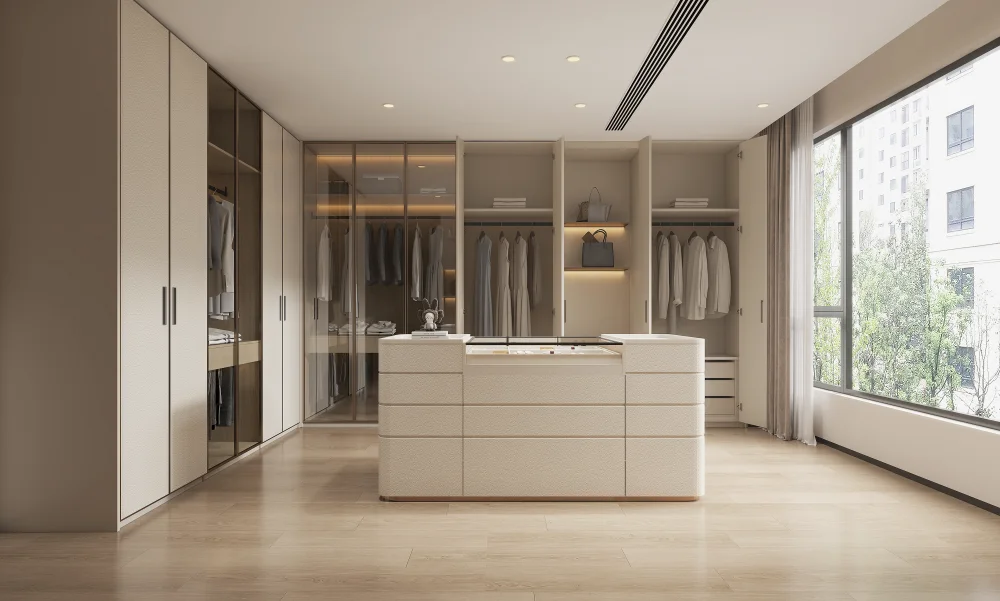
How Much Custom Wardrobe Storage Do You Really Need?
The answer depends more on your lifestyle than on the size of the bedroom. Before starting the design, make a simple inventory of what needs to be stored. Separate long garments, shirts, trousers, folded clothes, shoes, bags, accessories and seasonal items. This gives the designer a much better starting point than simply saying that you need “more storage”.
For couples sharing a master bedroom, it can also be useful to divide the wardrobe into individual zones. This allows each person to have storage arranged according to their own habits. A walk-in wardrobe can take this approach even further by combining hanging areas, drawers, shelving and an island into a single organised space.
Remember that storage should also include less obvious items. Suitcases, bedding, travel bags, sports equipment and seasonal clothing can take up considerable space. Planning these items at the beginning can prevent the need to add freestanding storage later.
What Makes a Good Custom Closet Design?
A successful custom closet design should look simple when it is finished because the complexity has been solved during the planning stage. Doors should align, storage should be easy to access, lighting should be placed where it is useful and the materials should work naturally with the surrounding interior.
Good design also leaves room for change. Adjustable shelves and flexible storage components can accommodate changes in clothing, accessories and lifestyle over time. This can make the wardrobe more useful over a longer period and reduce the need for major modifications later.
Ultimately, the best wardrobe is not necessarily the one with the largest number of compartments. It is the one that makes your daily routine easier while fitting naturally into the architecture and design of your home.
Conclusion
Choosing the right custom wardrobe manufacturer requires more than comparing photographs or asking for the lowest quotation. A good supplier should be able to understand the space, translate your storage requirements into a practical design, provide appropriate materials and hardware, manufacture the cabinetry accurately and complete the installation to a high standard.
When comparing manufacturers, pay particular attention to their completed projects, cabinet construction, internal storage systems, manufacturing process and installation service. These details often tell you much more about the quality of a company than the appearance of a showroom display.
Whether you need one custom closet, a complete master bedroom wardrobe or a whole-home cabinetry project, the same principle applies: start with how you live and design the storage around it. A well-planned wardrobe should not only give you more space; it should make the space you already have work better.
Plan Your Custom Wardrobe with MRETTY
If you are planning a custom wardrobe or whole-home cabinetry project in Singapore, MRETTY can help develop a solution around your room dimensions, storage requirements and interior style. From custom closet design and material selection to manufacturing and professional installation, the focus is on creating cabinetry that is practical, cohesive and built around the way you use your home. Contact MRETTY to discuss your project or visit the MRETTY showroom to explore custom cabinetry solutions in person.
FAQ
What is the difference between a custom wardrobe and a standard wardrobe?
A custom wardrobe is designed around the dimensions and requirements of a particular room, while a standard wardrobe normally comes in predetermined sizes and configurations. Custom cabinetry can make better use of full-height walls, awkward corners, sloping ceilings and other spaces that standard furniture may leave unused.
Is a custom closet worth the investment?
A custom closet can be worthwhile when storage requirements are specific or when the available space is difficult to use efficiently. The value comes from combining the available space with a storage layout designed around your belongings and daily routine rather than simply adding more cabinet volume.
What should I ask a custom wardrobe manufacturer?
Ask about cabinet materials, panel thickness, finishes, hardware, manufacturing methods, installation, warranty and after-sales service. You should also ask whether site measurement and design revisions are included and request examples of completed residential projects similar to yours.
How should I plan a custom closet system?
Start by identifying what you need to store and how frequently you use different items. Then divide the wardrobe into hanging, folded, drawer, shelving and accessory zones. The designer can use this information to develop a custom closet system that fits the room and your lifestyle.
Are custom wardrobes suitable for small bedrooms?
Yes. Custom wardrobes can be particularly useful in smaller bedrooms because the cabinet dimensions can be designed around the available wall space. Full-height storage, sliding doors and carefully planned internal components can help maximise capacity without making the room feel unnecessarily crowded.
Can one manufacturer design wardrobes for the entire home?
Yes. Many custom cabinetry companies can coordinate wardrobes with kitchens, living room storage, home offices and other built-in furniture. Using one supplier can also make it easier to maintain consistent materials, colours and detailing throughout the home.