
 Singapore
 China
China
When you embark on the journey of whole-house customization, every millimeter counts. While color palettes and textures often grab the headlines in interior design, the structural nuances—specifically wooden wall panel thickness options—play a silent but critical role in defining the quality, longevity, and aesthetic depth of your space.
Whether you are designing a serene master bedroom with integrated wardrobes or a statement living room featuring seamless joinery, understanding panel thickness is essential. It is not just about how the wall looks; it is about how it feels, how it sounds, and how it stands the test of time. In this comprehensive guide, we will explore the technical and aesthetic dimensions of wall panel thickness, helping you make informed decisions for your premium bespoke interior.
Why Wooden Wall Panel Thickness Matters
Many homeowners overlook thickness, assuming it is merely a technical specification for the contractor. However, the thickness of your wooden wall panels dictates several key aspects of your living environment:
Visual Depth and Texture
Thickness creates shadows and depth. In modern luxury interiors, flat walls are often replaced by textured surfaces. A thicker panel allows for deeper grooves, fluting, or 3D geometric patterns that interact with light to create a dynamic visual experience. Thin panels often look flat and "temporary," whereas substantial thickness conveys permanence and luxury.
Acoustic Insulation Benefits
If you value privacy and tranquility, thickness is your ally. Thicker panels have higher mass, which helps dampen sound transmission between rooms. This is particularly crucial in high-density living environments where creating a quiet sanctuary is a priority.
Structural Integrity and Durability
Wall panels in high-traffic areas like hallways or entryways need to withstand daily wear and tear. Thicker panels are more resistant to impact and less prone to warping over time due to humidity or temperature changes—a vital consideration for long-term home maintenance.
Seamless Integration with Custom Cabinetry
At MRETTY, our expertise lies in whole-house customization. We often integrate wall panels directly with bespoke cabinetry, hidden doors, and wardrobe systems. The thickness of the wall panel must align perfectly with cabinet doors and frames to create that seamless, "flush" look that defines high-end design.
Exploring Standard Wooden Wall Panel Thickness Options
In the realm of custom joinery and interior fit-outs, several standard thicknesses are utilized. Each serves a specific purpose in the ecosystem of home design.
The Slim Profile: 6mm to 9mm Panels
Best For: Overlay applications and renovations where space is tight.
The Details: These panels are lightweight and typically used to cover existing walls without eating into the room's floor area. They are excellent for a quick aesthetic refresh but offer limited acoustic benefits or structural depth.
Design Limitation: Due to their slim profile, deep carving or fluting is usually not possible. They are best suited for flat veneers or shallow textures.
The Standard Choice: 12mm to 15mm Panels
Best For: General residential cladding and moderate design features.
The Details: This is the "workhorse" range for many interior projects. It offers a balance between weight and rigidity. A 12mm panel feels solid to the touch and provides a decent substrate for veneers and laminates.
Design Flexibility: At this thickness, you can begin to introduce subtle groove lines (reveal lines) between panels, adding a touch of architectural detail.
The Premium Standard: 18mm Panels
Best For: High-end custom joinery, integrated cabinetry, and durable wall cladding.
The Details: In the world of premium bespoke furniture—like the systems we craft at MRETTY—18mm is often the gold standard. It provides substantial rigidity, ensuring panels remain perfectly straight over tall vertical spans.
Design Flexibility: This thickness allows for robust joinery mechanisms, meaning we can mount shelves or lighting fixtures directly onto or into the panels securely. It also matches standard cabinet carcass thickness, ensuring a unified look when walls meet wardrobes.
The Architectural Statement: 25mm and Above
Best For: Feature walls, fluted designs, and acoustic barriers.
The Details: When you want deep, dramatic fluting or a wall that acts as a significant sound barrier, you move into the 25mm+ territory. These panels are heavy and convey a sense of grandeur.
Design Flexibility: This thickness is ideal for sculpting. We can carve deep reliefs into the wood, creating shadows that change throughout the day. It is often used in home offices or media rooms where acoustic dampening is as important as the visual "wow" factor.
MRETTY vs. Generic Wall Panel Options: A Comparative Analysis
When selecting wall panels for a bespoke home, the source matters as much as the specification. Here is how MRETTY distinguishes itself from standard off-the-shelf solutions.
- Thickness Consistency
- Standard Market Panels: Often varies by +/- 1mm, leading to uneven joints. - MRETTY Bespoke Solutions: Precision-calibrated thickness for perfectly flush alignment.
- Core Material Density
- Standard Market Panels: Often uses low-density particle board prone to swelling. - MRETTY Bespoke Solutions: High-density, moisture-resistant cores for longevity.
- Customization
- Standard Market Panels: Fixed sizes and thicknesses only. - MRETTY Bespoke Solutions: Fully customizable thickness to match your specific design intent.
- Integration
- Standard Market Panels: Sold as standalone items; difficult to match with furniture. - MRETTY Bespoke Solutions: Engineered to integrate seamlessly with our wardrobes, cabinets, and hidden doors.
- Eco-Standards
- Standard Market Panels: Varies; may contain high formaldehyde levels. - MRETTY Bespoke Solutions: Strict adherence to safety standards; low-VOC and eco-friendly options.
Choosing the Right Wall Panel Thickness by Room Function
Not every room requires the same treatment. Optimizing your wooden wall panel thickness options based on the room's function ensures you spend your budget where it makes the most impact.
Living Room: The Visual Centerpiece
Recommended Thickness: 18mm to 25mm.
Why: This is where you entertain and relax. You want a wall that looks substantial and luxurious. Thicker panels allow for the integration of TV units and floating consoles directly into the wall structure, creating a clean, wire-free look.
Design Tip: Use varying thicknesses to create a 3D effect behind your TV or sofa area.
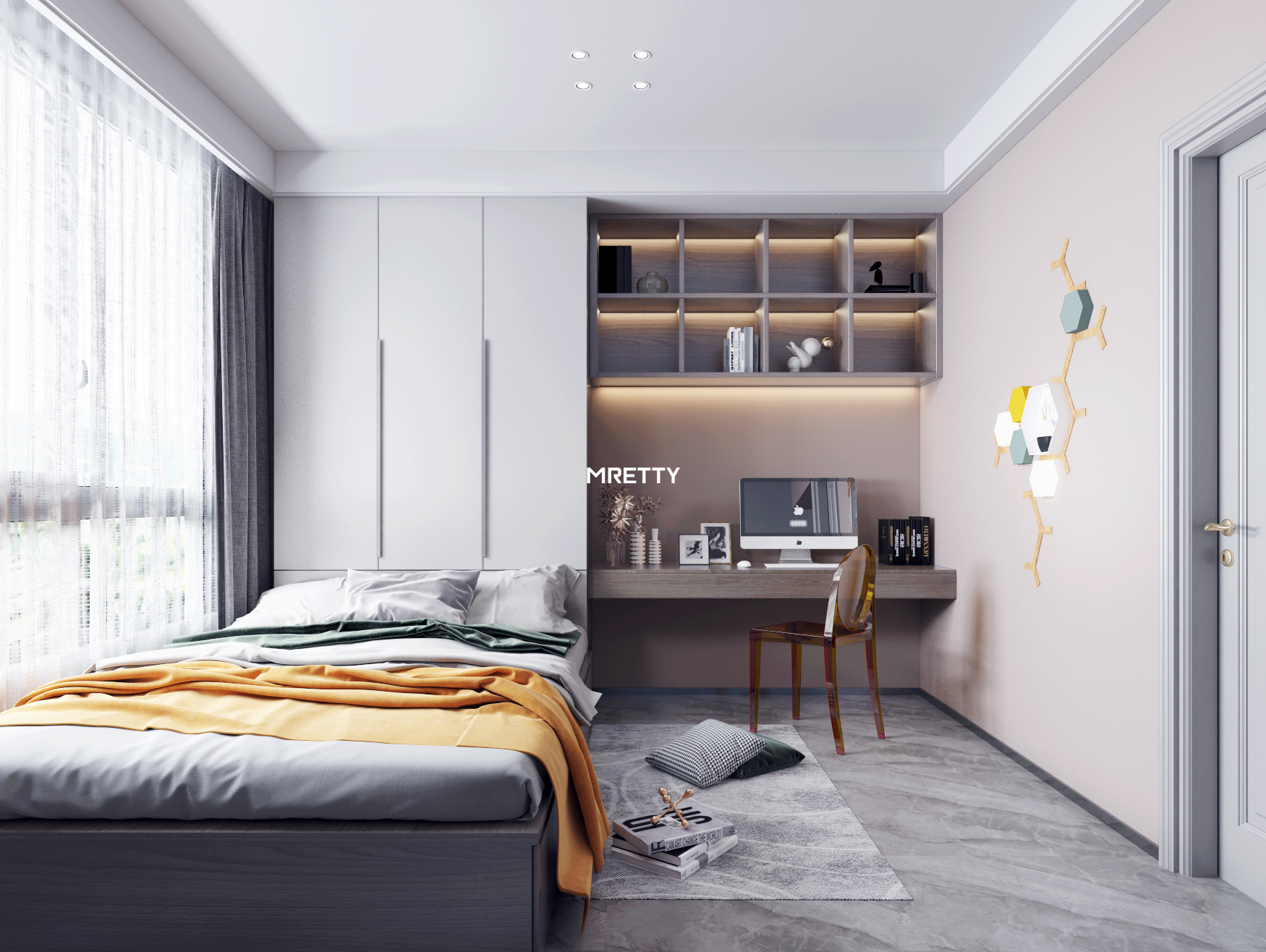
Bedroom: The Quiet Sanctuary
Recommended Thickness: 18mm (with acoustic backing).
Why: Aesthetics meet acoustics here. An 18mm panel provides a solid feel, and when combined with acoustic foam behind the installation, it significantly reduces noise from the rest of the house.
Design Tip: Integrate the wall paneling with your custom wardrobe system. At MRETTY, we can carry the veneer finish from your wardrobe doors onto the adjacent walls for a wraparound "hotel suite" effect.
Hallway and Entryway: High-Traffic Zones
Recommended Thickness: 12mm to 15mm (High-Density).
Why: Hallways are narrow. You do not want to lose too much width to wall cladding. A 12mm high-density panel is tough enough to resist scuffs from shoes and bags without encroaching on the walkway.
Design Tip: Use durable, scratch-resistant finishes in these areas.
Home Office: The Focus Zone
Recommended Thickness: 18mm+.
Why: Privacy is key. Thicker panels help isolate sound, ensuring your video calls remain private and household noise doesn't disturb your work.
Design Tip: Thicker panels can support integrated shelving systems for your books and files, eliminating the need for standalone bookcases.
Technical Considerations for Wall Panel Installation and Stability
The thickness of the panel dictates how it is installed. Understanding this helps you appreciate the craftsmanship involved in your renovation.
"Z-Clip" or Hanging System Installation
For panels 18mm and thicker, we often use a hanging rail system (cleats or Z-clips). This allows the panels to be hung securely on the wall while leaving a small air gap behind. This gap is beneficial for airflow (preventing mold) and allows for cable management behind the scenes.
Direct Bonding Method
Thinner panels (6mm-9mm) are often glued directly to the drywall or substrate. While space-saving, this method is permanent and makes it difficult to repair or access wiring behind the wall later.
Preventing Warping in Wooden Panels
Wood is a natural material that responds to its environment. Thicker panels are generally more stable, but they must be balanced (veneered on both sides) to prevent bowing. At MRETTY, we ensure that even the hidden side of our thick panels is treated to maintain structural equilibrium, ensuring your walls stay dead flat for years.
Design Trends: Fluting and Texture in Wall Panels
One of the most popular current trends is the fluted or slat wall. The success of this design relies entirely on thickness.
To achieve a distinct "slat" look, the panel must be thick enough to have deep grooves cut into it. A shallow groove on a thin panel looks like a print; a deep groove on a thick panel looks architectural.
- Micro-fluting: Requires min. 12mm thickness.
- Deep channel fluting: Requires min. 18mm-25mm thickness.
By choosing the right thickness, you allow our designers to play with light and shadow, turning a plain wall into a piece of art.
Sustainability and Safety in Panel Selection
When selecting your panels, it is not just about the dimensions; it is about what is inside. MRETTY is committed to responsible manufacturing. We utilize materials that meet stringent safety standards regarding emissions.
Choosing quality panels means you are also choosing better indoor air quality for your family. We avoid the use of sub-standard bonding agents often found in cheaper, thinner market alternatives.
Conclusion: The Impact of Panel Thickness
Selecting the correct wooden wall panel thickness options is a nuanced decision that affects the beauty, acoustics, and functionality of your home. It acts as the bridge between structural necessity and artistic expression.
By opting for professional-grade thickness (typically 12mm to 25mm) and partnering with a bespoke specialist like MRETTY, you ensure that your walls are not just coverings, but integral components of a high-performing, luxurious home. Whether you are integrating a hidden door, soundproofing a bedroom, or creating a show-stopping living room feature, the right thickness lays the foundation for success.
We invite you to experience the difference of true customization. Our design team is ready to guide you through the tactile world of wood textures and technical specifications.
Author: Pan Junqi
Senior Interior Architect & Spatial Designer | Winner of the 2024 Golden Compass Design Award for Residential Excellence
FAQ: Common Questions About Wooden Wall Panels
Q1: Can I install thick wall panels in a small room?
Yes, but be strategic. While 18mm panels take up slightly more space, the luxury feel they add often outweighs the minimal loss of floor area. We can use thinner profiles in tight spots and thicker ones for feature areas.
Q2: Do thicker panels cost significantly more?
The material cost is higher, but the installation labor is often similar. The investment in thicker panels pays off in durability and the ability to integrate features like lighting and shelving.
Q3: Can MRETTY match the wall panels to my kitchen cabinets?
Absolutely. This is our specialty. We can use the exact same veneer or finish batch for your kitchen cabinetry and your living room wall panels, ensuring perfect visual continuity throughout your open-plan space.
Related Products by MRETTY
- Bespoke Walk-in Wardrobe Systems: Seamlessly integrate your storage with matching wall cladding.
- Custom Kitchen Cabinetry: High-precision joinery that sets the standard for your home's aesthetic.
- Architectural Indoor Doors: Flush doors that blend invisibly into your MRETTY wall panels.
Transform Your Home with MRETTY
Don't leave your dream home to chance. Our experts are here to help you navigate every detail, from panel thickness to finish selection. We use only FSC-certified materials to ensure sustainability alongside luxury.
Book a Free Consultation Now
MRETTY: Premium Bespoke Kitchen & Cabinet Systems Provider in Singapore.
