
 Singapore
 China
China
The modern home is no longer just a shelter; it is a canvas upon which we paint our lifestyles. Among the many spaces that define our daily rhythms, the kitchen stands paramount—a place where nourishment meets artistry. However, the demands of Asian cooking, often characterized by high heat and aromatic intensity, can sometimes clash with the desire for a pristine, open-concept entertaining space.
This is where the ingenuity of zoning comes into play. To plan wet and dry kitchen layout is to embrace a sophisticated architectural dialogue, separating the rigorous demands of heavy cooking from the light, social grace of preparation and serving. At MRETTY, we believe that your home should be an extension of your persona—refined, functional, and deeply welcoming. A well-executed kitchen layout does not merely segregate tasks; it elevates the entire culinary experience, ensuring that the chaos of creation never overshadows the beauty of presentation.
Understanding the Wet and Dry Kitchen Concept
To master the wet and dry kitchen layout, one must first appreciate the distinct roles played by these two zones. They are siblings, related yet distinct in character, each serving a unique purpose within the home.
The Wet Kitchen: The Engine Room
The wet kitchen is the workhorse. It is designed for heavy lifting—deep frying, searing, and prolonged boiling. It is an enclosed sanctuary where functionality reigns supreme, allowing for intense culinary activity.
Here, splatters are contained, and strong odors are managed effectively. The cabinetry here must be robust, the surfaces resilient, and the layout focused strictly on ergonomic efficiency. It is the hidden gem where the magic happens, away from the prying eyes of guests.
The Dry Kitchen: The Social Stage
In contrast, the dry kitchen is the face you present to the world. It is often integrated with the dining or living area, serving as a pantry for light meals, baking, coffee preparation, or evening cocktails. This area prioritizes aesthetics and social interaction.
It is the realm of the kitchen island, the breakfast bar, and the display cabinet. The dry kitchen is where aesthetics take center stage, utilizing premium materials and sophisticated lighting to create an atmosphere of luxury and relaxation.
Why Separate Kitchen Zones? The Allure of Distinct Areas
Why should a discerning homeowner invest in separating these spaces? The benefits extend far beyond mere trend-following, offering significant advantages for both functionality and lifestyle.
- Preservation of Elegance
An open kitchen is beautiful until the first splash of oil hits the pristine countertop. By confining heavy cooking to the wet kitchen, the dry kitchen—and by extension, your living area—remains immaculate. Your guests are greeted by the scent of fresh coffee or baking pastries, rather than the lingering odors of last night's dinner.
- Enhanced Social Interaction
The dry kitchen allows the host to remain part of the conversation. Whether you are plating hors d'oeuvres at the island or pouring wine at the sideboard, you are engaged with your family and guests. It bridges the gap between the culinary and the communal, fostering connection.
- Organized Functionality
Separation allows for specialized storage. The wet kitchen houses heavy pots, pans, and bulk ingredients, perfect for intensive cooking. Meanwhile, the dry kitchen displays fine china, glassware, and frequently used snacks, maintaining a neat appearance.
This logical division streamlines daily routines, ensuring that every item has its rightful place and maximizing efficiency.
Choreographing the Flow: Key Planning Considerations
When you prepare to plan wet and dry kitchen layout, consider the movement between these spaces. The transition should be seamless, not jarring, facilitating easy use and interaction.
The Invisible Connection
Though separated, the two kitchens must feel connected. A common design strategy involves using glass partitions or sliding doors. This maintains visual continuity, allowing light to flow through while providing a physical barrier against fumes.
The floor plan should allow for easy passage of dishes from the cooking zone (wet) to the serving zone (dry), ensuring a smooth culinary journey from preparation to presentation.
Zoning the Work Triangle
The classic kitchen work triangle (sink, stove, fridge) applies differently here, adapting to the specific functions of each space.
In the Wet Kitchen: The triangle is tight and focused on efficiency. The sink handles heavy washing, and the stove is the primary focal point for all intense cooking activities.
In the Dry Kitchen: The "triangle" is looser and more flexible. It may consist of a secondary sink, a coffee station, and a refrigerator for drinks and snacks. The focus here is on ample surface area for plating and casual dining.
Ventilation Strategy
While MRETTY focuses on cabinetry and spatial design, we advise planning your layout to accommodate robust ventilation in the wet kitchen. The placement of your tall units and wall cabinets should not obstruct the airflow path, ensuring the space remains comfortable even during intense cooking sessions. Proper ventilation is key to maintaining air quality.
MRETTY’s Guide to Space Optimization and Cabinetry
As a provider of premium bespoke systems, MRETTY understands that the soul of the kitchen lies in its cabinetry. The line is always simple, but the structure is always unexpected, offering both beauty and functionality.
The Wet Kitchen Cabinetry: Resilience Meets Style
For the wet zone, durability is key to withstand the demands of heavy cooking.
Surfaces: We recommend non-porous materials for countertops and backsplashes, which are easy to clean and maintain hygiene.
Cabinet Systems: Our bespoke wet kitchen cabinets are engineered to withstand humidity and frequent usage. We utilize easy-to-clean laminates or high-gloss finishes that repel grease and moisture.
Internal Organizers: Deep drawers for heavy cast iron pots and pull-out racks for sauces and spices ensure that the workspace remains clutter-free and highly efficient. Every inch is optimized for utility.
The Dry Kitchen Cabinetry: A Tactile Experience
Here, we indulge in texture and warmth, crafting spaces that are both inviting and elegant.
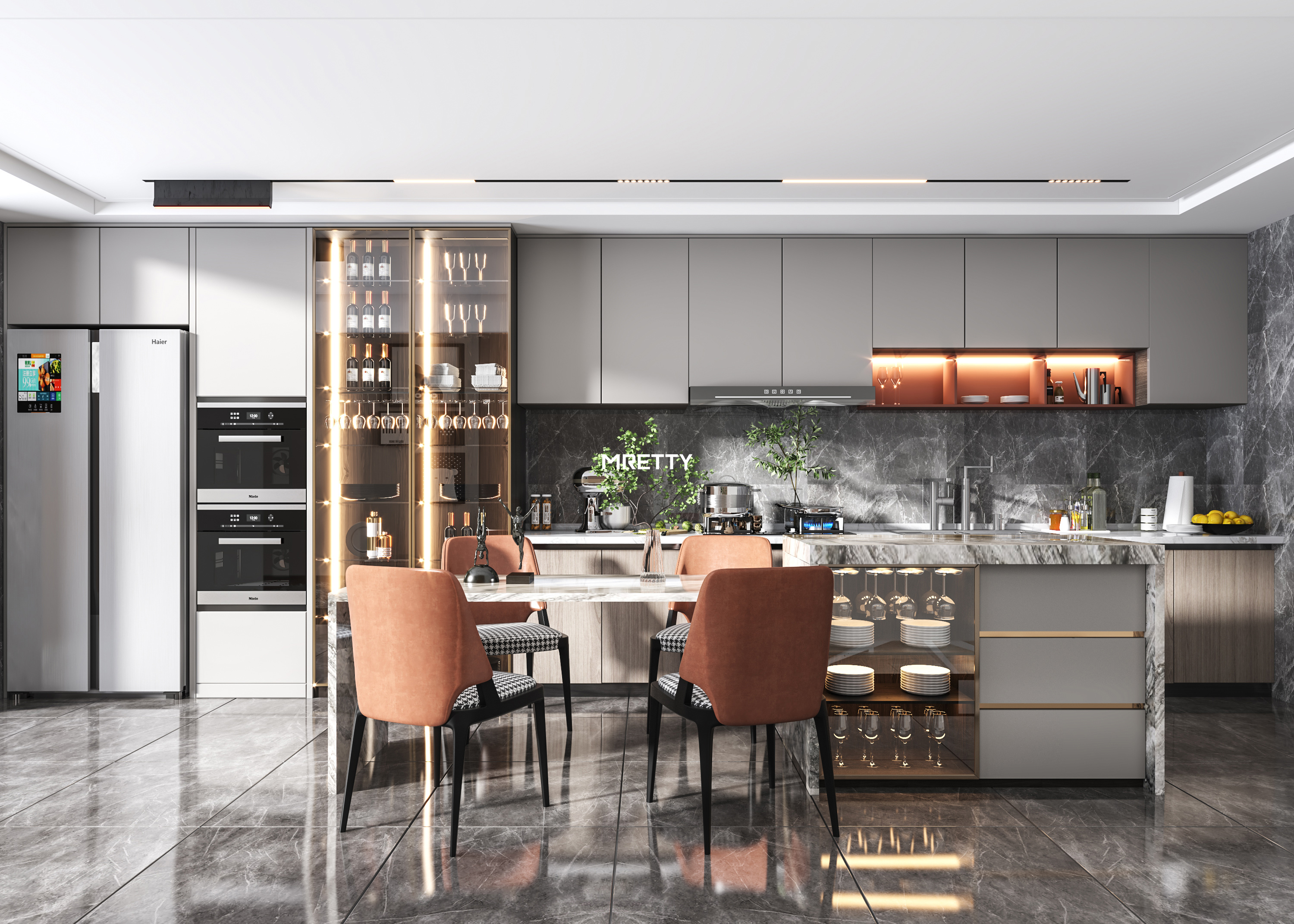
The Island: The centerpiece of the dry kitchen. MRETTY designs islands that function as sculpture—incorporating hidden storage, breakfast counters, and even integrated wireless charging points for a tech-savvy touch, blending form and function.
Display Units: Glass-fronted cabinets with integrated warm lighting showcase your finest collection of crockery or wine, adding a touch of sophistication.
The Pantry Wall: A floor-to-ceiling unit that merges seamlessly with the wall paneling. Behind sleek doors lies a world of organization—shelves for dry goods, dedicated drawers for linens, and nooks for small appliances, keeping everything tidy yet accessible.
Design Tips for a Cohesive Aesthetic
To ensure your dual kitchen feels like a singular, harmonious vision rather than two disjointed rooms, strategic design choices are essential.
Material Echoes
Use a common thread to bind the spaces. If you use a specific marble vein in the dry kitchen island, echo that tone in the backsplash of the wet kitchen. If your dry kitchen features walnut wood accents, carry a similar timber tone into the wet kitchen’s shelving, creating visual continuity.
Lighting Hierarchy
The dry kitchen deserves ambient, mood-setting illumination—think pendant lights over the island and soft strip lighting under shelves for a welcoming atmosphere. The wet kitchen requires bright, cool task lighting to ensure safety and precision during chopping and cooking.
Unified Flooring Aesthetics
While we do not provide flooring, we recommend choosing materials that flow visually between the two areas. A transition strip can be jarring; instead, use complementary tones to guide the eye from one zone to the other, maintaining a smooth aesthetic.
Common Mistakes to Avoid When Planning Your Kitchen
Even the most well-intentioned plans can falter if common pitfalls are not addressed. Avoiding these mistakes ensures a more functional and enjoyable kitchen space.
Neglecting the Landing Space: In the wet kitchen, ensure there is ample countertop space next to the stove and oven. You need a safe place to set down hot pans immediately after cooking.
The "Corridor" Effect: Avoid making the wet kitchen too narrow. If two people cannot pass each other comfortably, the space becomes stressful rather than functional, hindering efficiency.
Ignoring the Dry Kitchen Sink: A dry kitchen without a small sink limits its utility significantly. You shouldn't have to walk to the wet kitchen just to rinse a spoon or wash a glass; a dedicated sink in the dry area enhances convenience.
Over-Designing: In the pursuit of luxury, do not overcrowd the dry kitchen with too many focal points. Let the cabinetry breathe and appreciate simplicity, as it is often the ultimate sophistication in design.
The MRETTY Advantage: Bespoke Kitchen Systems
Your home is unique, and off-the-shelf solutions rarely suffice. MRETTY specializes in whole-house customization, ensuring that your kitchen layout is not just a collection of boxes, but a tailored suit for your home. From the precise height of the countertops to the internal configuration of the drawers, every element is crafted to fit your lifestyle and specific needs.
Related Products for Enhanced Kitchen Planning
Enhance your kitchen planning with our specialized systems, designed to integrate seamlessly and elevate your culinary space:
The MRETTY Artisan Island Series: Bespoke central islands featuring exquisite stone accents and smart storage integration, combining elegance with practicality.
Lumina Glass Display Cabinets: Elegant, dust-free storage solutions perfect for the dry kitchen, featuring soft-close aluminum frames for a refined look and feel.
Heavy-Duty Culinary Modules: Reinforced cabinetry specifically designed for the wet kitchen environment, offering superior resistance to heat and moisture, ensuring longevity and performance.
Integrated Pantry Walls: Floor-to-ceiling storage solutions that blend seamlessly with your interior architecture, providing extensive, organized storage while maintaining a sleek appearance.
Frequently Asked Questions About Kitchen Layouts
Q: Do I need a large house to have both a wet and dry kitchen?
A: Not necessarily. Even in compact apartments, intelligent zoning can create a distinction. A simple glass partition or a strategic peninsula unit can effectively separate the cooking zone from the prep zone, making dual kitchens accessible in smaller spaces.
Q: Can MRETTY match the kitchen cabinets to my living room furniture?
A: Absolutely. Since we specialize in whole-house customization—including TV consoles, sideboards, and wall paneling—we ensure a seamless visual language throughout your entire home. Our goal is to create a cohesive and harmonious aesthetic across all your living spaces.
Q: What materials are best for wet kitchen cabinets?
A: We recommend high-pressure laminates or specialized acrylics that are moisture-resistant and easy to wipe down. Our design consultants can guide you through our extensive material library to choose the best options that suit your needs and style.
Conclusion
To plan wet and dry kitchen layout is to curate a lifestyle of balance. It honors the tradition of cooking while embracing the modernity of entertaining, creating a truly versatile home environment. It is a decision that pays dividends in both daily comfort and long-term property value, offering a sophisticated living experience.
By separating the chaos from the calm, you create a home that is always ready to welcome, always ready to impress. At MRETTY, we stand ready to translate your vision into reality. With our commitment to eco-friendly materials and precision craftsmanship, we ensure your kitchen is not just built, but beautifully composed. Our commitment to sustainability is unwavering. All MRETTY wooden materials are sourced from responsibly managed forests, adhering to strict FSC (Forest Stewardship Council) certification standards, ensuring a healthy environment for your family.
Ready to transform your culinary space? Book a Free Consultation Now and let our experts guide you toward the kitchen of your dreams.
About the Author:
Yang Song
Senior Interior Designer at MRETTY
Award-winning designer recognized for "Excellence in Spatial Fluidity" at the Asia Pacific Design Awards. Yang specializes in merging ergonomic utility with minimalist aesthetics, creating homes that breathe.
MRETTY: Premium Bespoke Kitchen & Cabinet Systems Provider in Singapore.
